




50 years of avalanche forecasting in Colorado: A journey of people, technology, nature’s might
For a 14-year-old boy who loved being in the mountains, search and rescue seemed like a fine opportunity. And so there Dale Atkins was in the winter of 1974, strapped to wooden snowshoes with that rawhide webbing, trudging up a slope near Guanella Pass.
“The first mission I went on was an avalanche search,” Atkins recalled from his home in Avon. “It turned out to be a recovery.”
A schoolteacher was apparently out enjoying himself over the holiday break, a backcountry excursion perhaps like any other. He was buried and killed.
“I was quite young,” Atkins said, “and it made quite an impression on me.”
So much so that a decade later the still-young Atkins found himself on the small staff of the still-young Colorado Avalanche Information Center. Atkins was among early, snow-crazed minds that helped advance forecasting and education as technology changed along with our understanding of Mother Nature’s behavior and our own.
The mission: to keep people safe in a state unmatched for avalanche danger — a grim reality at the center of a mercurial snowpack and steep, wind-swept terrain.
The mission continues.
Colorado Avalanche Information Center (CAIC) is celebrating 50 years this winter.
From teletype warnings to hotline recordings, from a single office that broadcast conditions and predictions based on weather reports, snow measurements and whatever data and observations available, CAIC now posts regular, detailed forecasts for more specific areas like never before.
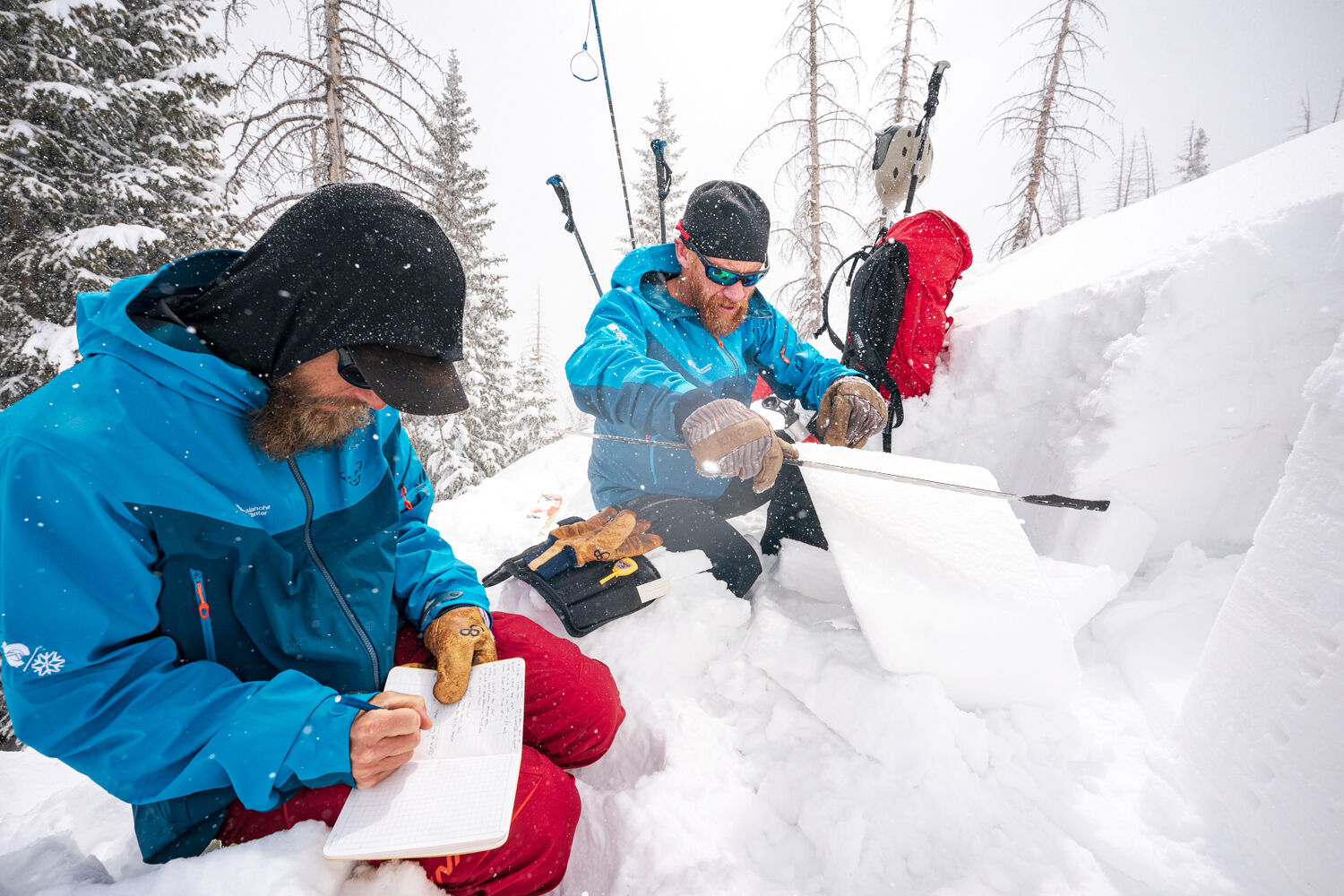
That’s thanks to a staff that has continued to grow, along with the network of snow stations and voluntary, enthusiastic watchers scattered across the mountains. Forecasters digging snow pits in the wild and others compiling information from their desks convene daily via video calls to post updates online for an adventure-hungry state.
It’s been half a century of “critical work,” said Dan Gibbs, executive director of the state office that houses CAIC, the Colorado Department of Natural Resources.
Gibbs offered a sentiment shared among generations: “As someone who recreates in the mountains, I have always relied on CAIC as a lifesaving source of information.”
The source began as “a tiny, upstart program,” said a leader from the beginning, Knox Williams. CAIC has grown, from his view, into “the largest and perhaps most successful avalanche safety program in the United States today.”
Williams is credited as an unlikely pioneer. Back then, out of Colorado State University in 1970, he “hardly knew an avalanche from a snowball,” he admits.
Williams was later Atkins’ boss.
“This may sound a bit odd,” Atkins said, “but he’s a Texan.”
Now retired in Cedaredge in western Colorado, Williams still recounts memories with a thick, Southern drawl.
“The irony of it is that I started in tropical meteorology,” he said.
That was his continued focus at graduate school in Fort Collins. He was just about to start his career at the National Hurricane Center in Miami.
“Then just totally through the grapevine, I heard the Forest Service there in Fort Collins was looking to start a brand-new avalanche information center.”
In 1973, it started as the Colorado Avalanche Warning Program. It was the vision of Art Judson.
He was among Forest Service “snow rangers” in those days assessing conditions as more people were falling in love with skiing and the winter backcountry. In Colorado, the resort industry had taken off in the 1960s. Judson knew there had to be an avalanche-focused outfit to meet the hoopla — an outfit like the government-supported forecast program he knew in Switzerland.
The Colorado Avalanche Warning Program was in that likeness, the first of its kind in America. (From the federal government’s house, it eventually became the nation’s only avalanche program under state government, remaining so today.)
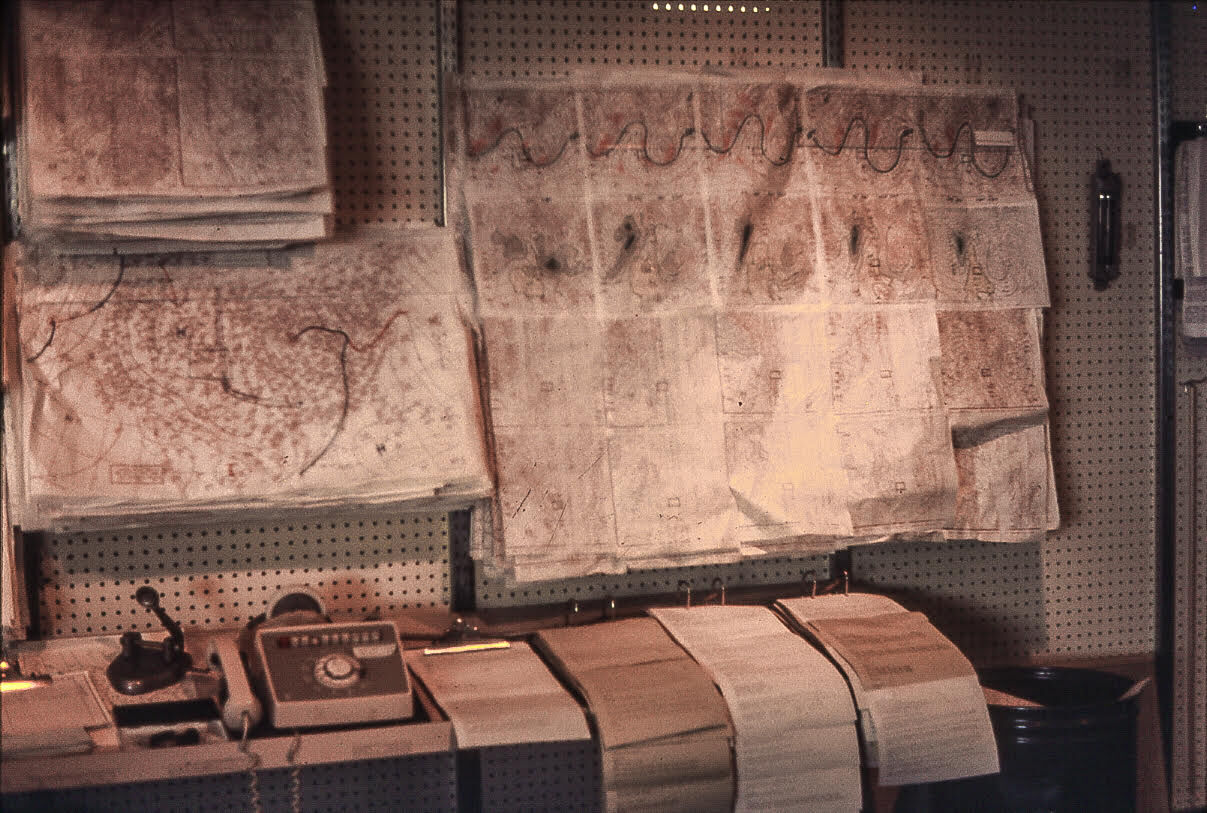
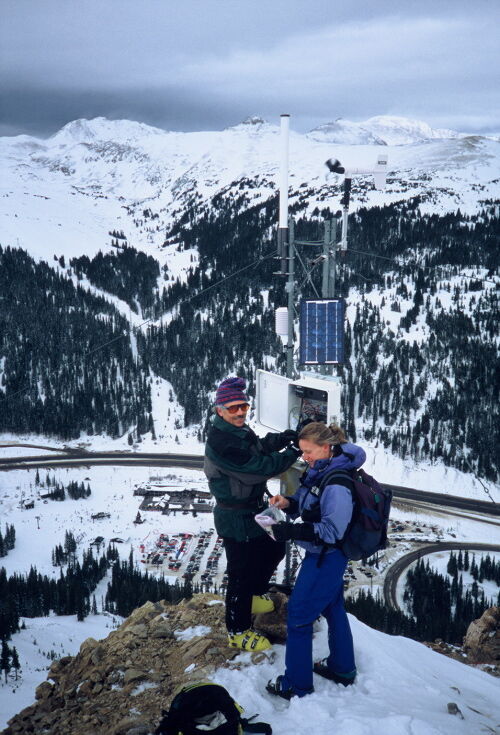
With the funding, Judson got busy installing weather-monitoring instruments across the mountains. He picked his odd understudy: Williams, who learned he was favored for his modern education in meteorology and, in fact, his lack of avalanche knowledge.
“I guess they wanted someone without any preconceived notions,” he said.
They got the Texan who learned to ski better — essential for essential field work — and someone who loved the job so much that he remained CAIC’s director over three decades, up until 2005.
Simply put: “I really liked the people,” Williams said.
They were practical as they were whimsical, free-spirited scientists or citizen scientists deeply interested in the intricate ways snow fell and ominously formed layers ready to break.
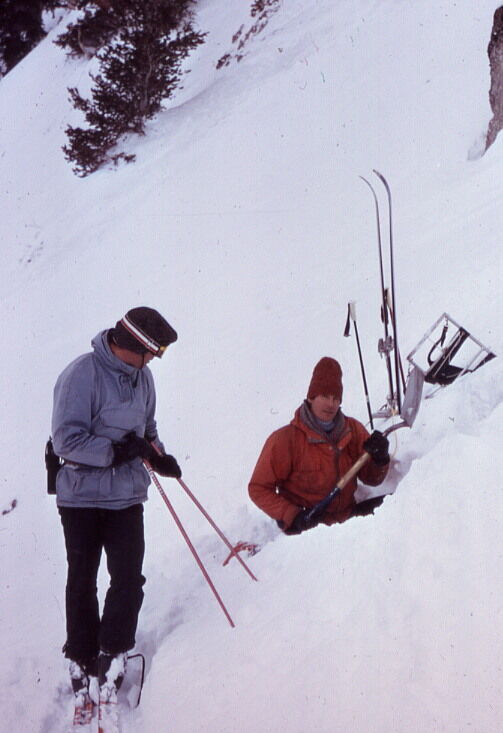
They were like Atkins, a Loveland ski patroller-turned-CAIC forecaster in 1987.
“Anyone who has seen an avalanche run … we were all very impressed by their power and their beauty,” he said. “We were all fascinated and intrigued by something like snow that can be so wonderful to play in, but in a split second can turn into a monster.”
The fascination reached Betsy Armstrong. Previous to CAIC, she was assigned to the San Juan Avalanche Project in the ‘70s — among other things, assigned to mapping avalanche-prone zones across the range.
Armstrong dug up old newspaper chronicles of slides that led her to scout specific, remote spots.
“My daughter was 2 or 3 years old at the time,” she recalled. “I carried her on my back and went tromping all over looking to verify these places. It was like, ‘Oh my, I’m really getting paid for this.’”
With CAIC, it wasn’t always fun and fresh air.
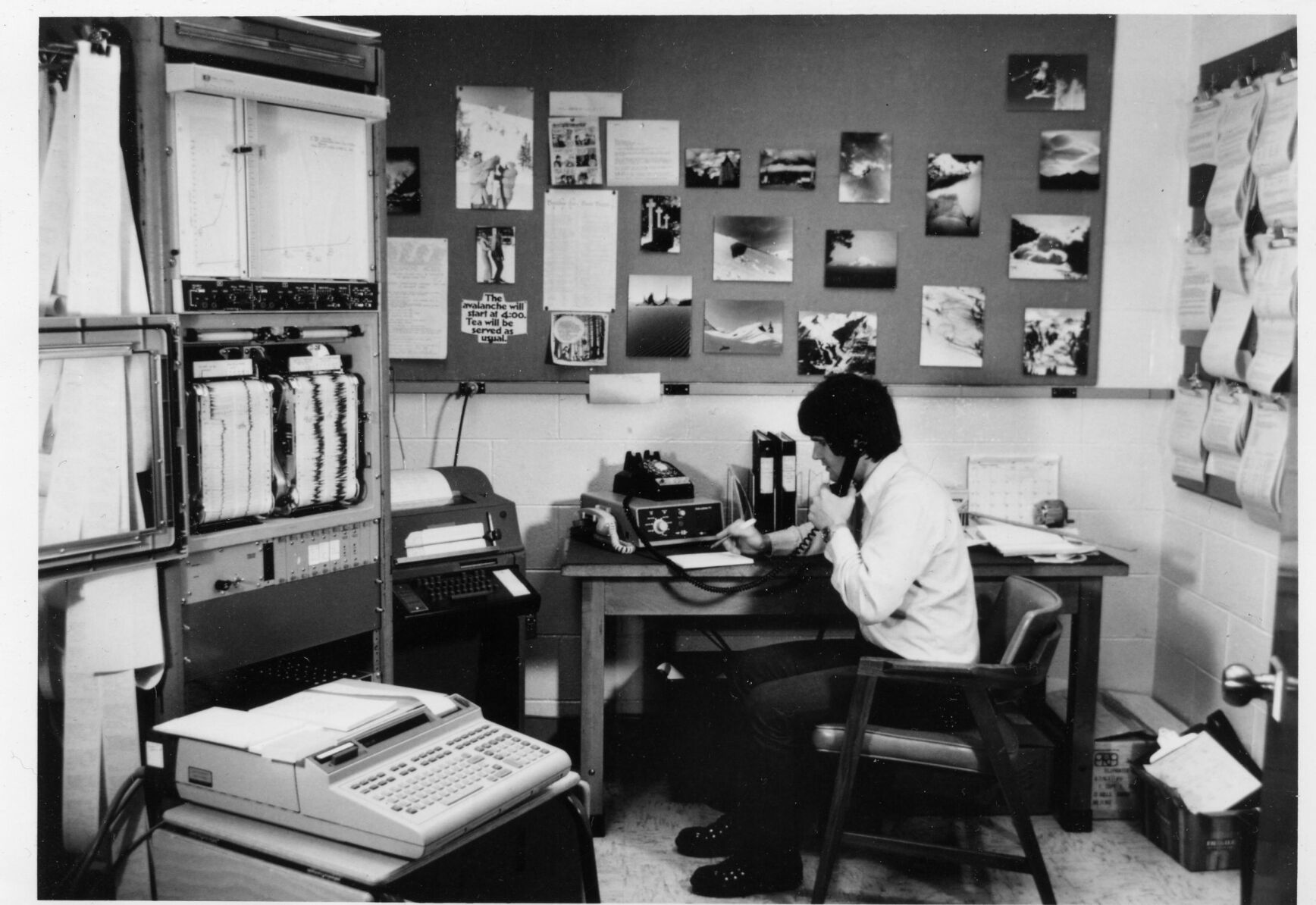
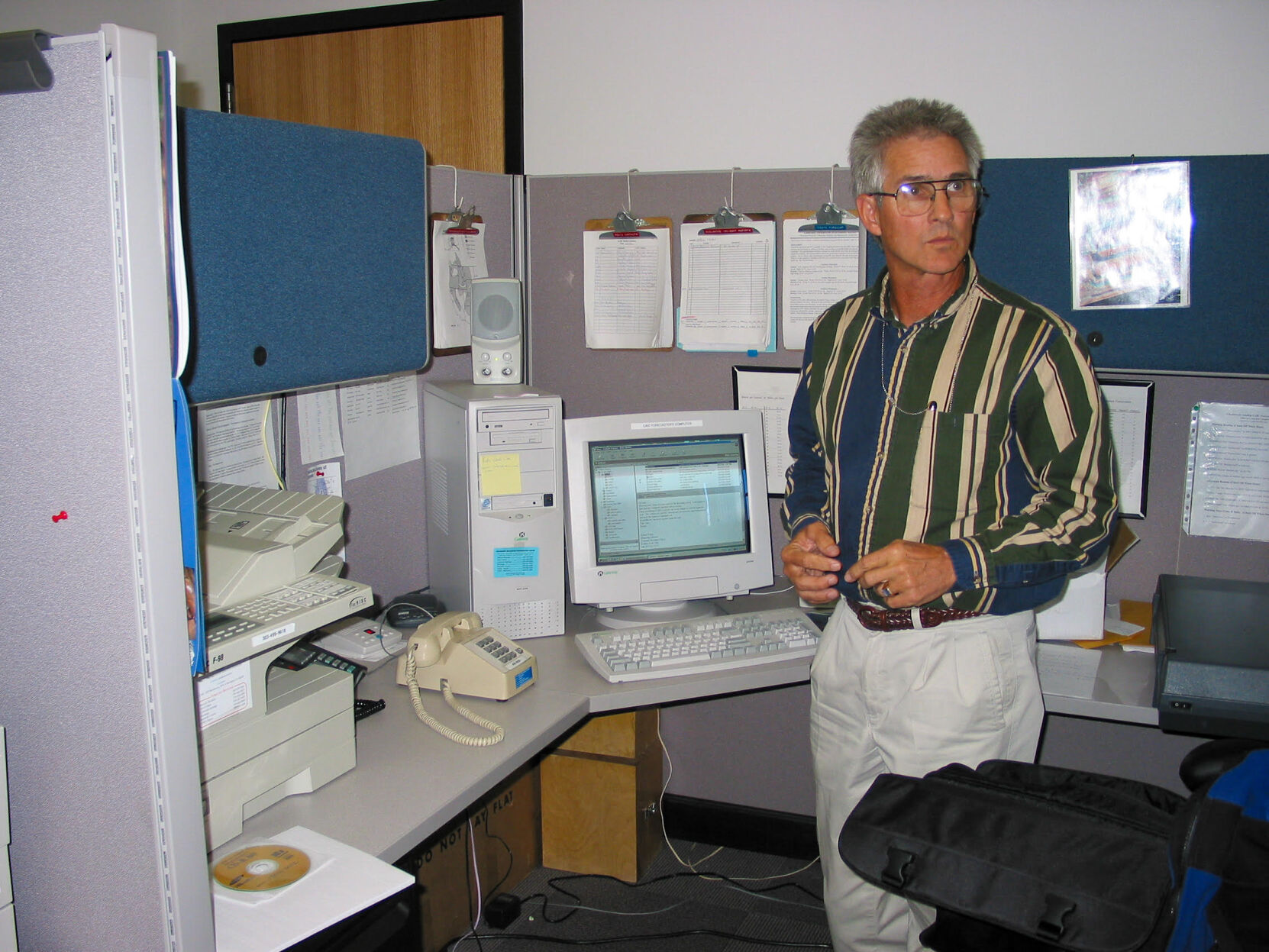
In the office, “it was sort of like the dark ages,” Armstrong said. “All we could do was issue avalanche warnings on a teletype. You’d type it out, and if you messed up, you had to start all over again. And then you’d thread it into a machine, and if it ate it you had to start all over again.”
Information reached newspapers and radio waves. People could later call a hotline for updated conditions.
In the 1990s, after Denver added a professional sports franchise, the message went something like: “You have reached the Colorado Avalanche Information Center. We are not the hockey team.”
The internet would change everything; CAIC’s website launched in ‘97. Atkins pointed to another “game-changer” at the start of that decade.
A plow driver was caught and killed by an avalanche on Red Mountain Pass. Colorado Department of Transportation sought a formal alliance with CAIC, establishing observation posts along several highways as part of a key, resource-blending collaboration that continues today.
Also continuing is a certain aspect of research and education that piqued Atkins’s curiosity in the early 2000s.
Just as avalanches were a weather and terrain issue, they were equally or more a human issue, Atkins suggested in studies and workshop presentations. He helped shift the focus of fellow forecasters everywhere.
“We as the skiers and snowmobilers and climbers, we make the decision of where to go and when to go,” Atkins said. “It was really about the judgment of the backcountry travelers.”
While it appears more people than ever are embarking into Colorado’s backcountry, reported avalanche deaths have not greatly skewed from the historic annual average of six. One might see that as a measure of success. Not CAIC Director Ethan Greene.
“We deal with each of those people and their families each year,” he said. “So it’s hard to really look at any fatal accident being part of any success.”
How experienced were those at the fatal ends of slides? How aware were they of avalanche risks heading out? Were they equipped with knowledge and gear to give themselves a better chance at survival and rescue? CAIC researchers continue to ask those questions.
The answers come through hard conversations.
“We talk to friends. We talk to family,” Greene said.
Motivation and inspiration continue in the worst way — in hopes of preventing the next victim.
“We realize this impacts lives, we understand that in a very up-close-and-personal way,” Greene said. “It drives us to be the best and do the best we can in all aspects of our work.”


Get OutThere
Signup today for free and be the first to get notified on new updates.
PREV
PREVIOUS

Democrats and liberal groups disenchanted with 'vague' Supreme Court ethics code
After months of urging the Supreme Court to adopt a code of ethics, Democrats and liberal judicial advocates are disenchanted by the justices’ new code of conduct over a lack of binding enforcement measures. The Supreme Court’s new code drew mixed opinions from Democratic senators, including Senate Judiciary Committee Chairman Dick Durbin (D-IL) and fellow […]

Pink teams up with nonprofit group to give away over 2,000 banned books in Florida
Musician Pink is partnering with the nonprofit group PEN America to give away over 2,000 books in Florida that the organization said are banned in the state. The books will be given away at concerts that Pink, whose real name is Alecia Hart, is hosting in Southern Florida. The giveaways are meant to bring attention […]