




My first terrifying winter driving experience in Colorado
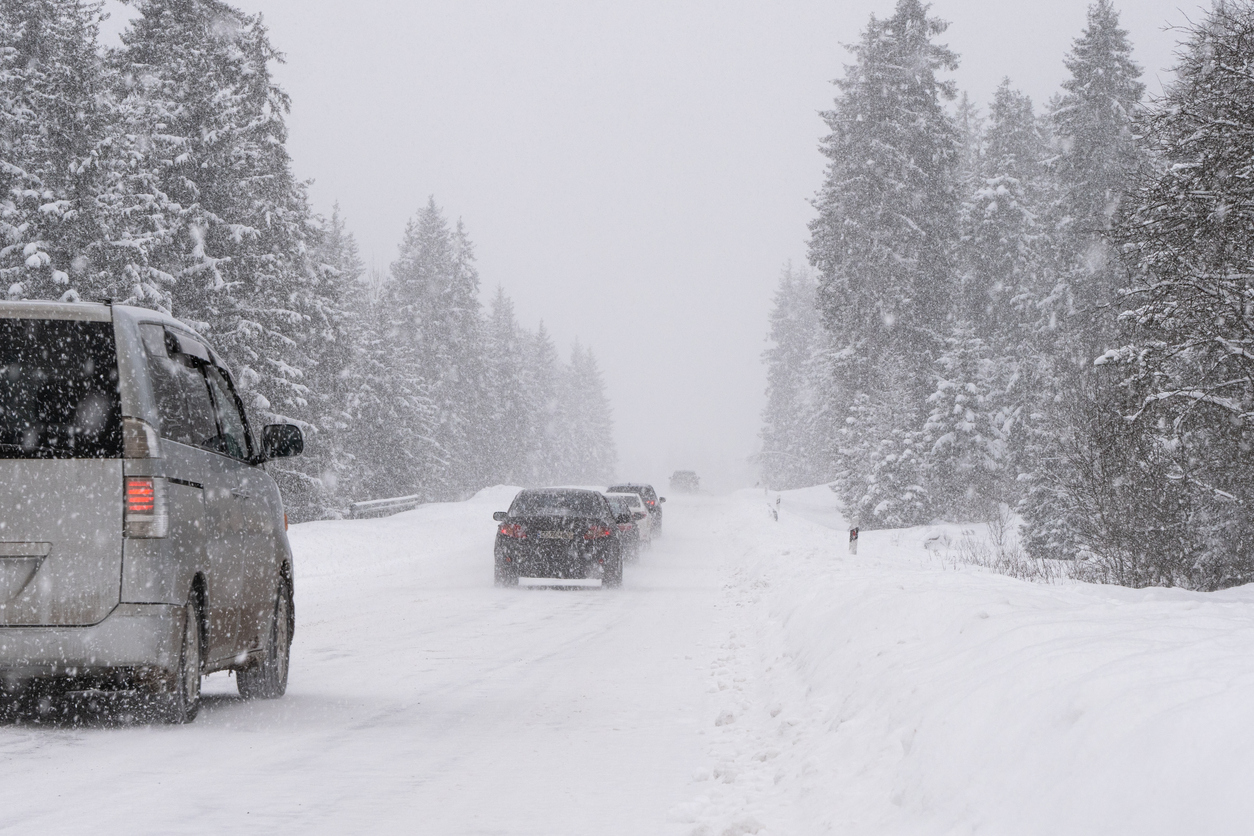
The massive drop-offs, steep grades, and many hair-pin turns are enough to rattle many Colorado travelers regardless of the season – but come winter conditions, many mountainous routes around the state can turn treacherous. Ask anyone who has called the Centennial State home for a few years about their own harrowing moments on snow-covered roads – each person will have at least one bone-chilling story that comes to mind.
As a skiing enthusiast that’s lived in Colorado for more than a decade, I’ve experienced my fair share of close calls on slick roads – and my white-knuckled drive on a February morning several years ago is one I can’t shake.
My group of friends had planned a weekend ski trip in Summit County, with plans to hit the slopes on both Saturday and Sunday. Snow was in the forecast and we were all looking forward to creating tracks in fresh powder.
Saturday on the slopes went swimmingly, but as our group discussed the next day, we noticed more snow than expected was rolling in.
Alright – we’ll do a half day, we decided, and peel out of town before conditions got too bad. After all, we didn’t want to get stuck behind the many others who ‘didn’t know how to drive in snow.’
And then the next morning came – and with it, about a foot of fresh snowfall, and the flakes were still coming.
As planned, the group assigned to my vehicle geared up in our Frisco hotel, but the nerves were apparent as we loaded into my sporty sedan and made our way toward the Breckenridge Gondola lot – still hopeful we’d make it to the lift line, but with an unavoidable aura of concern looming in the air.
Established plans changed about as soon as my vehicle’s tires started rolling, spurred by a brief battle that ensued as the car struggled to make it up a hardly noticeable slope that led out of the hotel parking lot.
Without debate, we knew we weren’t making it to the slopes that day, with the question now being how to safely make it back to Colorado Springs – I-70 or Hoosier Pass. After all, we assumed it would only get worse – and we were right about that.
Having the final say as the person behind the wheel, I opted for Hoosier Pass. I hoped my all-wheel-drive would work as intended while also having concern about what backed up traffic on the oft-crowded I-70 route might mean.
After struggling to make it through Breckenridge, we made it to the base of the Hoosier Pass uphill climb. While we all knew a stunning mountainous scene towered above, whiteout conditions made these peaks impossible to spot. Thus, from inside the vehicle, all eyes were locked on the road ahead.
Pushing forward at about five miles per hour behind a line of vehicle much larger and more capable than my own, we pushed on with fingers crossed that our lack of momentum wouldn’t be enough to stop the car in its tracks as I did my best to navigate up the steep route through thick snow. Each time traffic slowed ever so slightly, spinning wheels were the result. But each time, the tread on the tires eventually caught and the vehicle kept moving along.
Everyone in the car joined in an instinctual sigh of relief as we crested over the Continental Divide at around 11,500 feet of elevation. It would all be – mostly – downhill from there on out.
Granted, downhill travel posed its own risks. Any momentum we could gain now seemed to work against us, albeit while flanked by a large drop-off that plummeted into a cloud of white. Better equipped vehicles were moving much faster now, too, passing our slow and mostly controlled roll with every available chance – all while the whiteout conditions and lack of visibility persisted. Meanwhile in my vehicle, the terrifying ‘what if’ question loomed.
Thankfully, there’s no tragedy that comes with this story. After what felt like several hours, we made it over Hoosier Pass and down into Fairplay. Granted, no one felt like the traditional stop for beer at the now relocated South Park Brewery, no one even felt like stopping for a quick restroom break. Instead, we opted to push onward as the storm continued to get worse.
After a few more gut-wrenching moments over a couple mountain passes and through an icy canyon, we saw a familiar sight that cut through the blowing snow – the sign for Rudy’s Barbecue, an ever-popular staple on the west side of Colorado Springs. It had been about six hours since we’d left Summit County, and everyone in the car was desperate for the chance to get their feet back on solid ground for the sake of a hot meal. I pried my fingers off the steering wheel, took a deep breath, and happily joined.
This was perhaps the first time that I realized that even though a vehicle’s manufacturer might bill a certain model as being ‘designed for snow travel,’ it might not be designed for ‘Colorado snow’ travel. And just like that, I would soon become the proud owner of a Jeep.
Get OutThere
Signup today for free and be the first to get notified on new updates.
PREV
PREVIOUS

The beaver effect: How nature's engineers restore wetlands, control floods, and protect rivers
Colorado Springs Utilities hopes to draw beavers to the region to help with riparian restoration on Pikes Peak

Search and rescue team saves overdue hiker whose shoes had frozen solid
The Alpine Rescue Team rescued a man who had not returned from a hike up Mount Bierstadt on Friday. According to a social media post, the team was notified of the overdue hiker just after 8 p.m. on Friday. The hiker had set out to climb Mount Bierstadt from the winter trailhead that morning and […]