




Here’s what Denver is doing to shoo crows away from downtown
Downtown building owners have hired trained falcons to scare away the flood of crows that leave droppings everywhere.
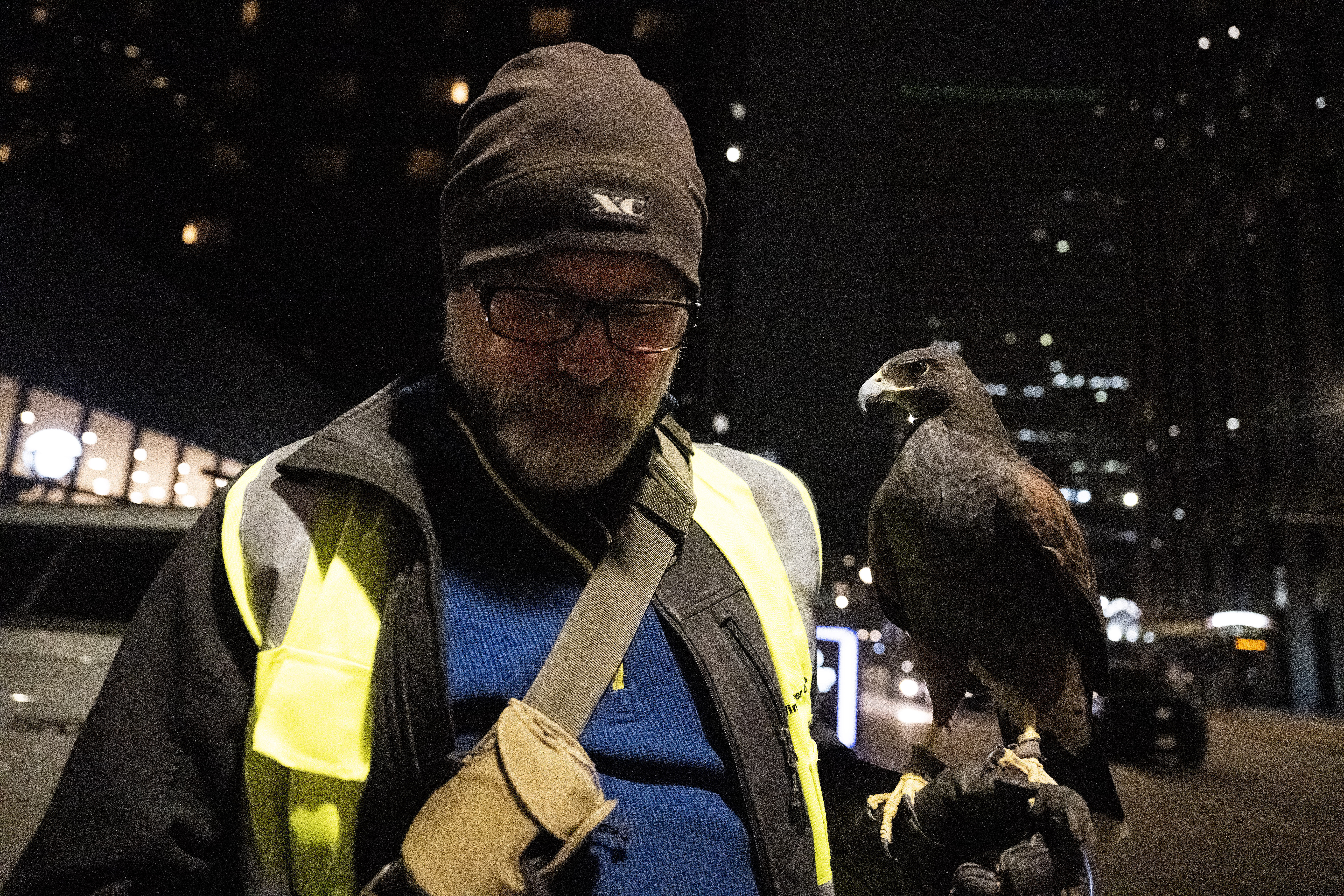
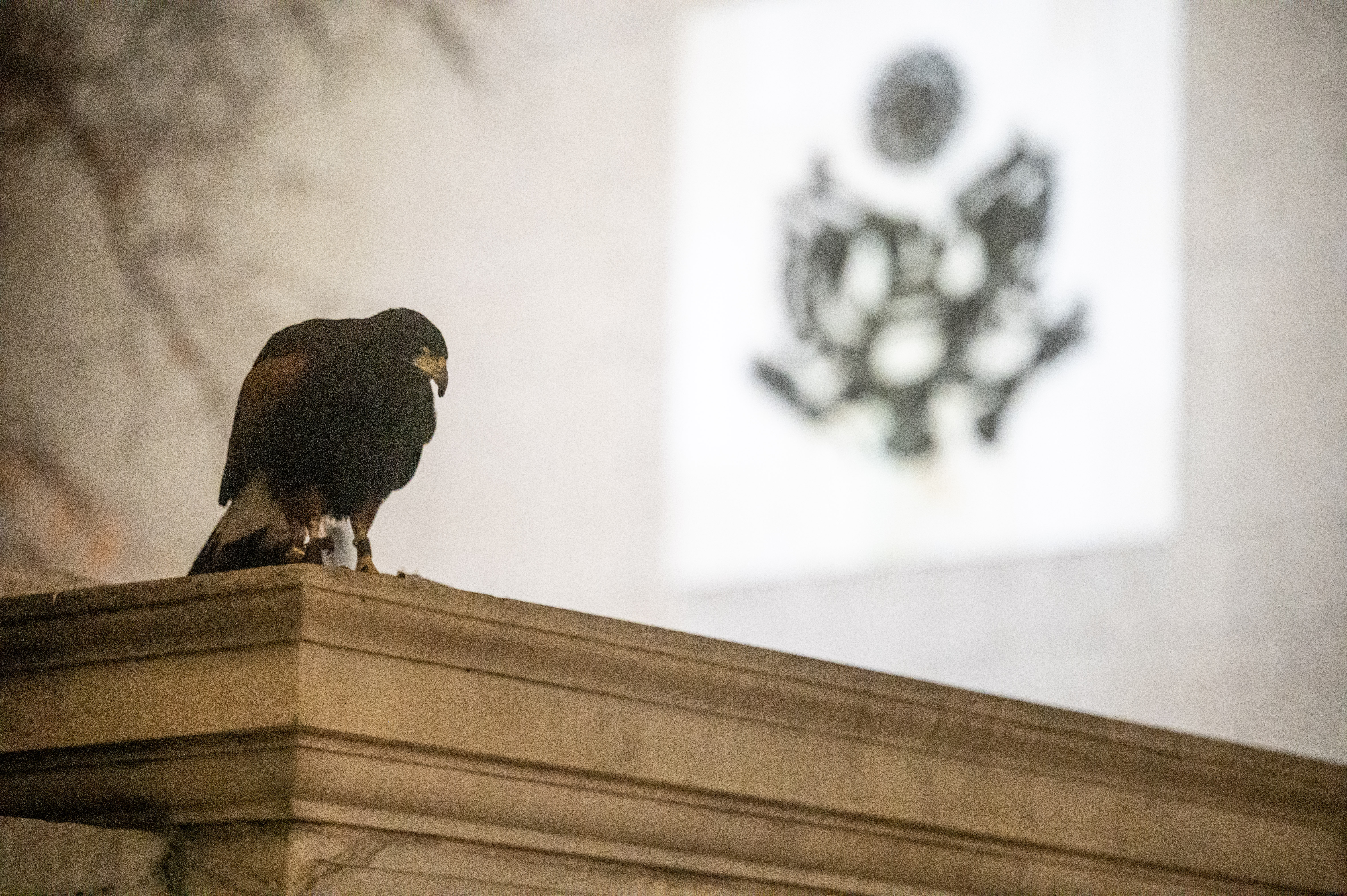
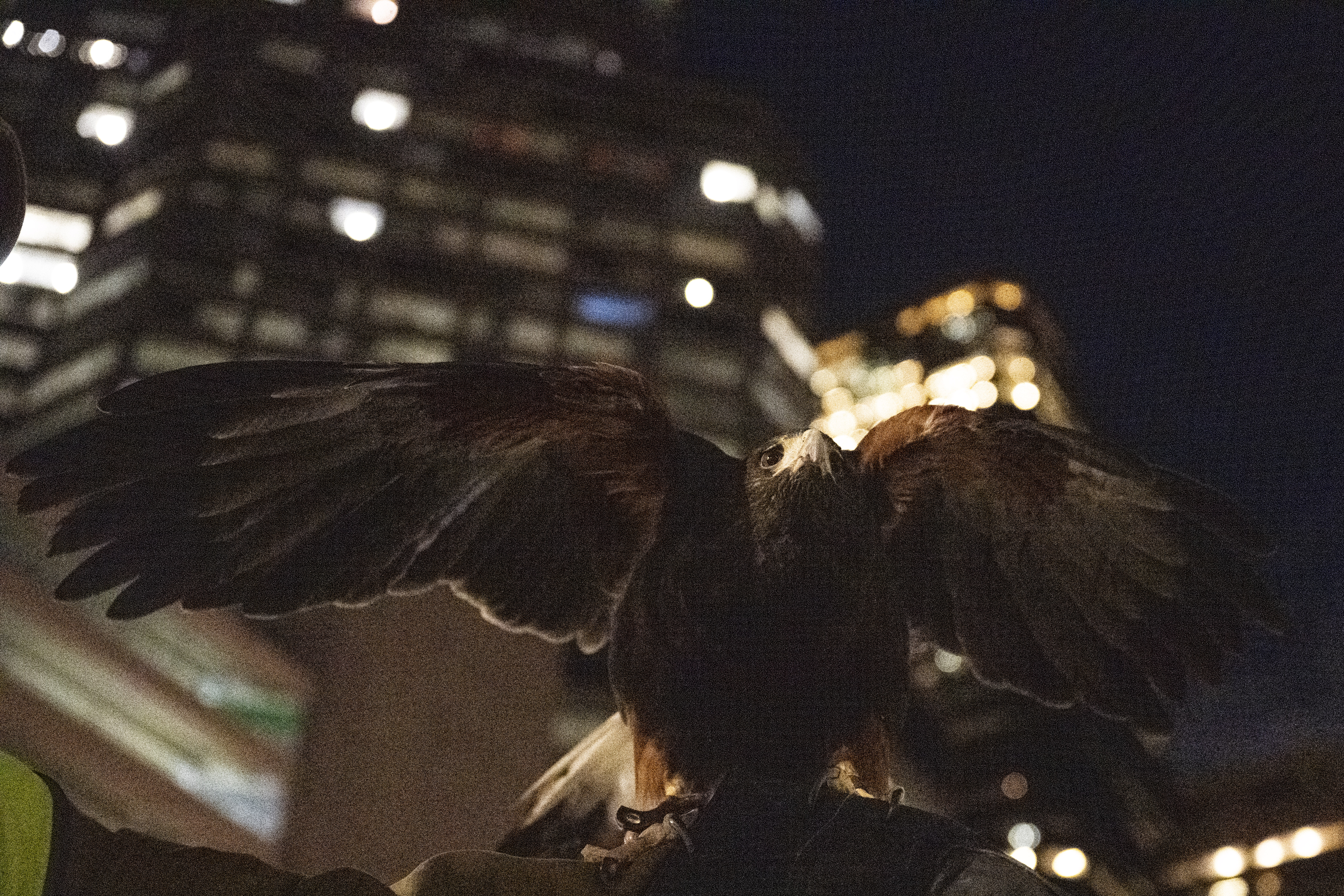
A Harris’s Hawk swooped for a juicy chunk of raw quail, like a dog to a treat.
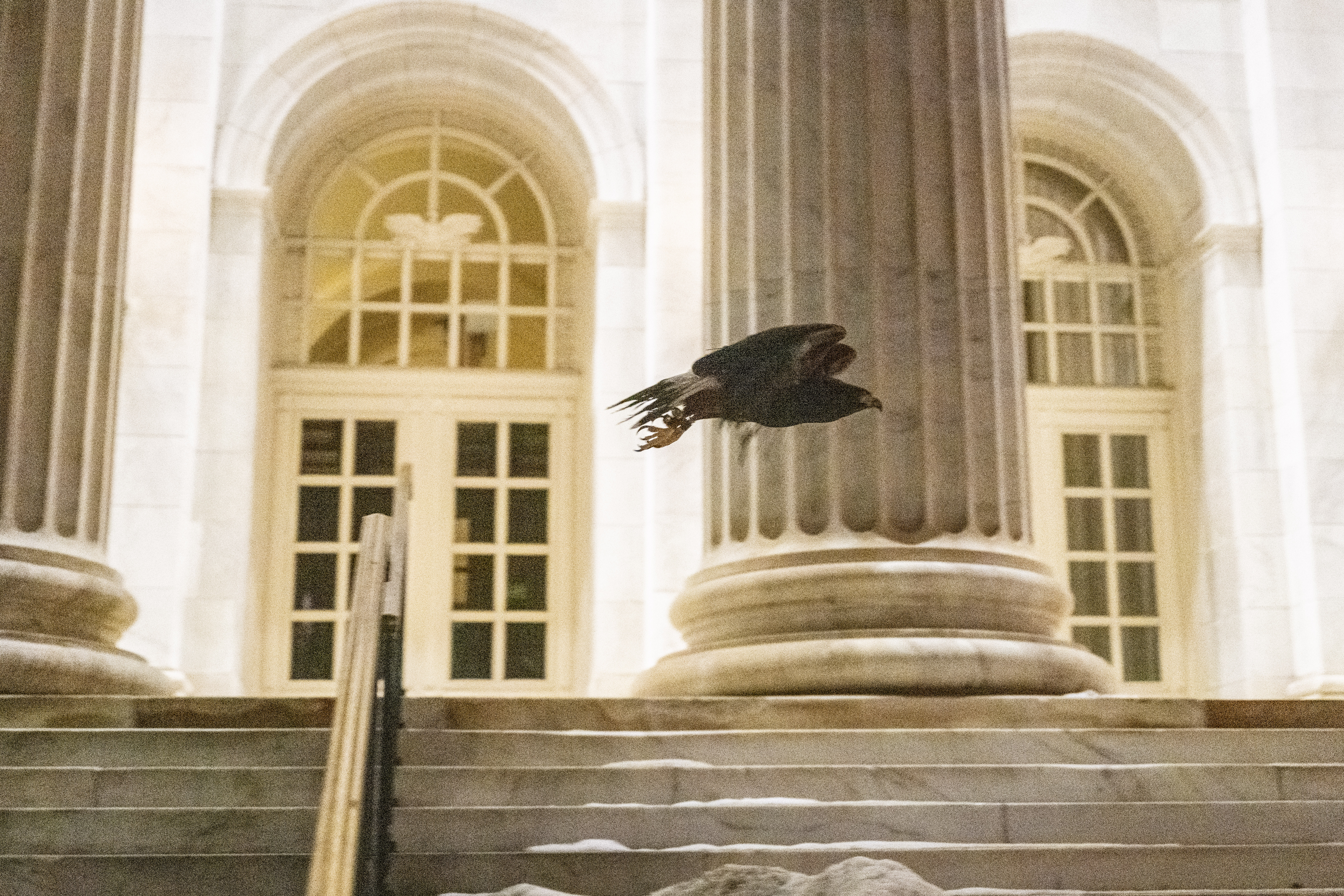
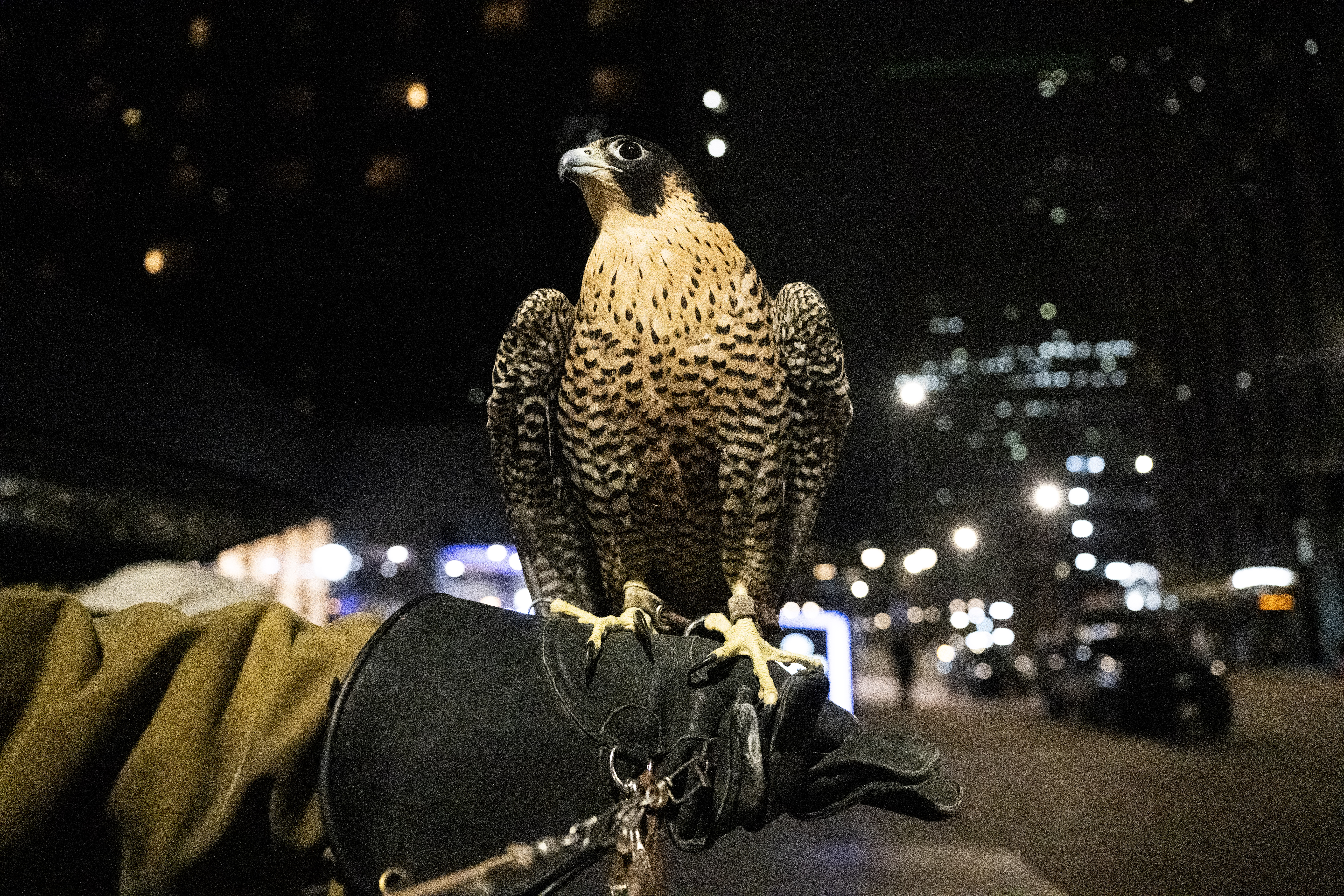
Twelve-year-old Juneau has a four-foot wing span, can spot small prey from a mile away and she’s been harassing crows in downtown Denver for three months.
On Wednesday night, the black birds of legend as messengers from the departed, were gone.
Mission accomplished.
Once Juneau ate her snack, her head swiveled to her handler. Only one caw was heard the entire night and the lone crow disappeared into the shadow of the Hilton Hotel.
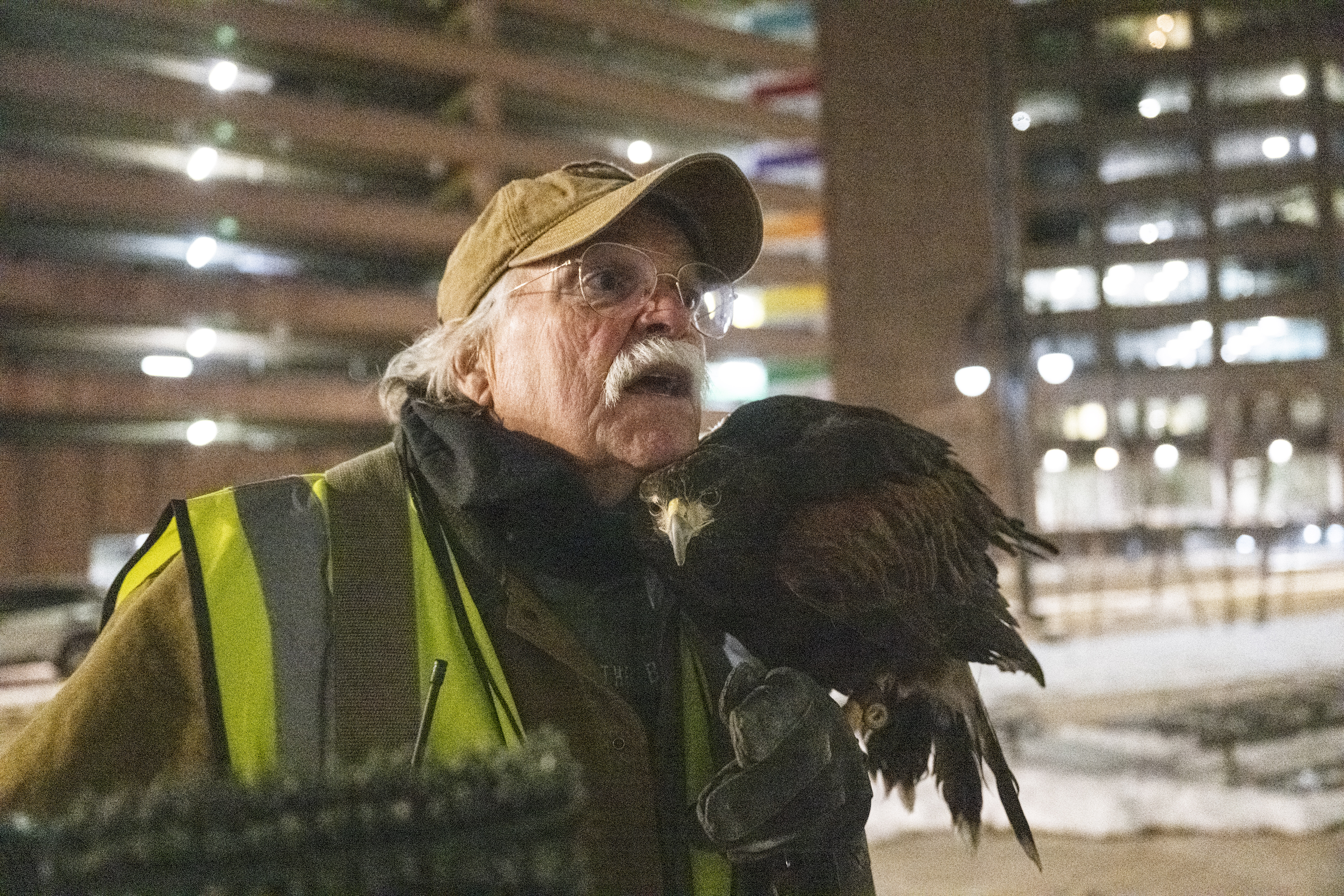
The only sound between 17th and 18th streets to the east and west and Stout and Arapahoe streets to the north and south was an occasional ambulance siren and Master Falconer Bob Probst on the walkie-talkie.
“Any sign of them?”
“Nope. Quiet,” answered Will McDonough, who had been searching the trees with his hawk, Pie.
“Where are ya?”
“I’m at 17th and Lawrence. My guess is the crows took off south to Speer.”
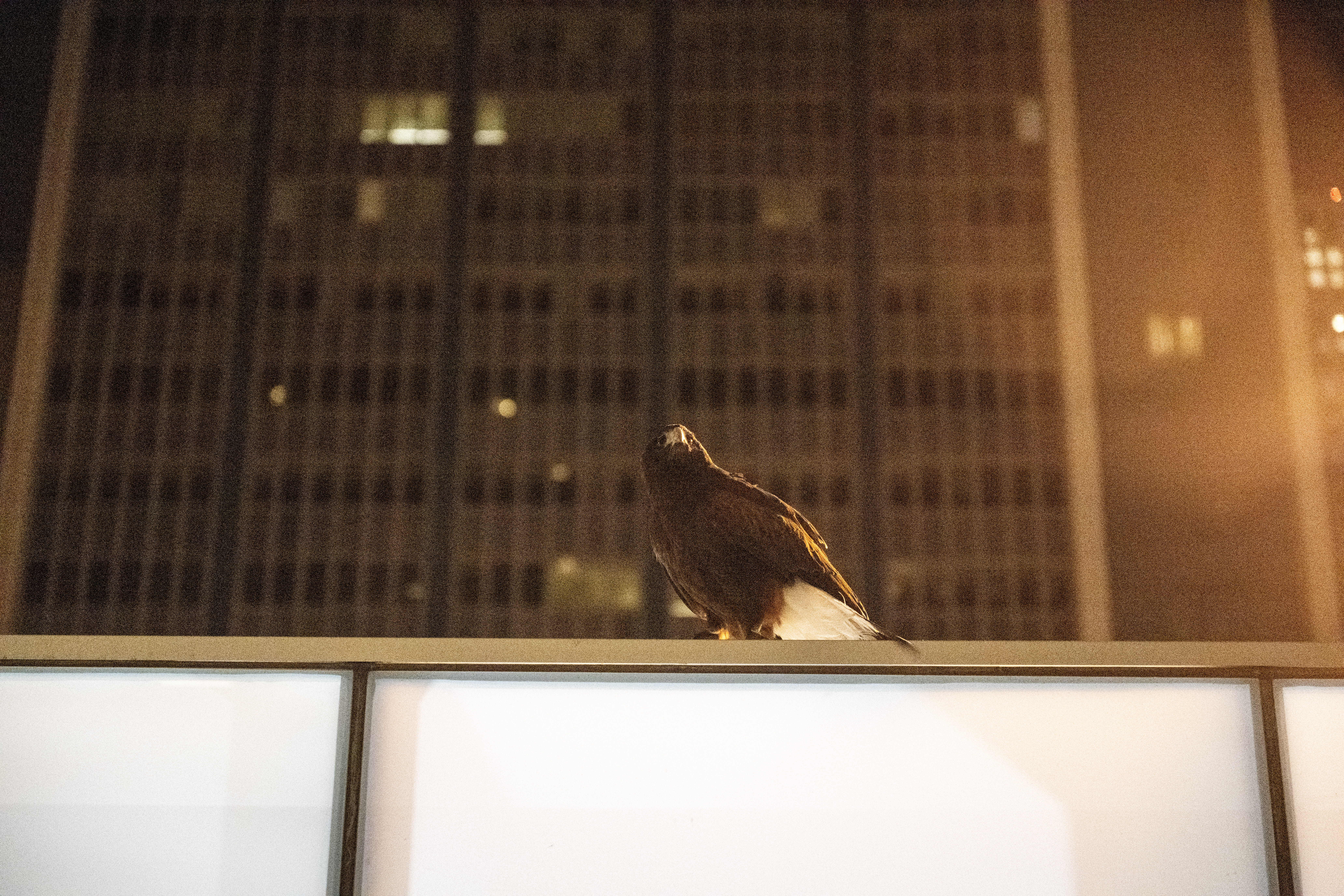
Juneau and Pie are at the tail-end of a mission to rid the city’s federal buildings of hundreds of crows that have been roosting and doing other natural business in plazas where very important feet are getting soiled before very important meetings.
There’s little risk of getting avian flu from their droppings, though crows are susceptible to the disease, according to the Colorado Department of Public Health and Environment. Scientists have seen some crows positive for the virus through surveillance, though “they are not considered a primary wild bird species.”
There has been no evidence of person-to-person transmission, but the state health agency advised that dogs and cats could become infected with the bird flu if they ate an infected dead bird, or if they were in an environment contaminated with bird flu-infected feces, such as downtown sidewalks.
Though the crow migration has delighted commuters, they were a huge nuisance to building owners who were tired of paying hundreds of dollars to power-wash their poop.
And their constant cawing unnerved some downtown residents, who complained to the city about the noise.
Denver staff biologist Vicki Vargas-Madrid could only sympathize. The city has no control over the property the crows inhabited this winter, but it bans birds of prey from city parks.
“Our ordinances do not allow hunting,” she said. “Allowing birds of prey or falconry to haze other birds is considered hunting.”
No harm, no foul
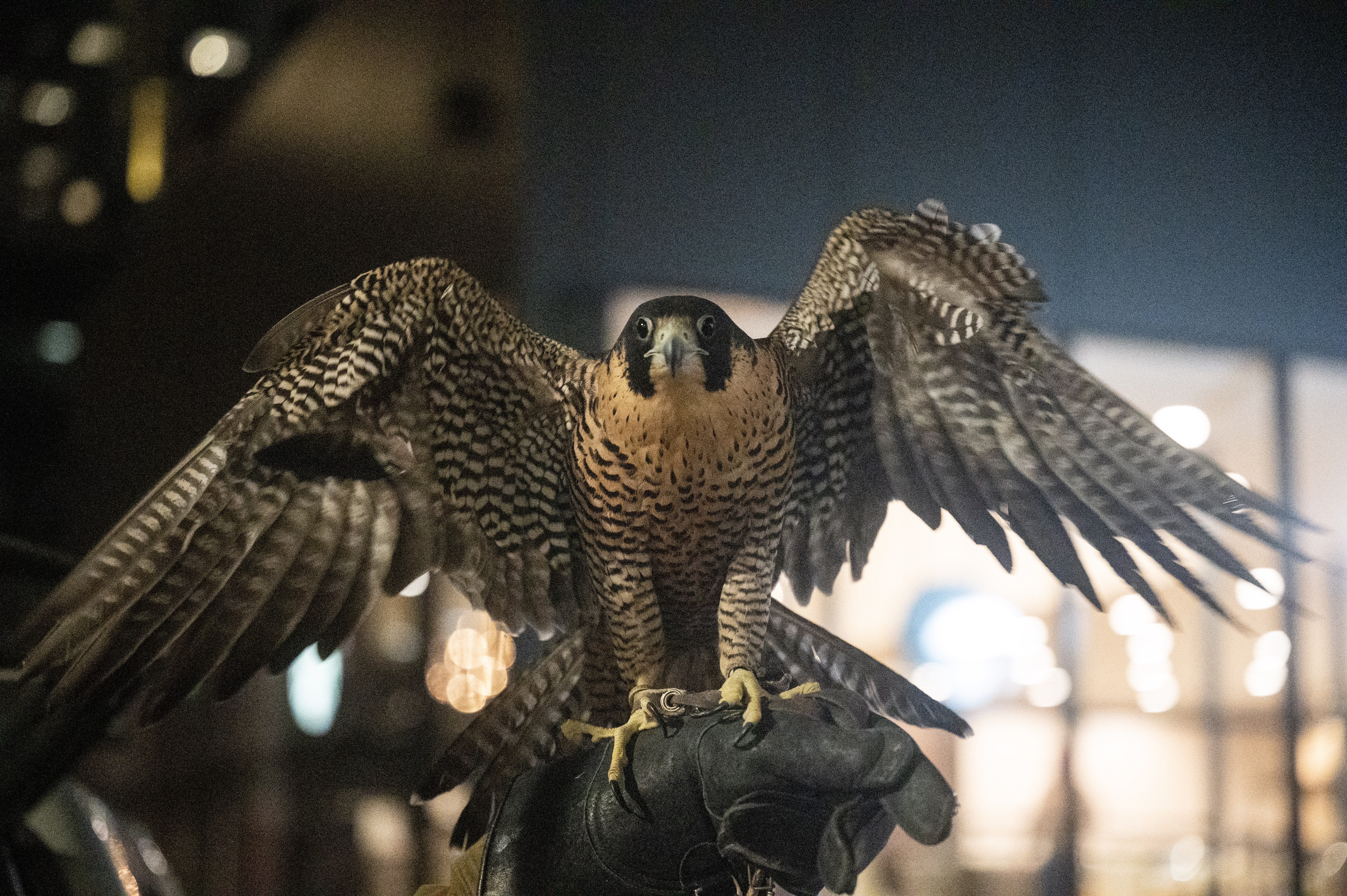
Probst would argue that his “wolves of the sky” are only doing what they normally do in the wild. Only this time, it is an urban jungle.
“It’s no harm, no foul,” said Probst, who bought his 100-acre ranch near Yoder in El Paso County to breed and raise various species of falcons, Gambel’s Quail, and pheasants as a family business with his son, Rob.
The business of shooing our feathered friends is called “bird abatement” and Harris’s Hawks often hunt in groups to chase prey, such as rabbits, rats and medium-sized birds into the open.
Downtown building owners, like the Johns Manville building at City Center and the federal government, contracted Wings Over Colorado to scare unwanted nuisance birds, such as crows and pigeons, from their properties.
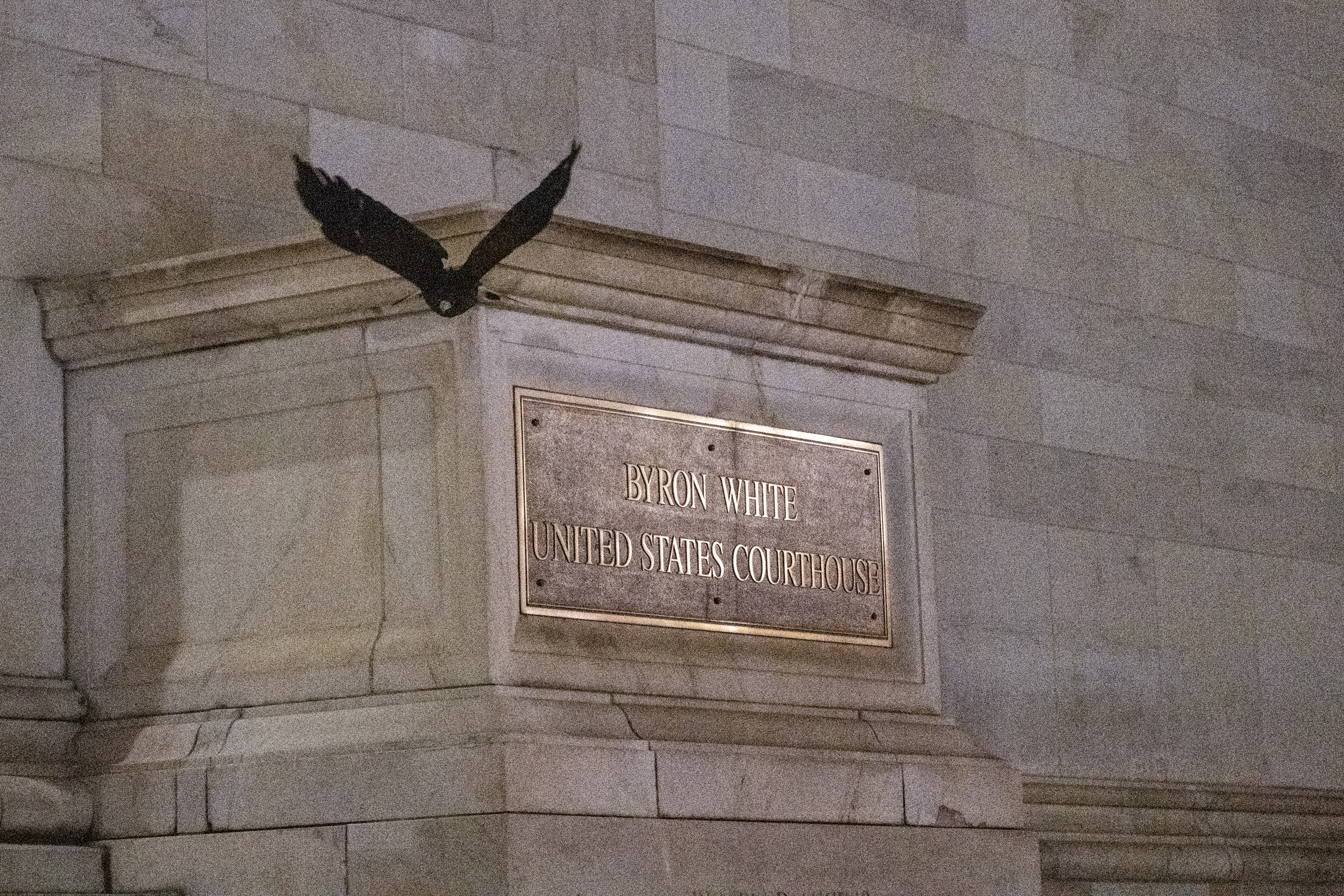
Jeff Colwell, the Clerk of the Court for the District of Colorado, confirmed that the General Services Administration hired Probst and his team to clear out the court campus area, which includes the U.S. Customs House, the Byron Rogers courthouse and the Byron White courthouse — all in the 19th and Stout area of downtown.
Probst first started working his elegant falconidae with their four-foot wing spans during the COVID-19 pandemic.
This winter season was the first time ever that the stubborn crows wore out their welcome in the heart of Denver by staying put until January.
Since November, the falcons and hawks have intimidated the heck out of the crows, scattering dark clouds of squawkers from street to street from 17th to 19th and Arapahoe to Stout.
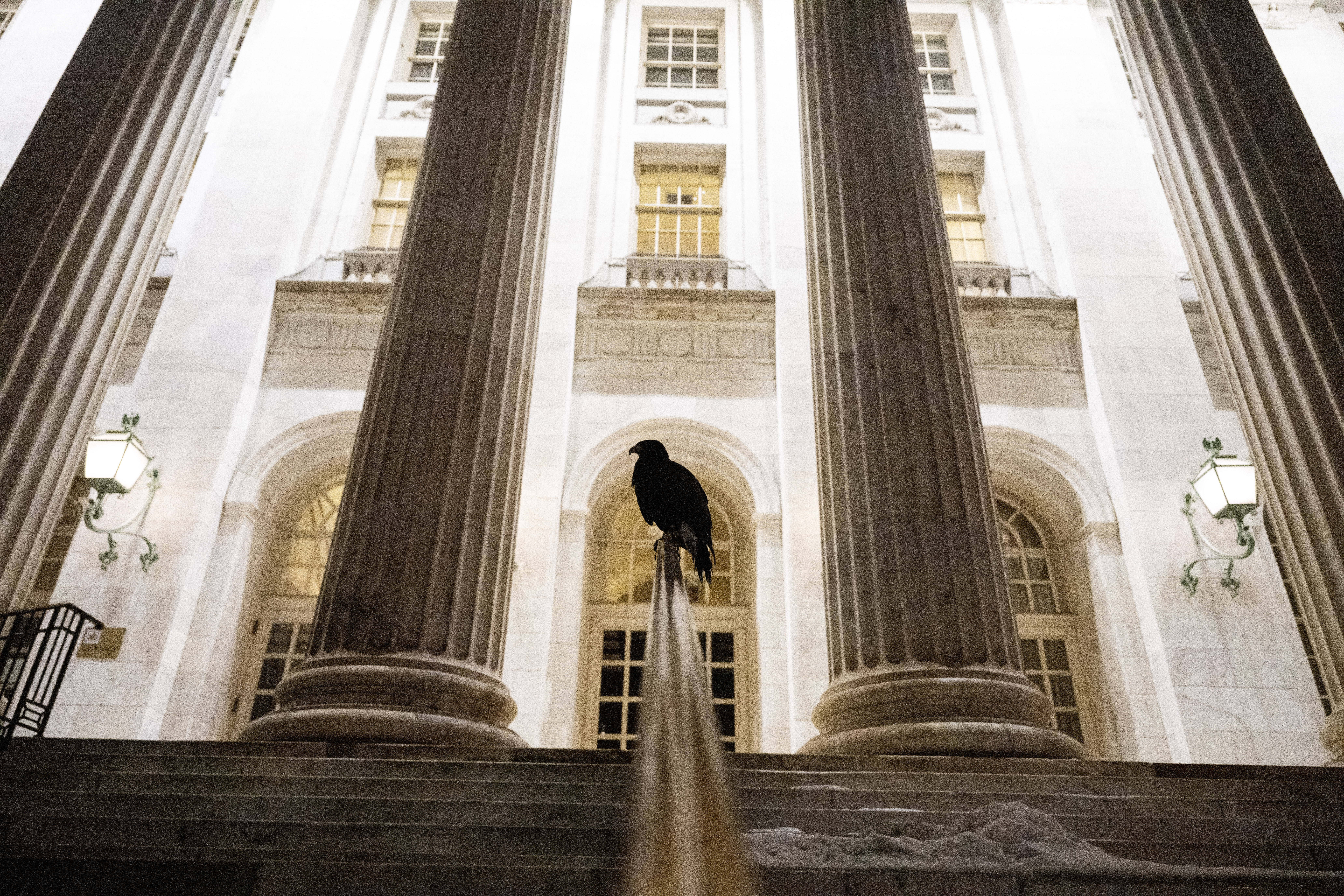
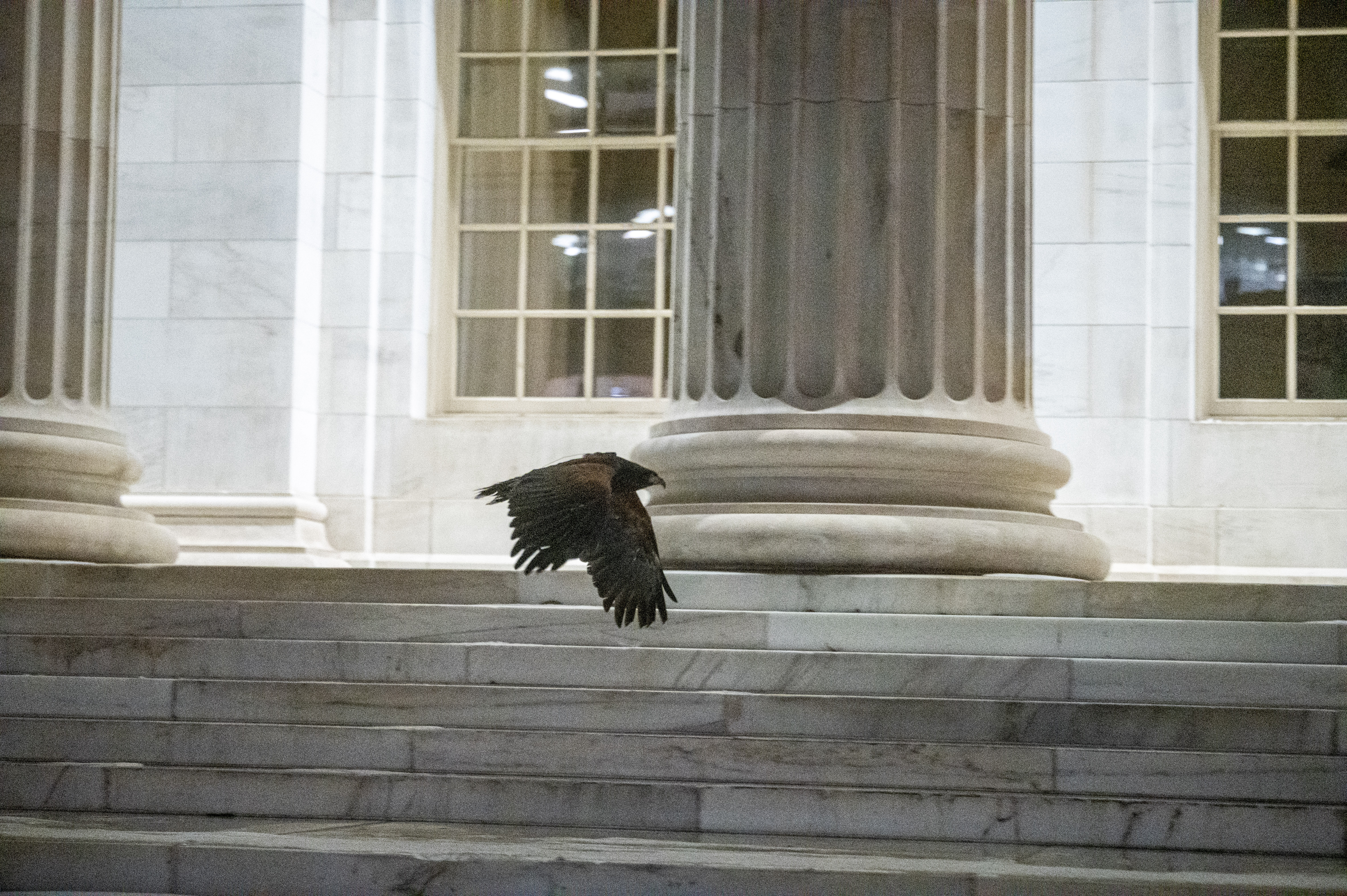
Juneau, a beauty who loves to play hide-and-seek behind the four-story pillars of the Byron White building, wears a bird-size GPS tracker, which blinks blue.
Probst, 71, monitors her movements from an app.
She is the matriarch of Probst’s kettle. A kettle is another name for a group of falcons. A murder is another name for a group of crows.
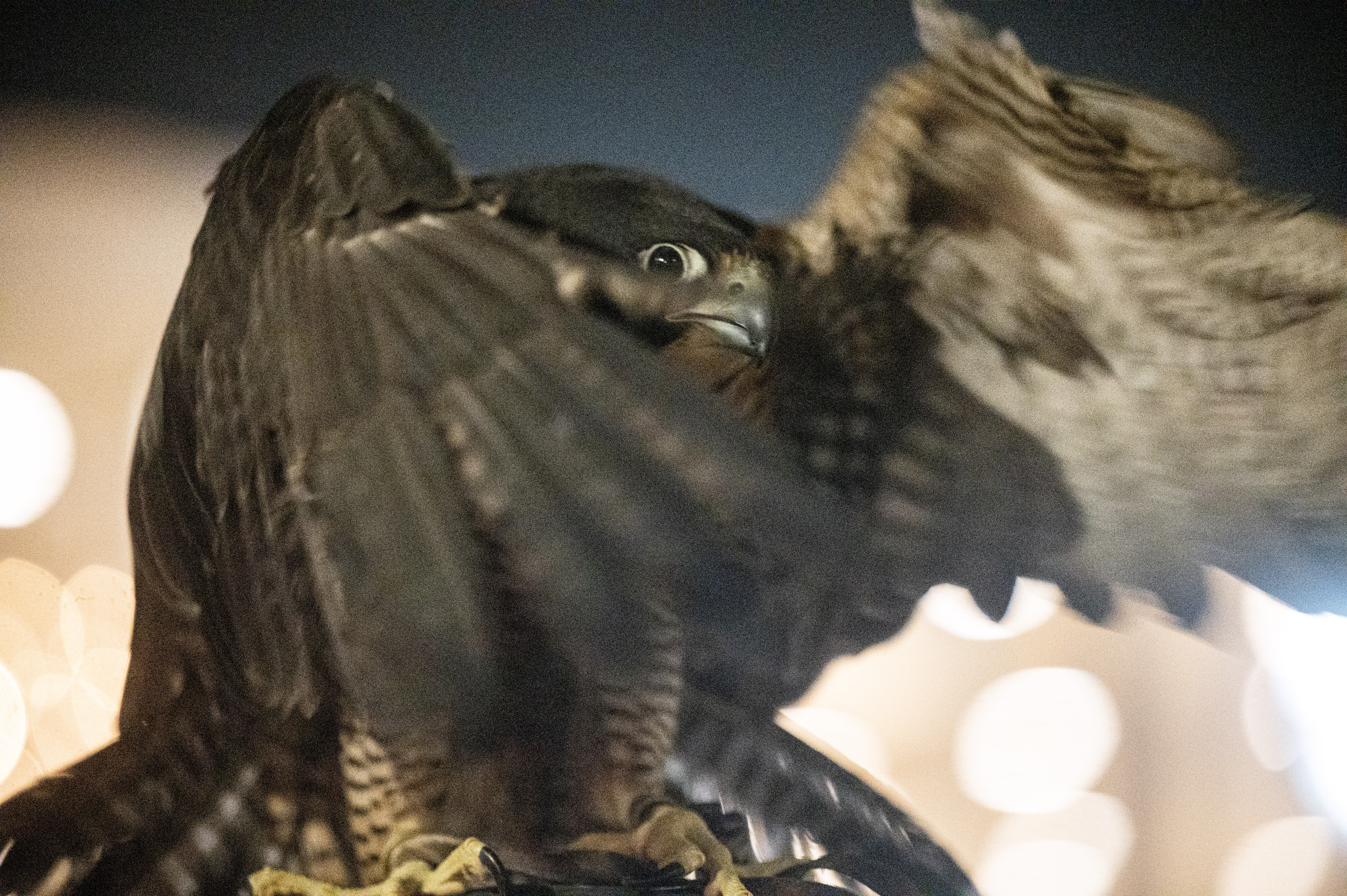
The unlikely scene playing out among Denver’s skyscrapers and bike racks fascinated pedestrian Tom Proctor, who stopped to watch a magnificent Peregrine falcon named Cheyenne warm up her wings.
“They’re the Ferraris of the sky,” he marveled.
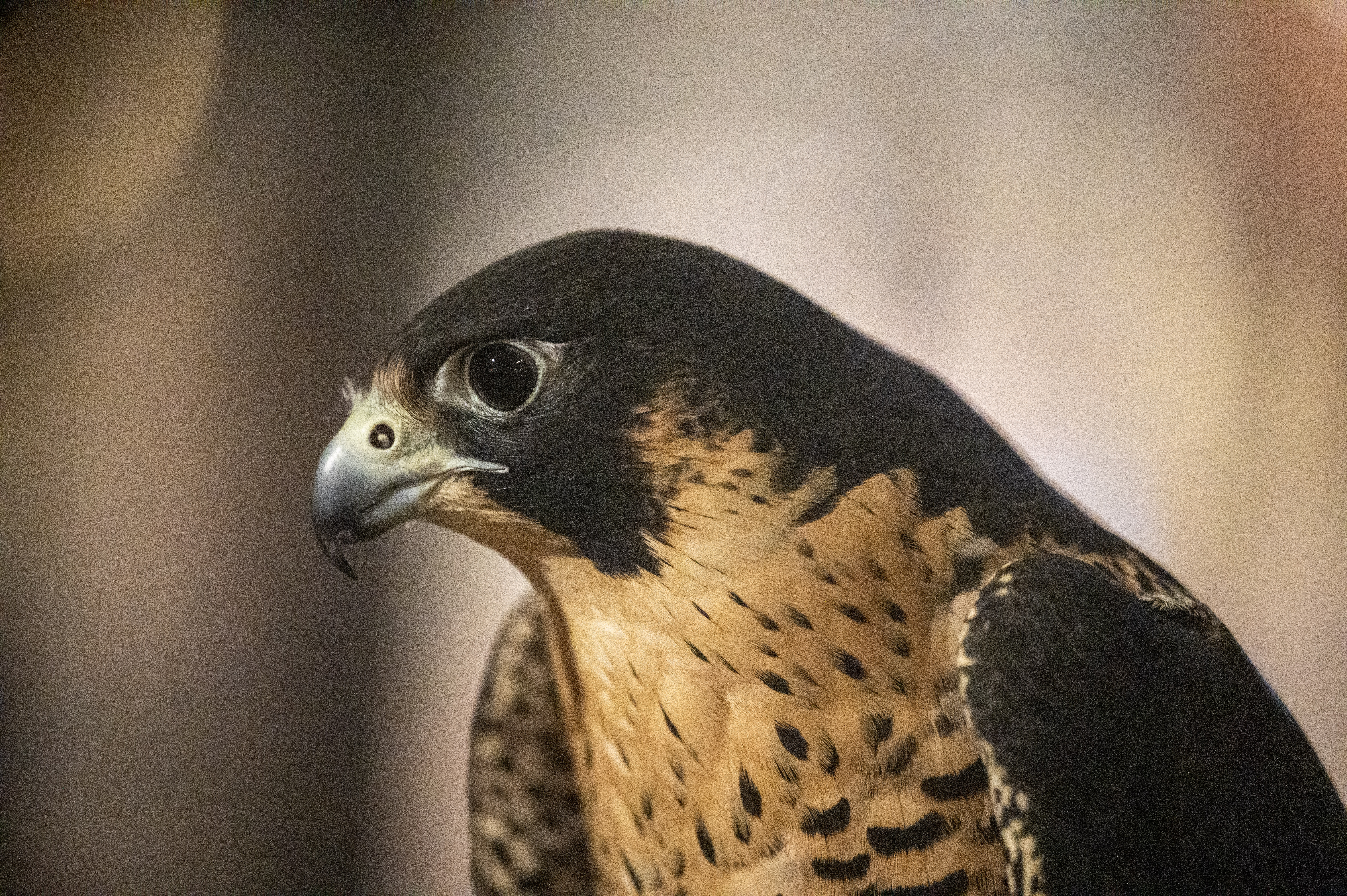
Probst and McDonough gingerly stowed their birds from their outstretched arms into kennels in their vehicles.
McDonough, an Iraq War veteran who credits his falcons for helping with his PTSD, actually built a wooden t-shaped perch into one of his SUVs so that Pie can ride over his shoulder like a back-seat driver.
This week, the kettle won the battle of Denver’s skyline but not the war.
Unnamed sources say that a kit of pigeons who live in a certain athletic stadium may want to scram.


Get OutThere
Signup today for free and be the first to get notified on new updates.
PREV
PREVIOUS
Nuggets vs. 76ers: 3 takeaways from Denver's dramatic win in Philadelphia
It took a near triple-double from Nikola Jokic, another 30-point performance from a new-look Jamal Murray and efficient scoring nights from Michael Porter Jr. and Julian Strawther, but the Denver Nuggets picked up their first win of the road trip Friday against a Philadelphia 76ers team that was without Joel Embiid and Paul George.