




8 of the most dangerous roads in Colorado when it comes to wildlife collisions
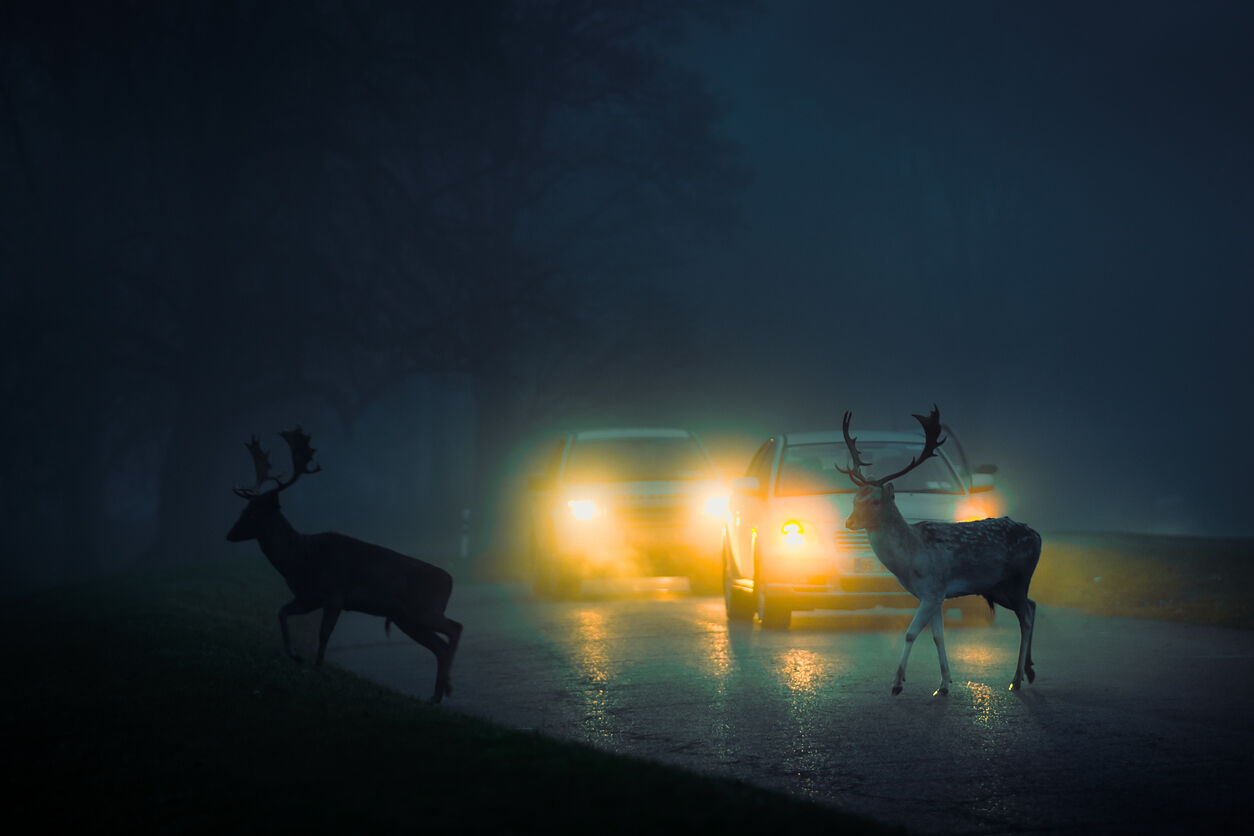
While wildlife-vehicle collisions can happen at any time throughout the year on basically any road, winter migration season tends to be one of the most dangerous periods, especially between dusk and dawn. During this time, wildlife is on the move from high elevation places to lower areas, making October, November, and December the three months when the most wildlife-vehicle collisions occur. With that in mind, Colorado State Patrol recently released a breakdown of eight high-risk roadways, including a few tips for avoiding a collision, too.
According to Colorado Parks and Wildlife, as cited in the CSP report, eight of the most high-risk areas when it comes to wildlife-vehicle collisions are as follows:
- Interstate 70 (Floyd Hill, Mt. Vernon Canyon and Eagle)
- US 285 (Morrison)
- Highway 160 (Durango to Pagosa Springs and Durango to Mancos)
- Highway 550 (north of Durango and from Montrose to Ouray)
- Interstate 25 (Castle Rock to Larkspur)
- Highway 82 (Glenwood Springs to Aspen)
- Highway 36 (Boulder to Lyons)
- Highway 93 (Golden to Boulder)
Last year, Colorado State Patrol troopers responded to 3,777 crashes involving wildlife – an average of more than 10 per day. And that’s just the crashes when CSP responded, too, not other law enforcement agencies around the state.
Wildlife crashes tend to result in heavy damage while often causing the death of the animal. In order to avoid a wildlife crash, the following tips can be helpful:
- Don’t exceed the posted speed limit. Doing so reduces the time a driver has to react to an animal in the roadway and can make it more difficult to safely brake.
- Continually scan roads and shoulders for signs of movement and ‘eye shine’ of animals.
- Utilize the vehicle’s ‘bright lights’ when safe and legal to do so. Do a quick flash of your lights at oncoming motorists if an animal is spotted to give other drivers a heads up.
- Stop for wildlife on the road if there’s time and space to safely do so. Be cautious of quickly slamming on your brakes as this can result in loss of control or other drivers hitting your vehicle from behind.
- Remember than many animals don’t travel alone, meaning that if you see one animal, another one might be nearby.
According to Colorado State Patrol, not all animal-vehicle collisions can be safely avoided. Those who spot an animal in their lane without time or space to safely stop should drive through the animal while staying in the correct lane. Never swerve or jerk the vehicle’s wheel as this can result in an even more serious crash.
Get OutThere
Signup today for free and be the first to get notified on new updates.
PREV
PREVIOUS

Colorado steps up EV rebates as federal credits vanish
With the national electric vehicle incentives having expired on September 30 due to new federal legislation, Colorado is revving up its Vehicle Exchange Colorado program to keep EVs affordable, but only for buyers whose income is below 80% of their area’s median income and who have a qualifying gas or diesel vehicle. […]

Movie rundown for the weekend through Oct. 5: 'The Smashing Machine' opens
OPENING “Anemone” — (Drama, R, 121 minutes). A man goes on a journey in the Northern England woods to reconnect with his estranged hermit brother. “Bone Lake” — (Horror, R, 94 minutes). When a couple on vacation must share a mansion at a secluded estate with another couple, a dream getaway turns into a battle […]