





Wolves detected in Denver metro watershed that stretches east of I-25
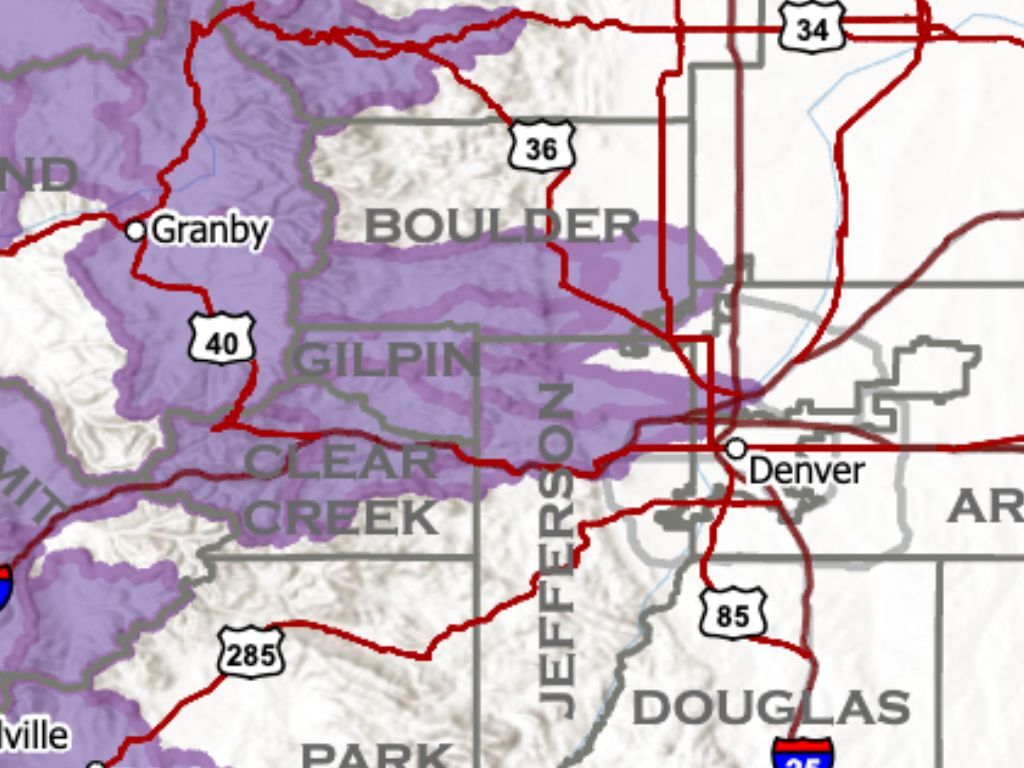
Colorado Parks and Wildlife has released their monthly wolf activity map for October 21 to November 25 – and it shows that wolves have once again been present in watersheds of the Denver metro, and for the first time, in a watershed that stretches east of I-25.
Before digging into the map that was recently published, it’s important to note that highlighted areas don’t show specific locations of wolves, rather watersheds in which wolves have been detected. This doesn’t mean wolves are present throughout the entire watershed, nor does it mean wolves are still present in that watershed – merely that at least one wolf was in a given watershed at some point during the aforementioned date range.
With that said, here’s a look at the most recent ‘wolf activity map,’ accounting for movement from October 21 until Tuesday of this week. As you’ll notice, wolf activity has been present in a large portion of the state’s mountainous region, as well as in the area of some Front Range population centers:
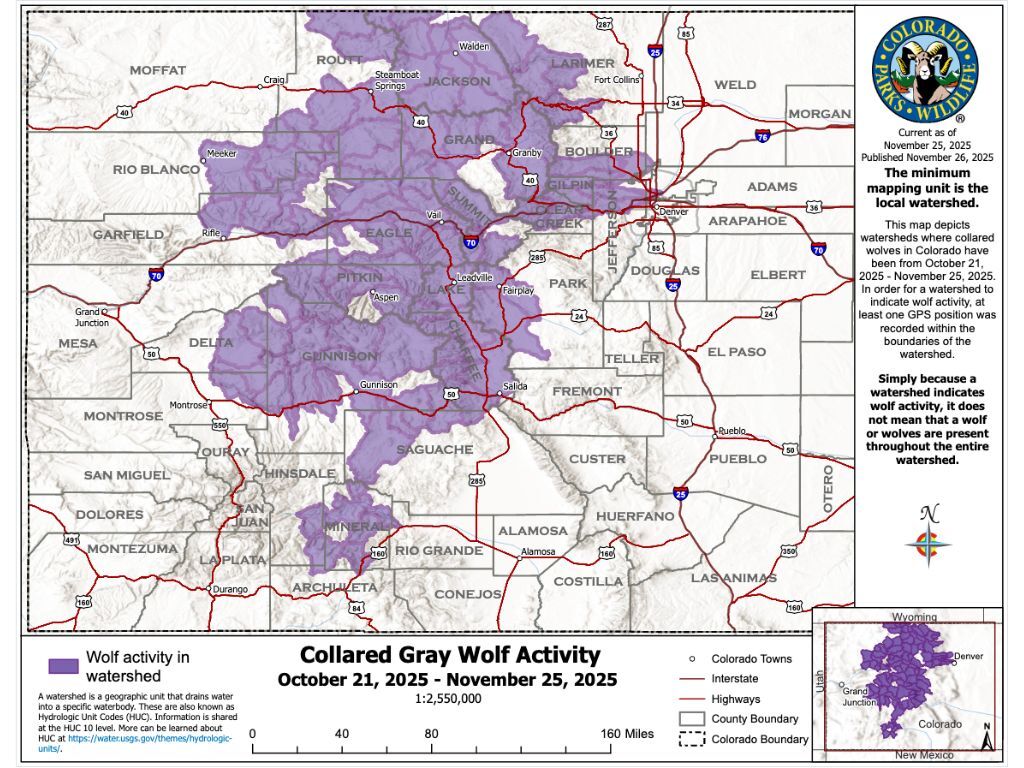
As is easy to see in the map above, wolves have been present in watersheds in the area of Denver, Golden and Boulder, along with many other places on the western side of the Mile High metro area. It must be noted, however, that this isn’t the first time wolves have been detected in watersheds that are close to the state’s capital.
Check out the image below – this compares a prior instance of wolves being detected watersheds near Denver with this more recent instance. The watersheds highlighted in both maps are roughly the same distance from downtown Denver, though in the more recent instance, it appears as if the watershed where wolves were detected extends east of I-25
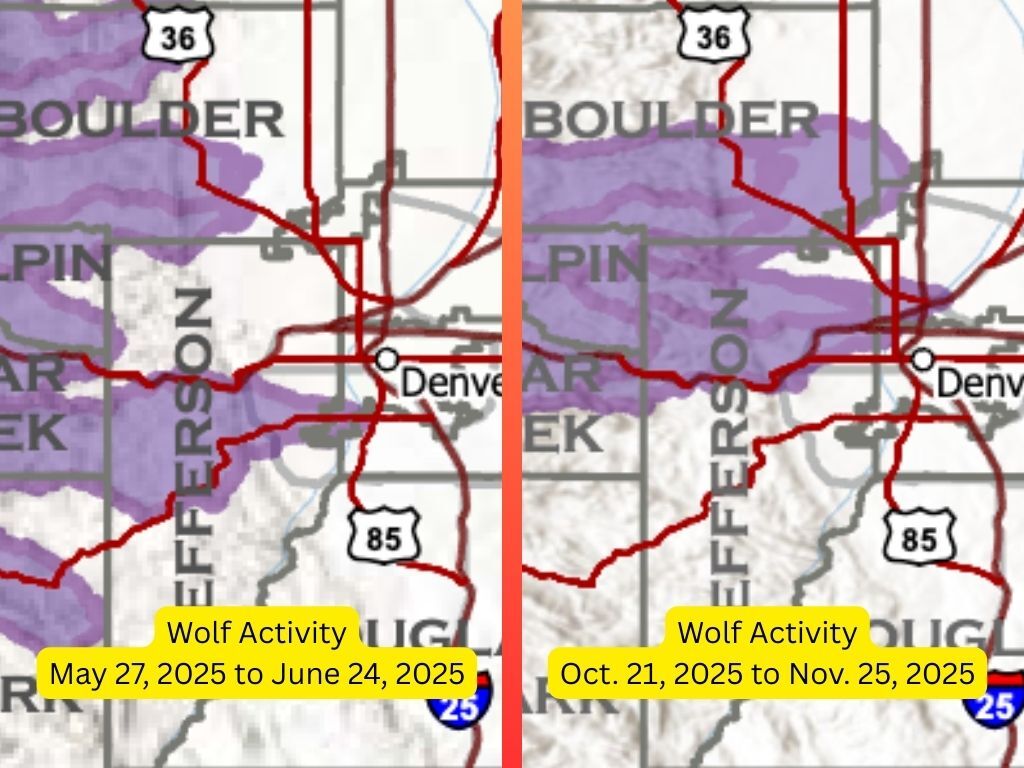
As mentioned already, this doesn’t indicate that wolves actually made it east of I-25, merely that the watershed where at least one wolf was located stretches past this interstate. Could Colorado’s wolves ever end up crossing to the other side of this major route? We’ll have to wait and see.
It’s also worth addressing risk related to wolves given that the species seems to be inching closer to major population centers in the Denver area. Wolves tend to avoid human contact, with no reported cases of an attack on a human in Colorado since the reintroduction effort started That said, small pets or children could be at risk, especially in more remote and rugged areas. Keeping pets leashed and keeping kids close by can help prevent dangerous encounters with wolves and other wildlife species.
Learn more about wolves in Colorado here.
STAY INFORMED: Get free Colorado news with our daily newsletter (Click here)
Get OutThere
Signup today for free and be the first to get notified on new updates.

PREV
PREVIOUS

It will soon cost an international couple $230 to visit Rocky Mountain National Park for a single day
The outdoor recreation industry has been abuzz about a press release published by the U.S. Department of the Interior on November 25, which announces several big changes coming to the country’s national parks. The press release describes the changes as “the most significant modernization of national park access in decades, delivering new digital America the […]

Crashes spike 267% on Colorado route during winter months making it one of most dangerous roads in US
A recent report from Samsara dug into the topic of dangerous American roads, looking at how major routes around the country tend to see a big uptick in automobile accidents during winter months of the year. During winter season, American drivers crash at a rate of about 0.46 times per 100 million miles – about […]