





Wildlife officials expect spike of deadly ‘avian flu’ in Colorado this winter
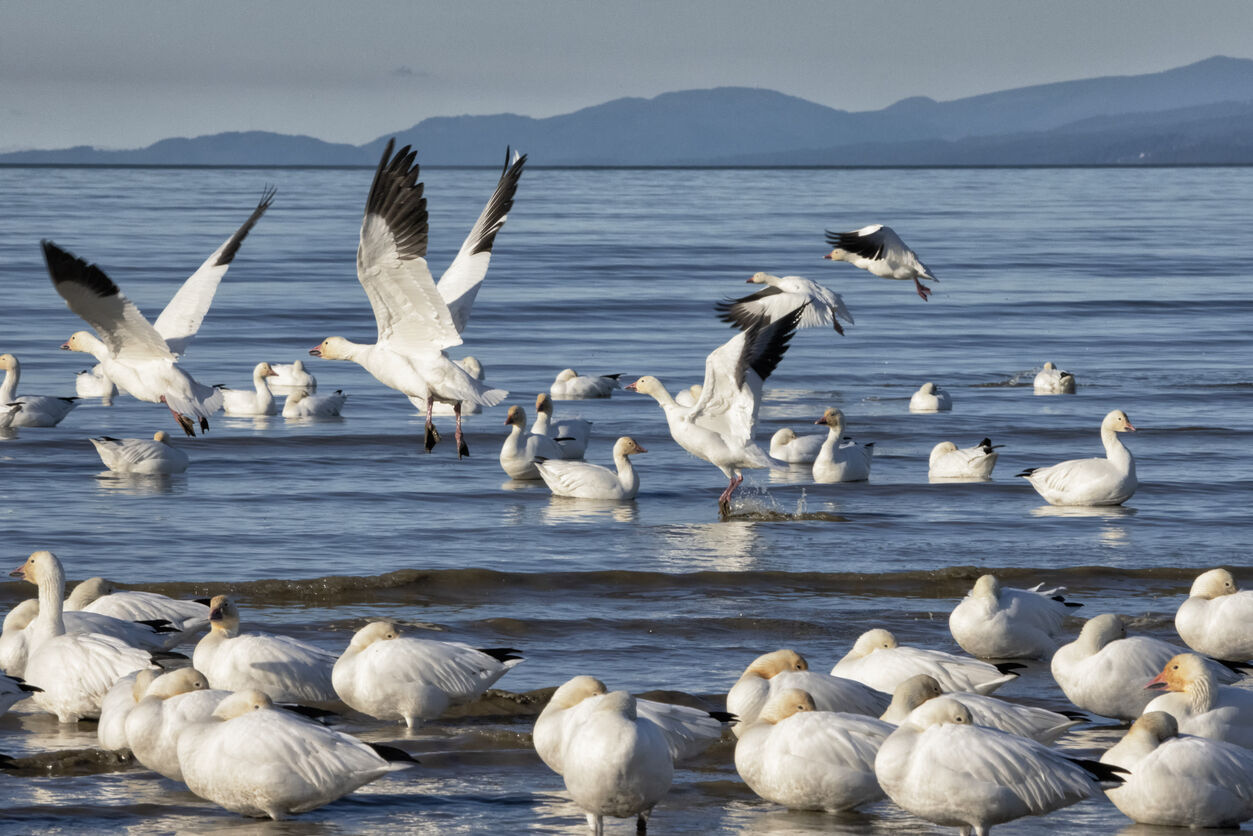
Colorado Parks and Wildlife expects cases of highly pathogenic avian influenza (HPAI) to spike this winter, with the agency issuing a reminder to the public to avoid contact with sick animals. A factor in this spike is the annual migration of several bird populations through the state.
According to a press release on the matter, cases of highly pathogenic avian influenza and low pathogenic avian influenza are a natural occurrence birds, including wild species. A specific strain of this species called H5N1 was detected in Colorado in March of 2022, known for its high mortality rate and how it has no known treatment or cure.
“This strain of HPAI has the potential to cause large-scale die-offs in wild bird populations as we progress into winter,” said CPW State Wildlife Veterinarian Dr. Peach Van Wick. “However, more commonly in Colorado, we receive reports of small scale mortality events. Since the beginning of fall, CPW has confirmed the diagnosis of HPAI in fewer than 20 birds, one black bear and one bobcat, though this is likely an underestimation of the number of affected animals on the landscape.”
According to Colorado Parks and Wildlife, waterfowl and shorebirds can be particularly susceptible to HPAI as these species tend to gather in larger numbers.
Birds that are infected with HPAI may be spotted with the following symptoms:
- slow movement
- swimming in circles
- inability to fly
- lack of coordination
- swollen head
- head tilting
- death
Mammals can show similar symptoms, with the neurological symptoms said to be consistent with those of rabies.
While humans should avoid interacting with animals that exhibit signs of HPAI (and all wild animals, in general), it’s also crucial to note that pets should be kept away from these animals, too. Keeping dogs on-leash can be a crucial step of transmission prevention.
Human infection of HPAI is extremely rare, but can occur. Handling of sick or dead birds infected with HPAI is a key means of transmission, thus hunters should wear proper protection when handing and processing wild game. Equipment should be thoroughly disinfected with the game carcass kept away from domestic animals. Meat should be cooked to an internal temperature of 165 degrees.
“CPW does not recommend handling sick or dead wildlife. If necessary, wear disposable gloves, protective clothing, eye protection, a fitted face mask and double bag the carcass,” said Dr. Van Wick. “Contact CPW as soon as possible for further instruction.”
Colorado Parks and Wildlife also asks the public to report instances of three or more birds showing signs of HPAI to the agency, also reporting cases where three or more birds are found dead in the same localized area.
Information about how to contact Colorado Parks and Wildlife can be found here.
STAY INFORMED: Get free Colorado news with our daily newsletter (Click here)
Get OutThere
Signup today for free and be the first to get notified on new updates.

PREV
PREVIOUS
Colorado Springs man dies before sentencing hearing in child drowning case
A Colorado Springs man charged with negligence and child abuse resulting in death after a 6-year-old boy drowned at Prospect Lake in Memorial Park two years ago has died before sentencing, court records show. Joseph Camacho, 55, was arrested Sept. 30, 2023, when a woman who had been windsurfing at the park called 911 after […]

First 3 shows of 2026 announced for Colorado Springs' 8,000-person venue with mountain view
With 2026 right around the corner, many of Colorado’s venues are starting to announce their schedules for next year – including 66 shows already on the calendar for Red Rocks. Located in a different metro area, however, is Ford Amphitheater, standing tall on the northern side of Colorado Springs. With a seating capacity of about […]