





Highly debated 1999 child death among four fatalities linked to mountain lions in Colorado
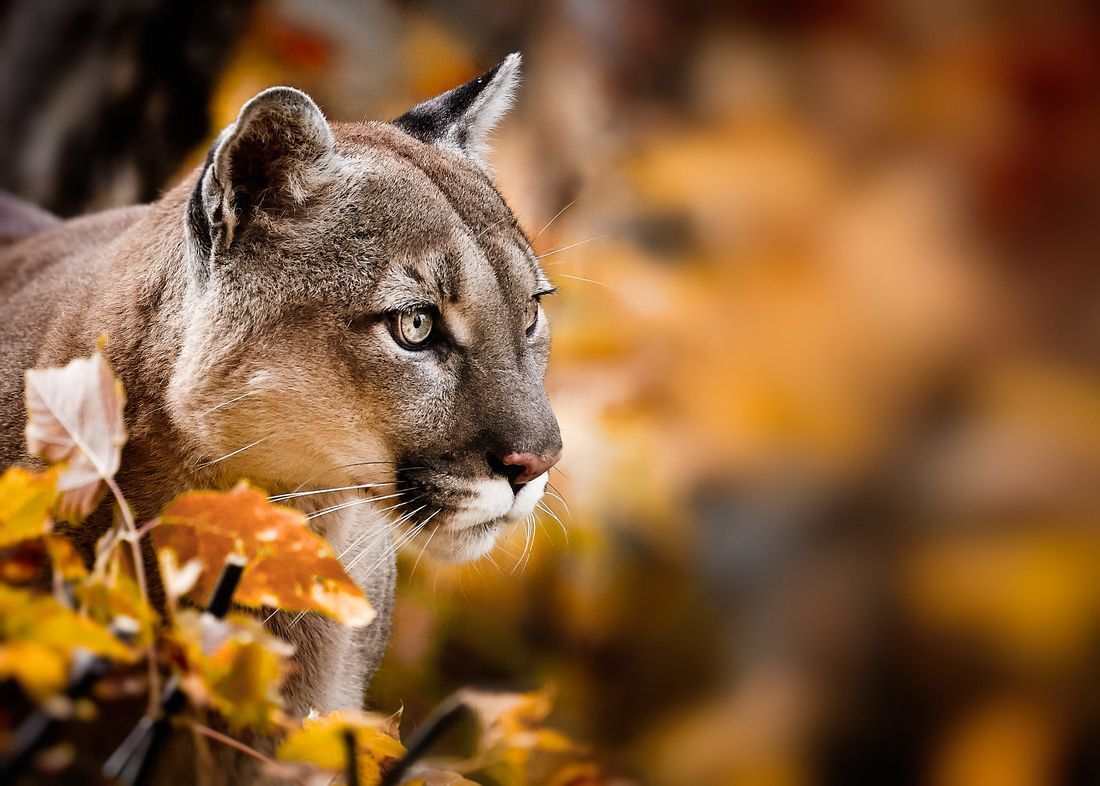
With news that a female hiker may have been killed by one or more mountain lions in Colorado taking over headlines in recent hours, it’s worth looking into other mountain lion-related deaths that have occurred and considering how lessons from these tragic incidents can make trail travel a bit safer.
For starters, it’s important to note that mountain lion attacks on humans are extremely rare. According to Colorado Parks and Wildlife, only 28 local mountain lion attacks on people had been reported prior to the most recent incident since 1990, three of which were fatal. With this more recent attack, which took place on a trail in the Glen Haven area of Larimer County and presumably involved mountain lions, that’s 29 attacks and four deaths in 35 years – 0.83 attacks per year and one death every 8.75 years. As noted, attacks and fatalities are quite rare, especially considering that Colorado is home to 3,800 to 4,400 members of this big cat species.
It’s also worth noting that the three other mountain lion-related fatalities that have occurred over the last 35 years took place in the 1990s, with the most recent fatal attack prior to the one that presumably involved a mountain lion on New Year’s Day taking place in 1999.
Here’s a breakdown of the three other mountain lion attacks that have occurred in Colorado, as well as a few details related to the presumed attack on New Year’s Day:
Scott Lancaster (January 14, 1991):
This mountain lion attack involved 18-year-old runner Scott Lancaster, who was jogging on what was described as a familiar route on a hill above Clear Creek High School in Idaho Springs when he was killed. Lancaster was reported missing after failing to return from his Monday run with his body found by Wednesday, less than a mile from the school. The mountain lion was still nearby, presumably guarding its kill.
In this case, it was believed that Lancaster’s running may have triggered a “cat-and-mouse” response from the mountain lion, which prompted the mountain lion to chase and kill Lancaster. The mountain lion involved in this attack was three years old, later shot and killed.
By many reports, this was not only the first mountain lion-related human death to occur in Colorado since 1990, but also the first to occur in state history.
Mark Miedema (July 17, 1997):
Mark Miedema, 10, was killed by a female adult mountain lion in Rocky Mountain National Park while his family was hiking on North Inlet Trail. This trail is located on the less-trafficked western side of the park, near Grand Lake.
Mark was reportedly hiking “several minutes ahead” of his family when he was seen getting dragged away by the big cat. His parents scared off the 88-pound mountain lion that was involved, though his mother – a registered nurse – was unable to revive her son at the scene. Another hiker called for help, but efforts to save Mark tragically failed. The lion believed to be involved was tracked down and killed.
In this case, it is believed that the boy was simply in the wrong place at the wrong time, coming across a mountain lion that was “in a hunting mode.” A spokesperson for the park at the time was quoted saying that mountain lion don’t distinguish between humans, deer, and elk.
This case also touches on how smaller humans are generally believed be at greater risk of attack by mountain lion compared to adults as the species is likely to see children as less of a threat. Children may also be at greater risk of death if an attack occurs, with a 1998 paper that looks into this specific topic indicating that of 50 documented attacks on children, the fatality rate was 25 percent. This paper also indicated that children were not alone in many of these attacks, with adult supervision present or nearby 92 percent of the time. That said, keeping children close while in mountain lion habitat still considered an important deterrent to an attack, according to Colorado Parks and Wildlife. Presumably, keeping children within a few feet would be more effective compared to keeping them within eyesight from a distance.
Jaryd Atadero (October 2, 1999):
This third mountain lion death comes with a bit of controversy, as there’s been plenty of debate over the years regarding whether or not a mountain lion is to blame. Still, the recent press release from Colorado Parks and Wildlife related to the New Year’s Day attack did note that the 1999 death of 3-year-old Jaryd Atadero was the last mountain lion-related fatality to occur in the state.
Jaryd, 3, went missing during a hike with a religious group on Big South Trail, which is located in Arapaho and Roosevelt National Forest. He was visiting a nearby resort with his father and sister, though his father stayed back from the group’s day trip to a nearby state fish hatchery. At some point during that trip, the 11 group members plus Jaryd and his 6-year-old sister ended up hiking the aforementioned trail that was in the same vicinity as the hatchery, according to a report from Coloradoan.
About 1.5 miles into the hike, Jaryd reportedly ran ahead from the group and talked to two fishermen. With the group about 50 to 80 feet behind at that point, he then continued up the trail toward an area with 16 backcountry campsites.
That was the last time Jaryd was seen alive, with a scream reportedly heard by some members of the group and Jaryd’s sister moments later. Jaryd’s sister reportedly described the scream as “playful scream, like someone was going up to tag him.”
Group members soon realized Jaryd was missing and after an hour of searching, they returned to the nearby resort where his father was staying to inform him.
An extensive search ensured and it attracted international attention, especially after a helicopter involved in the search crashed in the rugged terrain injuring five aboard.
A mountain lion attack became the leading theory behind Jaryd’s disappearance, though others speculated whether or not Jaryd may have been abducted, or went missing by other means.
Eventually, in June of 2003, two hikers stumbled on clothing remains believed to be those of Jaryd’s, torn up and with what appeared to be puncture marks. Human remains, including a skull and tooth, were found over the following days, with DNA matching that of Jaryd.
Whether or not a mountain lion had definitively caused the damages to the articles of clothing was a key point of discussion, as the clothes had been exposed to the elements and had been scavenged by wildlife for multiple years.
Jaryd’s manner of death was officially described as “undertermined, probable mountain lion attack,” with some debate still ongoing.
Find a full in-depth read about Jaryd’s case on the Coloradoan website. There are also multiple books that have been published about the tragic situation, including Missing: The Jaryd Atadero Story: A Father Turns Tragedy Into Hope After the 1999 Disappearance of His Son in the Colorado Mountains, written by Jaryd’s father and mother and published in 2008.
This case is another example of a child being killed, likely by a mountain lion, after traveling ahead on a trail.
Unidentified female at time of publishing (January 1, 2026):
An adult female was found deceased with two mountain lions in the general area on Crosier Mountain Trail near Glen Haven, about 7.5 miles northeast of Estes Park. The woman was presumably killed by at least one of these mountain lions, with both mountain lions killed by authorities. The woman’s body was found by hikers in the area, who were unable to find a pulse after scaring a mountain lion away by throwing rocks. The investigation into the situation is still underway. Read more here.
Mountain lion safety:
While mountain lion attacks on humans are rare, it’s important to be aware while hiking in Colorado’s wild terrain and to know how to react if a mountain lion appears.
The following tips have been provided by Colorado Parks and Wildlife related to mountain lion safety:
“If you encounter a mountain lion: Walk or hike in groups, making noise to avoid surprising a lion. Carry a sturdy walking stick and keep children close. Never approach a feeding mountain lion or one with kittens. Give them an escape route. Speak calmly, move slowly, and avoid running. Raise your arms, open your jacket, and pick up small children or pets to make yourself appear larger.
If the lion behaves aggressively, throw objects, wave your arms, and speak firmly. If the lion does not leave the area, face the lion and slowly back away. Fight back if attacked. People have fought back successfully with rocks, sticks, caps or jackets, garden tools and their bare hands.”
Learn more about staying safe in habitat’s shared with mountain lion here.
STAY INFORMED: Get free Colorado news with our daily newsletter (Click here)
Get OutThere
Signup today for free and be the first to get notified on new updates.

PREV
PREVIOUS
Locals in Denver metro warned about "heavy coyote activity" after 2 dogs killed
Law enforcement in the City of Wheat Ridge is warning its residents about heavy coyote activity that’s been observed in the area in recent weeks. Advice provided by officials related to that situation can also apply statewide, as Colorado’s coyote population is expansive. As locals continue to encounter coyotes in the urban area, at least […]
Hunting bison in Colorado? CPW accepting applications for potential opportunities
It’s official – 2026 is here and free-roaming bison that naturally enter Colorado are now managed as a ‘big-game species’ by Colorado Parks and Wildlife, the result of a dual-classification system that also allows bison to be considered as ‘livestock’ in other scenarios. A factor in the implementation of this new policy is how bison […]