




How the massive landslide that created Colorado’s 2nd-largest lake could also cause it to vanish
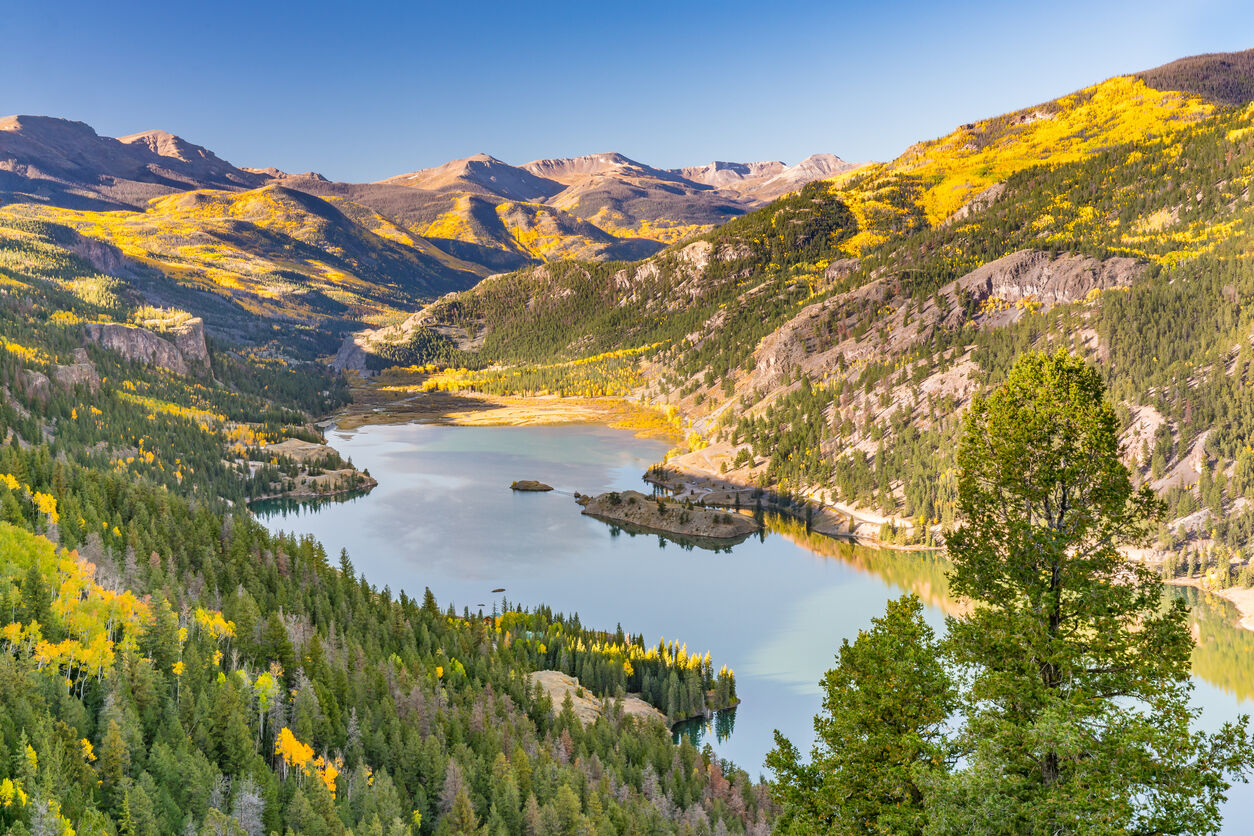
Formed about 700 years ago when a landslide blocked the Lake Fork of the Gunnison River, Colorado’s Lake San Cristobal is the state’s second-largest natural lake with a water surface of about 331 acres. That said, the same phenomenon that birthed this stunning aquatic scene may also lead to its demise.
Dubbed a National Natural Landmark and found near Lake City, the Slumgullion Earthflow is a landscape feature that involves the slow movement of mass sliding downhill at up to 20 feet a year (a NASA study says as much as 23 feet). Following the initial earthflow of seven centuries ago (or more) that formed Lake San Cristobal via the creation of a natural dam (involving an area of Mesa Seco that partially consisted of decomposed volcanic rock sliding down the mountain), a second earthflow that started about 300 years ago is still underway.
The Slumgullion Earthflow is measured at about four miles long, spanning an area of roughly 1,000 acres – about twice the size of the 432-resident town of Lake City. According to the town, the ongoing earthflow covers some of the original slide and can be seen clearly from a pull-off point at mile marker 67 along Highway 149. Perhaps the most obvious sign of the earthflow is seen in the trees that grow upon it, described by Lake City to be tipped at odd angles.
The earthflow is believed to bear the ‘Slumgullion’ name thanks to early settlers in the area comparing the yellow hues of its soil to Slumgullion Stew, with the name also utilized for the nearby Slumgullion Pass, as well.
Perhaps the most interesting aspect of the ‘Slumgullion Slide’ is that it could eventually result in the disappearance of the lake it once formed. Per a U.S. Geological Survey Bulletin that was published in 1996, sediment from the earthflow has been observed settling into Lake San Cristobal. If this sediment flow continues at the same rate that was observed in the 1990s, “it can be postulated that the lake will be filled with sediment in about another 2,500 years,” reads that report.
Granted, pending some sort of unthinkable medical breakthrough, no one reading this article today will be around by 4500 A.D. to witness Lake San Cristobal vanish. In the meantime, Lake City is a great place to visit, whether one is looking to track down some Colorado water or travel local hiking trails in the relatively uncrowded and very remote area. A town that’s often-overlooked amid spots along I-70 that are easier to reach, Lake City is the perfect place for a summer escape.
Read more about Lake City and a couple other Colorado towns born in the ‘Wild West’ era that are worth checking out here.
STAY INFORMED: Get free Colorado news with our daily newsletter (Click here)
Get OutThere
Signup today for free and be the first to get notified on new updates.
PREV
PREVIOUS
Red Rocks' first show of 2026 moved to smaller venue and later date
Red Rocks Amphitheatre’s first scheduled show of the 2026 season won’t be taking place – at least not at the same venue, nor on the same date. According to an announcement from Red Rocks Amphitheatre, the February 7 show – Icelantic’s Winter on the Rocks featuring BigXthaPlug, Smino, Mick Jenkins, & PawPaw Rod – that […]

Iconic figure of Colorado skiing once fled Nazi bullets in WWII
Klaus F. Obermeyer was only three years old when he created his first pair of skis out of chestnut slats from an orange crate at his boyhood home in the German Alps. It was the 1920s, and he nailed his house shoes to the makeshift skis and was off to create history in the skiing […]