





Will that ice hold your weight? Here’s a look at how to judge ice thickness plus other safety tips
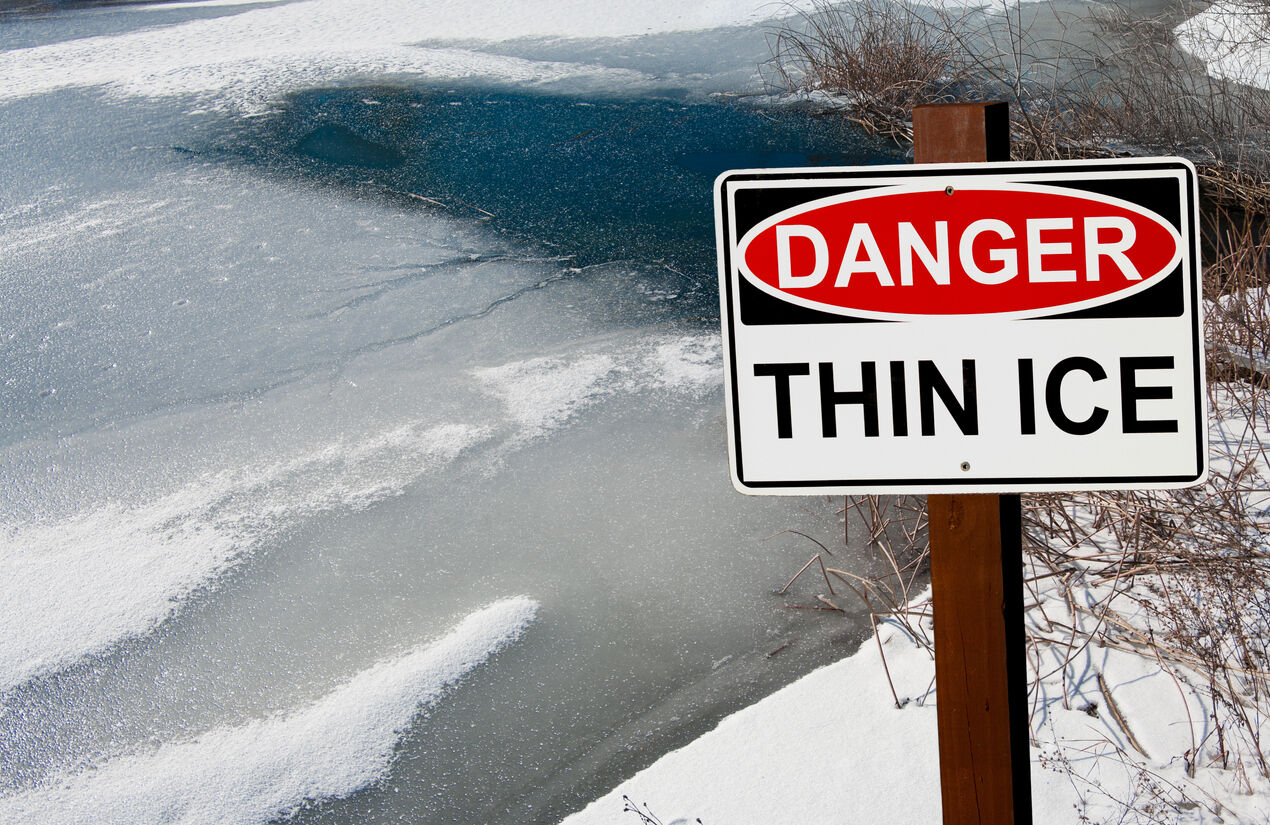
Amid an unusually warm winter, ice isn’t quite forming on the same scale that it usually does around the Centennial State. This makes it that much more important to follow best practices in terms of ice safety, especially those related to determining how thick ice is. While most Coloradans probably won’t come anywhere close to stepping on an icy lake this winter, some will do so for a variety of activities ranging from skating to fishing to hiking. If you’re one of the people who plans on venturing out onto the ice, it’s crucial to know how thick that ice needs to be, what it should look like, and how you can test it for sturdiness, as well as what to do if you or someone else falls in.
Before delving into this topic, it must first be noted that ice can be extremely unpredictable and crossing it always brings some level of inherent risk. This quick guide by no means contains everything you need to know and may not apply to all situations. These are merely basic guidelines to get your research into ice safety started. Partake in any activity on the ice at your own risk.
1. How thick should the ice be?
The first thing to note when it comes to ice thickness is that ice quality is a huge factor (more on that below). The following thickness rules apply to only new, clear ice. Ice in other conditions will likely be weaker and more fragile.
According to the Department of Natural Resources of Minnesota – a state where ice sports are a huge deal – here’s a breakdown of how thick ice should be in various situations:
- Under 4 inches – stay off the ice!
- 4 inches – ice fishing and other activities on foot
- 5 to 7 inches – thick enough to hold a snowmobile or ATV
- 8 to 12 inches – thick enough to hold a car or small pickup
- 12 to 15 inches – thick enough to hold a medium truck
According to the same department, thickness guidelines should be doubled if ice is white instead of clear. The department is also quick to remind their readers that ice is NEVER 100 percent safe.
2. How can you test ice thickness?
In order to test ice thickness, you’ll need to break through the ice. This can be difficult without the proper tools.
Three different tools that can be used include an ice chisel, an ice auger, and a cordless drill.
Once a hole is made in the ice, a tape measure is typically used to measure depth. Simply drop the end of the tape measure into the ice, hooking the metal lip on the bottom edge of the ice before reading a measurement.
It’s recommended that ice is measured every 150 feet (at least) and that vehicles are parked at least 50 feet apart to avoid overloading ice. If taking a vehicle onto the ice and parking it, it is recommended to drill a hole by the vehicle and watch for water leaking out over time. This can show if sinking is taking place.
3. Signs of weak ice
Not all ice is created equally and it’s important to know what signs of weakness to look out for.
An article from the Star Tribune – another Minnesota source, but hey, they know their ice up there – lists a few tell-tale signs of ice fragility.
The first factor the publication mentions is color. Ice that is thick, clear, and blue-ish is likely the strongest (again, no ice is 100 percent safe). Signs of weakness can include a dirty look or ice with a grayish tint. White ice is also weaker, as this can indicate more air bubbles in the ice.
Another sign of weakness to spot can be cracks and deformities. According to the Star Tribune piece, ice can lose about 40 percent of its strength with a single crack, with areas where cracks intersect losing around 75 percent of its strength. When ice is covered by snow, signs of water leakage can be a good indication that a crack is present.
Slush on top of ice can also be an indicator of uncertainty and potential issues. Problematic ice can also produce a hollow sound when struck.
The punchline is – signs of abnormality or differentiation from clear, pristine ice can mean weakness and be a cause for extra caution.
4. What if someone falls in?
A key rule of ice safety is to not chase after someone who has fallen through a break. If the ice isn’t thick enough to hold them, it probably won’t hold you and you’ll be likely to fall in, as well, further complicating the situation in a potentially deadly way. The same can be said for when pets fall through – don’t chase after them.
With that rule noted, here’s what should be done if someone falls in.
First, call 911, if possible. Getting professional help is the best option and they’ll have the correct rescue gear to get the person out of the water in the safest way possible.
Communication then becomes key. The person in the icy water will likely be panicked. Try to keep them calm and relay information their way. Hopefully, the person is able to self-rescue before help arrives (more on that below).
If they are not able to self-rescue and if professional help is not available, reaching the person in the water from a safe distance can be one option. This should be done without leaving shore, with large branches as one feasible option in some scenarios. Throwing some sort of line their direction can also help if that is available.
It can also be helpful to get some sort of floatation device to someone in the water by sliding it to them over the ice.
If one must cross a stretch of ice as part of a rescue, the best way to do it is by laying down and crawling to distribute weight. Remember though, this is not recommended as this can make a bad situation much worse should a rescuer fall in.
5. How do you self-rescue?
If you’re the person who has fallen into the ice, the first focus should be avoiding panic – which can be easier said than done. Knowing about proper ice safety and rescue techniques beforehand can help with this.
According to the Colorado Division of Wildlife, once in the water, turn to face the direction you came from. This will generally be the safest place to pull yourself out of the water and back onto solid ice.
Next, place your hands and arms on the unbroken surface of the ice and work your way up by kicking your feet. Ice picks can be particularly helpful for this (more on that if you keep reading).
Once out of the water and onto the ice, do not stand up. Remember, the ice has already proven how fragile it is. Distribute your weight by laying down and crawling or rolling away from the broken ice, back in the direction you came from.
6. Ice Safety Tools
The Colorado Division of Wildlife recommends that those on the ice have several items that are crucial for ice safety in a piece that specifically talks about ice fishing. Either way, if you’re on ice, it’s probably a good idea to bring these items along.
Here’s a quick list:
- An ice chisel or auger to check for thickness
- Ice picks or screwdrivers that float and are connected with a nylon cord that’s 24 to 30 inches in length. These should be easily accessible for use in the event of needing to self-rescue. The ‘Pick-of-Life’ is one tool the department specifically recommend.
- 50 feet of nylon rope with a loop tied on one end. This can be very helpful in the event of a rescue, as it can be thrown to someone in the water.
- A wool blanket. This can be crucial for preventing hypothermia.
- A Thermos of hot liquids
- A communication device to call for help. A satellite device like the Garmin inReach can be a good option.
7. Preventing hypothermia
After someone falls into the water and gets out, preventing hypothermia is the next crucial step. Here are a few quick tips for doing this, but it’s best if you read this full article from the Colorado Division of Wildlife if you want to be more prepared.
- If the person isn’t breathing, perform CPR if trained to do so.
- Keep the victim off the ground as direct contact can be very cold.
- Remove wet clothing, especially cotton, and replace it with dry clothing.
- Cover, but don’t wrap, the victim in a blanket or spare clothing.
- Holding or laying next to the victim can help transfer body heat.
- Give the victim warm (but not hot) liquids.
- Do not apply direct heat, as this can force cold blood back to the heart. Warm towels can be placed on the neck, chest wall, and groin.
- Give the victim a warm (again, not hot) bath if possible.
Other tips for ice safety
- Follow a known path – while you can’t assume that ice is safe because other people have safely crossed it, following a proven path is often a good place to start.
- Seek safety in numbers, but don’t overload. While it’s important to avoid crossing ice alone, always try to keep members of a group spaced out while on ice to prevent overloading and for better odds in the scenario that a break occurs. This way, one person is in the water instead of multiple people.
- Read reports and do proper research on a specific area – different places will have different quirks. Read local reports and check with official sources when possible.
Remember, no ice is 100 percent safe. Be prepared and know what to do if something goes wrong. Cross ice at your own risk.
STAY INFORMED: Get free Colorado news with our daily newsletter (Click here)
Get OutThere
Signup today for free and be the first to get notified on new updates.

PREV
PREVIOUS

Official dates for Boulder's first Sundance Film Festival are here
The Sundance Film Festival will run from Jan. 21 to Jan. 31 when it comes to Boulder next year, the premier independent film festival announced Tuesday. The internationally-recognized film festival had been in Park City, Utah, for more than 40 years, but organizers chose Boulder to host the festival for the next decade citing its […]
Up to 24" of snow could hit Colorado mountain range in most likely scenario
A couple rounds of snow are set to hit Colorado this week and while impacts of this winter storm won’t be as widespread as that of last week, some mountains should get some decent snow. Per the National Weather Service, snow this week should favor northern Colorado, with an initial wave of snow set to […]