




New study disputes claim moose are non-native to Colorado: ‘Here for centuries, likely longer’
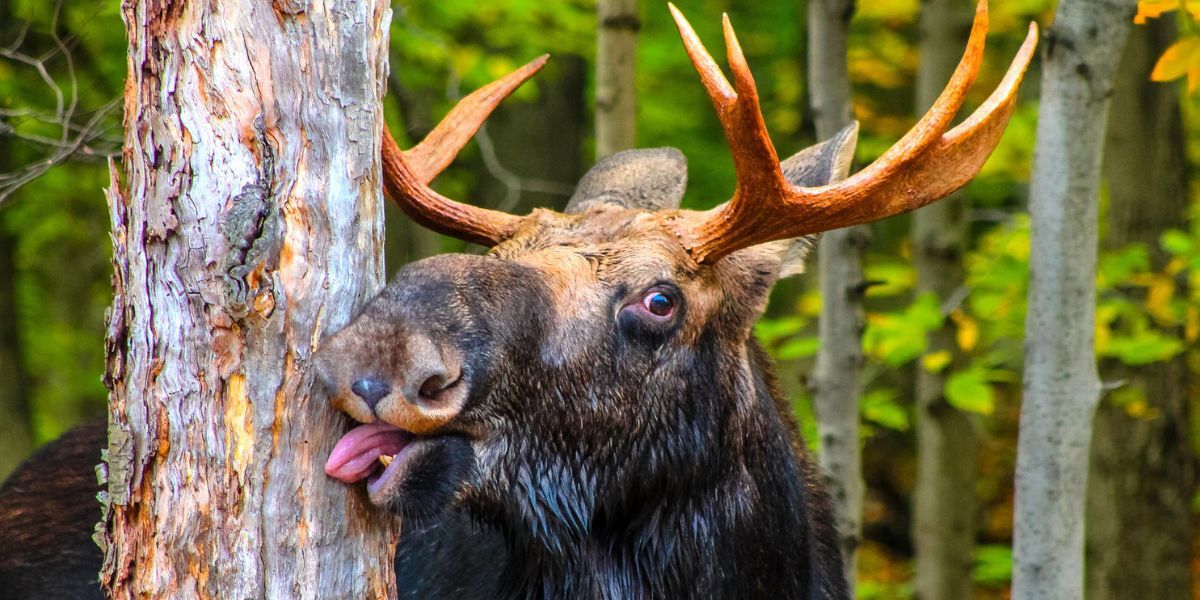
Long-billed as a non-native species that was introduced to Colorado by wildlife officials in the late-1970s, whether or not the moose belongs in the Centennial State has been a lingering topic of debate. That said, a recent report out of University of Colorado – Boulder indicates that moose are not only native to Colorado, but that the species has been present in the southern Rockies for “centuries, likely longer.”
As part of the research into the topic, those involved analyzed newspaper archives, archaeological site reports, scientific journals, museum collections, and photo archives to determine when and where moose may have been present in Colorado prior to the introduction effort of the mid-1900s.
Among the archaeological evidence that led to additional research on the topic was something called the ‘Jurgens Collection,’ which CU Boulder scholar William Taylor described as “one of the oldest and most significant” […] “among the more significant archaeological collections in the whole region.”
This collection provides a look into Colorado’s prehistory, with a predecessor of Taylor, Dr. Joe Ben Wheat, having identified several specimens of moose out of northwest Colorado that date back thousands of years to the early Holocene during an analysis that took place decades ago. More specifically, the Jurgans site is located near Greeley, putting moose in Colorado at about 7000 B.C.E.
In addition to the Jurgens site evidence, another documented discovery at Middle Park’s Barger Gulch of a specimen that was either moose or elk dates back to 10,500 B.C.E. More possible moose remains were found at the Ute-associated ‘Sue site’ in North Park, dating to 1070 to 1340 C.E., along with moose metapodials (foot bones) found near Mesa Verde National Park that likely date between 900 and 1350 C.E.
It was, however, noted that none of the archaeological identifications “were accompanied by thorough descriptions of the morphological criteria used, or with clear photos. They should, therefore, be treated with caution and verified through archaeozoological reassessment and supporting techniques like radiocarbon dating, DNA, LC–MS/MS, and other methods before they are used to inform wildlife management decisions.” Regardless, these findings were said to point to the potential presence of moose in the Southern Rockies across many millennia in a way that challenges the prominent assumption that moose were not present in the region until they were introduced by wildlife officials.
In an effort to expand on archaeological records, Taylor, along with helpful staff of the CU Museum, started to dig through digitized newspapers to map each documented local sighting of moose over the past 160 years.
“The story that emerged was a rich record showing that moose have been in this area from its earliest colonial settlement days,” reads a report on the findings.
Also included in Taylor’s research was work with Tribal partners to establish Indigenous histories of moose in the region, which included a 19th-century record from the Jicarilla Apache of northern New Mexico that indicated moose had been present, but had recently (at the time of that account) disappeared.
Per a paper on the study titled Understanding Ancient Moose Populations in the Southern Rocky Mountains that was published in the Journal of Biology this June, credited to William T.T. Taylor, et al., “Findings reveal a clear record for premodern moose presence in the Southern Rockies stretching back to the earliest reliable written accounts, including regular presence of female and juvenile moose, pointing to local reproduction. Archaeological assemblages include a number of premodern moose identifications dating back to the Early Holocene, corroborated by the widespread reference to moose in ethnohistoric sources from Native nations in the Southern Rockies.”
The paper includes a full table of findings that point to moose being present in Colorado with dates ranging from 10,500 B.C.E. to 1968 C.E. – as recent as 10 years before the official introduction of the species took place. Archaeological findings aside, the newspaper report of moose in Colorado was published in 1860 (Sweetwater Lake) with another published in 1863 (Estes Park).
In conclusion, the paper states: “Recognition of moose as part of the native ecology of the region should prompt those making wildlife management decisions at federal and state levels to consider consultation and engagement with paleobiologists, archaeologists, Native leadership, and the public. These consultations will lead to a more complete understanding of the distribution and importance of moose in Colorado ecosystems, and help make stronger specific management strategies informed by deep-time perspectives.”
“The veil of time is often our biggest obstacle in understanding wildlife,” said Joshua Miller, a study co-author from the University of Cincinnati. “Compared to the thousands of years that a species can live in a particular place, data from wildlife surveys might only extend a few decades into the past. We can learn a lot from those data, but some questions require more expansive time horizons. Weaving together different threads of historical evidence can fill important knowledge gaps, and help us develop strategies for managing and conserving plants and animals from around the world.”
Find the full paper here and a report from CU Boulder on the research here.
Study authors included William T.T. Taylor, John A.F. Wendt, Jonathan Dombrosky, Crystal C’Bearing, Mikayla Costales, Isaac A. Hart, Journey LeBeau, Adrian Johnson, Elena Lompe, Russell W. Graham, Chance Ward, Emily Lena Jones and Joshua H. Miller.
STAY INFORMED: Get free Colorado news with our daily newsletter (Click here)
Get OutThere
Signup today for free and be the first to get notified on new updates.
PREV
PREVIOUS
Popular canyon road closed in Colorado after 175-foot-long rockslide covers route
Update: Per a 1:27 p.m. report from the Jefferson County Sheriff’s Office, this route has reopened following clean-up work. See the original piece below. –––– Original piece below ––––– Those traveling through Colorado should know that US 6 through the scenic Clear Creek Canyon of Jefferson and Clear Creek counties has been closed as of […]
Two creepy encounters reportedly occurred at same 14,000-foot peak in recent days
In recent days, two ‘creepy encounters’ have been reported in the area of the same 14,007-foot peak in Colorado. While local law enforcement looked into the situation and didn’t find anything, it felt worth covering the topic in the event that a potential safety concern exists. At the least, the encounters can serve as a […]