







Plan to revive historic hotel, once heart of Denver’s jazz scene, moves forward with urban renewal financing
A development project set to bring life back to one of Denver’s historic jazz venues is set to get extra help from the city to make it happen.
The Finance and Business Committee, a group of City Council members who take up budget and economic development decisions, unanimously approved the creation of a tax increment financing area around the Rossonian Hotel to help reimburse up to $15.5 million for the building’s revival on Tuesday.
The matter is set to go to City Council as a public hearing on June 1 for final approval.
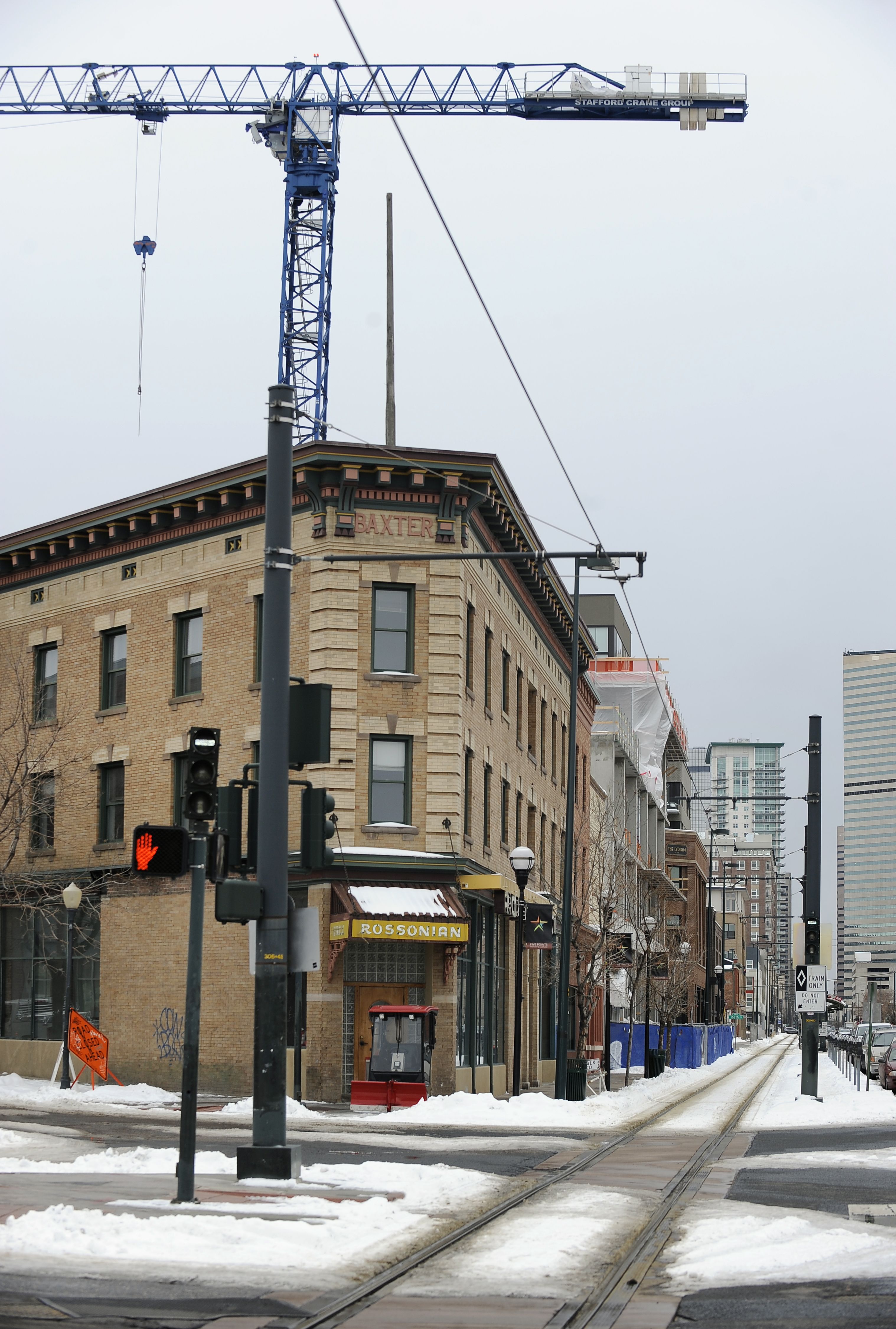
This project led by Palisade Partners has been a years-long initiative that aims to take the historic hotel at 2650 Welton St. and transform it into a mixed-use development with more than 150 hotel rooms and restaurant, retail and event space.
It’s set to open in 2028, according to the developer’s website.
The Rossonian Hotel, located at the heart of the star-shaped intersection that inspired the name behind Denver’s historic Five Points neighborhood, was built in 1912 and became one of the most famous jazz venues between St. Louis and Los Angeles during the 1930s to 1950s.
The hotel welcomed jazz artists such as Duke Ellington, Ella Fitzgerald, Count Basie and Billie Holiday during the segregation era, according to city and national records.

Famous Black jazz musicians would stay at the hotel when they had scheduled shows around Denver — often at other hotels that would deny them lodging — and would later perform downstairs at the Rossonian Lounge after their performances. The building became a major hub for jazz and helped define Denver’s predominately-Black neighborhood as the “Harlem of the West.”
But as Denver made strides in desegregation, the Rossonian Hotel struggled as more Black musicians were able to book other hotels that were closer to their scheduled performances. It closed its doors in 1973.
The building was added to the National Register of Historic Places in 1995 for being the “best remaining physical symbol” of that era of Denver’s Black cultural history.
There have been several efforts to revive it, including in 2005 by the late developer Carl Bourgeois who is credited with revitalizing the Five Points neighborhood, but none have been successful thus far.
The building has been vacant since the 1990s, Bill Pruter, the interim director of the Denver Urban Renewal Authority, told the committee Tuesday.
“So I’d personally like to get something done,” he said.
Colorado-based developers Palisade Partners acquired the hotel in 2017 for $6 million, according to city property records. In the following years, the company also bought the parcels around it, including the Hooper apartment complex built in 2021 at 2600 Welton St.
The adaptive reuse project plans to restore the three-floor Rossonian Hotel with 18 hotel rooms and a 4,800-square-foot restaurant on the ground floor. Plans also include a brand new 53,000-square-foot building in the parcels between the Rossonian and the Hooper with 72 hotel rooms and a 7,200 square-foot event space.
The 103 apartments at the Hooper will not be part of the Rossonian project, though a quarter of the building will add 36 hotel rooms and retail space.
Overall, the $101 million project would bring more than 150 rooms.
But the project is dependent on extra financing from DURA — the economic development organization that has set up development zones to help fund blighted areas in the River North neighborhood, redeveloped the Stapleton airport and is helping finance the women’s soccer stadium — to make it work.
“We’ve done that underwriting and concluded the project does require assistance in order for it to be delivered as it has been contemplated,” Pruter said.
The project is eligible for reimbursement through tax-increment financing for up to $15.5 million to be paid back within 25 years, Pruter said.
Councilman Paul Kashmann recalled how the Five Points was the first place he lived in when he moved to Denver about 50 years ago and how he quickly learned the importance of its history to the city that makes him excited for this project.
“I’ve watched the Rossonian sit there and sit there and sit there and it’s such a wonderful piece of property,” Kashmann said. “To not have it redeveloped, to lose that history, would be a crime.”