Finger pushing
weather icon 85°F


Denver’s homeless population jumps by 24% in 2022, number of people in streets rises sharply

Metro Denver’s homeless population jumped by a quarter, adding nearly 1,400 between 2021 and 2022, federal data show.

The data from the U.S. Department of Housing and Urban Development’s 2022 Annual Homeless Assessment Report reflect a single-night snapshot of homelessness, so there could be more — or fewer — homeless people at any given day in America’s major cities.

The survey counted 6,884 homeless people — the overwhelming majority of whom are male — in metro Denver in January this year, compared to 5,530 in 2021.

Compared to two years ago, just before the onslaught of the pandemic, the increase stood at 13% — from 6,104 to this year’s total.

Notably, the number of homeless people in metro Denver’s streets sharply rose in the last few years.

In 2019, the federal survey counted 946 “unsheltered” individuals. In 2020, the number jumped to 1,561, and by 2022, it stood at 2,047.

The data yielded a few places of improvement. The number of homeless children dropped within the last year. So did the number of Hispanics and African-Americans who are homeless. But the number of homeless people who are white spiked, adding nearly a thousand people.

Colorado’s biggest cities — metro Denver, in particular — have struggled to address homelessness, even as state and local governments have poured significant resources into tackling the crisis. A free-market think-thank said local governments and nonprofits are on track to spend nearly $2 billion over a three-year period to tackle homelessness in some counties in the Denver metro area alone.

The homeless crisis has occupied front and center of the debate on the floors of the state Capitol and in halls of city councils.

The city of Aurora, for example, recently decided to overhaul its homelessness reduction system after a divided council approved a proposal that calls for a new campus, incentivizes people’s participation in supportive services and incorporates conditions people must meet to receive transitional housing. City staff have projected building a campus on city-owned land could cost between $50 million and $70 million.

The city of Denver, meanwhile, earmarked $254 million in its 2023 budget toward homelessness. Of that amount, $20 million would go towards what Mayor Michael Hancock called “housing justice” and include a down payment assistance program seeking to increase home ownership among families of color.

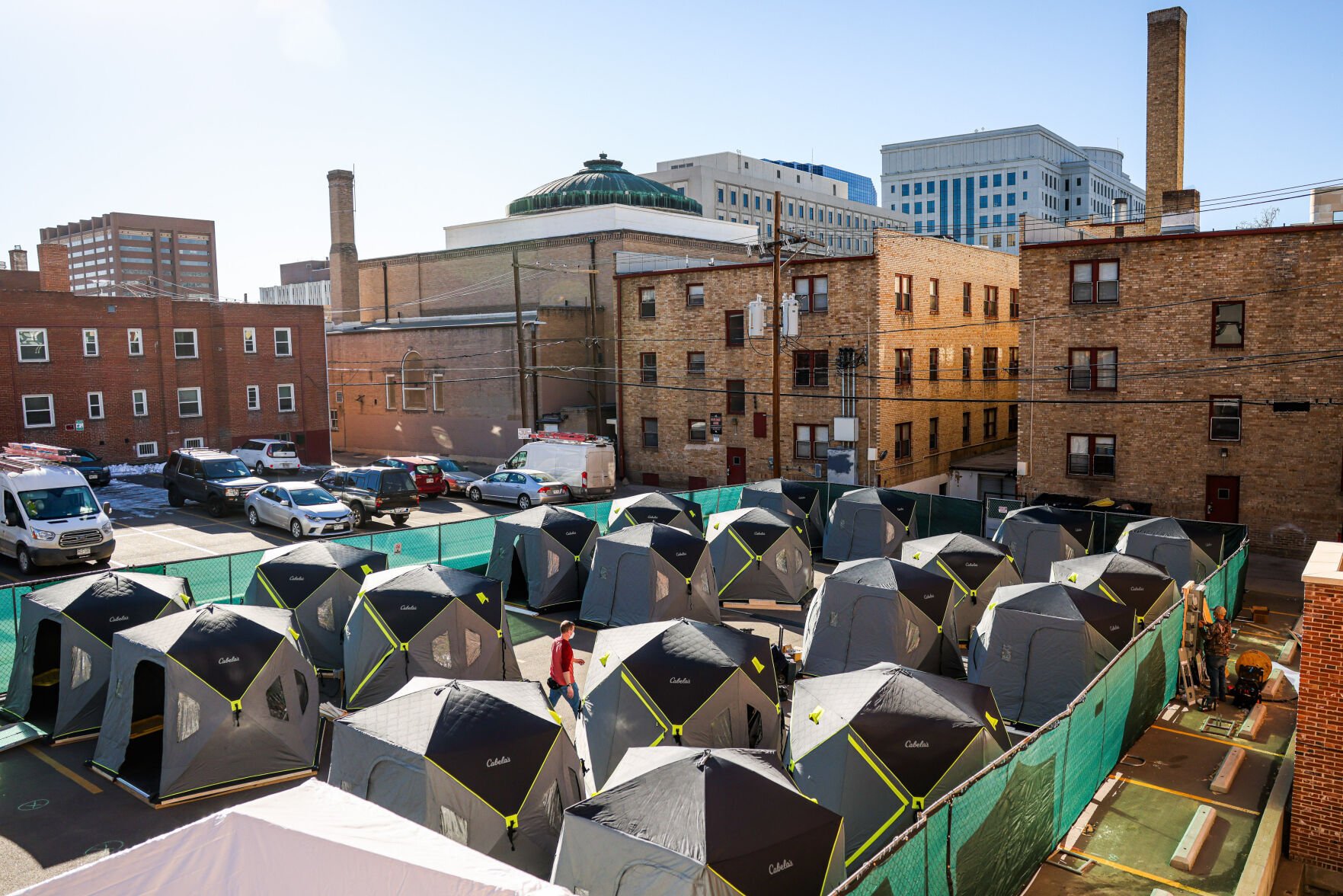
A homeless camp in the parking lot of Denver's First Baptist Church in Denver’s Capitol Hill neighborhood. This camp housed 30 individuals. The camp that will go up in the Arie P. Taylor Building parking lot will twice that amount, and may house up to 70 people. (Michael Ciaglo/Special to The Denver Gazette)
A homeless camp in the parking lot of Denver’s First Baptist Church in Denver’s Capitol Hill neighborhood. This camp housed 30 individuals. The camp that will go up in the Arie P. Taylor Building parking lot will twice that amount, and may house up to 70 people. (Michael Ciaglo/Special to The Denver Gazette)
Denver Mayor Michael Hancock, right, and Chief Housing Officer for the City & County of Denver Britta Fisher tour the building during the grand opening of 74 affordable housing units at the newly restored Pancratia Hall on Thursday, May 12, 2022, in Denver, Colo. (Timothy Hurst/The Denver Gazette) (Timothy Hurst)
Angel, left, and friend Sleepy discuss the difficulties of living in a camp after picking up trash between their site and a neighboring site on Monday, Feb. 28, 2022, near I-225 and East Mississippi Avenue in Aurora, Colo. Angel has stacked up debris around her tent to help insulate it from the wind. Out of the first 86 clients of the Office of Public Guardianship, 47 – or more than half – were homeless when they were referred to the office. (Timothy Hurst/The Denver Gazette) (Timothy Hurst)
Tags

Denver’s homeless population jumps by 24% in 2022, number of people in streets rises sharply

Metro Denver’s homeless population jumped by a quarter, adding nearly 1,400 between 2021 and 2022, federal data show.

The data from the U.S. Department of Housing and Urban Development’s 2022 Annual Homeless Assessment Report reflect a single-night snapshot of homelessness, so there could be more — or fewer — homeless people at any given day in America’s major cities.

The survey counted 6,884 homeless people — the overwhelming majority of whom are male — in metro Denver in January this year, compared to 5,530 in 2021.

Compared to two years ago, just before the onslaught of the pandemic, the increase stood at 13% — from 6,104 to this year’s total.

Notably, the number of homeless people in metro Denver’s streets sharply rose in the last few years.

In 2019, the federal survey counted 946 “unsheltered” individuals. In 2020, the number jumped to 1,561, and by 2022, it stood at 2,047.

The data yielded a few places of improvement. The number of homeless children dropped within the last year. So did the number of Hispanics and African-Americans who are homeless. But the number of homeless people who are white spiked, adding nearly a thousand people.

Colorado’s biggest cities — metro Denver, in particular — have struggled to address homelessness, even as state and local governments have poured significant resources into tackling the crisis. A free-market think-thank said local governments and nonprofits are on track to spend nearly $2 billion over a three-year period to tackle homelessness in some counties in the Denver metro area alone.

The homeless crisis has occupied front and center of the debate on the floors of the state Capitol and in halls of city councils.

The city of Aurora, for example, recently decided to overhaul its homelessness reduction system after a divided council approved a proposal that calls for a new campus, incentivizes people’s participation in supportive services and incorporates conditions people must meet to receive transitional housing. City staff have projected building a campus on city-owned land could cost between $50 million and $70 million.

The city of Denver, meanwhile, earmarked $254 million in its 2023 budget toward homelessness. Of that amount, $20 million would go towards what Mayor Michael Hancock called “housing justice” and include a down payment assistance program seeking to increase home ownership among families of color.

A homeless camp in the parking lot of Denver's First Baptist Church in Denver’s Capitol Hill neighborhood. This camp housed 30 individuals. The camp that will go up in the Arie P. Taylor Building parking lot will twice that amount, and may house up to 70 people. (Michael Ciaglo/Special to The Denver Gazette)
A homeless camp in the parking lot of Denver’s First Baptist Church in Denver’s Capitol Hill neighborhood. This camp housed 30 individuals. The camp that will go up in the Arie P. Taylor Building parking lot will twice that amount, and may house up to 70 people. (Michael Ciaglo/Special to The Denver Gazette)
Denver Mayor Michael Hancock, right, and Chief Housing Officer for the City & County of Denver Britta Fisher tour the building during the grand opening of 74 affordable housing units at the newly restored Pancratia Hall on Thursday, May 12, 2022, in Denver, Colo. (Timothy Hurst/The Denver Gazette) (Timothy Hurst)
Angel, left, and friend Sleepy discuss the difficulties of living in a camp after picking up trash between their site and a neighboring site on Monday, Feb. 28, 2022, near I-225 and East Mississippi Avenue in Aurora, Colo. Angel has stacked up debris around her tent to help insulate it from the wind. Out of the first 86 clients of the Office of Public Guardianship, 47 – or more than half – were homeless when they were referred to the office. (Timothy Hurst/The Denver Gazette) (Timothy Hurst)
Tags


Welcome Back.

Streak: 9 days i

Stories you've missed since your last login:

Stories you've saved for later:

Recommended stories based on your interests:

Edit my interests