




The West Nile Trackers: Young scientists behind mosquito data
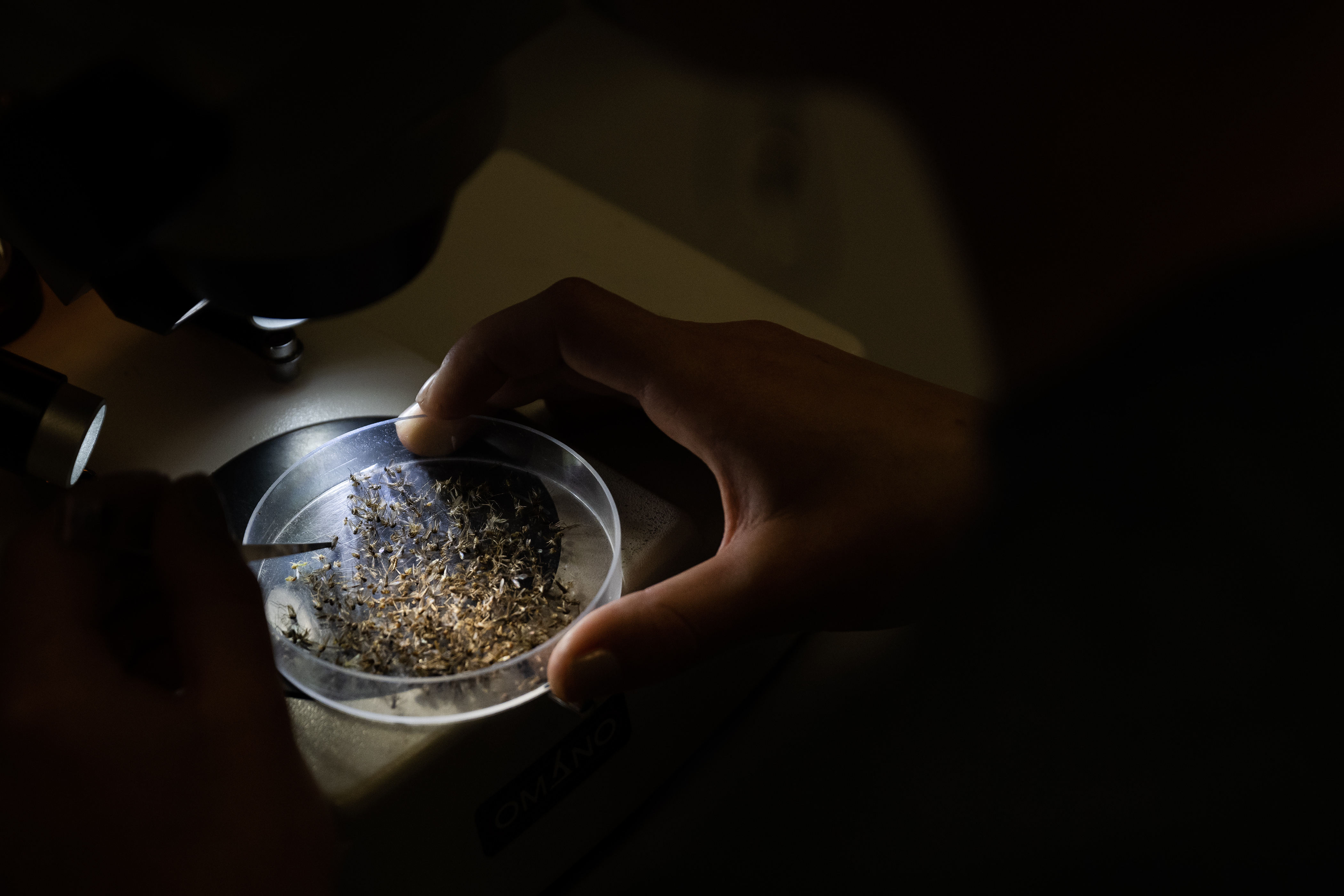
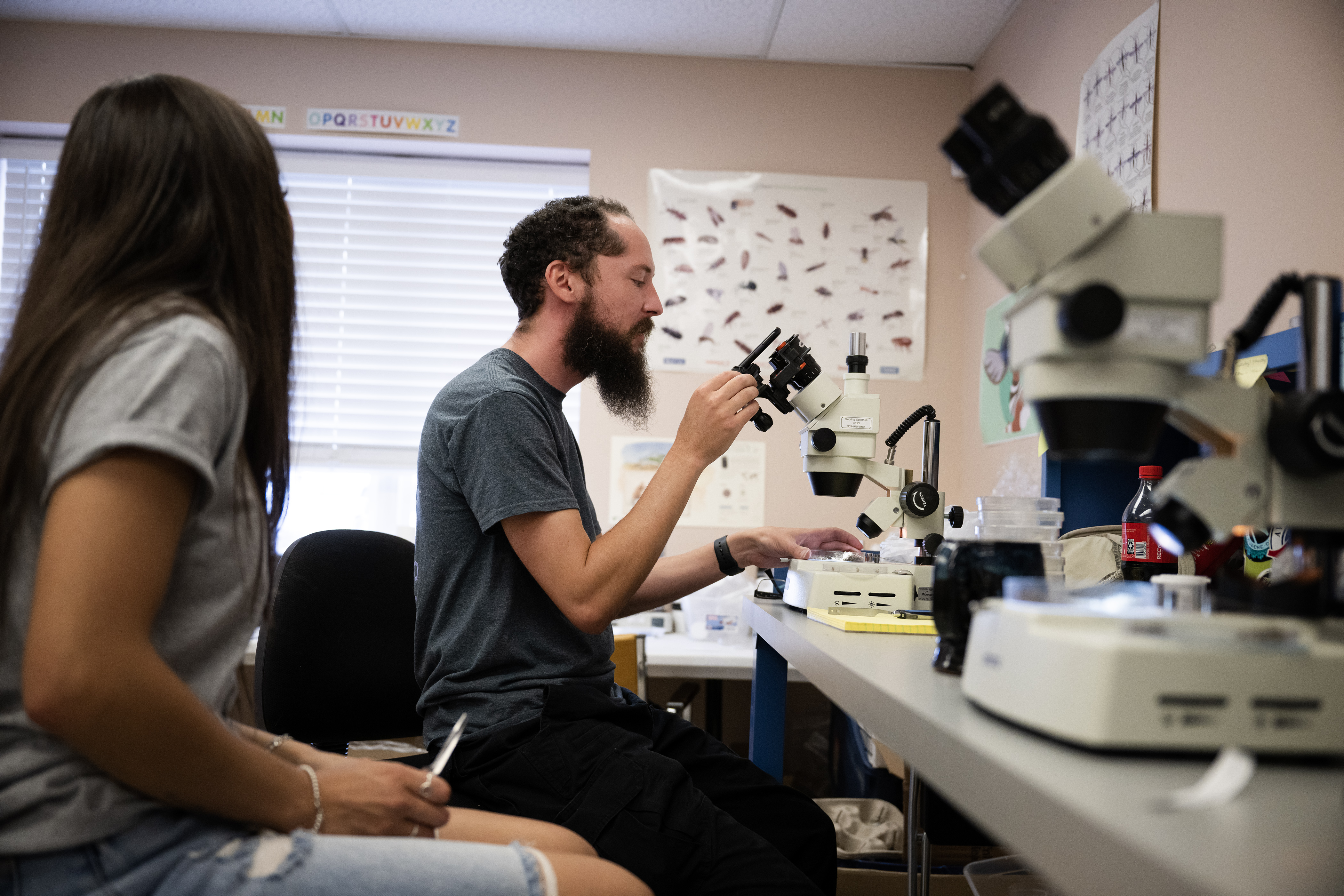
Tucked along a row of sleepy Broomfield industrial buildings is a lab where the war on the West Nile Virus is fought with tweezers and high-powered microscopes. At the Vector Disease Control International Lab, millions of flash-frozen mosquitos are meticulously counted by jeans-clad Gen-Z biologists who have grown to love them.
“My parents are confused by what I do. They were migrants who have migrant jobs,” said Yailenne Rodriguez, 19, who is paid $19 per hour to identify West Nile virus-carrying bugs. “They call me and say ‘What is it you do again?’”
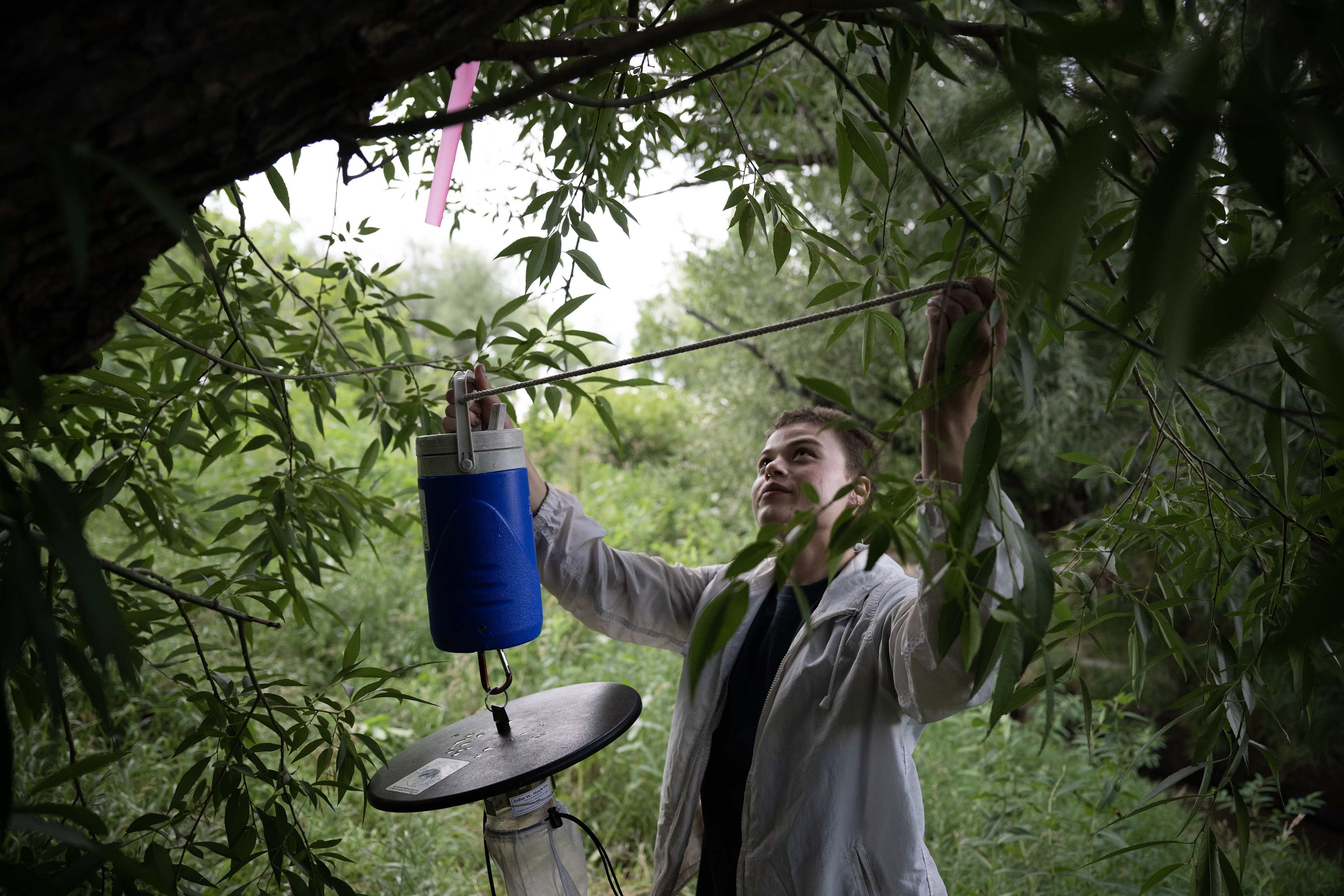
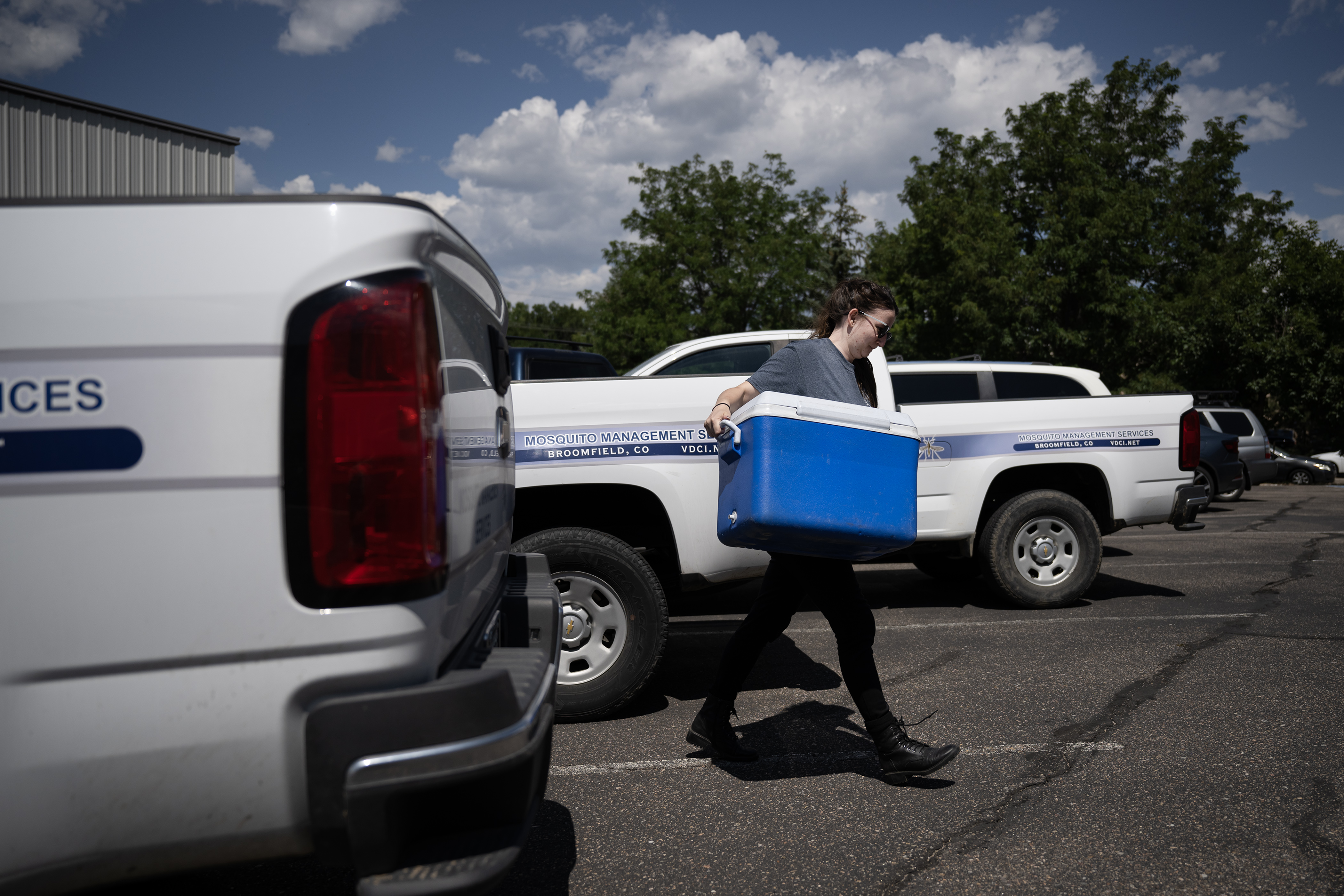
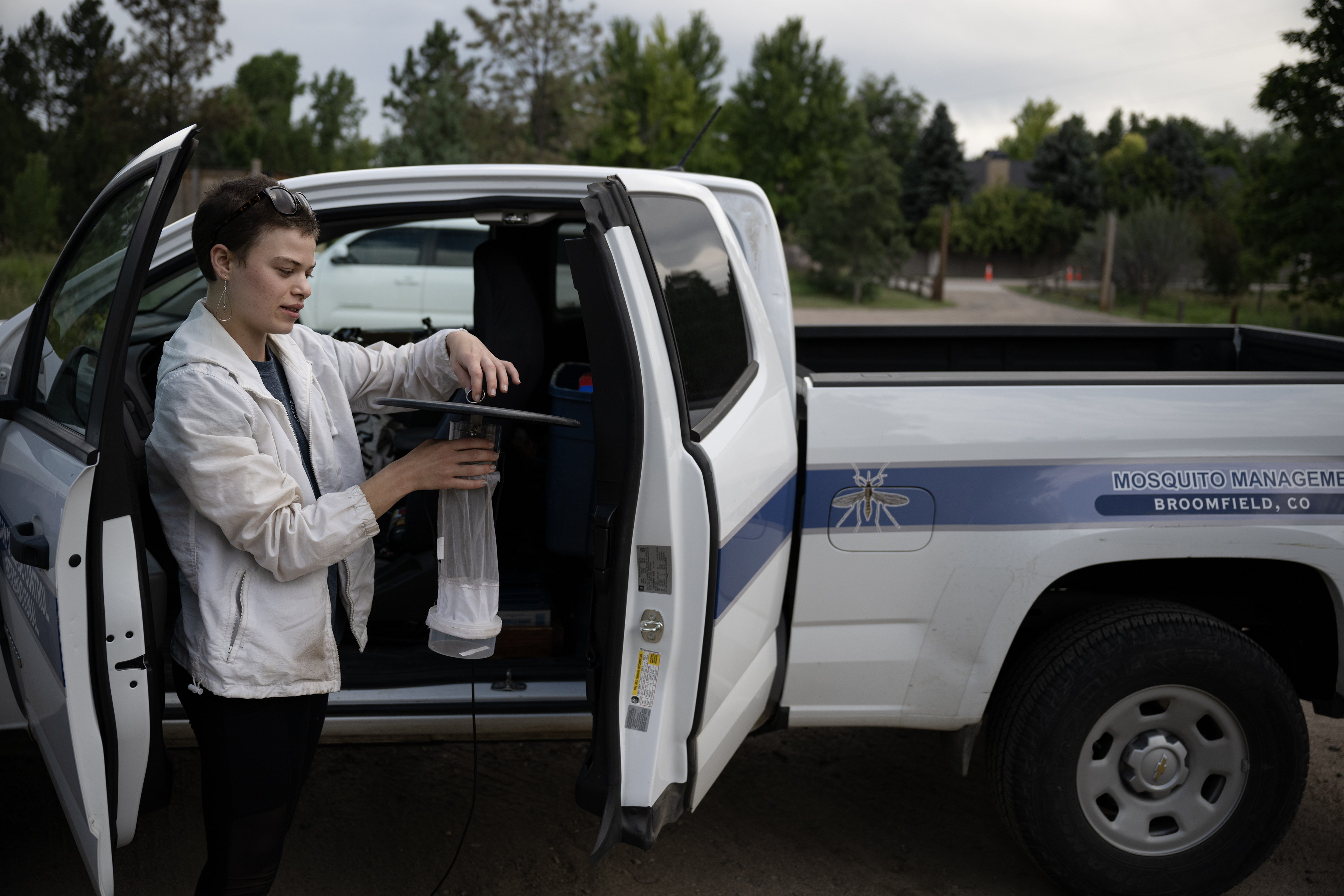
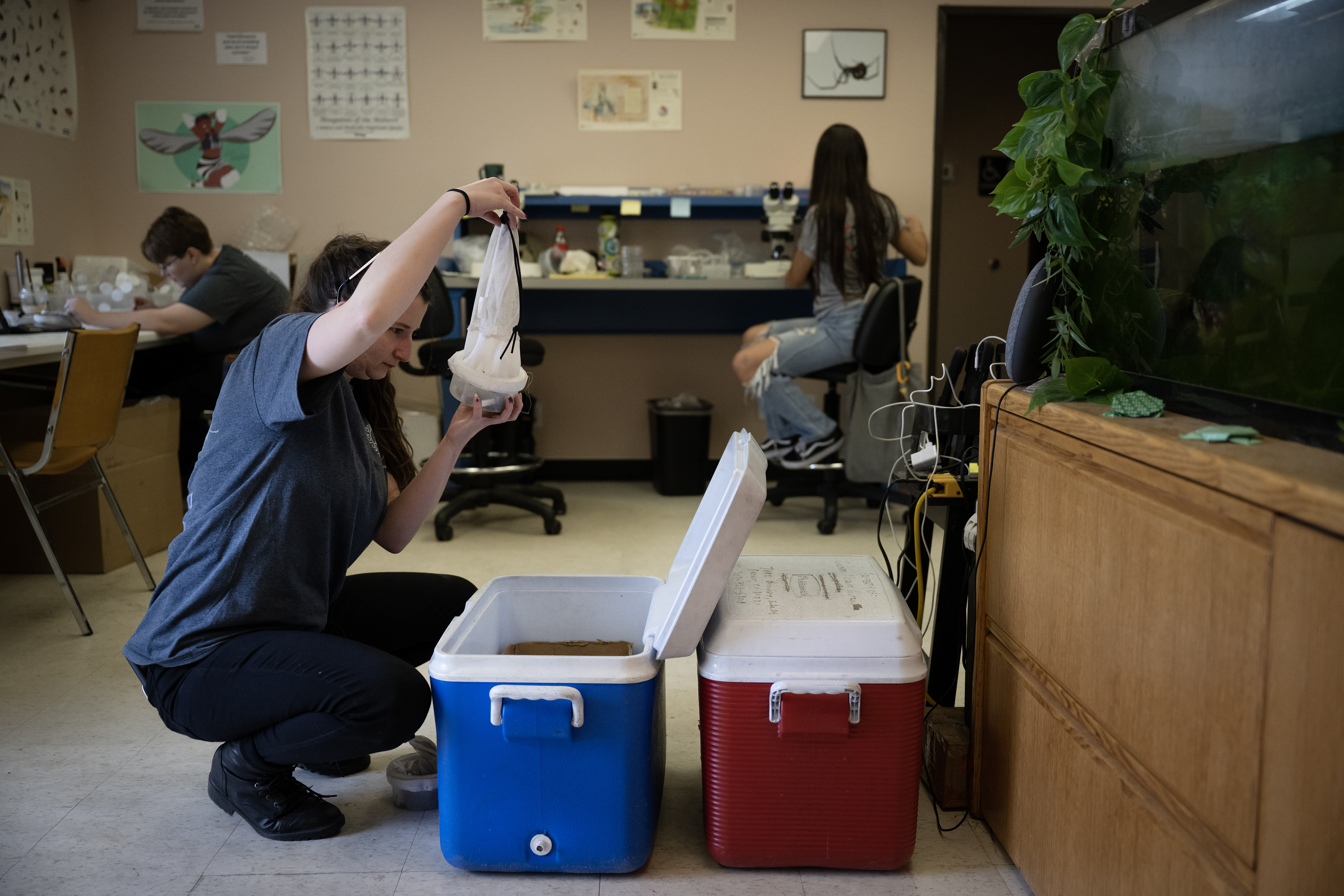
Every day, a fresh batch of mosquitoes is hauled in Coleman coolers gathered from elaborate traps along Colorado’s Front Range to the VDCI Lab, where they are counted and categorized. Petri dishes piled with dusty mosquitoes are marked with a type-written tab identifying the location of the bug-napping: Fort Morgan’s Riverside Cemetery, Wildwood School in Aspen and Rollin D. Barnard Equestrian Park, a bucolic horse ranch nestled by a running stream off of Orchard Road in Greenwood Village.
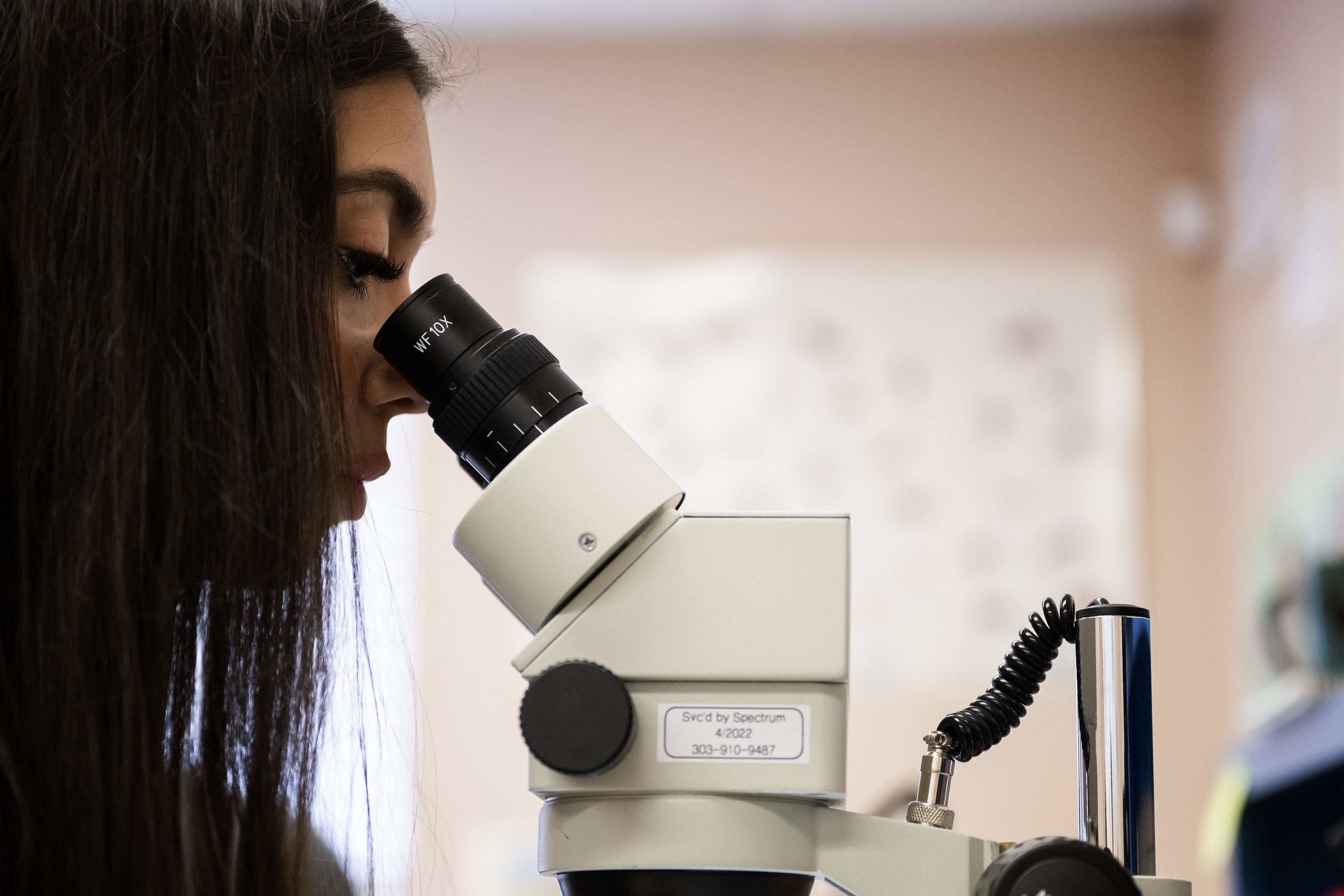
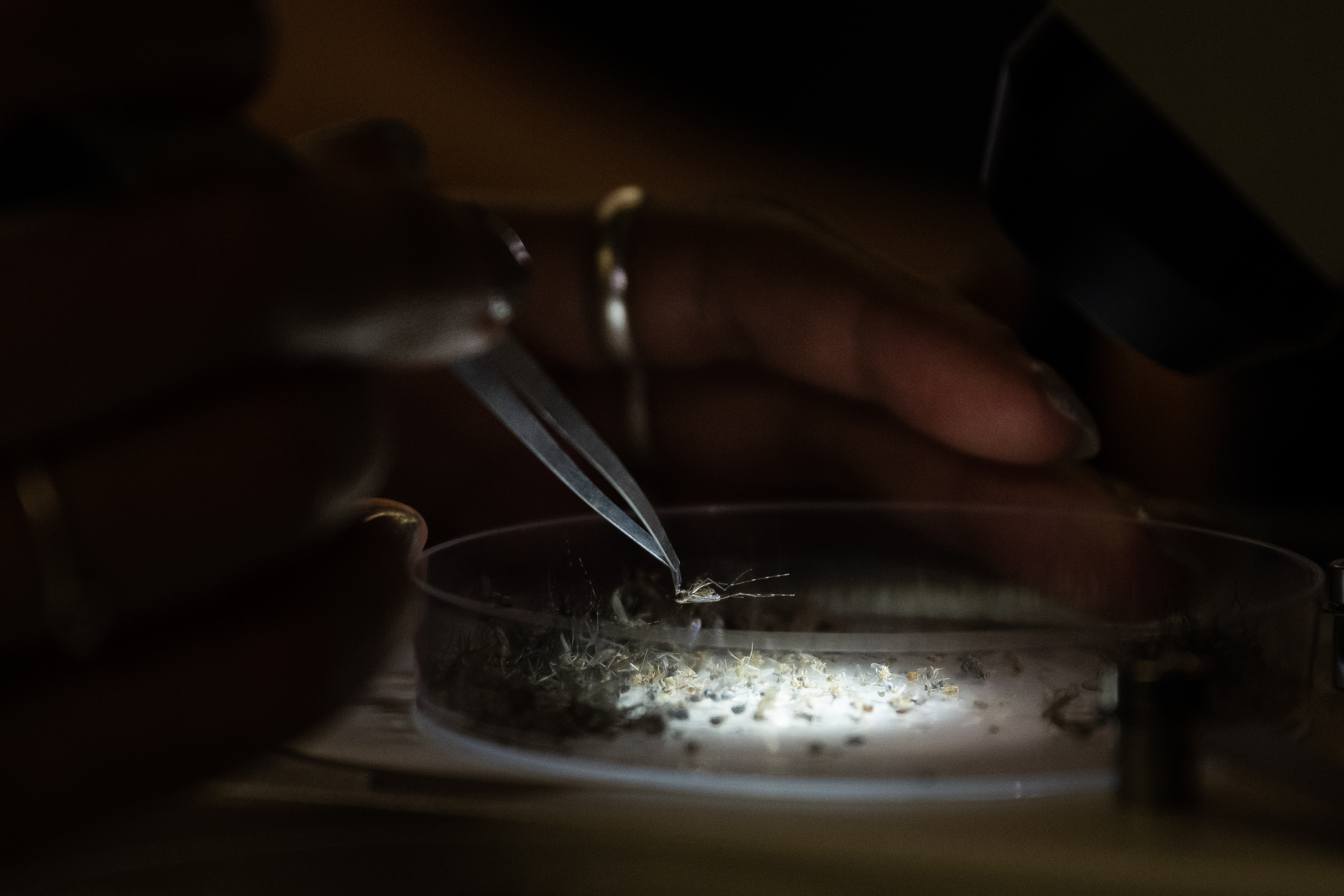
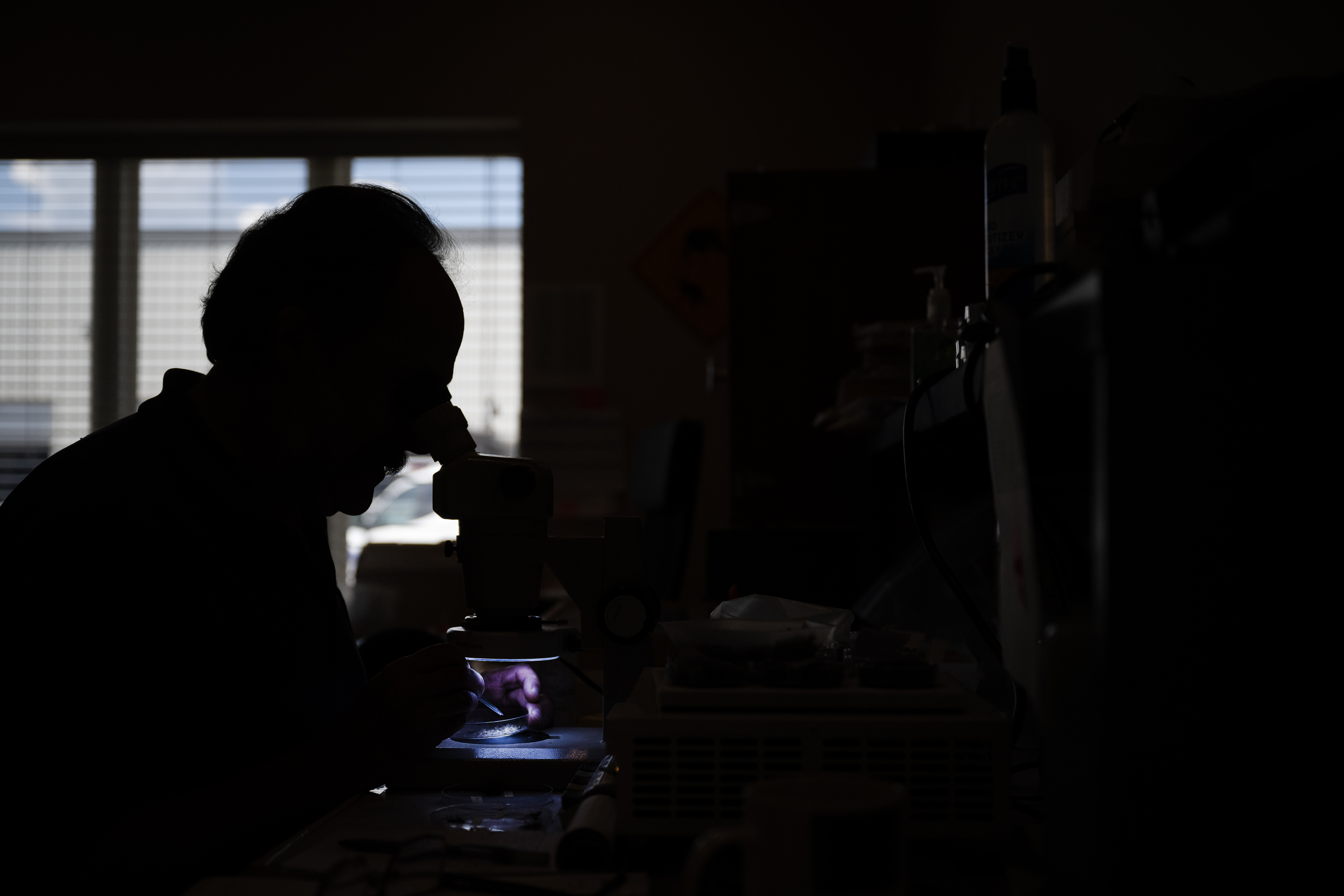
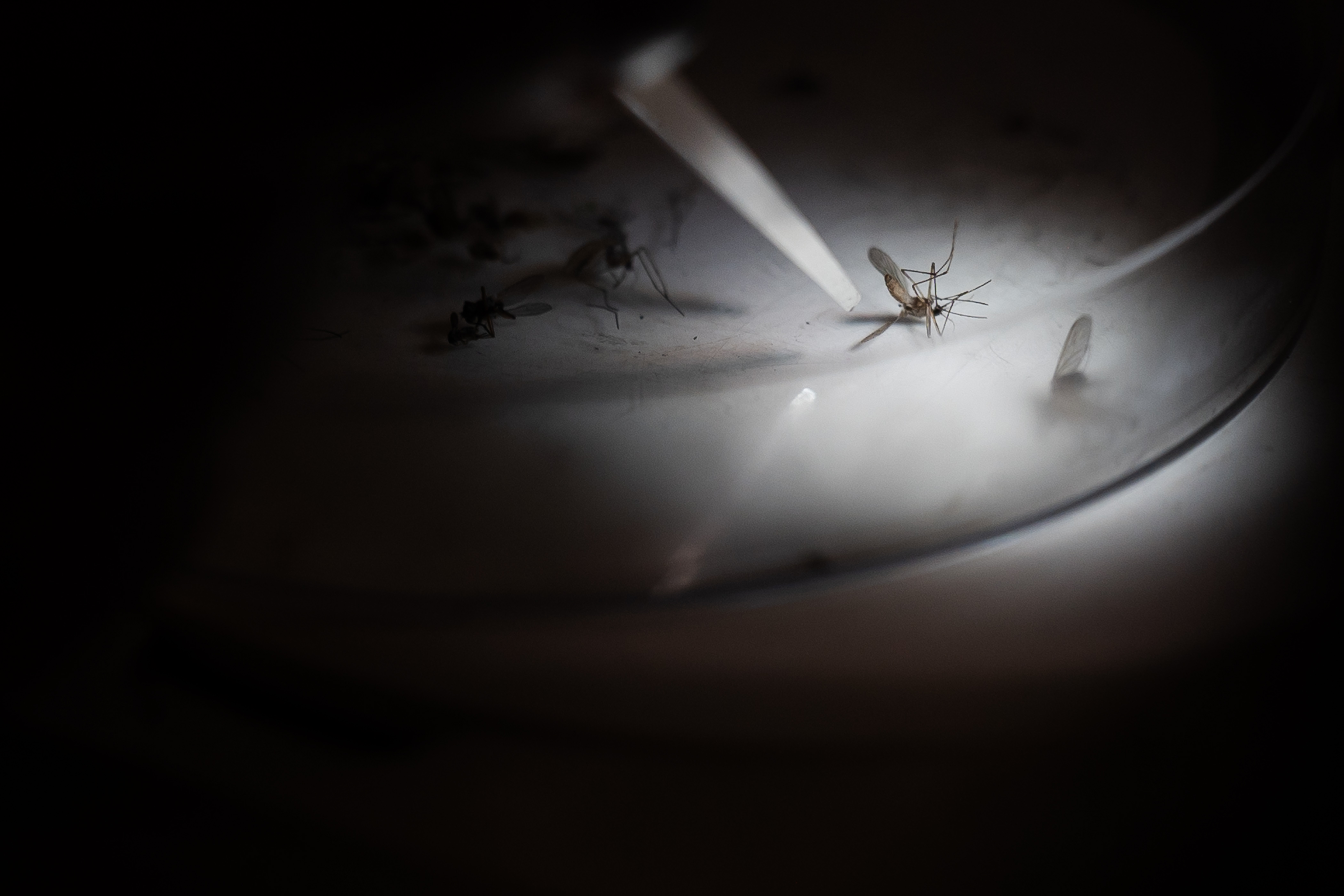
The West Nile trackers, most of them recruited through a solid biology program at Metro State University Denver, tediously separate the species of mosquito which carries the West Nile virus, (Culex) from the ones that don’t, (Aedes). Each spindly mosquito is lifted with the tiny tongs as if they’re flakes of gold.
After the Culex are counted, they’re sent, frozen but alive by the thousands, to a different lab to be tested for West Nile virus — an illness which can cause fever, fatigue and, in rare instances, hospitalization and even death. The Colorado Department of Public Health and Environment uses these numbers to track the prevalence of WNV in the Culex and pinpoint where the arm-biters are showing up.
This year, during which Colorado saw one of its wettest spring and summer months on record, entomologists and public health officials have been holding their breath as the WNV numbers steadily creep upward. The state’s first death by West Nile virus came in Weld County last week. Counties with reported human cases include Adams, Arapahoe, Boulder, Delta, Denver, El Paso, Jefferson, LaPlata, Larimer, Mesa, Pueblo, and Weld.
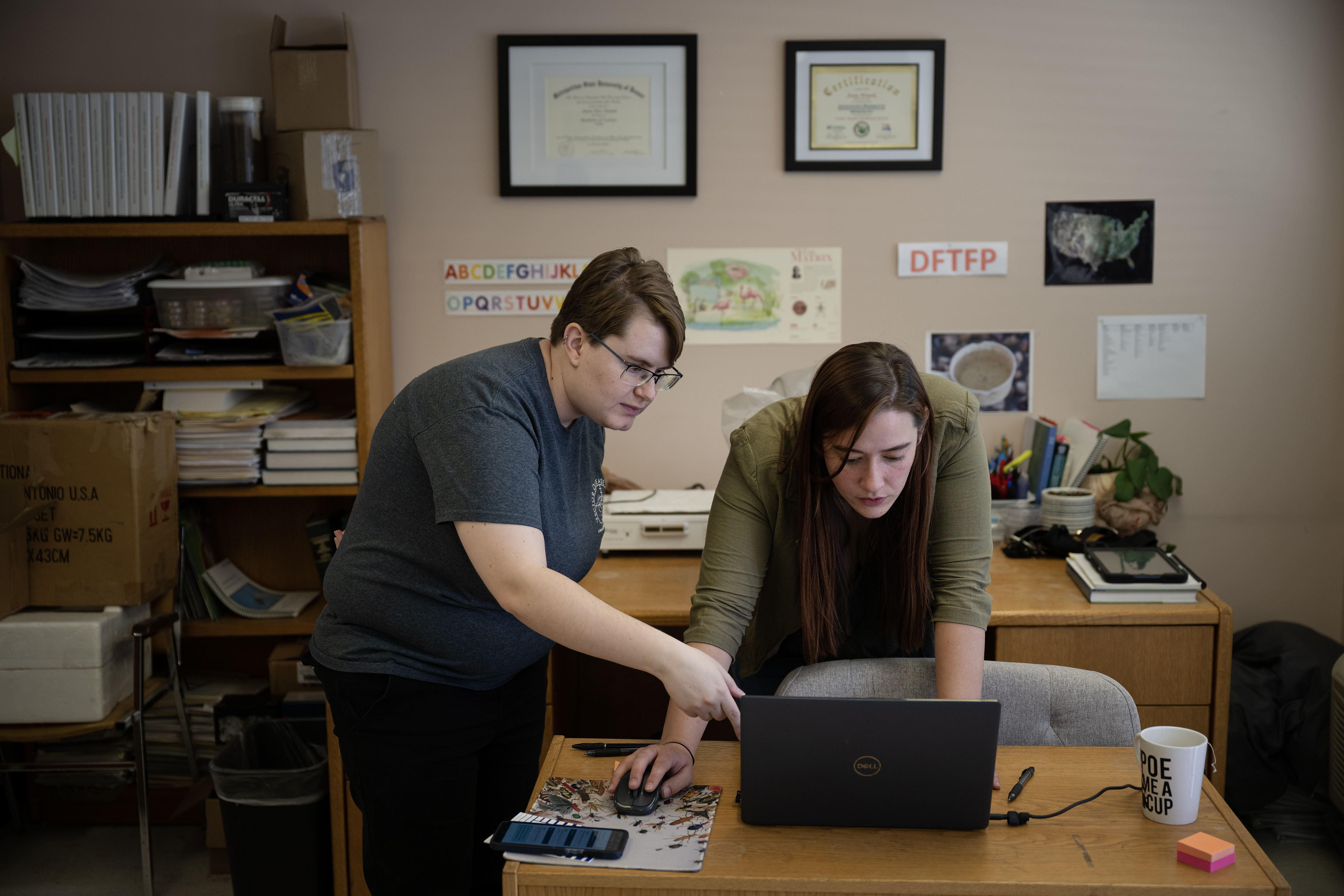
“They come out with the heat,” said VDCI Lab manager Anna Wanek, whose mouse pad is a photo of crawling insects. “We are the sentinel for when infections start occurring,” she smiled and added, “we’re also saving the eco-system a little bit.”
No cure
There is no cure for the West Nile virus in humans, but there is a vaccine for horses, which are hit particularly hard by the disease.
A horse was euthanized in Weld County last month after contracting the first case of equine West Nile virus that has been reported in Colorado so far this year.
The latest data showed that Larimer County had the most human infections with eight, Weld County had the second-most with seven, followed by Denver and Arapahoe with three, five more had two cases each.
The number of Coloradans hospitalized with West Nile stood at 19, nearly double the amount recorded last week.
Eric Aakko, CDPHE Weld County division director and public spokesperson, said it’s a mistake to consider Weld County as the epicenter for West Nile just because the first death occurred there. There are two months to go before the flying pests succumb to the initial frost.
Public health departments offer cities and counties the option of mosquito control by putting a bacterial larvicide in water bodies which gives the insects a fatal ulcer. Ninety per cent of mosquito eradication is done that way, but another method, a permethrin spray, has been more controversial.
Last month, despite warnings that traps were netting 500 times more mosquitoes than usual, Berthoud town trustees voted not to spray for mosquitoes this season over concerns about potential impacts on the area’s biodiversity and pollinators. Other residents didn’t like the idea of the government telling them how to manage their properties.
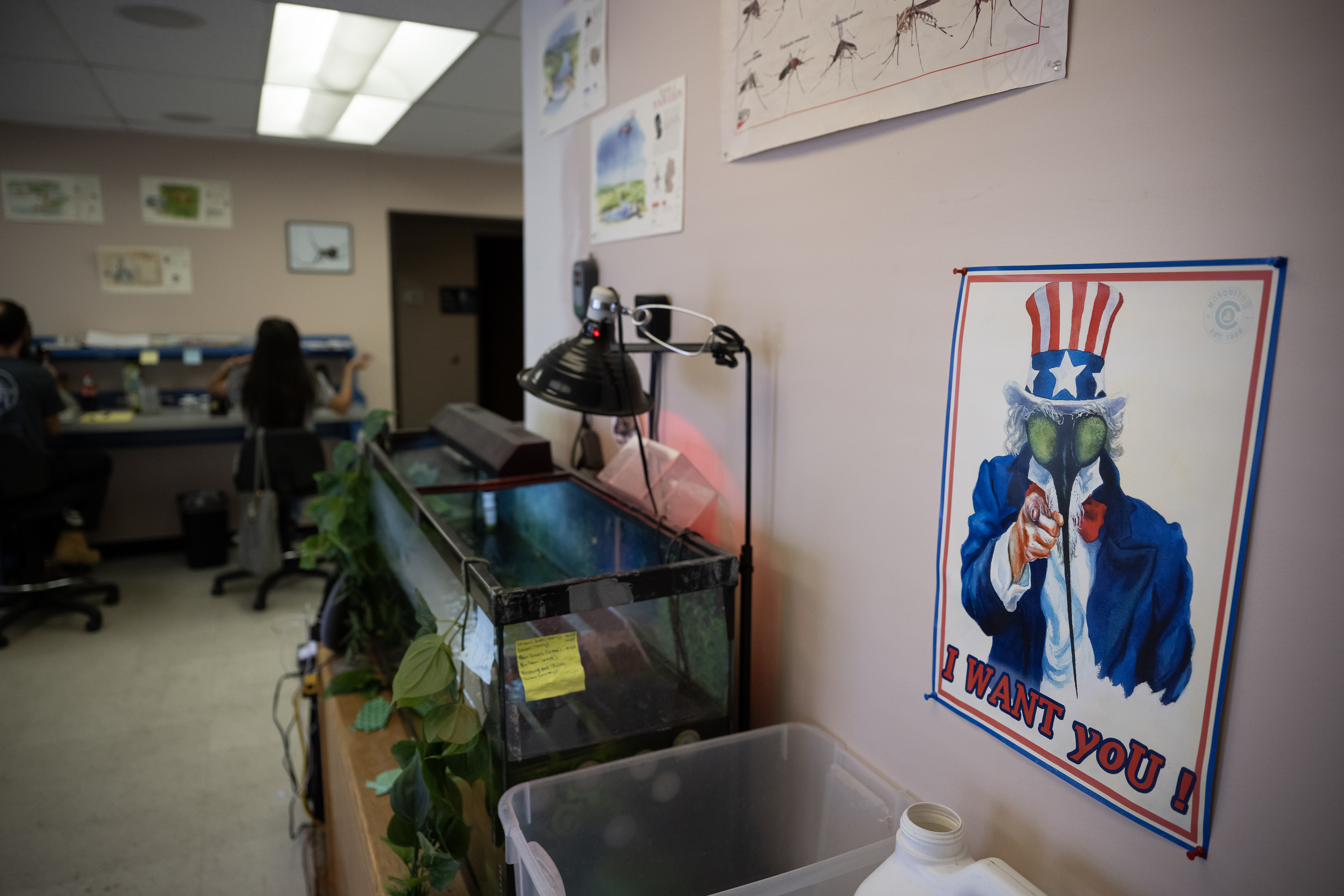
It’s an attitude which irritates Mike “Doc” Weissman, VDCI’s chief entomologist. He told The Denver Gazette that people still conjure up a mental image from the 1950’s where scores of smiling children bicycle behind the fog of DDT-spraying trucks.
“Permethrin is not DDT and it is sprayed overnight. It dissipates by morning. Sunlight and water break it down,” said Weissman.
Dozens of Colorado cities do not spray for mosquitoes including: Denver, Boulder, Castle Rock, Lakewood, Monument and Centennial. Made from a chrysanthemum plant, permethrin is lethal to ants, flies, moths, fleas as well as mosquitoes, but is also toxic to pollinators.
In Weld County, mosquito spraying is performed in almost every city including: Greeley, Firestone, Hudson, LaSalle, Frederick, Windsor and Dacono.
Weld’s rural 4,000 square miles are checkered by irrigation trenches, which makes the region north of Denver “the ideal breeding ground…the perfect combination of moisture and heat,” Aakko said.
“From a public health perspective WNV is endemic to Colorado,” said Aakko. “West Nile is here to stay, which is concerning. Be cautious, enjoy nature, but you don’t want get bit by mosquitoes.”
Culex army
Biologists say that the 2023 WNV season is on track to equal 2022 when there more than 206 WNV cases, 20 of them fatal. 2003 hit the all-time Colorado mosquito motherlode when the state was in WNV crisis. That year saw nearly 3,000 cases, 146 hospitalizations and 66 deaths.
The Culex lay their eggs in standing water, which could be as small as a backyard flower-pot or as large as a fresh-water lake.
They adore over-watered lawns and the smell of carbon dioxide and sweat, which means that joggers and bicyclists are prime candidates for infection.
Once eggs are laid, they have been known to take only two days to hatch.
This year in Colorado, mosquitoes first started showing up in May, but those were the Aedes variety which lay their eggs on water surfaces and do not carry West Nile.
Two months later, July 4, swarms of Culex burst on the scene for the first time, just as Coloradans were itching to grill and exercise outside after all the rain.
Mantas Sabuliasuskas, 28, a front-line Metro State mosquito counter, confirmed that over the last month, Culex has multiplied.
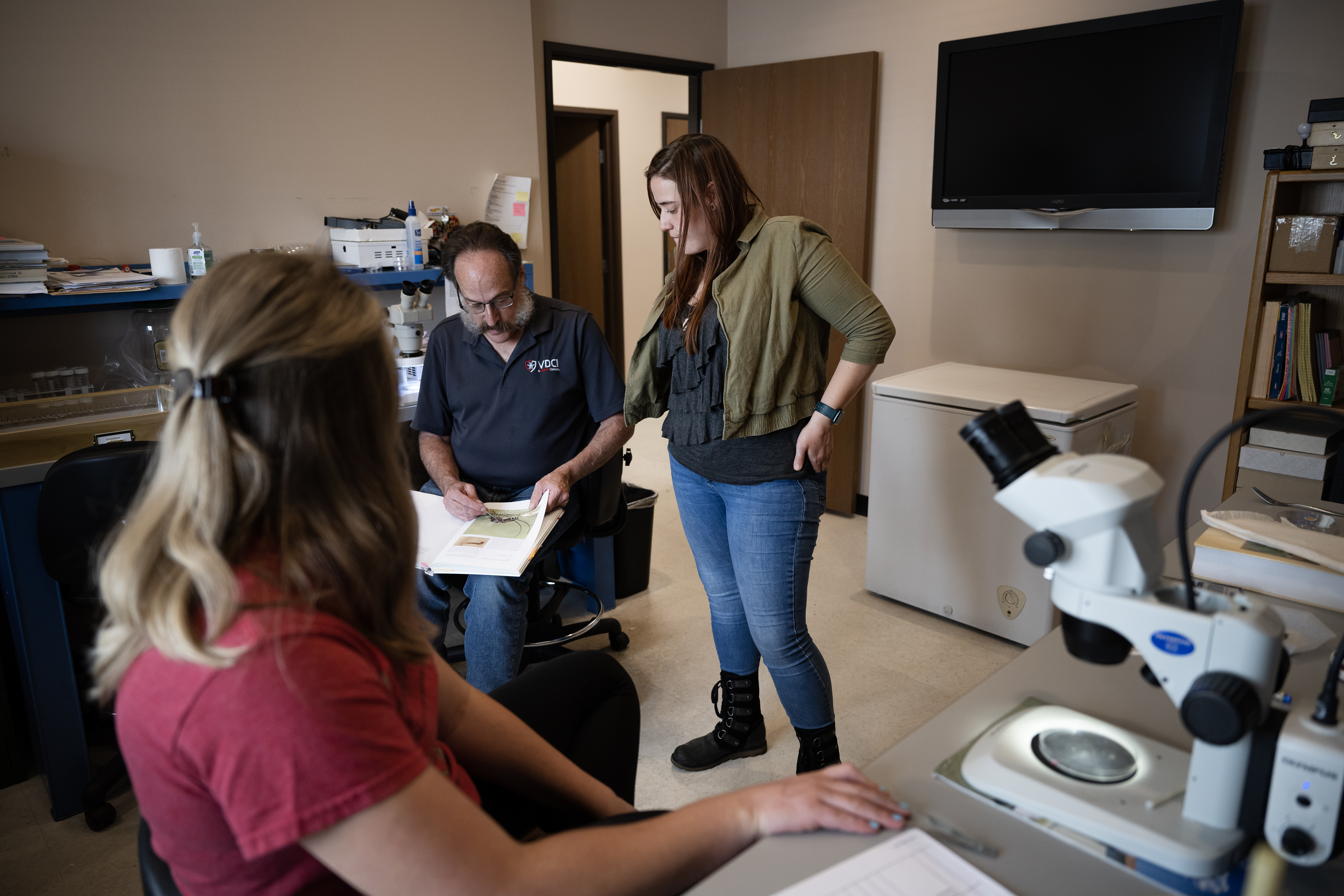
“We’re seeing almost nothing but the Culex Tarsalas,” he confirmed, his microscope keyed on a hugely magnified mosquito. To identify the Culex under magnification, he uses a cheat sheet with photos and a description of the insect which has a white marks on its legs and a white ring around its mouth.
It’s almost impossible for a layperson to distinguish a Culex from other species with the naked eye, but these biologists can, and they do it by looking at the insect’s back side.
“The Culex has a round butt and lots of others have pointy butts,” said Liz Lynch, who runs the VDCI office along with her aging pit bull, Belle.
Mosquito respect
There are 3,578 breeds of mosquitoes in the world and Colorado is home to 54 of those, six of which can carry West Nile Virus and transmit it to humans.
But wait, there may be more.
As climate change evolves, so does the ecosystem, and as temperatures climb, scientists at VDCI are noticing a new type of mosquito making its home in the Rocky Mountains. The breed was witnessed this week by one of the VDCI biologists who broke from her microscope with the news of her discovery and a high five.
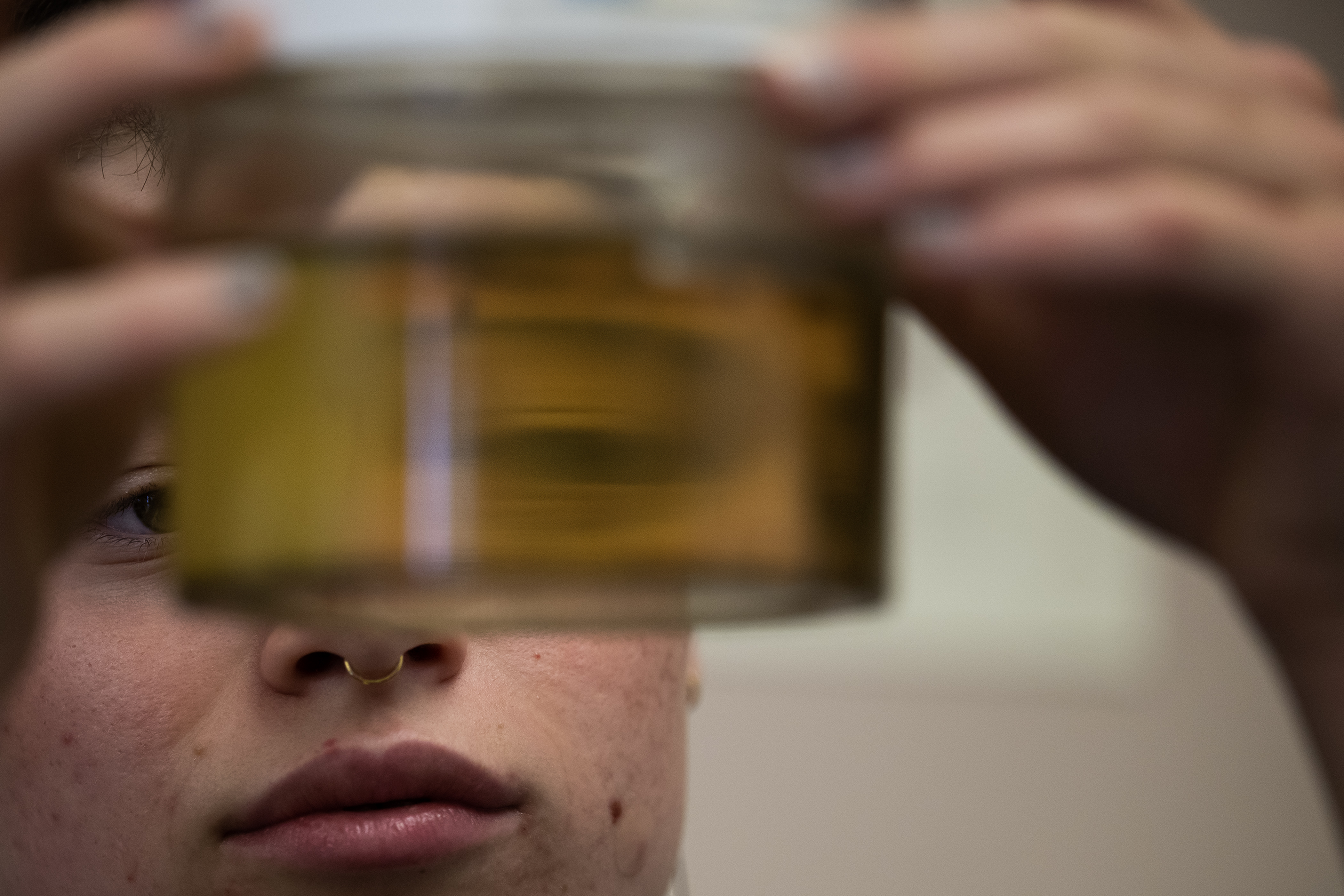
“I found a Solicitans!” Sydney Schmelzer yelled.
The Solicitans is a genus which usually only breed in salt water.
No one knows for sure why they are showing up in a land-locked state.
Like the Solicitans, Culex mosquitoes are also evolving.
They are developing an immunity to certain insecticides, and for the first time, some are surviving Colorado’s freezing winters. They’re living for weeks longer than they used to.
The good news for mosquito-haters is that they die in the sunlight “like vampires,” said Weissman. “They like shade and blood.”
The Culex, which has three genuses including the Tarsalas, is one of the only mosquito breeds in Colorado which carries West Nile virus and according to MSU Denver professor Bob “Mosquito Man” Hancock, is showing up stronger than ever before.
“Most traps in years past were Aedes-dominant. But this year, there has been an unprecedented switch toward a Culex-dominant. Further, the Culex positive pool data is robust,” Hancock said.
Though Colorado has 54 different breeds of mosquito, Culex is the primary WNV carrier which then transfers to humans by the bite of a breeding female. So far this year, 23 Coloradans have been infected and one person, a 53-year-old unidentified Weld County man, was hospitalized and died from the sometimes deadly virus.
Eighty percent of people who are infected with West Nile are asymptomatic. Around 20% may experience West Nile fever, which feels “like a crummy flu” according to Weissman.
Less than 1% actually die of the illness.
“You do not want to be that 1%,” warned Rose Gallegos, whose father Jesse lost his five-year battle with West Nile virus in 2013 at the age of 75.
Gallegos’ nightmare started with two bites to his foot while he was relaxing on his porch swing in Denver’s Ruby Hill near the South Platte River. Annoyed, he treated it with hydrogen peroxide and let it go. Two weeks later he was in St. Joseph’s hospital on life-support machines.
“We walked into his hospital room and my dad was swelled up like a balloon. It was as if someone blew him up,” said Gallegos. The father of six was in the ICU for a year, his lungs collapsed, he was paralyzed and eventually went blind.
“My dad was a big man,” Gallegos said of Jesse, who was well-known for his gregarious nature, the owner of Big J Auto Service Center. “Before he died I promised him I’d be an advocate for West Nile prevention. As persistent as the mosquito which transferred the infection that killed her dad, she is known reminding her friends to wear insect repellent and to get rid of standing water around their homes.
“I tell them, they may not want to be the individual who became my dad.”
“Mosquitoes suck you in”
During West Nile virus season, the annoying mosquito can be frightening. But if you’re a biologist whose responsibility is helping keep track of them, they are a curiosity.
“I’ll never look at them the same,” Liz Lynch said. If a mosquito lands on her arm, she tolerates it, staring at its markings to determine which genus it is before she swats it away.
“Mosquitoes will always be around,” Lynch said. “But we can’t get back the lives of the people who have died.”
VDCI Lab is a biologist’s dream. In terrariums and aquariums is a menagerie collected by Wanek, who grew up relocating prairie dogs. There is Stanley the water turtle, Der the salamander, Morgan the frog and Ivan the jumping spider.
Wanek does not name her mosquitoes, but she admits to feeling a certain comfort in a world of uncomfortable creatures. Said the bug scientist: “Mosquitoes suck you in.”
Five West Nile virus tidbits
- There’s a WNV vaccine for horses, but not for humans.
- Only female mosquitos bite for their needed “blood meal.” The protein supplies the nutrition they need to get them through the egg-laying process.
- Mosquitos are attracted to smell, so heavy breathers who emit CO2 are more likely to be bitten by them. Also attractive to mosquitos are flowery perfumes (they smell like the nectar they crave) and sweat.
- WNV was first isolated in a woman in the West Nile district of Uganda in 1937. Sixty-five years later, WNV first appeared in Colorado (2002).
- Mosquitos do not have the ability to distinguish between human blood types and thus are NOT attracted to particular blood types.

Get OutThere
Signup today for free and be the first to get notified on new updates.
PREV
PREVIOUS

Inside the Biden family-tied accounts at the heart of the GOP 'foreign influence' inquiry
Republican congressional investigators have now detailed in three memos the various Biden-linked accounts they say hauled in over $20 million combined from overseas as the GOP inches toward subpoenaing the family. The House Oversight Committee on Wednesday released its third memo on the Biden family’s foreign business dealings, which, like the May and March memos, […]

Food stamps: SNAP payment worth up to $1,691 for Kentucky recipients to arrive in seven days
Kentucky residents who receive payments from the Supplemental Nutrition Assistance Program can collect up to $1,691 in food stamps over the next seven days before the program wraps up for August. Payments are sent out in the Bluegrass State beginning on Aug. 1 and ending on Aug. 19. Eligible households can expect to receive their […]