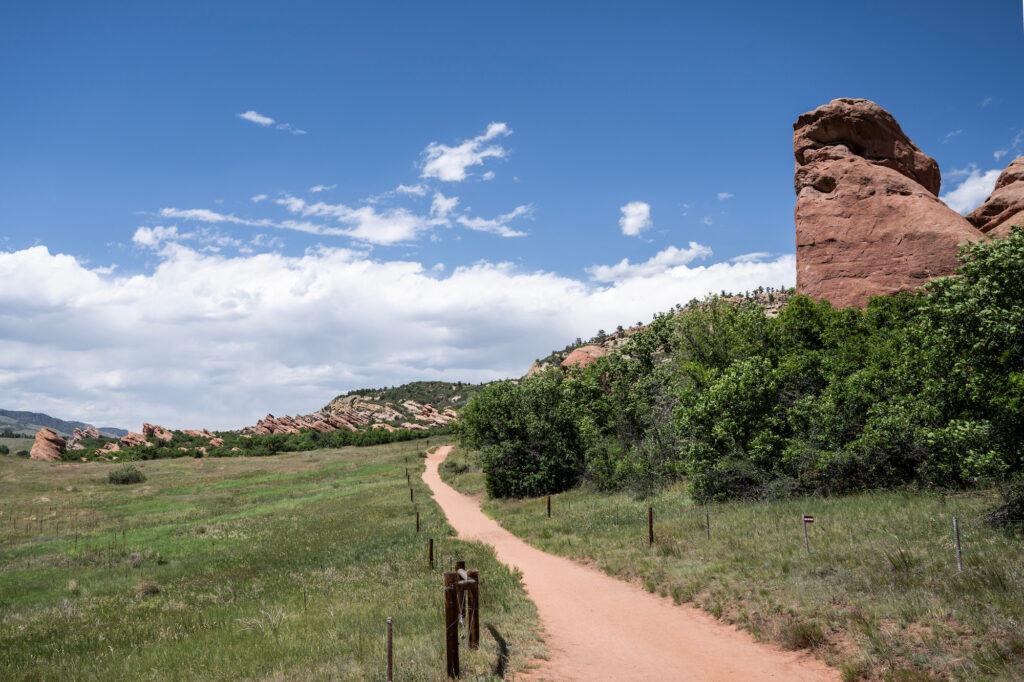
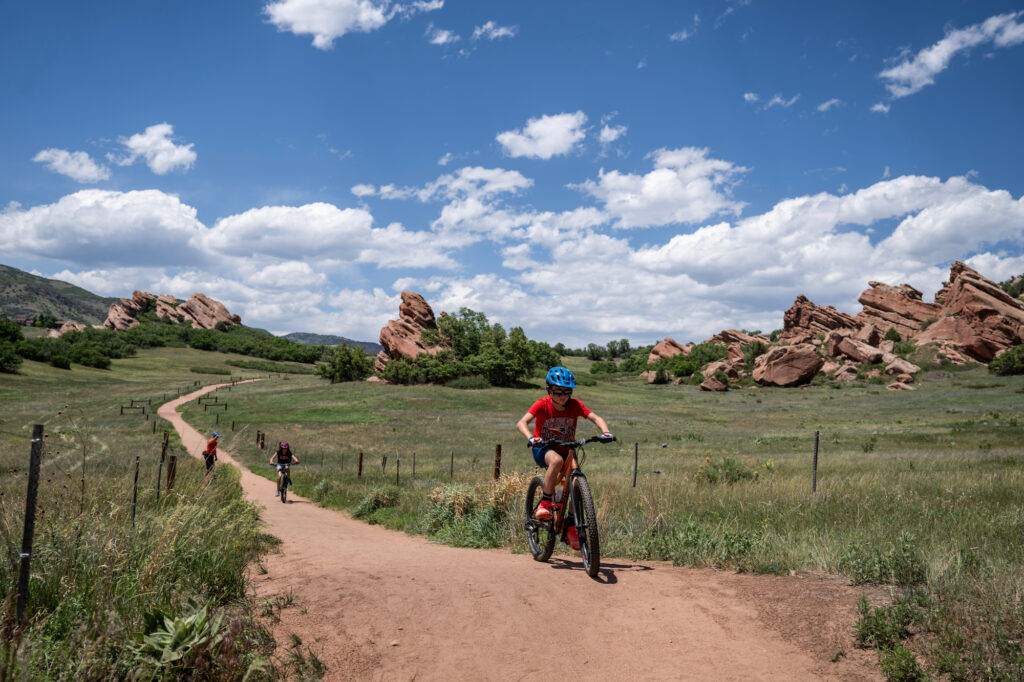
This red rock wonderland hides behind a hogback near Denver
Around Denver, people know Red Rocks Amphitheatre. They know the red rocks of Roxborough State Park. They know the related, similarly aged Flatirons in Boulder and Garden of the Gods in Colorado Springs.
But do they know South Valley Park?
Tanner Marshall, a natural resources specialist with Jefferson County Parks and Open Space, offers yet another better-known park featuring the ancient sandstone of the Fountain Formation: Eldorado Canyon State Park.
“If you’re interested in those kinds of views — which, why wouldn’t you be? — I do think South Valley is one of those that flies under the radar,” Marshall says. “We hire seasonal staff every year, and without fail, when we first take them there, they drive by and they’re like, Whoa, I didn’t know this sort of thing was right here.”
Right here behind the mighty, craggy wall that is the hogback looming over Colorado 470. Residents of Ken-Caryl of course pull off, continuing west through a slot in the hogback to their homes nestled in the valley.
Should outsiders do so, they’ll see a sign directing them to something else nestled here: a wonderland with an unassuming name.
Perhaps a name like “South Valley Park” lends to the place Marshall knows as a hidden gem. Growing up in Evergreen, he had never heard of it. (Nor had our photographer, who grew up in nearby Littleton.)
“It just hides there right on the other side of the hogback from C-470,” Marshall says. “Unless you have some reason to get off and venture behind that hogback, it’s easy to miss.”

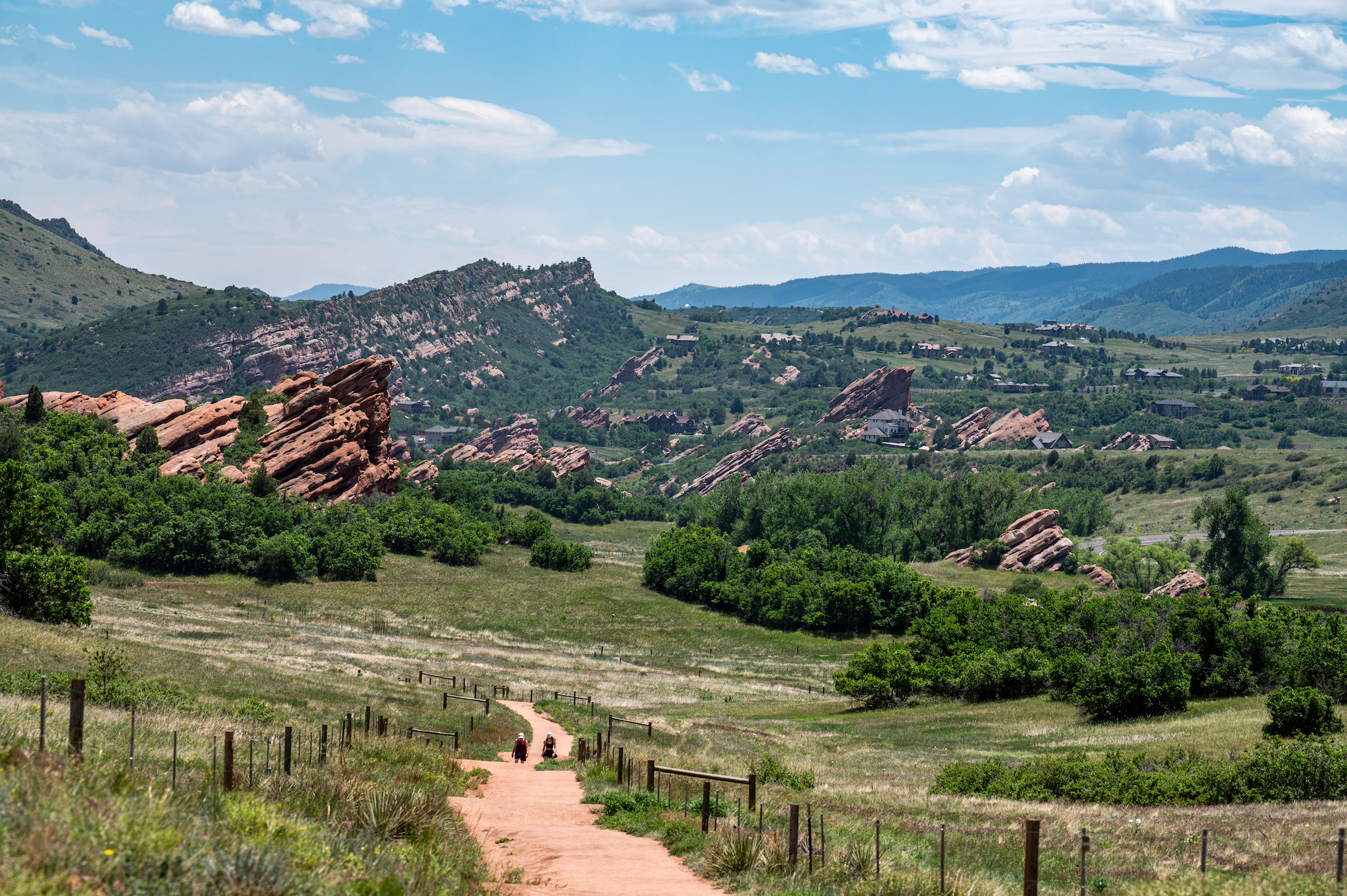
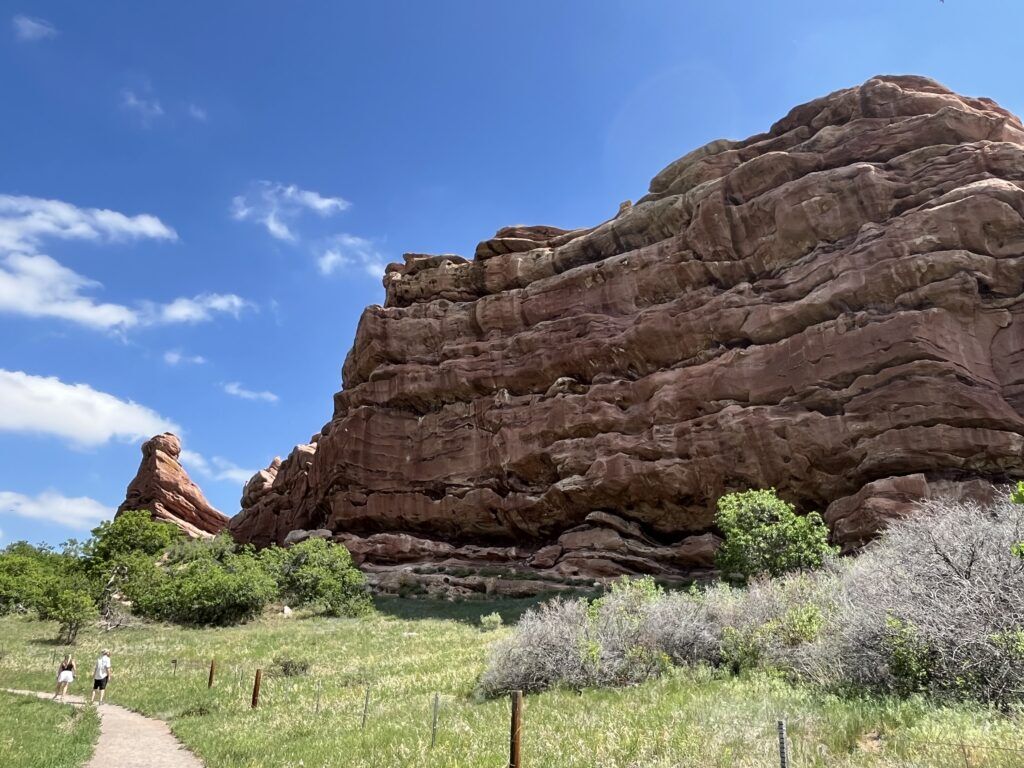
It’s not to be missed — 995 acres of bulging, angling monoliths and pillars that pierce the green, wavy, wildflower-sprinkled valley. It’s not to be missed in the late afternoon, when the sun sets and the high, hulking face of the hogback glows orange and pink against the multi-shaped formations that recall some 300 million years of Earth’s history.
“It feels like stepping into a different world right out your back door,” Marshall says. “I almost feel like I’ve been transported to the West Slope of Colorado; I get this snapshot of feeling west of Grand Junction, or like I’m in Moab.”
That mighty hogback serves as a natural barrier to the highway, he adds. “It’s pretty insulated from the noise. When you’re back there, you don’t feel like you’re in a bustling metropolis. It feels like you’re out there.”
And Marshall knows there to be more than meets the eye.
He’s a grassland ecologist who knows South Valley Park to be home to four plant species listed as rare by the state. The vegetation attracts mule deer, elk and an array of songbirds and raptors. Golden eagles, American kestrels and prairie falcons have been spotted amid the rock, which also provides an overwintering home for various reptiles.
The fencing between the outcrops and trails is aimed at preserving those homes, Marshall says. It’s also aimed at keeping people from climbing or taking pictures on the rocks, potentially damaging them.
It’s about maintaining the experience as well, Marshall adds: “It’s a different experience if you go there and there’s people crawling on all those formations.”
For generations, the land was only privately enjoyed.
The private reservoir beside South Valley Park is named for Frank Mann, the property owner going back to the 1880s. According to a historical account by Jefferson County, John Shaffer bought land in 1913 and christened it after his two sons, Kent and Carroll.
Different owners ran cattle across South Valley through 1980, when the Ken-Caryl subdivision was platted. By then, the Johns Manville Corp. had established headquarters here. In 1987, the business sold acreage to Martin Marietta Corp, now Lockheed Martin.
The company’s big, gleaming base is seen along Grazing Elk Trail, a loop on South Valley Park’s west side that grants a view from an elevated meadow. One looks across the hogback to the other side of the park, where Ken-Caryl Ranch Master Association maintains open space reserved for residents.
Also here from above, it’s easy to see rock formations beside houses up and down the valley. And it’s easy for Marshall to imagine a different fate for this sanctuary preserved in 1997.
“You drive west of there and north of there a little bit, and you see similar rock formations literally in people’s front yards,” he says, mentioning others spread across the private likes of Red Rocks Country Club. “So it wouldn’t at all surprise me if it weren’t preserved, it would’ve been developed, and we wouldn’t have these experiences available to us.”