







Utah agave enters death bloom ‘grand finale’ at Denver Botanic Gardens
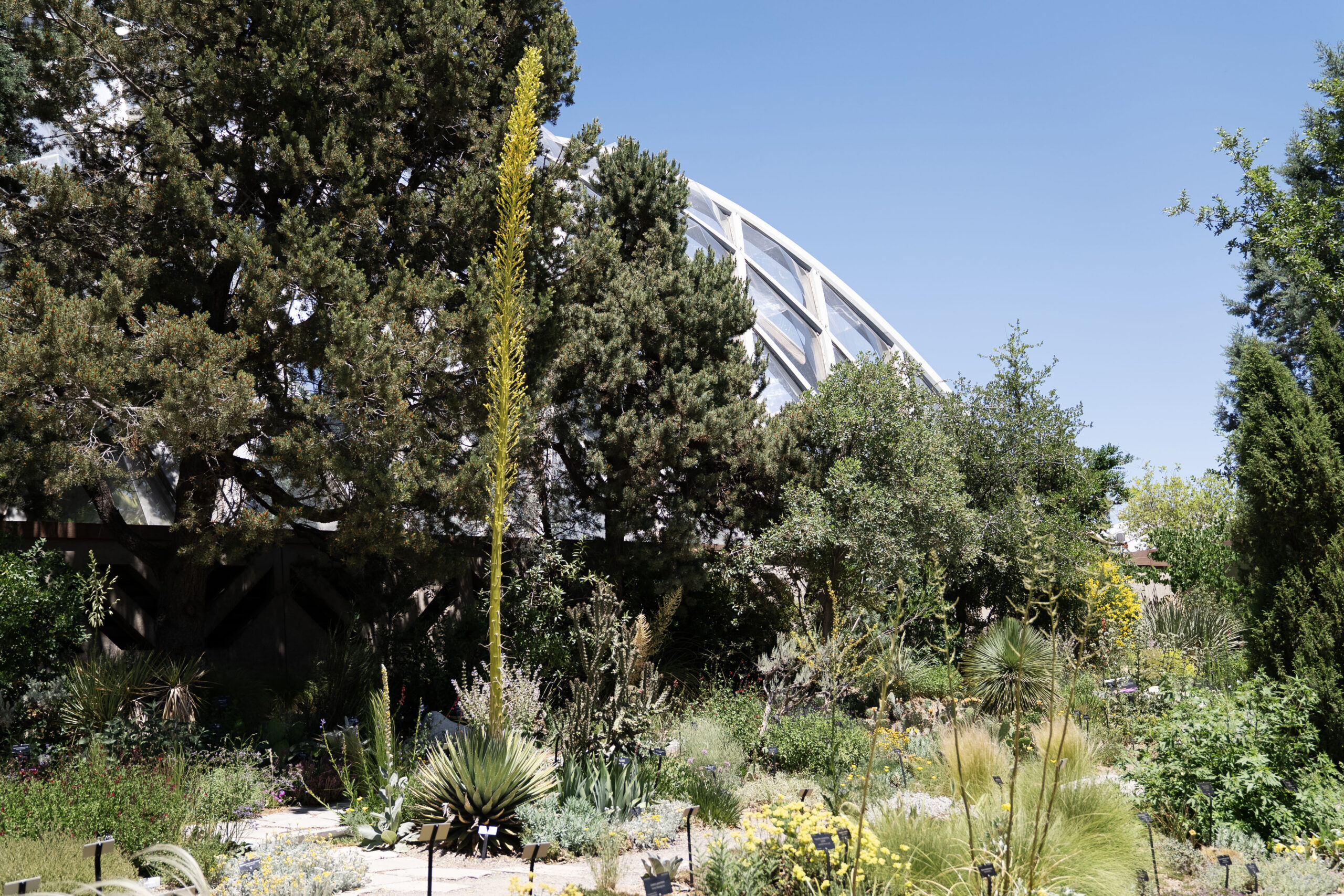
The 25-year-old plant shot up a towering stalk to produce seeds before its demise
A few years into Dan Johnson’s 29-year horticulture career at the Denver Botanic Gardens, the nonprofit acquired a hard-to-come-by agave plant. The now decades-old Utah agave has “survived multiple hailstorms, polar vortexes, crazy swings in weather … through all of it, this plant has just been a solid survivor,” Johnson said.
A subspecies of Utah agave plants, the Kaibab agave, gets its name from the northern rim of the Grand Canyon’s Kaibab Plateau. At the end of the plant’s life cycle, it gets its only chance to reproduce, sending a 12-foot, asparagus-like stalk out from its spiny base.
Although bittersweet, Johnson sees the plant’s spectacular display at the end of its life cycle as a chance to educate the public and garner interest in the garden’s mission.
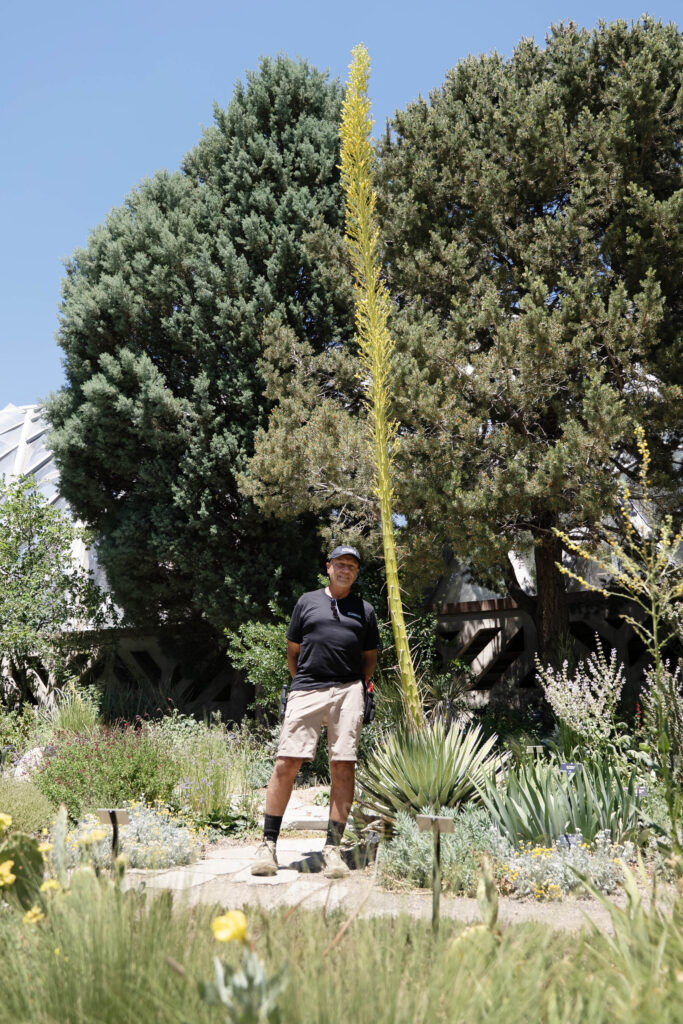
“I don’t really like to call it a death bloom as much as a grand finale,” Johnson joked.
Horticulturists hope it will produce seeds they can germinate and grow more with, although it is unclear if it will pollinate without another one in bloom nearby. Currently, yellow flowers dot the soaring stalk, which Johnson estimates is about halfway through its bloom.
Visitors unable to make it for the bloom can rest easy though, as the stalk will stay up through autumn and potentially the winter. The plant can be found in the Roads Water-Smart Garden near the York Street entrance.