







Vanishing starter home: Buyers find that even at higher prices, Denver area pickings are slim
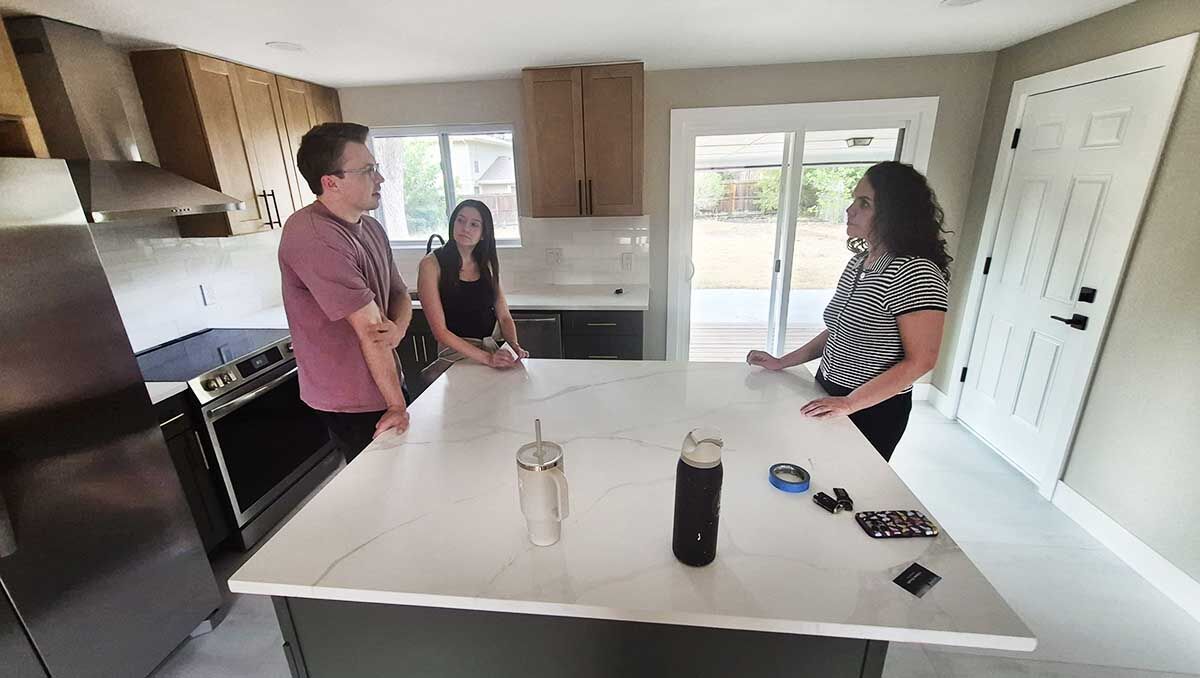
On a hot July night, Matt and Kelly were on all fours, measuring the lengths of walls in a home in Denver’s Virginia Village area, east of Colorado Boulevard and south of Leetsdale Drive — figuring whether a widescreen television would fit the space.
The pair, who moved west last year from Washington, D.C., are among a generation of potential buyers, very much wanting to buy their “starter home” — hoping to do what their parents and grandparents did decades ago, to climb onto the homeownership ladder.
The decisions about that go way beyond room dimensions.
Despite what analysts had hoped would be a market of readjusted prices, the least expensive single-family home in Colorado now runs around $400,000. And even for those qualified to reach well beyond that, that leads to a calculation about how much basic homeownership is worth.
Remodeled home in a 1960s neighborhood
The house that Matt and Kelly (they asked that their last names not be used) were looking at Thursday night was a remodel of what had been a three-bedroom/single-bath ranch built in the 1960s. Coming from a nice apartment in Cherry Creek, they wanted to keep Kelly’s commute to a medical campus in Aurora workable (Matt works from home).
But they also liked the dining scene and street life that was walkable from their Cherry Creek apartment.
Their real estate agent, Tori Worthing with MileHiModern, had taken them to explore areas close to Cherry Creek like Congress Park, Lowry and Central Park, as well as westside options like Berkeley and Wheat Ridge. This house, in a tract neighborhood that 60 years ago was designed for affordability, had been remodeled into a 4-bedroom/3-bath plan, showing new finishes and baths and a kitchen that Kelly said was the nicest they had seen.
But it retained an old single-car garage, and the pair spent a while in the yard, commenting on issues that needed attention there. The listing, Worthing notes, had originally come on the market at $670,000 and had now been reduced to $639,000.
The couple had made a bid on the home days before, but it was declined. Now they were weighing whether to make a second one.
“We put in a pretty low offer initially,” Matt told The Denver Gazette. “You have to come in pretty low for assuming moderate appreciation over time, let’s say over the next three or five years or so.
“We’ve just tried to do our best to model (the situation) out, staying at what that would look like compared to continuing to rent and investing that down payment into the stock market.”
And yes, he quipped, stock investments are also volatile.
Wealth gains from 2000
Practically all Americans agree on how important it is for young people, as early as possible, to buy what will likely be the most important and most personal investment they will ever make.
That message has been underscored by huge gains in wealth that homeowners here and elsewhere harvested since the year 2000.
With inflation figured in along with a price collapse during the Great Recession of 2008-2012, the typical buyer who bought during the millennium year ended up seeing a “real” 15% increase in investment over the two decades through 2019.
Then the pandemic arrived, and prices soared.
That average owner would see prices increase almost 100% over the next three years, yielding another 60% increase in real value, after calculating for inflation.
And all the time that owners were reaping the rewards, most of them were actually living inside their investment.
Now, those price gains have held in place over the past three years — good news for owners and very bad news for a new generation of potential buyers wanting to play out the experience of their parents and grandparents.
While the statewide starter price rests near $400,000, Denver area agents say that’s too low for what starting buyers are seeing now in the metro area. Many see $500,000 as a more realistic threshold.
According to Zillow data, Colorado now has three cities, all inside the seven-county area, where the very lowest home now exceeds $1 million (Cherry Hills Village, $2,156,940; Bow Mar, $1,609,515; and Columbine Valley, $1,233,977).
Astounding as that seems, Colorado offers better prospects than many other areas. California, according to Zillow, has 105 cities with million-dollar starter homes. Even Texas has seven.
The problem for fledgling buyers is not just a western-state problem. According to a study released by online trader list BestBrokers, the meager 16% that a typical Colorado annual income contributes against the median price of a starter home is still better than what buyers find in 10 other states.
Only 21% of purchases are first-time buyers
States where starting buyers are worse off include Arizona (15.65%), Washington and Oregon (each around 15%), Idaho and Montana (each near 14%), and California (12%).
The National Association of Realtors says that a record-low 21% of purchases today are going to first-time buyers. The median age of those making a first buy is now 40, a record high.
Meanwhile, getting onto the housing ladder now has become even more complex, as agents note some issues particular to the post-pandemic market.
The first issue is that despite slower sales that followed after the rise in interest rates in 2023, prices haven’t really dropped much.
According to the newest stats released this week by the Colorado Association of Realtors, the median price in the state is $600,000, up almost a full percent from where prices stood in early summer 2025, amid what analysts expected to be a retreat following the big pandemic run-up.
A median single-family home, CAR says, stands at $606,500, up almost 2% over early summer 2025. Buyers typically prefer single-family homes, with yards and more privacy, over condos and multifamily homes. The latter are priced lower but are often hampered by issues over homeowner association fees and insurance liability issues.
Even condos and townhomes, CAR notes, have maintained their prices in the slower market.
The second issue adding complexity is the price of rentals versus for-purchase homes.
Denver saw a record 23,000 apartment units arrive on the market in 2024, spurred by a shortage of rentals at the height of the pandemic. That left a surplus of 12,000 vacant units, competing against older apartments that often have lesser-quality finishes and amenities.
Competition from rentals
Accordingly, apartment rents this year are down 8% from 2025 rents, and those lower prices make the advantage of owning versus renting less clear for would-be buyers.
For buyers determined to purchase, agent Brandy Pfalmer with Graham Group Real Estate says that all price ranges are competitive now.
“Every Thursday morning, I and other Realtors are looking at what comes on the market,” she said.
She is working with a couple now able to reach higher price ranges, but they want to be close to popular neighborhoods west of downtown in Highlands, centered on Highlands Square. After starting two months ago, she has shown them 15 to 20 properties. One of those captured their interest, in West Highlands, at a price point over $1 million, near the top of their intended range.
However, the home went to another buyer for $75,000 over asking price, following multiple offers.

“It’s a tough price point, as high as it sounds,” said Pfalmer.
She notes that prices can vary greatly between locations —between areas offering primarily older homes and ones with builders’ new models designed for lower budgets.
Pfalmer has another buyer who wanted to make a first purchase — an Air Force veteran, getting a certification for HVAC work, with a budget of $475,000. She ended up finding her client a new-built home north of Brighton that offered builder financing. With a lower mortgage rate figured in, her buyer’s qualifying range easily jumped to within range of the builder’s homes.
“Builders are able to give these lender incentives, getting interest rates down into the fours,” Pfalmer noted. “It opens things up for these first-time buyers.”
Better numbers in Colorado Springs
Despite Colorado’s relative dearth of starter homes, younger buyers in Colorado Springs are posting some of the best homeownership numbers in the country — ranking ninth best in the nation in terms of purchase access, according to ConsumerAffairs. That study shows 18% of Springs residents under 35 owning a home, seventh in the national ranking, compared with 14% nationally.
But Denver buyers have options that help them purchase. Some programs assist with down payments or bring down the price of for-purchase units.
Matt and Kelli, the couple who were contemplating the Virginia Village home this past week, ultimately opted not to make a second offer on the property, according to their agent, Tori Worthing.
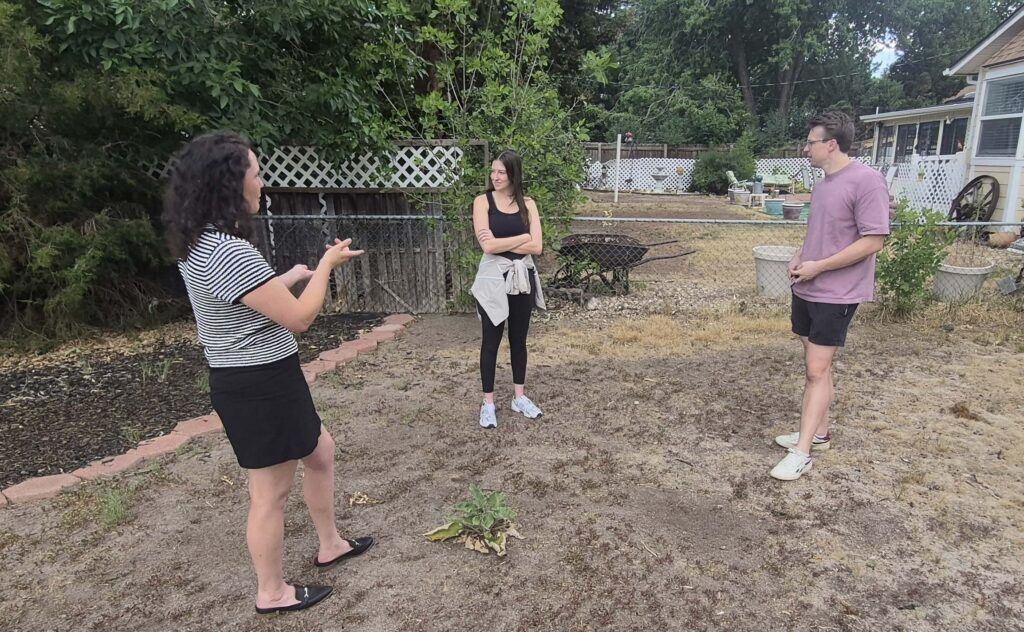
“People think there is so much inventory but, when you really get out there and look, inventory is pretty strapped,” Worthing said.
“The market is tough,” added Annie Hancock, who directs Residents Community Connections programs in association with the Denver Housing Authority.
DHA offerings include a self-sufficiency program designed to help buyers making a small fraction of the area median income navigate their way out of public housing by helping them grow their career options, and over the course of years, make them eligible for subsidized options that allow them to purchase a home.
Hancock says DHA is also at work on a program to build new, more affordable homes on existing properties owned by the city of Denver, where lot size allows for creation of a second home, along the lines of an auxiliary dwelling unit.
DHA also offers a full-day class by HUD-certified counselors, open to all buyers, as a starting point for anyone entering the market, to understand what will be required to qualify for government-backed loans with lower down payments and lower mortgage rate requirements.
Classes for first-time buyers
Veronica Ware, executive director of the Denver-based Colorado Housing Assistance Corporation, told The Denver Gazette that the current market calls on buyers to press for concessions from sellers. Those can be used to buy down a mortgage rate, perhaps amplifying those dollars into significant monthly savings that add up over the course of a loan.
CHAC also provides low-interest second mortgages that can be used toward down payments or closing costs for low-to-moderate-income households. And Ware’s organization, like DHA, offers classes available to all that teach buyers how to qualify.
Those are free and offered online but also in person, including one set for Thursday, 4:30 p.m., at CHAC’s offices at 670 Santa Fe in Denver. That requires a reservation, available at CHAConline.org.
DHA’s next First-Time Homebuyers Education Workshop is noon to 6 p.m. Wednesday. Sign-up is available via the Denver Housing Authority Homebuyer Education Page.