







Victor Marx’s money matters — but just how much? | Jimmy Sengenberger

The Republican primary for governor is underway in a three-candidate race.
On Wednesday night, three conservative candidates participated in a forum hosted by conservative group Colorado Citizenry and several GOP organizations. In the spotlight were two Republican contenders — state Sen. Barb Kirkmeyer and state Rep. Scott Bottoms — and former U.S. Rep. Greg Lopez, who is running as an unaffiliated candidate.
The standing-room-only crowd heard a serious and substantive discussion on issues ranging from the state’s bloated budget and $1.5 billion shortfall to affordability, energy, agriculture and roads.
The noticeable no-show? Missionary leader and first-time GOP candidate Victor Marx, who was invited in January but didn’t answer. Later, Lopez offered to bow out if Marx attended. Ultimately, Marx declined — holding a solo livestream event instead.
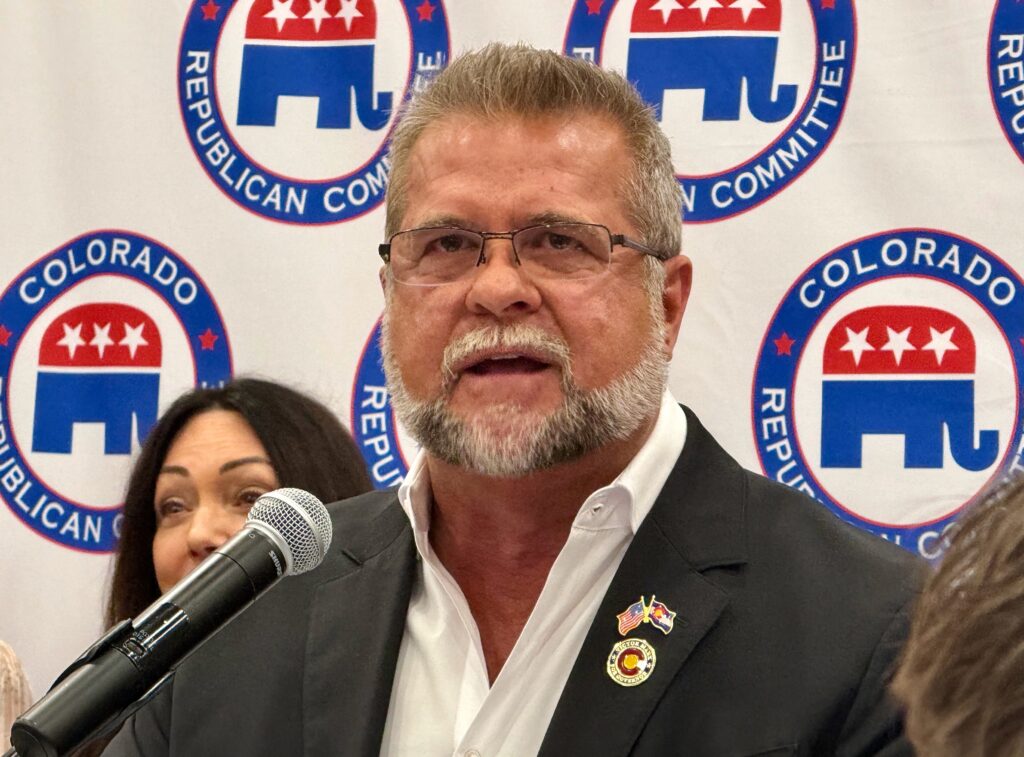
He’s only scheduled for two debates, including one co-moderated by The Gazette’s affiliate Colorado Politics. The Marx campaign has argued he doesn’t need to attend because he’s already winning on his own terms.
Marx has raised by far the most of any Republican candidate, boasting $2.3 million since he entered the race last year. His latest report shows $1.66 million alone. No one else comes close. Kirkmeyer reported roughly $127,000 in contributions; Bottoms nearly $70,000.
But here’s the catch: Marx has $531,225 in cash on hand, with just $183,204 raised this period. That’s a monthly burn rate of $370,000, or 89 cents spent per dollar raised — leaving just six weeks of wiggle room before the June 30 primary. Where did the money go?
The report contains hundreds of contributions that appear to be duplicates, carry wrong addresses or push donors over Colorado’s $1,450 contribution limit in the primary.
The campaign first reported raising over $2 million on April 17 — months into fundraising — yet Marx campaign communications director Roger Hudson told me they only notified the secretary of state of the discrepancies this Wednesday.
Hudson blamed the address errors on a column-sorting issue while uploading to the state’s TRACER system. Brandon Wark, host of the Free State Colorado podcast, appeared to corroborate that explanation after donating $5 to all three GOP campaigns. Marx’s report was the only one that got his address wrong.
At least $35,000 appears owed to 56 donors who exceeded Colorado’s $1,450 primary limit. One donor’s aggregate totaled $5,000 across five transactions — more than three times the legal limit. Hudson told me those donations will be refunded per state law, pinning the issue on the “heavy carry” of having a single person handle compliance. “We’ve now moved on to a big firm who’s going to do all of our compliance,” he said.
Perhaps the most glaring example involves three separate contributions totaling $2,491.02 — nearly $1,000 above the allowable limit — filed under “Isaiah Foundation” but addressed to the personal home address of the president of the Castle Rock-based Isaiah 58:12 Foundation, a 501(c)(3) nonprofit forbidden from making political contributions.
The campaign attributed it to “likely a disclosure error” but provided no further information by deadline. It remains unclear whether it was an individual contribution or an unlawful nonprofit donation.
“Everything’s trustworthy,” Hudson told me. “The dollars are the same, the donors are the same.” Fair enough — but those dollars include tens of thousands above what’s allowable under the law.
The donation issues are curable, albeit costly. The deeper questions come from the expense side of the ledger, where money that’s spent isn’t coming back.
The campaign spent $564,637 on two fundraising firms, HSP Direct and Active Engagement, to reach 13,616 unique donors — about $41.47 per donor, far more expensive than reaching a voter through advertising. According to the report, the campaign averaged $88 per transaction, or $121.94 per donor.
“The front end costs are a little higher, but they pay off throughout the entire race. Anybody who’s run a campaign knows that,” Hudson said.
Sure, prospect mailers can boost name ID while raising funds. But this is a primary campaign wrapping up on June 30 — with only six weeks’ worth of cash on hand and no general election guaranteed.
Beyond fundraising vendors, the campaign reported nearly $577,000 on consultants and professional services, $270,000 on miscellaneous expenditures and only $31,527 on advertising — 2.2% of total spending, and less than $37,000 on travel and lodging.
Nearly $50,000 went to security firms, unusual for a primary candidate who isn’t an incumbent. Another $46,000 went to apparel firm Custom Chic Studio. WDR Aspen received $74,100 and Campaign Catalyst $50,000. The campaign hired some 30 different consultants, including two Marx family members who received a combined $15,040.
When asked about the consultant spending, Hudson pivoted to Bottoms — who raised $180,000 total — paying himself $2,000 a month as a consultant.
“I’m having trouble with some of the questions because the only political candidate anyone is talking about in the state of Colorado is Victor Marx,” Hudson said. “No one’s even talking about Jena Griswold — none of these other races. So apparently these dollars are paying off.”
Again, fair enough. But being talked about as a candidate and being positioned to win are different things, especially when the money that could close the gap is already spent.
Democratic candidates Phil Weiser and Michael Bennet have raised $5.9 million and $4.4 million, respectively. Weiser carries $2.7 million in cash on hand; Bennet holds $1.16 million backed by $2.5 million in super PACs.
Raising money only matters to the extent it is spent wisely. With the other party’s top contenders holding a five-to-one cash advantage, Marx’s headline-grabbing numbers start to look less like a movement and more like an attempt to impress the neighbors.
Jimmy Sengenberger is an investigative journalist, public speaker, and longtime local talk-radio host. Reach Jimmy online at Jimmysengenberger.com or on X (formerly Twitter) @SengCenter.