







Flash flooding hits El Paso County hard; Warnings indicate more might be on the way
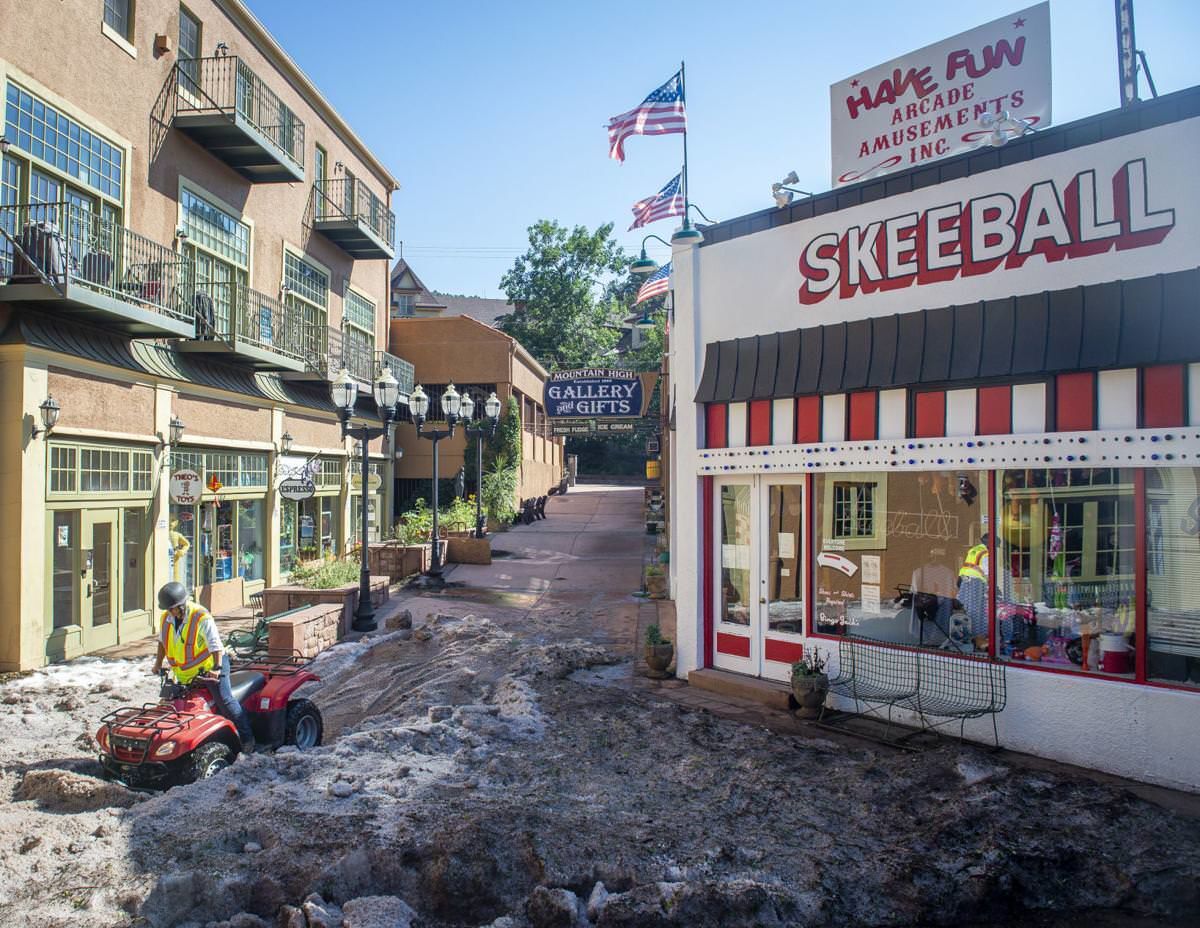
El Paso County officials are warning the public to stay on high alert for flash flooding and debris flows Tuesday afternoon, as the previously-parched soils pummeled by rain and hail Monday have little room for more moisture.
“Even though the forecast doesn’t show sudden and sustained rains quite like yesterday, we have soils that are pretty well saturated and can’t absorb a whole lot more water,” said county spokesman Dave Rose. “Even a less significant storm even can still cause serious street flooding.”
The National Weather Service in Pueblo predicted rains to arrive sometime after 2 p.m. and to peak about 5 p.m. Meteorologist Bill Line expects the storm to be less severe than Monday’s, though heavy rains, strong wind gusts, inch-sized hail and lightning are likely.
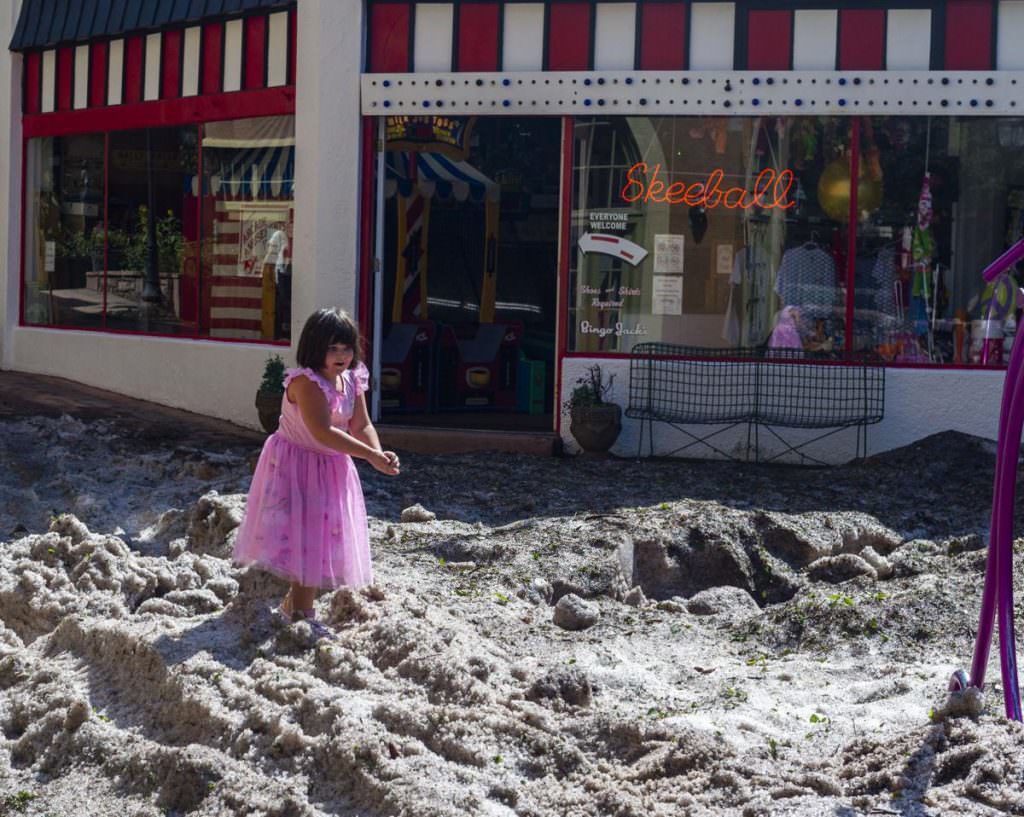
Madison Guessford, 5, plays in hail in downtown Manitou Springs. Photo Credit: Dougal Brownlie.

Madison Guessford, 5, plays in hail in downtown Manitou Springs. Photo Credit: Dougal Brownlie.
Monday’s storm shocked El Paso and Teller counties, with reports of 1 to 3 inches rain, hail, mudslides, lightning and even a funnel cloud. At Colorado Springs Airport, the Weather Service reported 0.94 inches of rain, just 0.01 inches less than the record set in 1975.
The deluge washed out roads, flooded basements and chased drivers out of their cars.
Despite the chaos, Rose said the mitigation structures constructed after the Waldo Canyon fire did “remarkably well.”
“The areas that were fortified did really well,” Rose said. “That was pretty encouraging, even though the areas that weren’t fortified had sand and gravel slides that forced us to close 24.”
Unmitigated areas below the Waldo Canyon burn scar did not fare as well. Ute Pass Elementary School and a bridge owned by Green Mountain Falls just past the elementary school had “substantial damage,” Rose said. Officials were still assessing the extent as of midday Tuesday.
The Waldo burn scar had little impact on the extensive flooding in Manitou Springs and the southern part of the county, though. Instead, hail clogged the stormwater drainages, retarding the rate of flow necessary to keep up with the velocity of the downpour.
“The clogging caused by the hail creates a lot of back pressure, so the drainages couldn’t handle the massive amounts of water coming down,” Rose said.
In some areas, the hail piles reached 18 inches.
Tuesday morning, five crews were working on cleanup throughout Manitou, while on-call engineers conducted bridge assessments, said Manitou Springs Interim City Administrator Malcolm Flemming. A recovery team is investigating the raw waterline pipe, which the city believes suffered major damage.
Crews found no major damage at the Westside Avenue Action Plan construction, the county tweeted.
Though Manitou Springs incurred significant flooding and debris washes, the county is most concerned with the culvert that collapsed on Old Pueblo Road near Pikes Peak International Raceway. About 2:30 a.m. Tuesday, the culvert crumbled under the weight of a car driving across it. The car fell into the sinkhole, followed by another car. A truck driven by firefighters from the Hanover Fire Department responding to the accident then toppled into the sinkhole and trapped the driver of the second car.
The driver of the first car fled the area before firefighters arrived.
Rose said the county had replaced some culverts upstream of the collapse, which were able to flush out enough water to stay stable. Once the torrent reached the old culvert, though, its fortifications failed.
The county hopes to install a new culvert with larger concrete wings and have the road open by the end of the week.
County superintendents assessed other culverts in the county, especially older ones in the southern part of the county, to look for damage undercutting the structure.
“We won’t be able to see any destruction from above the road, so we have to be doubly careful to inspect because they took a real load of water last night,” Rose said.
The county has not been able to grade gravel roads because of the extensive drought, limiting the restoration of their draining capacity. For grading to be effective, the layer below the surface needs some moisture to be overturned.