







Deeming arrest unconstitutional, court overturns murder conviction in Denver shooting
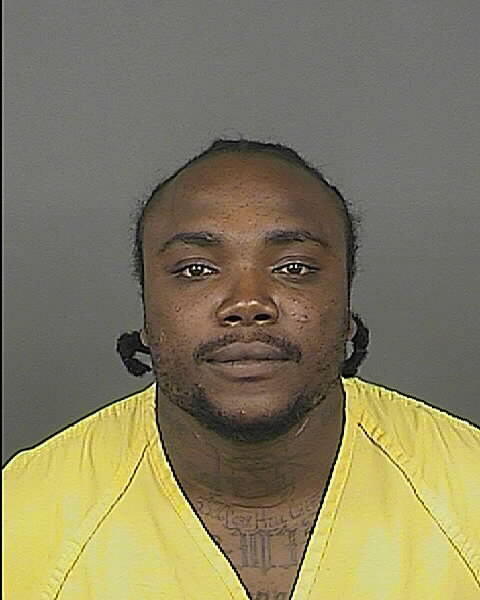
Because police kept a suspected shooter in handcuffs before they had probable cause, the Court of Appeals on Thursday deemed it an illegal arrest and reversed his conviction for murder.
In February 2017, a Denver jury convicted Jesse L. Oliver of first-degree murder for the death of 34-year-old Bobbby Brown at a Montbello apartment complex. He also received an assault conviction for allegedly wounding a 17-year-old girl. The court sentenced Oliver to life in prison.
Oliver appealed, arguing that law enforcement had no justification for stopping and arresting him, which led to illegally-obtained evidence.
On the night of the apartment shooting, Sept. 16, 2015, Officer Joseph Guagliardo was sitting in his patrol vehicle nearby. Shortly after hearing gunshots, he saw Oliver running from the parking lot. Guagliardo pursued Oliver while hearing screams from the building.
When Oliver stopped fleeing, the officer pointed his gun at Oliver and waited for backup to arrive to handcuff him. Guagliardo found no weapons on Oliver and seated him in the patrol vehicle. Upon request, Oliver provided his identity to police.
After 30 minutes, police swabbed Oliver’s hands for gunshot residue. Within two hours of Oliver’s apprehension, a witness arrived to identify Oliver and mentioned he had carried a weapon. The entire time, Oliver remained handcuffed but cooperative.
Evidence at trial included photo lineups witnesses, proof of gunshot residue on Oliver’s shirt and the testimony of the individual who showed up while Oliver was handcuffed — all of which the defense maintained were illegal.
The three-judge Court of Appeals panel acknowledged Guagliardo had reasonable suspicion to stop Oliver. The combination of the gunshots, a man fleeing on foot and the screams all presented a legitimate basis to suspect Oliver was involved in a crime.
“I think what’s interesting in this case is two of the officers that responded to the scene actually said they were stopped by people running out of the parking lot,” said Katharine Gillespie of the attorney general’s office during oral argument. “But when those two individuals saw that officer, they stopped, they waved him down, they flagged him down, they asked for help. In contrast, the defendant in this case starts pumping his arms and running farther and farther away from the officer.”
However, the panel was more critical of Oliver’s continued placement in handcuffs.
“Police officers may use reasonable measures to ensure their safety during an investigatory stop, but only if the use of such force is a reasonable precaution for the protection and safety of the officers,” wrote Judge Ted C. Tow III in the opinion.
The court deemed it reasonable to put Oliver in handcuffs during the pat-down and until officers could determine whether he was a danger due to outstanding warrants. The prosecution went further, arguing the legality of restraining Oliver during the entirety of the investigation.
“He acknowledges to the police officer that he was there and there was some sort of beef going on,” said Gillespie. “I think as the investigation continued, the officer is getting more and more information that justifies continuing that investigatory stop.”
But there was no clear rule for whether it was acceptable to continue to handcuff a suspect after it became clear he was no threat.
Noting that court decisions across the country determined a failure to remove handcuffs at that stage in an investigation constituted arrest, the panel elected to apply the same standard in Colorado. The earliest possible time officers could determine that probable cause existed of Oliver’s culpability was two hours into the detention when the witness arrived to identify him.
“This was long after the detention had developed into an arrest,” Tow wrote. “Unsupported by probable cause, Oliver’s arrest was unconstitutional.”
Although the photo lineups were properly admitted at trial, the court deemed the identification by the witness and the gunshot residue results to be the products of the illegal arrest. The appellate judges required the prosecution to show that this evidence could not have contributed to the guilty verdict.
The panel concluded the gunshot residue was likely too important to the prosecution’s case for the jury to overlook in their verdict.
“The People’s case significantly relied on contradictory and inconsistent eyewitness testimony. The improperly admitted GSR found on Oliver’s shirt was one of the few pieces of scientific evidence presented at trial,” Tow wrote.
As a result, the judges ordered a new trial.
David Lindsey, a criminal defense attorney in Englewood, did not believe the ruling would have a wide-reaching effect, considering the rarity of an officer being so close to a murder scene. However, he acknowledged the upshot of the court’s decision was that officers would have to release individuals whom they suspected of murder, but did not have probable cause to arrest.
The officer may say, “‘you’re free to go but I’d like to ask you some questions,’ which is what happens with narcotics traffic stops all the time,” explained Lindsey. “It transfers the contact into a consensual contact, and then they can continue to ask questions.”
The case is People v. Oliver.