







Strife between police, prosecutors sink sex abuse investigation into retired bishop
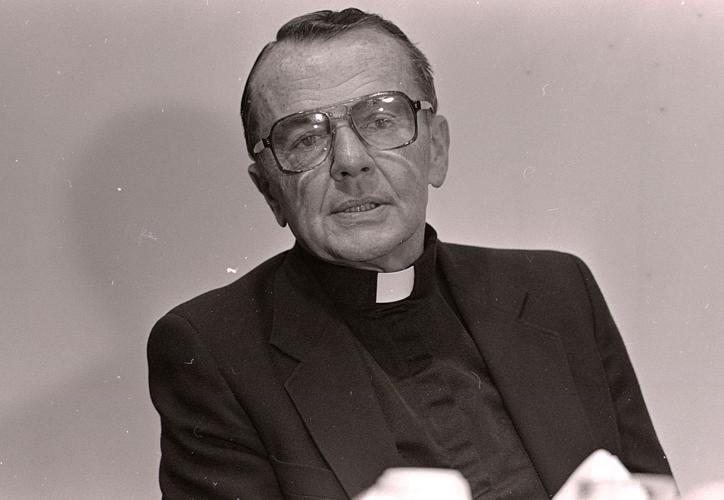
Joseph Hart retired in 2001. Over the next decade, men sued him and other Kansas City priests over alleged abuse. But despite being criminally investigated, he did not face charges, and he remains a member of the Catholic clergy.
Casper Star-Tribune Collection, Casper College Western History Center
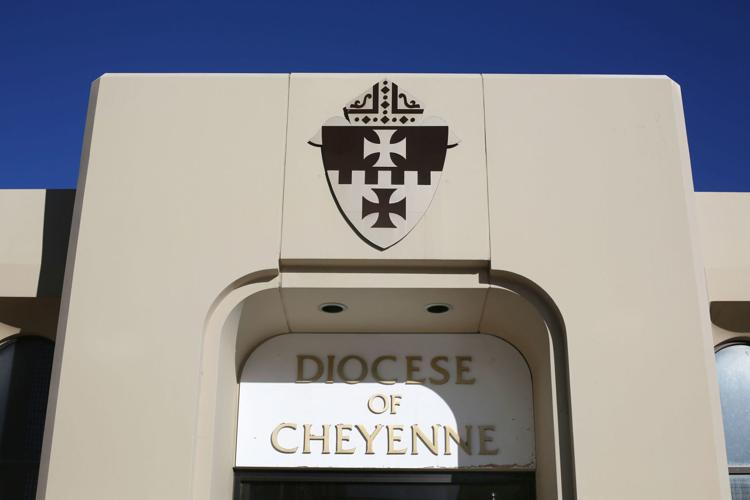
At least eight men or their families told police that they or a relative had been the victim of sexual misconduct by retired Wyoming Catholic Bishop Joseph Hart, but no charges were ever filed against Hart because police and prosecutors were repeatedly at odds over the investigation, police and prosecutor documents show.
Police claim that prosecutors hadn’t read basic case documents, and prosecutors complained about media attention and their problems with the work by police.
That decision not to charge Hart, a defense attorney who reviewed the case said, was “unforgivable” and amounted to a pass given to a predator. For some victims, it was the end of years of effort to see the retired bishop held accountable. It was, from their perspective, a failure by the only office that could prosecute Hart, who has been accused, either in court or to police, of abusing more than a dozen men over two decades.
In interviews over the past year, victims excoriated prosecutors and lamented that a historic opportunity fell upon a District Attorney’s office in the middle of Wyoming, whose inaction validated their years-long pessimism that nothing would be done.
For 10 months between 2019 and 2020, prosecutors in Wyoming were considering whether to charge Hart, the 89-year-old retired chief Catholic cleric in Wyoming. Cheyenne Police completed their 16-month investigation in August 2019, turning the case over to the District Attorney’s Office in Casper, Wyoming’s second-largest city. There it would languish for months.
Though Hart’s alleged abuse occurred decades ago, it was still open for prosecution because Wyoming has no statute of limitations. Hart, who retired in 2001 after a 46-year career as priest and bishop, allegedly abused boys in the 1960s, ‘70s and ‘80s, in Kansas City, Wyoming and on trips around the West. He has faced minor punishments from the church; the Vatican would later exonerate him on charges of sexually abusing minors.
The investigation had the potential to be historic: No American bishop has ever been charged with sexual abuse. But the effort was plagued by months of seeming inaction by prosecutors and poor communication between investigators and the men who’d decide whether to charge Hart. Police say that one of the prosecutors didn’t read documents describing the allegations and that he didn’t know how many victims were contained in the report.
When police described the details of the report, which spanned nearly 100 pages, the prosecutor was surprised by its contents, according to an internal report. The alleged abuse detailed by police investigators ranged from inappropriate touching to physical intimidation to graphic sexual abuse.
In internal communications, prosecutors wrote that they believed the central victim in the case had been victimized by Hart, but that a prosecution would not be successful for a variety of reasons: Shifting victim accounts, an erroneous belief that little corroboration existed, and a 2002 police investigation that cleared the retired bishop. Police, as well as defense attorneys who reviewed the case for The Gazette, flatly disagreed.
Hart has consistently denied any and all allegations against him. He has never been arrested or charged, and he was cleared earlier this year by the Vatican, though two American dioceses — in Kansas City and Cheyenne — have said his victims are credible. Hart’s attorney, Tom Jubin, reiterated those denials in a brief interview April 2. He said the police investigation correctly ended with no charges against his client.
The police report is the most detailed accounting of the investigation into Hart yet released. It describes a months-long effort by police to arrest Hart and corroborate the many allegations against him, an effort that included details as minute as checking the release date of a Star Wars movie. It states that Hart has been scrutinized for possible sexual abuse going back to the early 1990s at least, and that other victims came forward in Kansas City, years before Hart retired. Despite the allegations, church and police authorities did little about Hart for nearly 30 years.
Allegations of abuse
According to the extensive Cheyenne police report, one man told officers that in 1980, Hart invited him to stay for a weekend at his house in Cheyenne. When the then-teenager was using a shower in the home, he caught Hart, then the Catholic bishop in Wyoming, watching him. Another man told investigators that Hart abused him during confession. A third said Hart directed him to change clothes in front of him, while others described being groped by the then-cleric or being forced to engage in sexual acts. Another said he was sexually abused by Hart in Wyoming after the cleric flew him out from Kansas City.
Several described Hart as being especially close with their families, with multiple men coming from broken homes. One family, the Hunters, had a photo of Hart hanging in their home, and their mother worked for the diocese in Kansas City. Hart allegedly abused all three brothers in the family, according to previous statements by the family and accounts described in the police report.
The men described to police how Hart’s homes were always stocked with candy and soda. Some described the Town Car-like vehicle he drove. They alleged that he used his position to intimidate them and that he threatened to withdraw the church’s support from their families if they spoke up.
“The church has been very good to your family for a long time and taken care of you,” Hart allegedly told one victim who — according to the police report — wasn’t responding to Hart’s alleged demands. “It would be a shame if all of that were to stop because of the way you’re behaving right now.”
Another described feeling the need, as a teenager, to “check with Jesus to make sure everything (Hart) was doing was OK.” As he stood before the altar, he prayed. “Please give me a sign if this is OK, and I should trust him,” the victim said, according to police documents.
“(The victim) stated he never got an answer from Jesus,” investigators wrote.
Many of the details described by the alleged victims were corroborated, either by other witnesses or in details observed by police. The then-teenager who said he saw Hart watching him in the shower described the nozzles in the shower and bed he slept in at Hart’s home. Both descriptions were later confirmed by police.
The victim at the center of the investigation, identified by The Gazette under the pseudonym Martin, alleges that Hart abused him at the bishop’s residence in Cheyenne in the mid-1970s, and during a trip out of Cheyenne, Hart allegedly directed him to undress and change into a swimsuit in front of him. He also alleges Hart groped him. Relatives of Martin corroborated parts of his story that he shared with police, including him often being alone with Hart. Martin’s sister described him going into Hart’s home alone and then emerging, red faced and upset, and speeding away on the bike ride home. Hart allegedly had specifically requested Martin come to his house.
There are details of Martin’s story that have changed since the 2002 police inquiry into Hart and the more recent one. But the core of his allegation — that Hart abused him in Hart’s residence while Martin was working for him — has remained the same.
Hart has consistently and completely denied all allegations against him.
Police, prosecutors bicker
Armed with these and more accounts, police handed the case over to prosecutors in August 2019. Prosecutors in Cheyenne passed it off to Casper, citing a conflict of interest. But for months after an initial meeting, police and prosecutors didn’t talk, according to an internal report and letters exchanged, and it’s unclear what, if anything, prosecutors were doing during that time. The documents detail a prosecution concerned with the “he said, he said” nature of the case, as well as with pressure brought by Hart’s defense attorney. They describe police investigators frustrated with the shoddy communication and prosecutors’ alleged poor understanding of the case. Communication was so bad that then-Cheyenne police Chief Brian Kozak wrote that he thought Michael Schafer was a legal aide, not a prosecutor.
In June, District Attorney Dan Itzen and Schafer sent Kozak a letter outlining some of their concerns. They asked if any of the victims in the lengthy police report had ever sued the church and if they’d made any sworn statements or testified at a deposition. They questioned why another priest who allegedly had committed abuse was not interviewed. Cheyenne Police wrote in their case report that the priest in question was misidentified by a victim.
In that letter and a followup, Itzen’s office complained about media attention and poor communication with police. Prosecutors wrote that they’d tried to get in touch with detectives multiple times and that they learned about details of the case via the Casper Star-Tribune.
Cheyenne Police leveled the same accusations at prosecutors. In a supplemental report he attached to the case file, Kozak, who stepped down as chief in early January, wrote that repeated calls to Itzen and Schafer were not returned. At least twice, he writes that the prosecutors declined to speak to him because they were “too busy.”
Schafer did not respond to a list of questions, or multiple requests for comment. His office instead sent two internal letters detailing prosecutors’ concerns.
Schafer and Itzen wrote that there was no “additional corroboration” to support the central victim’s account. Police investigators disagreed. After Itzen and Schafer told police and one victim in June that they would not be charging Hart, investigators argued the case was strong and worthy of charges. The disagreement culminated in a meeting and Casper prosecutors briefly agreeing to reconsider the case, after police pointed out that prosecutors didn’t seem to understand the full breadth of the investigation.
“Schafer seemed surprised by the information of additional witnesses,” Kozak wrote. “Detective (Micah) Veniegas brought attention to his affidavit, which outlined this evidence. It appeared Schafer had not read the affidavit nor the (police) report.”
Despite that conversation, prosecutors ultimately stood by their decision not to prosecute. Itzen and Schafer told police that they felt that Martin, the central victim in the case, “was a victim of Bishop Hart. We just do not believe there would be successful prosecution.”
Acrimony and criticisms
Reached by phone April 2, Itzen told the Gazette that four prosecutors, including himself and his predecessor, looked at the case. “We asked for follow up investigation and never received it,” he said of Cheyenne Police. “At some point we had to make the determination to no longer proceed.”
He wouldn’t elaborate on his office’s review of the case and said he couldn’t remember offhand what he thought the investigation had been missing.
Repeated messages sent to Kozak and Cheyenne Police seeking comment were not returned in recent weeks. But police have said they completed the requested follow-up investigations.
Based on the documents, much of the hand-wringing by prosecutors was based on a 2002 investigation by Cheyenne police that went nowhere. The investigator in that case said it faltered because Martin stopped participating; Martin said he stopped participating because the investigator was aggressive and seemed more interested in clearing Hart’s name.
In any case, that decision not to charge Hart in 2002 reverberated into the 2020 decision. Itzen and Schafer wrote that the original investigative file was lost and that the 2002 investigator had said Hart “didn’t seem like a guilty man.” That information, they wrote, would be used by Hart’s defense attorney to “wreak havoc” at trial.
Three Wyoming defense attorneys reviewed the case for The Gazette. Their conclusion: Casper prosecutors gave Hart an “unforgivable” pass. John Robinson, one of the attorneys, said the investigation appeared “very thorough,” though he said none of the three attorneys “has seen any case where records in a case like this get destroyed.”
“Even with the destruction of documents, there’s enough to prosecute, and none of us can understand why any reasonable prosecutor would not move forward with prosecution,” he said. It seemed, he added, that prosecutors were throwing up “every roadblock” to avoid charging Hart.
Asked about victim statements that shifted between 2002 and the second investigation, Robinson said changing or evolving stories were “always problematic if you’re a prosecutor, but they’re common.” He said the presence of multiple victims, in Wyoming and Missouri, would overcome such inconsistencies.
“If you can say, ‘Yeah this victim’s statements are inconsistent, but that’s not uncommon, and on top of that, look at all of the other victims, and the pattern and the modus operandi that was utilized,’” he said. “So it’s a way to overcome. Inconsistent statements are difficult, but they’re not that big of an obstacle, especially in sex assault cases and especially when you have multiple victims.”
In an interview, Martin, the central victim to the case, was also critical of the prosecutors. He said he was never contacted by them; he only spoke with Schafer after Martin requested a call so the prosecutor could explain his office’s decision. During that conversation, Martin said Schafer repeatedly lost his temper and yelled at Martin and his wife. Martin said he asked about impaneling a grand jury; Schafer allegedly said that it would cost money to put up jurors in hotels.
Ultimately, Martin said he didn’t expect Hart to end up in prison. But two decades after he first came forward, he wanted prosecutors to at least try.
“That’s the thing. It’s not just one (prosecutor’s) office,” he said. “I can’t just look at one person who bungled. No, everybody was just a little bit s—ty at the wrong moment, and then we never got the burden over the wall.
“Honestly, the shame that has — I will use that word — haunted me my whole life, and never being able to tell anyone, to finally … you gird yourself to put it all out there.”
In the decades since he was abused, Martin has confronted that shame and come forward: To police, to the Vatican, to journalists, to prosecutors. From his perspective, the tragedy is not that he didn’t try. It’s that he feels few others did.
Casper Star-Tribune staff writer Ellen Gerst contributed to this report.