







Suncor Energy hopes improvements ‘regain community’s trust’
9News
Suncor Energy late Monday pledged it is “committed to regaining the community’s trust” with a series of plant improvements it hopes will reduce the number, and intensity, of future emissions.
The improvements are projected to cost $12 million, more than the $5 million required by the state.
In 2020, Suncor paid $9 million in a settlement with state health regulators over air pollution violations from its Commerce City refinery.
As part of that settlement with the Colorado Department of Public Health and Environment, Calgary, Alberta-based Suncor agreed to hire “an independent, third-party expert to investigate the root cause of our past emissions exceedances and identify refinery improvement opportunities,” according to a news release.
Boulder’s climate liability lawsuit will not move to Denver, judge rules
That expert was Kearney, which issued a final report, including recommendations for improvement. The full report is located on Suncor’s website.
“Kearney’s investigation concluded that our Commerce City Refinery is designed to meet environmental permits during steady-state operations, and it is adequately funded,” according to Suncor’s statement.
In a video statement, Vice President Donald Austin said the company vowed to “improve our performance and continue to regain the community’s trust.”
“We heard from the neighborhood the need for more timely, transparent and accessible information,” Austin said in the video.
The company’s website now includes a link where people can sign up for updates from Suncor on operations that might cause flaring or other warnings.
“We also heard the need for us to better explain our operations and improvements made to minimize our environmental impact,” Austin said.
In two Colorado neighborhoods, even life expectancy is much diminished
Those improvements include an auto shutdown system for the “gasoline-making units, which are also known as FCCUs” in Plant 2, which was installed in 2020, according to Austin. The same system will be installed in Plant 1 by the end of this year.
“By the end of 2023, Plant 2 will also have a programmable logic controller and upgraded instrumentation with automated shutdown valves and new hydraulic pressure units,” Austin said. “That will increase the reliability and speed of the FFCU automated shutdown process.
“Simply put, these systems significantly reduce the potential and severity of future catalyst releases.”
According to Suncor: “The plan includes additional voluntary measures that will enhance our processes, strengthen the capabilities of our employees and continue to expand and reinforce a culture focused on safety and environmental responsibility above all else. The cost to install these capabilities will be $12 million, exceeding the $5 million we committed to invest as part of the settlement with CDPHE. The Plant 2 upgrades alone will cost approximately $10 million.”
The CDPHE has 30 days to review Kearney’s report.
“We’re still reviewing Kearney’s report and Suncor’s implementation plan,” said said Trisha Oeth, director of CDPHE environmental boards and commissions, in a statement Tuesday. “Based on our initial reading of the investigative report, we believe Kearney has identified meaningful deficiencies at the refinery in culture, training, process and technology. These are important insights, and an independent, third-party investigation was crucial to bringing them to light.”
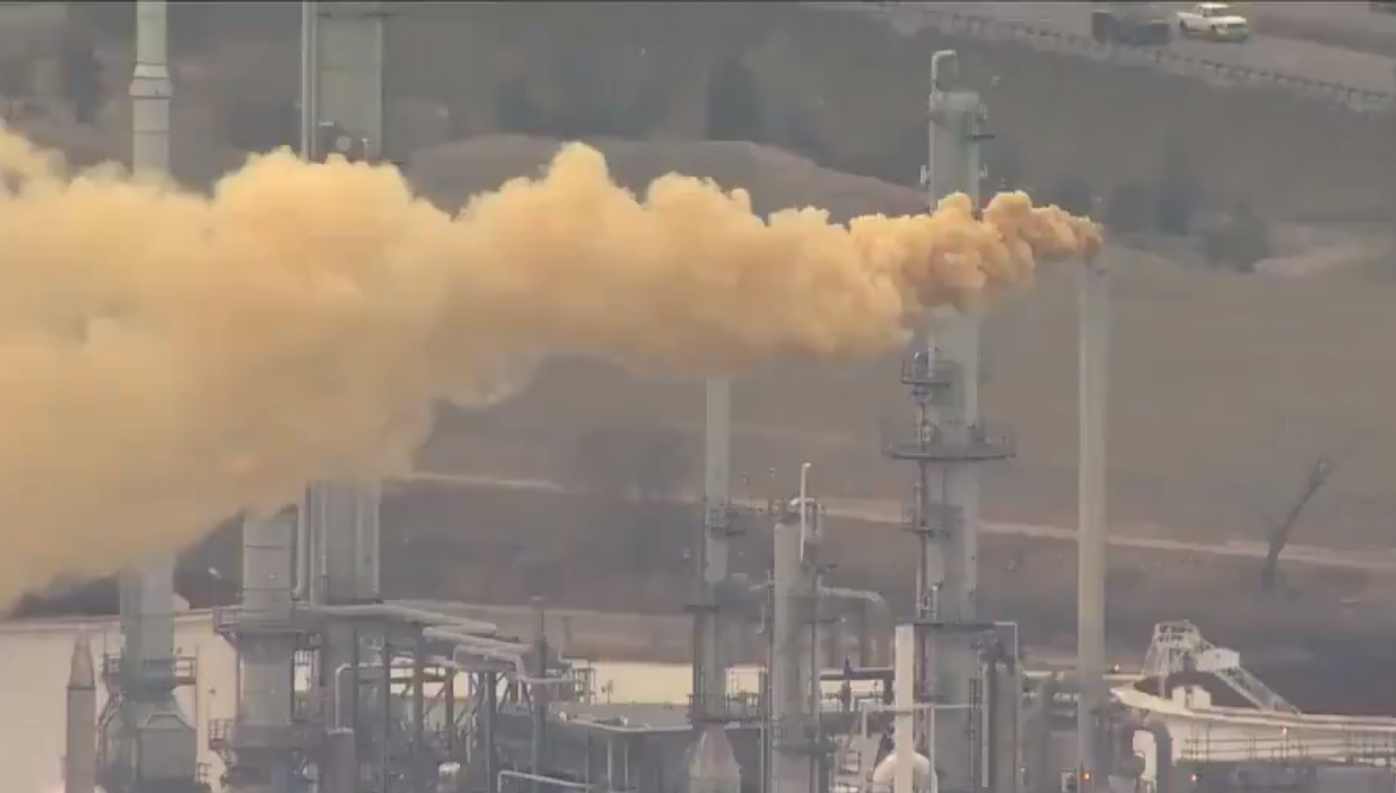
In March 2020 and December 2019, there were instances of excess emissions at the plant, prompting the Air Pollution Control Division to be “concerned about the number, duration, and nature” of such events.
The state’s health department noted no apparent health risk to the community during the appearance of a yellow vapor cloud in March.
On Oct. 21, the refinery also experienced a partial power loss resulting in increased flaring. Suncor said its response included monitoring air quality in surrounding neighborhoods and investigating the cause of the power failure.
Suncor, along with ExxonMobil, is also facing a climate liability lawsuit in Boulder District Court, filed in 2018 by the city and county of Boulder and San Miguel County.
It alleges the government entities will pay $100 million over the next three decades to deal with the impacts of climate change caused by fossil fuel products associated with ExxonMobil and Suncor Energy.