







Omnibus bill could make it harder for opponents to oust elected officials in Colorado
the Gazette file Gazette file Gazette file Under ranked-choice voting, voters rank candidates by preference on their ballots.
Gazette file


The third attempted recall of Gov. Jared Polis in as many years is expected to begin later this spring, and it could be the last of its kind — an omnibus election bill pending in the General Assembly promises to reshape how Coloradans remove an elected official they don’t like.
In a year of stern attention on Republican election bills in conservative-led states, the Democratic Senate Bill 250 slid onto the Colorado General Assembly’s agenda quietly when it was introduced three-quarters of the way through the legislative session and had its first hearing on May 4.
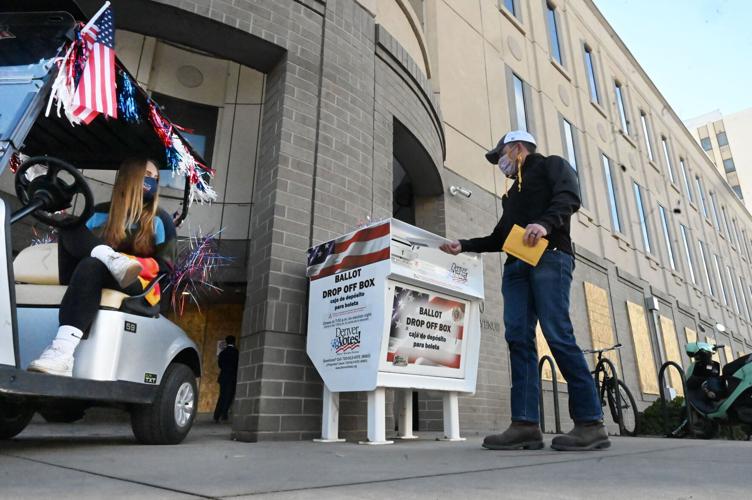
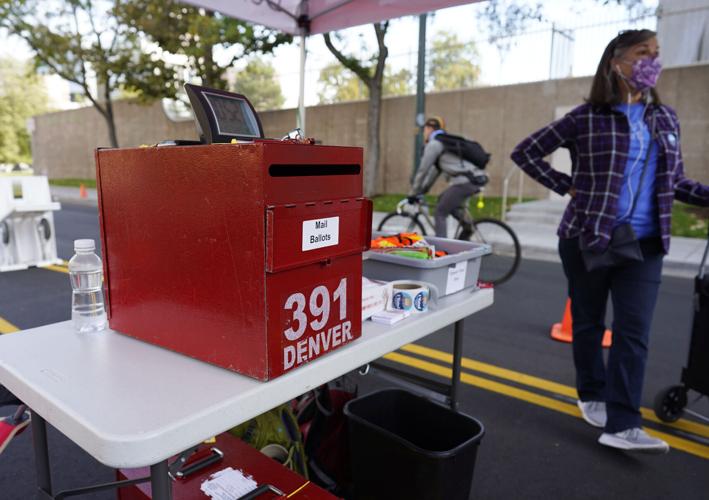
Most notably, the 82-page bill includes new procedures and requirements for recall petitions and elections among managing drop boxes, registering to vote online using the last four digits of a Social Security number and uploading a signature.
Senate Majority Leader Steve Fenberg of Boulder, the author of the legislation, downplayed what critics see as raising the bar too high on recall elections, which, at least at the state level, tend to target Democrats.
Supporters, however, see the changes overall as leveling the field with clarity and consistency in this era of mistrust in democracy. They’re looking to limit the use of recalls as a political tactic, as opposed to a remedy to legitimate misconduct in office.
Two years ago, a reform effort fizzled after House Speaker KC Becker of Boulder and then-House Majority Leader Alec Garnett of Denver said they wanted to see a bipartisan agreement on the issue.
The current bill’s sponsors are all Democrats.
Fenberg contends the “vast majority” of changes are procedural, the result of a collaboration with the Colorado County Clerks Association, the Secretary of State’s Office and other “advocates.”
Those advocates include America Votes, a progressive group from Washington, D.C., that works to increase voter turnout for Democratic candidates, and New Era Colorado, a Democratic group that works on registering younger voters that Fenberg founded. The state Democratic Party also collaborated on the legislation, a spokeswoman said.
If some of the provisions become law, they certainly would make the task of petition-gathering more difficult, including wearing badges that explain whether the person is a volunteer or a paid solicitor, how much the campaign is expected to cost and to include a note of defense against the recall claims included on the petition.
Petition gatherers on recalls also would have to be licensed, which is already required for those who collect petitions for ballot initiatives.
Skepticism rises
Especially slippery: Petition gatherers would be required to tell potential signers the truth, which Fenberg acknowledged could be a subjective call.
“In the end, that judgment call is left to the voters, like most decisions in our election process,” he said. “But if there is something blatantly false or clearly not accurate, I think that’s maybe something somebody could take to a judge or potentially the Secretary of State’s Office. It’s something that could be brought to the public’s attention, and let the public make the final decision on it.”
The petitions would have to disclose the estimated cost of the recall, and the language around petition statements also changes under Senate Bill 250. Current law says petition statements “may” not include false or profane statements, but SB 250 changes that to a “shall” not. However, the question of who decides what’s true or false isn’t spelled out in the bill.
It also bans petition-gathering for a recall if the elected official is up for election within six months.
Jeff Roberts of the Colorado Freedom of Information Coalition sees looming legal problems. The state constitution and state law prohibit any review of recall petition statements for a statewide office.
The state election manual states that “although it may not have profane or false statements, under statute and constitution, the statement is not subject to review. Thus, aside from ensuring the statement meets the 200-word limit, the (elections division) should consult the county attorney before taking any other action regarding the content of the statement.”
Fenberg didn’t see the changes as a big deal, though, even if Republicans view it differently.
“This takes us in a lot of the wrong directions, if you believe in the accuracy and fairness of the election process,” Sen. Rob Woodward, R-Loveland, said. “I worry it takes us backwards in that effort.”
He and his GOP colleagues are working on amendments. He said the bill could work, if Republicans are allowed to help fix it. Failing that, they won’t support it.
Woodward said he’s seen “a slew of bills working through the process that protects the political class. This section of the bill is no different. This makes it as hard as possible for regular folks in Colorado to take away our power. Clearly, I disagree that should be the case.”
Sen. Jerry Sonnenberg, a Sterling Republican, sent a letter to the clerks association outlining his concerns with the bill.
Those include the bill’s language allowing clerks the ability to reject a ballot solely on a faulty signature; that the voter’s record could be changed without a matching signature; that it allows 16-year-olds to vote in precinct caucuses; and that an elector can submit the last four digits of the Social Security number for registering to vote without a matching signature.
The combination of these changes “makes it next to impossible to prove that a voter intended to vote twice if there are two or more ballots submitted.” Sonnenberg also told Colorado Politics that the last four digits of a Social Security number is common practice for a lot of things, and that makes the potential for problems that much greater.
“How do you trust an election if you whittle away at the integrity of the entire system?” he asked. What worries him is whether someone can trust a country, state or even local jurisdiction “if you don’t have confidence that the election was fair. … If I won an election by 100 votes under this system, would I trust that I actually won that election?”
Ongoing campaigns
The rules of a recall now are pretty straightforward: Valid petition signatures from 25% of the number of votes the subject received in the last elected.
Factoring in the number of people in the opposing party already predisposed against an officeholder, that lowers the bar to find one in four voters against them.
The biggest recall effort in the past several years has been one launched with a lot of fanfare and not much in the way of signatures that targeted Polis.
The 2021 Polis recall effort is being led by the same folks who tried but failed to submit even one signature in 2020.
Organizers told 9News last December they had collected less than 200,000 signatures in the 2020 effort. The group also went to court to get an extension, citing problems with collecting signatures due to COVID-19, but dropped that lawsuit in March, instead deciding to try another recall.
The Facebook group devoted to the 2021 Polis recall is also talking about taking on other statewide elected officials, most notably, Secretary of State Jena Griswold, whom they deem “corrupt.”
Recall Polis 2021 organizer Lori Cutunilli is getting ready for the late-spring launch of the next Polis recall. She discussed how the recall language in SB 250 would affect future such efforts. She said she doesn’t think licensing petition-gatherers would stop the majority of her volunteers, but requiring information on costs of a special election is a concern.
Democrats in Republican-held states have called election changes a form of intimidation on those who might vote against GOP candidates. Cutunilli saw that tactic at play in Colorado.
“I think they’re trying to discourage people from signing, by saying there’s an added cost for a special election,” Cutunilli said.
In Colorado, the state pays all expenses if only state candidates or issues are on the ballot.
In 2013, when two state senators were ousted by recall, taxpayers covered about $300,000 per district to administer the elections. That same year, Quinnipiac University conducted a Colorado poll that indicated likely voters opposed recalling legislators with whom they disagree by 57% to 36%, instead favoring a wait for the regular reelection.
Cutunilli isn’t concerned about the language on petition statements including false or profane language, given that they use an attorney to prepare those petition statements to ensure they are legal. She’s also fine with the badge requirement, since her volunteers already use them.
Taken as a whole, “all of these changes are to discourage recalls, to insulate these elected officials from being held accountable to the people for their actions,” Cutunilli said. “We already have the strictest recall requirements in the country. Added requirements are an attempt to insulate themselves from recall.”
More than recalls
The bill does more than make recalls harder to get on the ballot.
The larger omnibus:
• Sets up procedures for automatic voter registration, including allowing those without driver’s licenses to use the last four digits of their Social Security number to do online registration.
• Establishes requirements for how political parties are organized, as well as rules for precinct caucuses, county assemblies and vacancy committees.
• Repeals the fee to nominate an unaffiliated candidate for president.
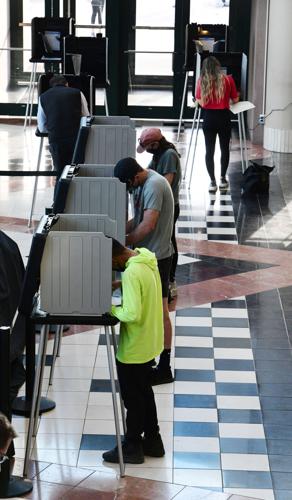
• Changes requirements for voter service and polling centers, voting in person and emergency voting.
• Limits challenges to a person’s right to vote to age, citizenship and residency.
• Prohibits electioneering within 100 feet of a polling place.
The proposal staggered out of the gate on May 4, passing its first committee along partisan lines.
The Senate State, Veterans and Military Affairs Committee sent the bill to the Finance Committee on a party-line vote, before it can reach the Senate floor. If it’s successful there, it would start over in the House. The session is expected to end on May 28.
Matt Crane, executive director of the Colorado County Clerks Association, said the bill does a lot of good for the overall process.
“This bill creates consistency in the way we conduct our elections, which is very important when we’re talking about disenfranchising our citizens,” he said of the modern era of challenges, recounts and recalls.
Bo Ortiz, the Pueblo County clerk and recorder and the president-elect of the County Clerks Association, said the recall statutes have been worked on since 2013. That’s the same year Senate President John Morse and Sen. Angela Giron, both Democrats, were recalled over new gun laws. Another senator, Evie Hudak, resigned when a recall effort was organizing against her.
“The association believes that this bill will make our gold-standard election system in Colorado even better that it has been,” Ortiz said.