







Wildfire season heating up nationally, limiting crews available for Sylvan fire
Widespread drought across the western U.S. is helping to fuel more fires earlier than normal in the season and spreading resources thinner. Colorado is seeing its fair share of fast-moving blazes although they have not reached the monstrous sizes as some burning in other states such as Arizona and New Mexico.
The National Interagency Fire Center upgraded its preparedness level from 3 to 4 on Tuesday to reflect the increased number of fires and level of resources available. The scale maxes out at 5. In the last 20 years, there have only been three previous years when the fire activity reached level 4 in June, according to the agency. So far this year, 47 large fires have burned about 519,000 acres across the country.
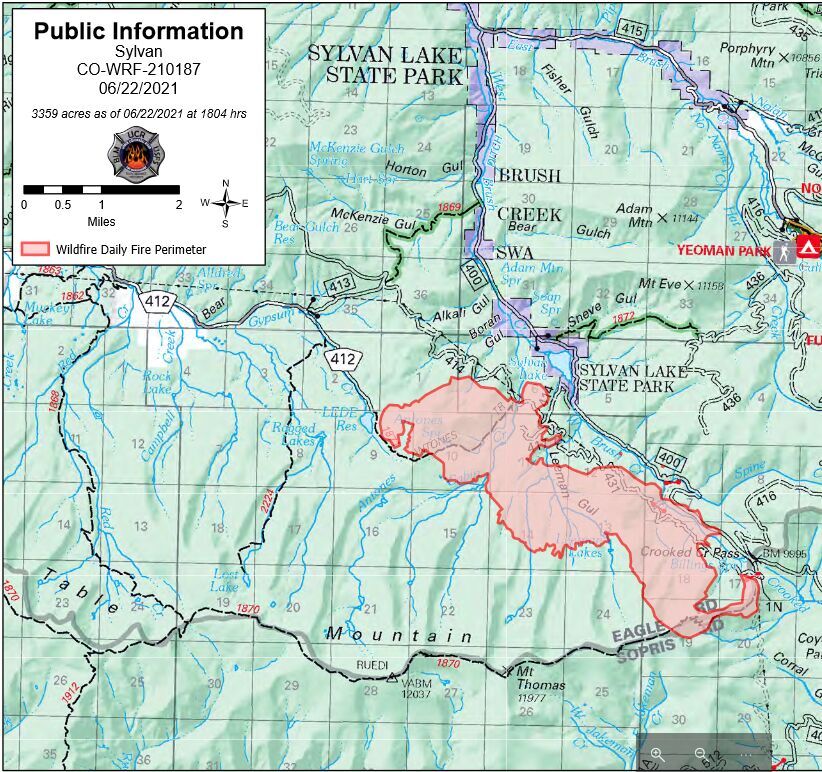
In Colorado, the Sylvan fire near Eagle had a run overnight and it grew from about 1,500 on Monday to 2,600 as of Tuesday morning, according to a federal incident management system. At 6 p.m., the blaze was measured at 3,359 acres.
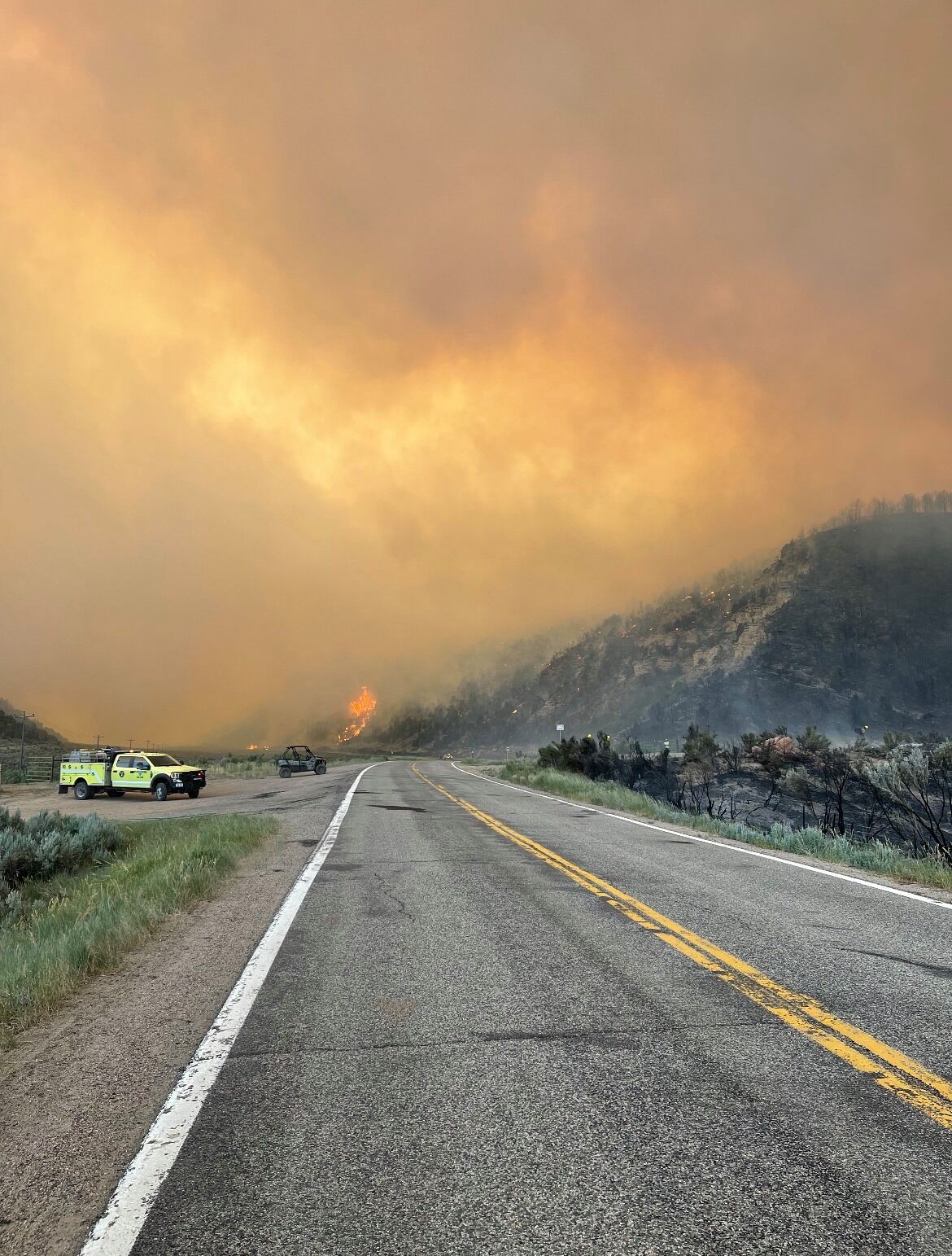
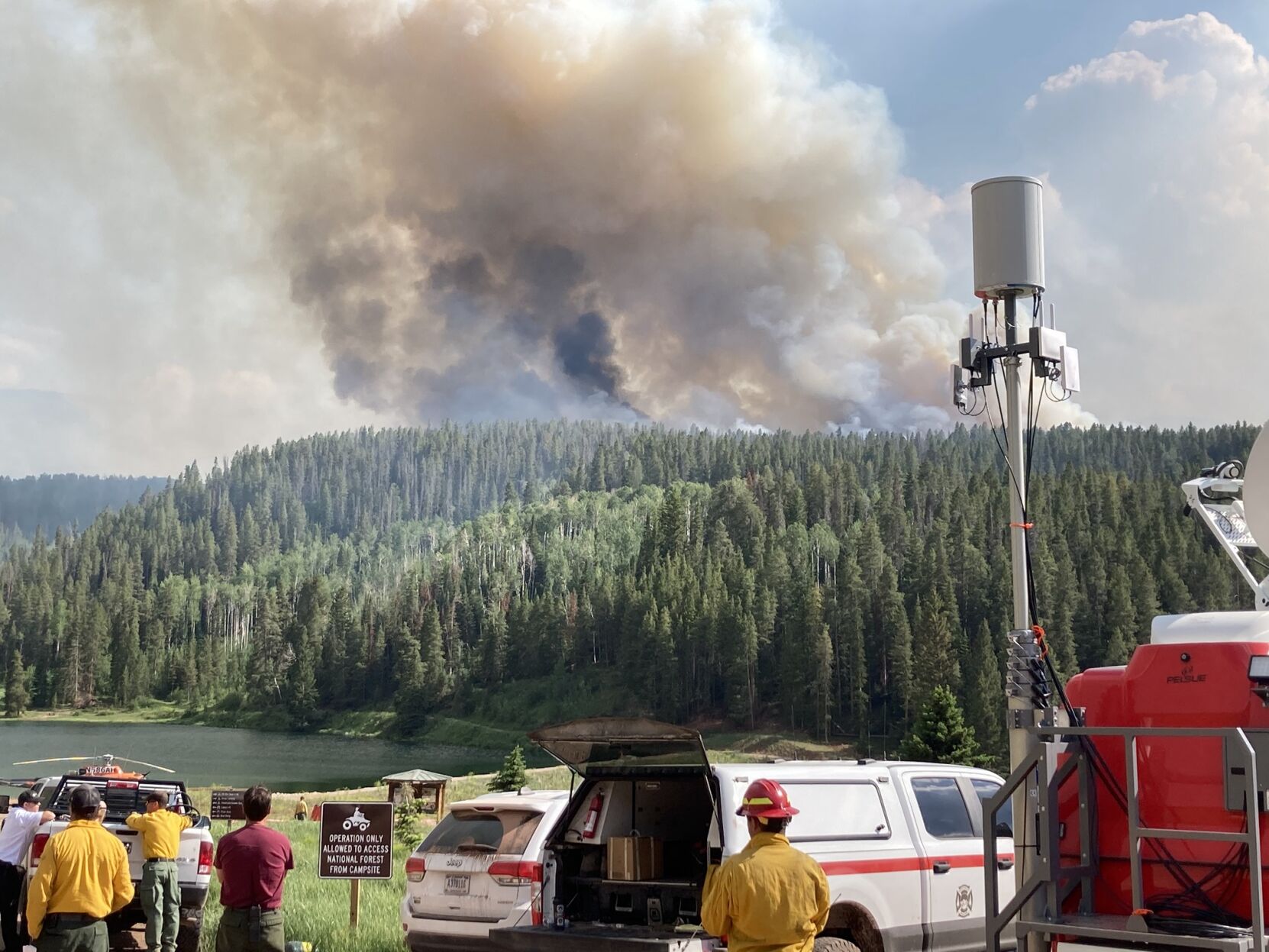
The fire is burning in thick timber, some of it beetle killed, and firefighting crews are unable to challenge it directly, so they are working to box it in using natural features and roads, said David Boyd, a spokesman for the White River National Forest.
Boyd said there is no estimate on when the fire will be contained yet, and that the cause of the fire was still being investigated, although lightning is suspected.
“There is so much fuel, it’s putting up a ton of smoke,” Boyd said.
Crews were aided Tuesday by cloud cover, although the fire was heating up in the afternoon, as is typical, he said.
The fire could provide some ecological benefit to the area depending on how hot the fire burns, he said. Anecdotally, some areas have burned severely and those areas can take longer to recover from a fire.
The fire is threatening a major power line owned by Xcel that’s been de-energized for safety and the watersheds for the towns of Eagle and Gypsum, he said. Firefighter crews are also working to protect the structures at Sylvan Lake State Park, where strong winds pushed the fire on Tuesday, he said. The park has also been evacuated.
The blaze also crossed West Brush Creek Road above Sylvan Lake, which triggered several pre-evacuation and evacuation notices for residents throughout Eagle and Pitkin Counties.
The fire has been assigned roughly 135 firefighters and two heavy and one light helicopter. Air tankers have provided support but they are not assigned to the fire, Boyd said. A federal management team is expected to arrive Thursday to help, he said.
“We would like more aircraft and we would like more crews, but we are able to use what we have,” he said.
Crews and aircraft are limited nationally because so many fires are burning, Boyd said.
The other large blaze in Colorado, the Oil Springs fire in northwest Colorado near the Utah border, had consumed 7,395 acres of pinyon and juniper forest as of Tuesday afternoon.
Across the country, more than 8,700 wildland firefighters are deployed, according to the national fire center. At the peak of the season, 30,000 firefighters can be deployed including members of the military, said Stanton Florea, a spokesman for the agency. The height of the season nationally is typically September.
Gazette reporter Esteban Candelaria contributed to this report.
Wildfire season heating up nationally, limiting crews available for Sylvan fire
Widespread drought across the western U.S. is helping to fuel more fires earlier than normal in the season and spreading resources thinner. Colorado is seeing its fair share of fast-moving blazes although they have not reached the monstrous sizes as some burning in other states such as Arizona and New Mexico.
The National Interagency Fire Center upgraded its preparedness level from 3 to 4 on Tuesday to reflect the increased number of fires and level of resources available. The scale maxes out at 5. In the last 20 years, there have only been three previous years when the fire activity reached level 4 in June, according to the agency. So far this year, 47 large fires have burned about 519,000 acres across the country.
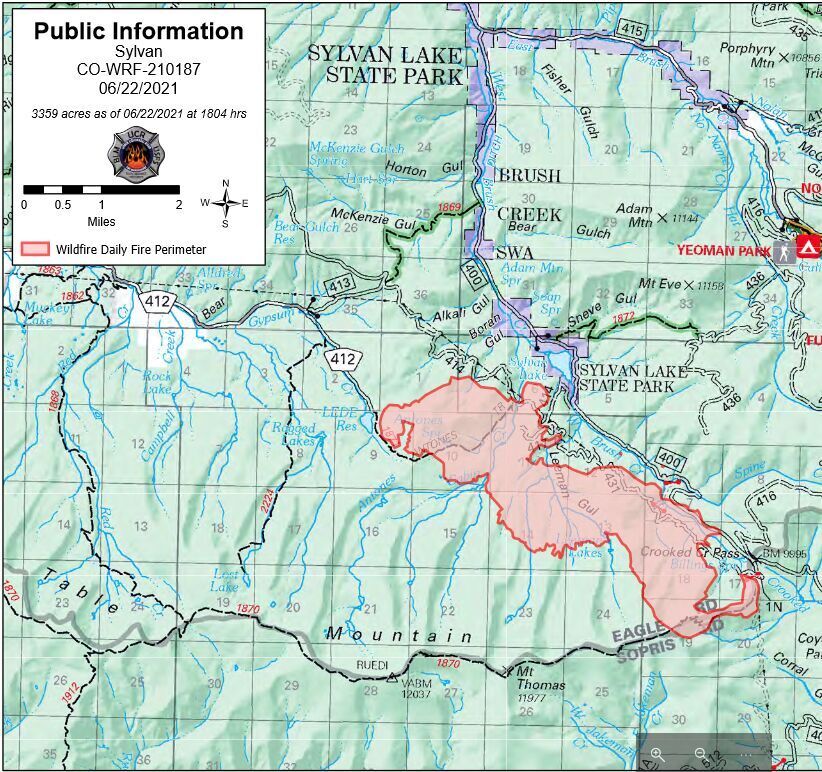
In Colorado, the Sylvan fire near Eagle had a run overnight and it grew from about 1,500 on Monday to 2,600 as of Tuesday morning, according to a federal incident management system. At 6 p.m., the blaze was measured at 3,359 acres.
The fire is burning in thick timber, some of it beetle killed, and firefighting crews are unable to challenge it directly, so they are working to box it in using natural features and roads, said David Boyd, a spokesman for the White River National Forest.
Boyd said there is no estimate on when the fire will be contained yet, and that the cause of the fire was still being investigated, although lightning is suspected.
“There is so much fuel, it’s putting up a ton of smoke,” Boyd said.
Crews were aided Tuesday by cloud cover, although the fire was heating up in the afternoon, as is typical, he said.
The fire could provide some ecological benefit to the area depending on how hot the fire burns, he said. Anecdotally, some areas have burned severely and those areas can take longer to recover from a fire.
The fire is threatening a major power line owned by Xcel that’s been de-energized for safety and the watersheds for the towns of Eagle and Gypsum, he said. Firefighter crews are also working to protect the structures at Sylvan Lake State Park, where strong winds pushed the fire on Tuesday, he said. The park has also been evacuated.
The blaze also crossed West Brush Creek Road above Sylvan Lake, which triggered several pre-evacuation and evacuation notices for residents throughout Eagle and Pitkin Counties.
The fire has been assigned roughly 135 firefighters and two heavy and one light helicopter. Air tankers have provided support but they are not assigned to the fire, Boyd said. A federal management team is expected to arrive Thursday to help, he said.
“We would like more aircraft and we would like more crews, but we are able to use what we have,” he said.
Crews and aircraft are limited nationally because so many fires are burning, Boyd said.
The other large blaze in Colorado, the Oil Springs fire in northwest Colorado near the Utah border, had consumed 7,395 acres of pinyon and juniper forest as of Tuesday afternoon.
Across the country, more than 8,700 wildland firefighters are deployed, according to the national fire center. At the peak of the season, 30,000 firefighters can be deployed including members of the military, said Stanton Florea, a spokesman for the agency. The height of the season nationally is typically September.
Gazette reporter Esteban Candelaria contributed to this report.