







City Council to consider moving Denver elections, implementing ranked-choice voting
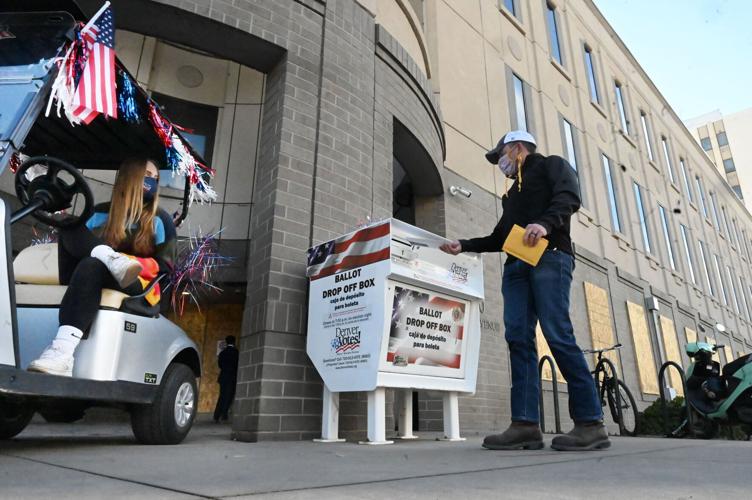
Gazette file
The Denver City Council will consider two proposals from Clerk and Recorder Paul López in the coming weeks that would change the way the city holds municipal elections.
The first proposal would move Denver’s May municipal election to April, keeping the runoff election in June. The second proposal would implement a ranked-choice voting model, eliminating the city’s current runoff structure.
“Denver’s charter has become antiquated with the way modern elections are to be conducted,” said López, Denver’s chief elections official. “Both models are viable options, and we are prepared to administer either option with the standard of excellence our office is known for.”
López proposed the changes to align Denver’s municipal elections with a federal requirement recently adopted by Colorado. Under the new requirement, cities must provide ballots to overseas and military voters 45 days before elections. The requirement became an issue because Denver’s municipal elections are followed by runoffs 30 days later, with only the top two candidates appearing on the runoff ballot.
Under ranked-choice voting, known as RCV, voters rank candidates by preference on their ballots. If no candidate get the majority of first-preference votes, the candidate with the fewest first-preference votes is eliminated and all ballots with that candidate selected first move to their second preference. This is repeated until a candidate has a majority.
Public safety working group created to examine policing reform report holds first meeting
Denver used the RCV model in its municipal elections from 1916 until voters repealed it 1935, replacing it with the current runoff system.
Supporters of ranked-choice argue it assures winning candidates aren’t opposed by most voters, even if the winner isn’t their first choice, and allows voters to select their true picks instead of feeling limited to choosing between the top two candidates. RCV also prevents voter fatigue, and saves time and money by only requiring one election, a benefit López acknowledged in his proposal.
“We can join the growing number of cities using RCV, or we can spend well over $1.2 million dollars on a second, three-month-long election,” said Linda Templin, executive director of RCV for Colorado. “There is a better way and it is available.”
Opponents say ranked-choice voting does not guarantee winning candidates have majority support as runoff elections do and it can result in voter disenfranchisement by throwing out ballots that do not rank the most popular candidates.
For example, the winning candidate of an RCV election in San Francisco in 2010 was only listed on 4,321 ballots out of the 20,440 ballots cast, meaning only 21.1% of voters voted for the candidate and about half of them the candidate as their second, third or lower choice.
DIA CEO nominee Phil Washington passes first City Council confirmation vote
The candidate won the election after 20 rounds of elimination because 21 candidates were running and the majority of voters did not rank all 21 on their ballots, according to the San Francisco Department of Elections.
Trouble also was reported when New York City held its first ranked-choice election in June, with one mistaken announcement of results. It took more than two weeks to announce all the winners.
Denver Councilman Kevin Flynn, a member of the clerk’s advisory committee, argues that the complicated nature of RCV could lead to lower voter participation and higher rejections of improperly filled out ballots.
“Denver already has a superior system in the runoff, and the timing issue is easily fixed by changing the date,” Flynn said. “The runoff is the only election system that guarantees a majority winner every time. RCV not only can’t guarantee a majority victor, it actually routinely fails to do so.”
Five of the seven members of the clerk’s advisory committee recommended moving the municipal election to April over implementing ranked-choice, Flynn said.
While moving the municipal election to April would come with its own problems.
Thanks to the COVID-19 pandemic, this year’s Census data was delayed by six months and won’t be delivered to states until Sept. 30. The delay has caused major delays in Denver’s redistricting process, which could disrupt the City Council’s 2023 election.
Delayed Census data could push back Denver’s redistricting, causing problems for City Council elections
To run for Denver council, candidates must live in their council districts for at least one year. But if redistricting is not completed by May 2022 – one year before the next council election – council members and prospective candidates whose districts are changed cannot run for office.
And moving the election from May to April would give the council one less month to complete the months-long redistricting process in time, which may not be possible.
López said he considered other solutions to the voting timing problem, including moving municipal elections to November, changing elections to a plurality model and changing to approval voting where voters could select as many candidates as they want.
His last two proposals were the most popular options chosen during his public outreach and engagement process, López said.
“Our goal is to make it as easy as possible for voters to decide on who is entrusted to lead our city,” he said.
If either proposal is passed by the City Council, members will be added to the November 2021 ballot for voters to consider.