




RIVER TOWNS: GRAND JUNCTION | Managing popularity amid climate struggles on the Gunnison and Colorado rivers
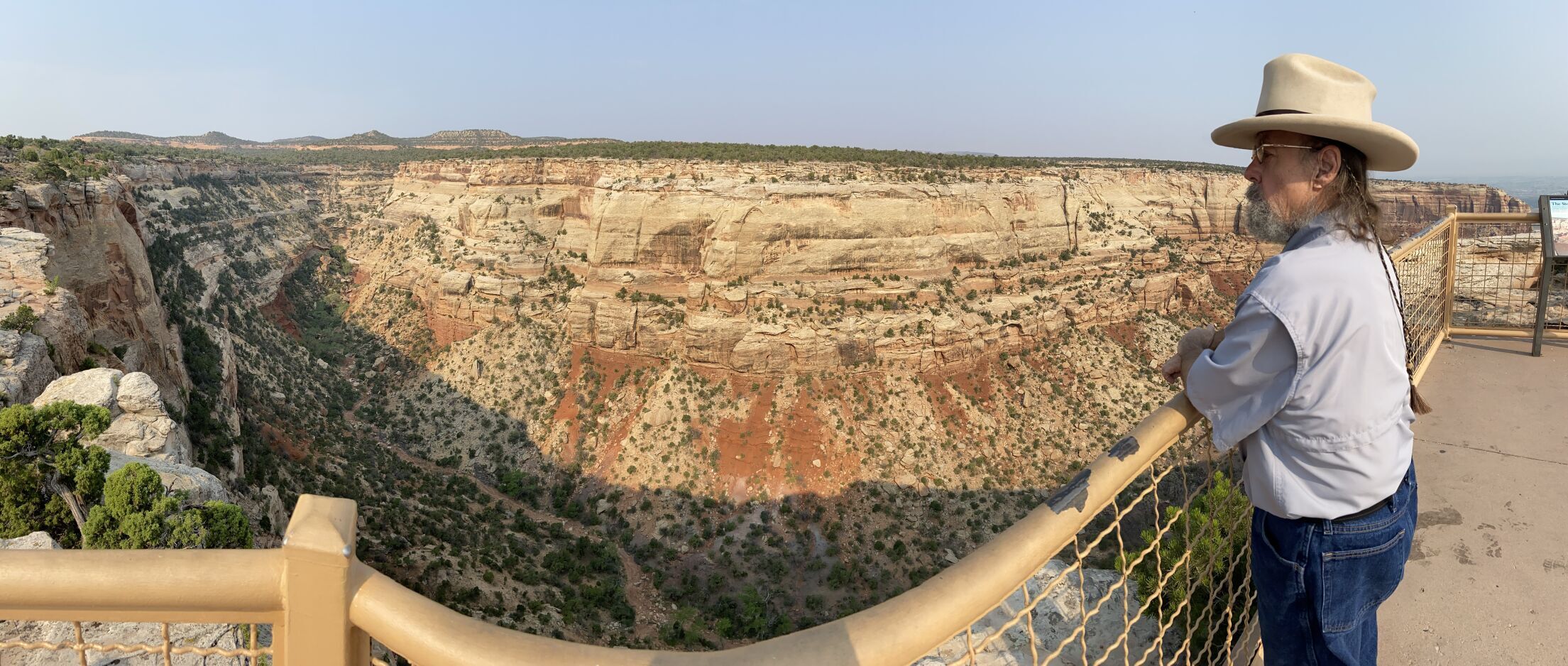
Dave Fishell pulled his pickup truck off of the serpentine road ascending the Colorado National Monument, overlooking Grand Junction in Mesa County. He had spied a family visiting from Buffalo attempting to take a selfie and stepped out to offer his services as a photographer — in addition to his role as local historian.
“If it was clear,” Fishell told the tourists as the haze of Western wildfire smoke lingered over the valley, “you could see the original toe hold and hand hold” on a giant rock formation arising from the canyon floor.
They didn’t mind the smoke, the family said — the views were still better than those in Buffalo.
The Grand Valley is a desert through which the Gunnison and Colorado rivers flow. the former merging into the latter. The waterways form a confluence — or junction — at the edge of Grand Junction’s city limits.
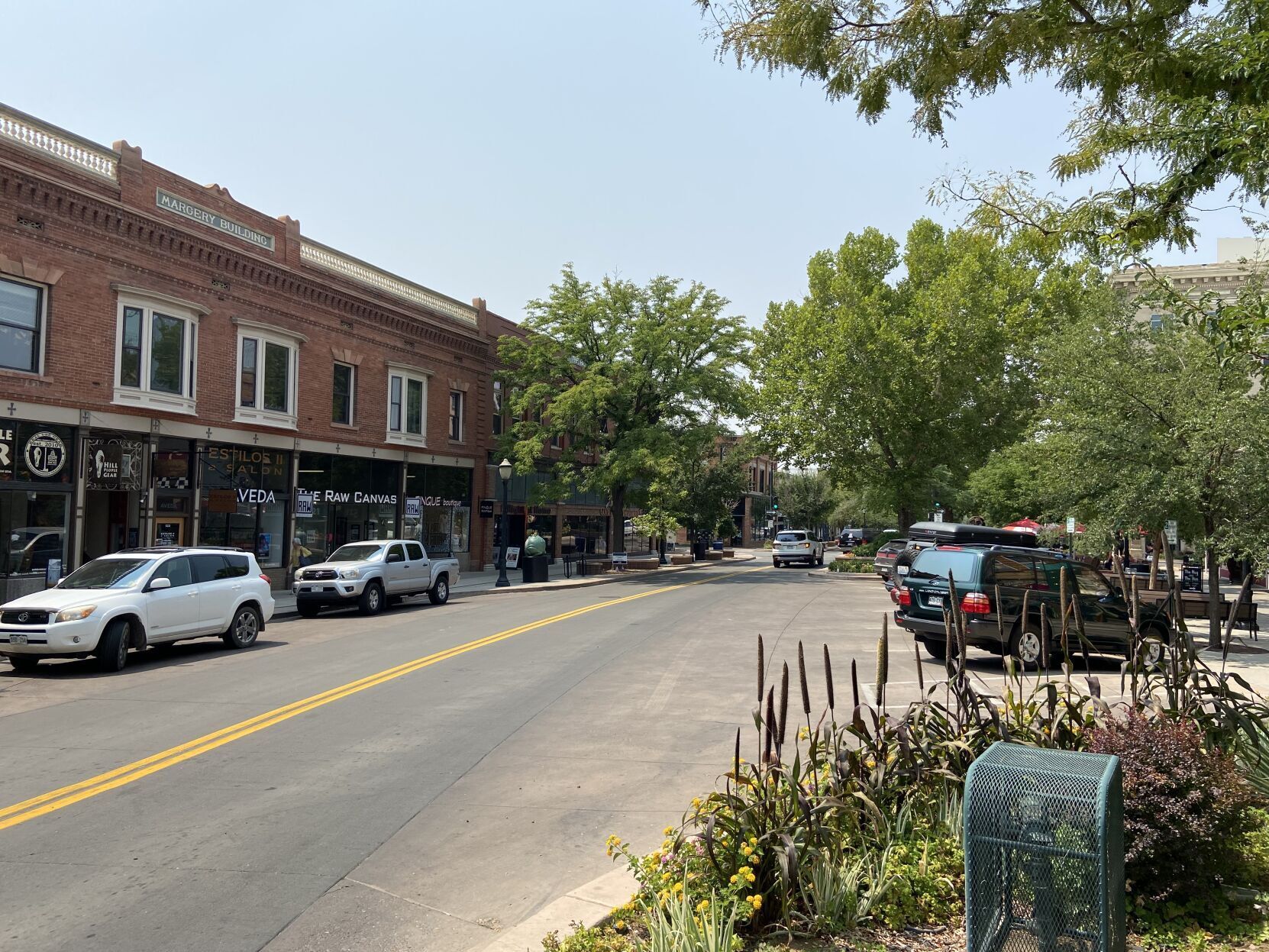
Grand Junction, the largest city on the Western Slope, is a magnet for people visiting the region. Its attractions include the geological monument, the Colorado River, wine country — and it is a highlight on one of Amtrak’s most scenic train routes, the California Zephyr, which traverses the Rocky Mountains via the river on its trek between Chicago and the Bay Area.
But there are issues encroaching on the valley that are increasingly common to the Western United States: drought, fire and fears of being overrun with recreational visitors. Water flows are well below the 30-year average in a critical stretch of fish habitat. And for the first time in 65 years, the Ute Water Conservancy District drew upon the Colorado River to maintain its water supply for Mesa County customers.
“This valley is in a pretty privileged position. … People in this valley haven’t really had to worry about their own water use very much,” said Hannah Holm, director of the Hutchins Water Center at Colorado Mesa University. “We’re in a pretty cushy spot in a pretty dry region. But I think we’re starting to see that we’re not as invulnerable as we felt.”
Rivers, rails, arrival of industry
Indigenous habitants have origins to at least 11,000 BCE. But the government forcibly removed the remaining Ute Indians from Western Colorado to reservations after a 19th-century clash between U.S. soldiers and the subjugated tribal population.
Grand Junction incorporated in 1882. Later that year, the first Denver & Rio Grande Railway train arrived. It would only take until April 1883 for the first passenger train to travel between Denver and Salt Lake City over the route. By the end of the decade, two railroad lines were now helping ship produce and coal to market in Colorado’s Front Range.
In 1918, the completion of the Highline Project provided a means of cultivating 50,000 acres in the Grand Valley using a roller dam controlled by moving large steel cylinders. Three years later, Congress renamed the Grand River to its current designation: the Colorado River.
“Radium, vanadium, uranium — those phases came and went,” Fishell said. “Radium was mined not within the town, but in the county. … They thought radium was gonna cure everything, from dandruff to cancer.”
How to handle popularity
Catherine Ventling, a co-chair of the volunteer organization One Riverfront, said that more than three decades ago, an effort began to clean up the Colorado River’s industrial waste from the mining era and establish a trail system.
By 2020, more than 1.2 million people were using BLM-managed public lands surrounding Grand Junction for recreation, added Dan Ben-Horin, national conservation lands specialist with the BLM in Grand Junction.
“When the land is so delicate right now (in a severe drought), the impacts from recreational users are a little higher. Having more people on the landscape will deteriorate conditions,” Ben-Horin said.
Calling the region a “hotbed of climate change” — The Washington Post found the Western Slope to have warmed twice as fast as the global average — he said the long-term effects are yet to be determined.
To Scott McInnis, a county commissioner and former congressman, the region needs to be cautious of being overwhelmed by tourism that could turn the city into another Moab, Utah, a public lands gateway that is also on the Colorado River.
“I don’t think the average person in Grand Junction really wants us to be the number one tourism spot,” McInnis said. “I think many of the communities on the Western Slope need to slow down on the marketing and shift to management … so that we don’t get over-loved and overwhelmed.”
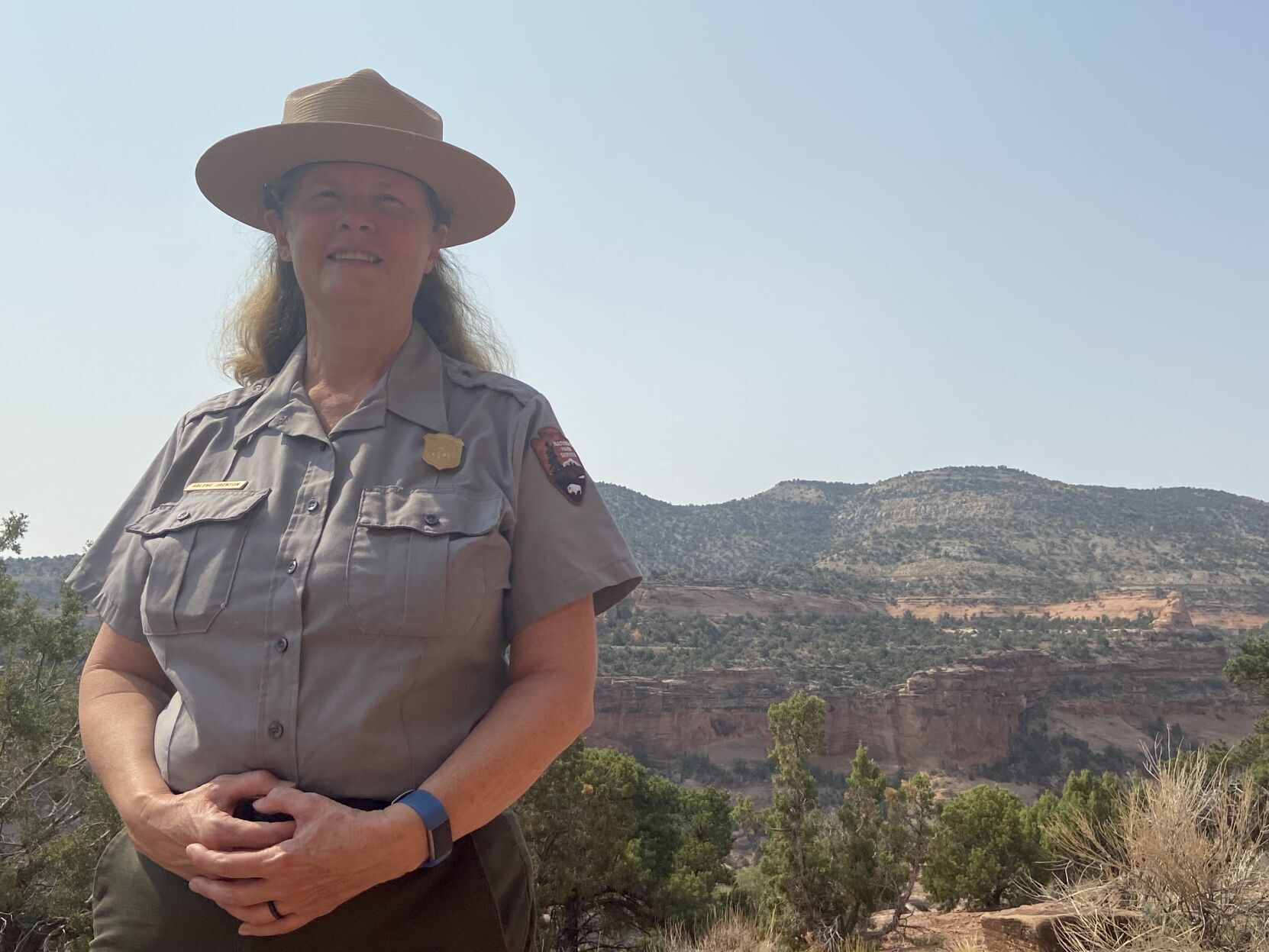
Arlene Jackson, the chief of interpretation, education and community outreach at Colorado National Monument, said her site experienced a 30% growth in visitation over 2020. That kind of traffic, if sustained, would make park leaders nervous, even though it is in service of the monument’s purpose, as it overlooks the city and river from 7,000-feet.
“We’re a national park. They deserve to be able to come here and to have a wonderful experience. This is their birthright as American citizens,” she said. “I hate to say it’s a bad thing. It just creates challenges.”
Jackson described the National Park Service’s work with local and state tourism leaders to publicize “all of the amazing things you can do when you come to Colorado,” and she expects steady growth in visitation, instead of more worrisome spikes.
“A lot of communities have one national park or one national forest. Here, we have this wonderful mosaic of public lands,” she added. “None of us are forced to deal with a lot of pressure in one area.”
Extended drought
Next year marks the 100th anniversary of the Colorado River Compact, the interstate agreement governing water use and management among seven Southwestern states and Mexico. Holistically, the prognosis for the river is not good.
The U.S. Bureau of Reclamation, which supplies water and hydroelectric power, has declared a shortage on the Colorado River for the first time, which will result in reductions to water flows downstream. The U.S. Drought Monitor has also designated much of Mesa County to be in “extreme drought,” with some portions in “exceptional drought” and others in — merely — “severe drought.”
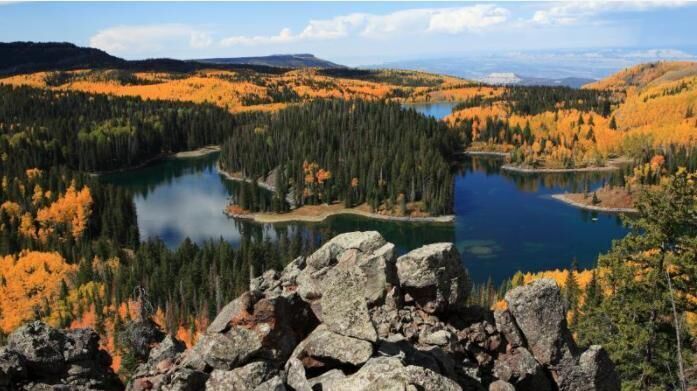
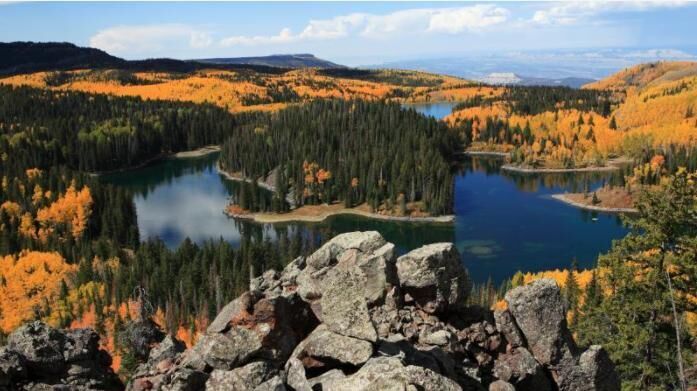
But for the city of Grand Junction, which has senior water rights and gets its municipal supply from reservoirs on nearby Grand Mesa, the drought does not necessarily equate to a water crisis.
“It’s pretty uncommon that anyone here in the valley has to cut back,” said Holm, who added that last summer was the first time she could remember the city imposing watering restrictions.
“Our demand is not much higher than it was 10, 15 years ago, even with the growth that we’ve experienced,” said Greg Williams, assistant general manager of the Ute Water Conservancy District. It is a finding backed up in the city’s 2019 “Issues and Opportunities Report,” which notes that education has been crucial to keeping per capita water usage down.
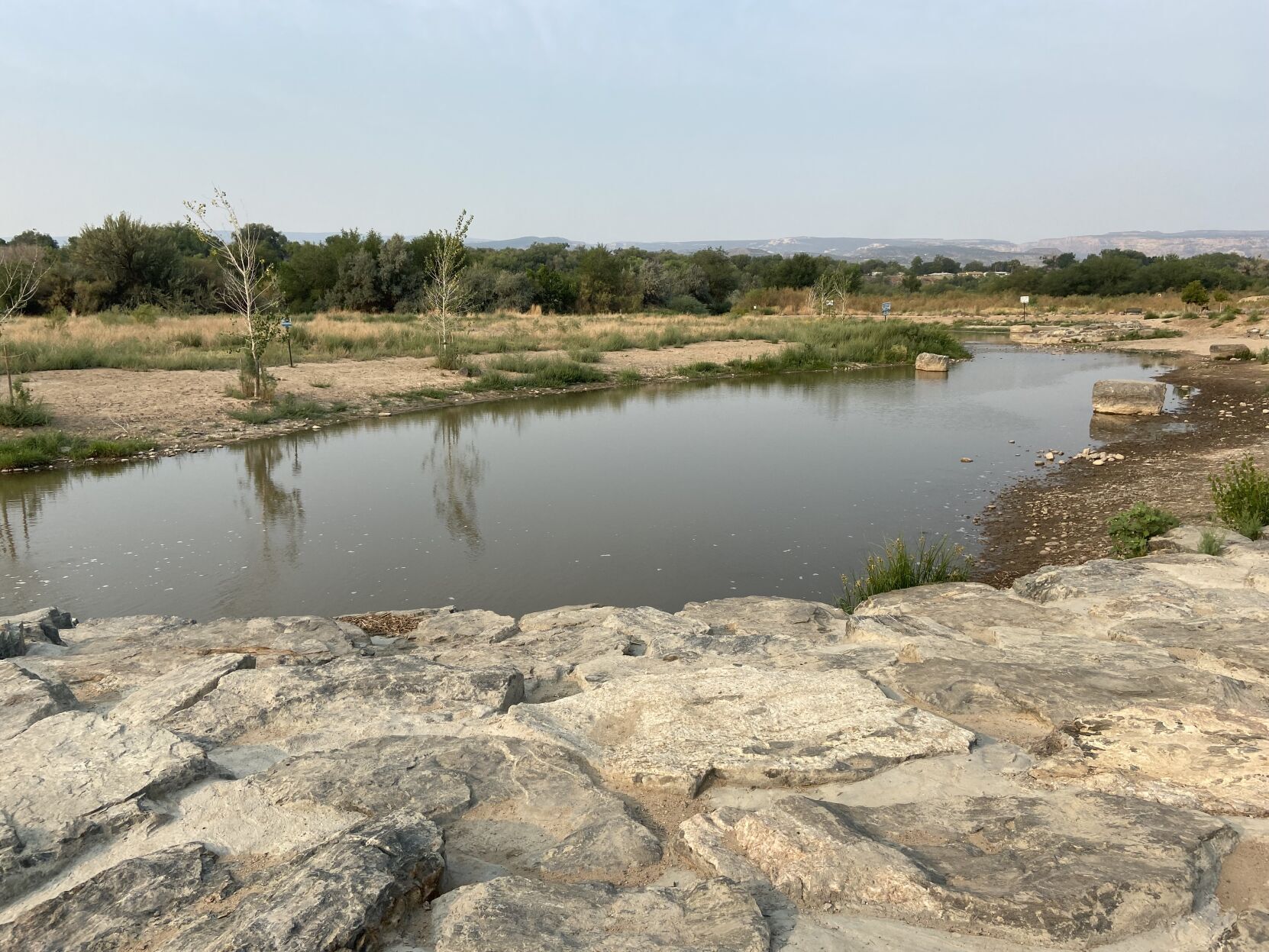
Instead, the water availability manifests in other ways. At River Park at Las Colonias near downtown, a channel provides a “lazy river” experience along the riverfront trail, connecting to the Colorado River itself. Last year, the city placed sandbags at the entrance to the channel to cut off the recreational feature from the habitat that is a priority for the Colorado’s diminished water flows.
As of mid-August, the “lazy river” was riding low. The experience on the channel is “very different,” the city acknowledged after placing the sandbags. Holm worried that, if the climate gets hotter and smokier, it may eventually be unpleasant to even partake in recreation — much less sustain other segments of the economy.
“Region-wide, agriculture is where most of the water is. I think that’s where you’ll see the biggest impacts,” she said. “It doesn’t matter what your legal water rights situation is if there isn’t physically water there to take.”
Doug Colby of Fruit Basket Orchards in Grand Junction said that aside from the availability of water, there are two other threats to agriculture in his experience: fungus and fires.
“Certainly the wildfires in Glenwood Springs have changed the minerals that are in the water,” he said.
The water economy
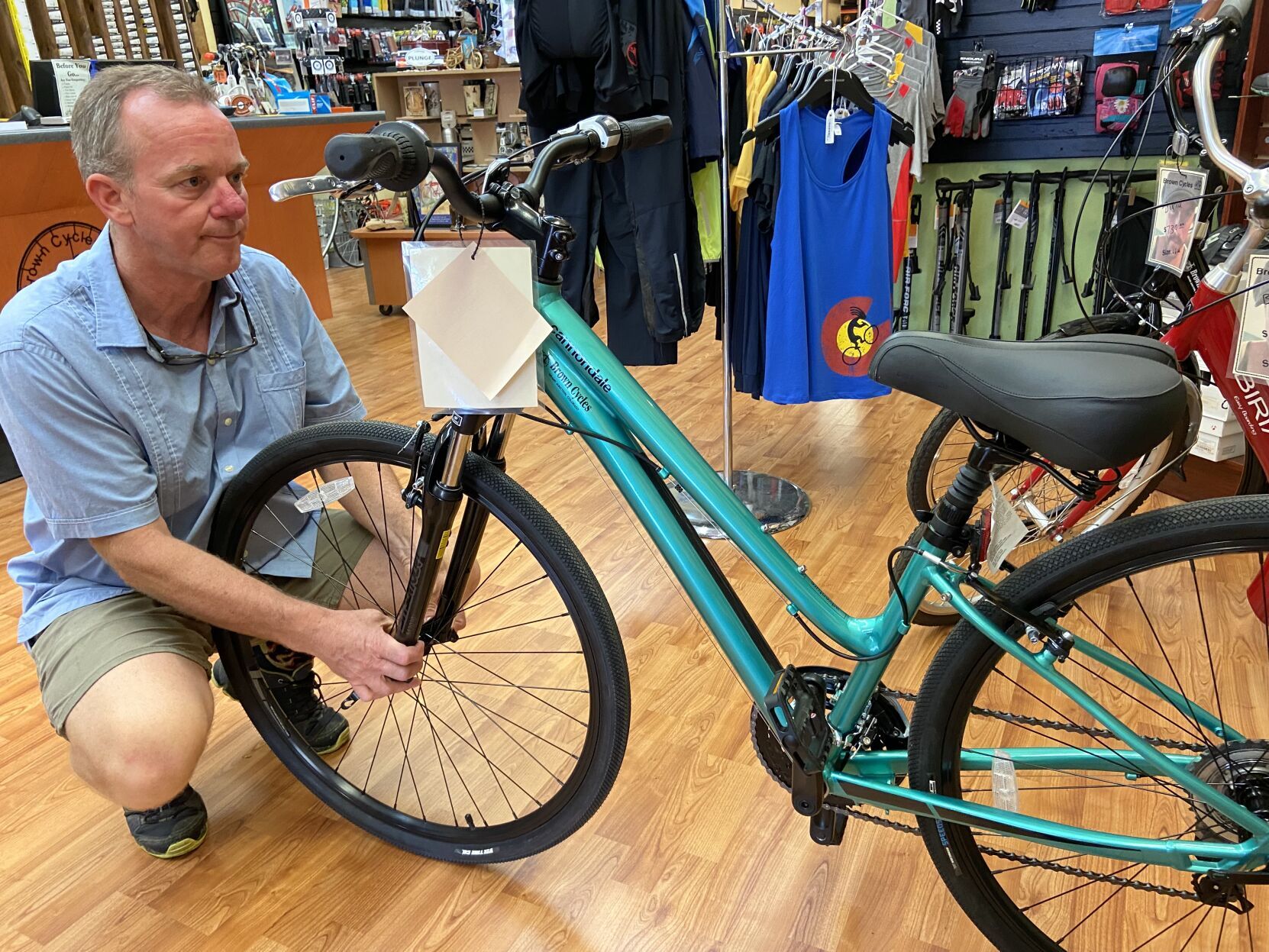
Chris Brown has run a bicycle shop for 20 years, located on Main Street. His recent historical book, “Bicycle Junction,” was adapted to an opera and performed this summer.
“There’s a big push here for outdoor life. It’s happening all over the state because it’s the easy thing,” said Brown, who primarily rents bikes to out-of-town visitors. The rivers have always been at the center of outdoor life in the Grand Valley, and their health will be a major determinant of the future.
He described how the city’s pool came about 99 years ago, after a local banker watched a rescue crew try unsuccessfully to pull a drowning boy out of the river, and then donated $25,000 for a safe place to swim. In that vein, a local business now provides water safety classes for the river down the street from the cycling shop.
“You always hear, ‘You better learn your history or otherwise you’re gonna repeat it.’ And the opening line in the opera play was, ‘For what is the value of history if you can’t repeat it?'” he said.
“You’re not looking back so you won’t do it. You’re looking back so you will do it,” Brown added. “Why can’t it be a positive thing?”


Get OutThere
Signup today for free and be the first to get notified on new updates.
RIVER TOWNS: GRAND JUNCTION | Managing popularity amid climate struggles on the Gunnison and Colorado rivers
Dave Fishell pulled his pickup truck off of the serpentine road ascending the Colorado National Monument, overlooking Grand Junction in Mesa County. He had spied a family visiting from Buffalo attempting to take a selfie and stepped out to offer his services as a photographer — in addition to his role as local historian.
“If it was clear,” Fishell told the tourists as the haze of Western wildfire smoke lingered over the valley, “you could see the original toe hold and hand hold” on a giant rock formation arising from the canyon floor.
They didn’t mind the smoke, the family said — the views were still better than those in Buffalo.
The Grand Valley is a desert through which the Gunnison and Colorado rivers flow. the former merging into the latter. The waterways form a confluence — or junction — at the edge of Grand Junction’s city limits.
Grand Junction, the largest city on the Western Slope, is a magnet for people visiting the region. Its attractions include the geological monument, the Colorado River, wine country — and it is a highlight on one of Amtrak’s most scenic train routes, the California Zephyr, which traverses the Rocky Mountains via the river on its trek between Chicago and the Bay Area.
But there are issues encroaching on the valley that are increasingly common to the Western United States: drought, fire and fears of being overrun with recreational visitors. Water flows are well below the 30-year average in a critical stretch of fish habitat. And for the first time in 65 years, the Ute Water Conservancy District drew upon the Colorado River to maintain its water supply for Mesa County customers.
“This valley is in a pretty privileged position. … People in this valley haven’t really had to worry about their own water use very much,” said Hannah Holm, director of the Hutchins Water Center at Colorado Mesa University. “We’re in a pretty cushy spot in a pretty dry region. But I think we’re starting to see that we’re not as invulnerable as we felt.”
Rivers, rails, arrival of industry
Indigenous habitants have origins to at least 11,000 BCE. But the government forcibly removed the remaining Ute Indians from Western Colorado to reservations after a 19th-century clash between U.S. soldiers and the subjugated tribal population.
Grand Junction incorporated in 1882. Later that year, the first Denver & Rio Grande Railway train arrived. It would only take until April 1883 for the first passenger train to travel between Denver and Salt Lake City over the route. By the end of the decade, two railroad lines were now helping ship produce and coal to market in Colorado’s Front Range.
In 1918, the completion of the Highline Project provided a means of cultivating 50,000 acres in the Grand Valley using a roller dam controlled by moving large steel cylinders. Three years later, Congress renamed the Grand River to its current designation: the Colorado River.
“Radium, vanadium, uranium — those phases came and went,” Fishell said. “Radium was mined not within the town, but in the county. … They thought radium was gonna cure everything, from dandruff to cancer.”
How to handle popularity
Catherine Ventling, a co-chair of the volunteer organization One Riverfront, said that more than three decades ago, an effort began to clean up the Colorado River’s industrial waste from the mining era and establish a trail system.
By 2020, more than 1.2 million people were using BLM-managed public lands surrounding Grand Junction for recreation, added Dan Ben-Horin, national conservation lands specialist with the BLM in Grand Junction.
“When the land is so delicate right now (in a severe drought), the impacts from recreational users are a little higher. Having more people on the landscape will deteriorate conditions,” Ben-Horin said.
Calling the region a “hotbed of climate change” — The Washington Post found the Western Slope to have warmed twice as fast as the global average — he said the long-term effects are yet to be determined.
To Scott McInnis, a county commissioner and former congressman, the region needs to be cautious of being overwhelmed by tourism that could turn the city into another Moab, Utah, a public lands gateway that is also on the Colorado River.
“I don’t think the average person in Grand Junction really wants us to be the number one tourism spot,” McInnis said. “I think many of the communities on the Western Slope need to slow down on the marketing and shift to management … so that we don’t get over-loved and overwhelmed.”
Arlene Jackson, the chief of interpretation, education and community outreach at Colorado National Monument, said her site experienced a 30% growth in visitation over 2020. That kind of traffic, if sustained, would make park leaders nervous, even though it is in service of the monument’s purpose, as it overlooks the city and river from 7,000-feet.
“We’re a national park. They deserve to be able to come here and to have a wonderful experience. This is their birthright as American citizens,” she said. “I hate to say it’s a bad thing. It just creates challenges.”
Jackson described the National Park Service’s work with local and state tourism leaders to publicize “all of the amazing things you can do when you come to Colorado,” and she expects steady growth in visitation, instead of more worrisome spikes.
“A lot of communities have one national park or one national forest. Here, we have this wonderful mosaic of public lands,” she added. “None of us are forced to deal with a lot of pressure in one area.”
Extended drought
Next year marks the 100th anniversary of the Colorado River Compact, the interstate agreement governing water use and management among seven Southwestern states and Mexico. Holistically, the prognosis for the river is not good.
The U.S. Bureau of Reclamation, which supplies water and hydroelectric power, has declared a shortage on the Colorado River for the first time, which will result in reductions to water flows downstream. The U.S. Drought Monitor has also designated much of Mesa County to be in “extreme drought,” with some portions in “exceptional drought” and others in — merely — “severe drought.”
But for the city of Grand Junction, which has senior water rights and gets its municipal supply from reservoirs on nearby Grand Mesa, the drought does not necessarily equate to a water crisis.
“It’s pretty uncommon that anyone here in the valley has to cut back,” said Holm, who added that last summer was the first time she could remember the city imposing watering restrictions.
“Our demand is not much higher than it was 10, 15 years ago, even with the growth that we’ve experienced,” said Greg Williams, assistant general manager of the Ute Water Conservancy District. It is a finding backed up in the city’s 2019 “Issues and Opportunities Report,” which notes that education has been crucial to keeping per capita water usage down.
Instead, the water availability manifests in other ways. At River Park at Las Colonias near downtown, a channel provides a “lazy river” experience along the riverfront trail, connecting to the Colorado River itself. Last year, the city placed sandbags at the entrance to the channel to cut off the recreational feature from the habitat that is a priority for the Colorado’s diminished water flows.
As of mid-August, the “lazy river” was riding low. The experience on the channel is “very different,” the city acknowledged after placing the sandbags. Holm worried that, if the climate gets hotter and smokier, it may eventually be unpleasant to even partake in recreation — much less sustain other segments of the economy.
“Region-wide, agriculture is where most of the water is. I think that’s where you’ll see the biggest impacts,” she said. “It doesn’t matter what your legal water rights situation is if there isn’t physically water there to take.”
Doug Colby of Fruit Basket Orchards in Grand Junction said that aside from the availability of water, there are two other threats to agriculture in his experience: fungus and fires.
“Certainly the wildfires in Glenwood Springs have changed the minerals that are in the water,” he said.
The water economy
Chris Brown has run a bicycle shop for 20 years, located on Main Street. His recent historical book, “Bicycle Junction,” was adapted to an opera and performed this summer.
“There’s a big push here for outdoor life. It’s happening all over the state because it’s the easy thing,” said Brown, who primarily rents bikes to out-of-town visitors. The rivers have always been at the center of outdoor life in the Grand Valley, and their health will be a major determinant of the future.
He described how the city’s pool came about 99 years ago, after a local banker watched a rescue crew try unsuccessfully to pull a drowning boy out of the river, and then donated $25,000 for a safe place to swim. In that vein, a local business now provides water safety classes for the river down the street from the cycling shop.
“You always hear, ‘You better learn your history or otherwise you’re gonna repeat it.’ And the opening line in the opera play was, ‘For what is the value of history if you can’t repeat it?'” he said.
“You’re not looking back so you won’t do it. You’re looking back so you will do it,” Brown added. “Why can’t it be a positive thing?”
Get OutThere
Signup today for free and be the first to get notified on new updates.
PREV
PREVIOUS
RIVER TOWNS: GRAND JUNCTION | Managing popularity amid climate struggles on the Gunnison and Colorado rivers
Dave Fishell pulled his pickup truck off of the serpentine road ascending the Colorado National Monument, overlooking Grand Junction in Mesa County. He had spied a family visiting from Buffalo attempting to take a selfie and stepped out to offer his services as a photographer — in addition to his role as local historian. “If […]
Police: Man assaults pregnant woman, man with 'large rock' in Colorado Springs
A 20-year-old man hit a pregnant woman on the head with a “large rock” near the Springs Rescue Mission in Colorado Springs on Sunday afternoon, law enforcement said. Officers responded to East Las Vegas Street near the Springs Rescue Mission shortly before 1 p.m. where two people were hit in the head with a “large […]