







Suit claims CU Denver overreacted to anonymous COVID complaint
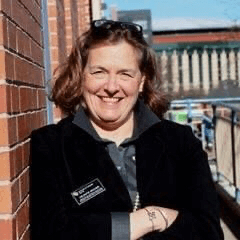
Courtesy Celeste Archer
The Mountain States Legal Foundation filed a lawsuit against the University of Colorado – Denver, Wednesday, on behalf of their client, Celest Archer, who was summarily excluded from the CU Denver campus September 3 after an anonymous complaint claimed she had “either been exposed to COVID-19, tested positive for COVID-19, Or having symptoms related to COVID-19.”
Archer is the Executive Director of the University of Colorado Denver’s National History Day in Colorado program and the Colorado Student Leaders Institute, both of which serve K through 12 students.
“Our state’s National History Day program is like a science fair for history, only bigger,” Archer told The Denver Gazette. “We do a lot of teacher training and things like that. And then I’m also director of our state’s version of a governor’s school. Ours is called Colorado Student Leaders Institute. I also am listed as an instructor for an education class that we offer sometimes to teachers. It’s a graduate education and methods class.”
An email sent by Kimberlyn Cook early in the afternoon of September 3 directed Archer to “please remain off campus until you are cleared by a contact tracer to return.” Cook did not respond to a request from The Denver Gazette asking her about her position and function at the department. Sarah Erickson, public relations manager for CU Denver would say only that Cook “is a graduate student with the Environmental Health and Safety Department.”
The notice of exclusion was also transmitted to Archer’s supervisor, Dean Marjorie Levine-Clark and three other members of the CU Denver administration, advising that Archer was “unable to return to campus.” Levine-Clark texted Archer asking if she was okay and saying there was an email circulating claiming Archer was either showing signs of COVID-19 or had tested positive.
Archer eventually contacted Chris Pucke, Managing Associate University Counsel and special assistant to the Chancellor for COVID-19 matters.
Pucke emailed Archer about four hours later saying, “I checked with our team, and we are changing our process and communications. No one should have said you were excluded from campus. They were moving way too fast … I’m sorry that it moved so quickly, we need to slow that down. No one should be excluding folks from campus without a clear level of verification and information.”
In an email statement to The Denver Gazette, Sarah Erickson, PR Manager for CU Denver said, “Our No. 1 goal throughout the pandemic has been to keep our campus community safe. We followed our safety protocols and responded with good intent, as we would with any reported positive case of COVID-19 on campus. In less than two hours, we sorted out any misunderstandings and invited the employee back to campus.”
Erickson also said, “Kim is a graduate student with the Environmental Health and Safety Department. This information, coupled with the statement I provided yesterday, is the only information we will be providing on behalf of the university.”
One of the reasons Archer is suing is that the university refuses to disclose the name of the person who made the report. Archer wants to know who it was because the report could be considered harassment and defamation.
“We’ve named John or Jane Doe as a defendant in the case, in addition to the university personnel and certainly, during the course of litigation, if we need to, we’ll subpoena the records in the name of the individual who made the report,” said William Trachman, Archer’s attorney and general counsel for the MSLF.
“Celeste is a government employee,” said Trachman. “She has a contract; she has a job to do, and she has a property interest in her employment. And if the government or a government actor like the public university is going to deprive her of that, even for short periods of time, it has to give her some due process…they can’t just unilaterally exclude her and hope that they got it right when she has those sorts of rights. And they didn’t give her any.”
“She was targeted using COVID-19 hysteria. This is one of the things that’s happening,” said Trachman. “It doesn’t matter who you are. You don’t have to be an unvaccinated or unmasked person to be a victim of COVID-19 hysteria. And the Constitution doesn’t take a holiday during pandemics, and that’s one of the narratives of our complaint. And that’s why we took the case.”