







Speed changes could be coming to your neighborhood
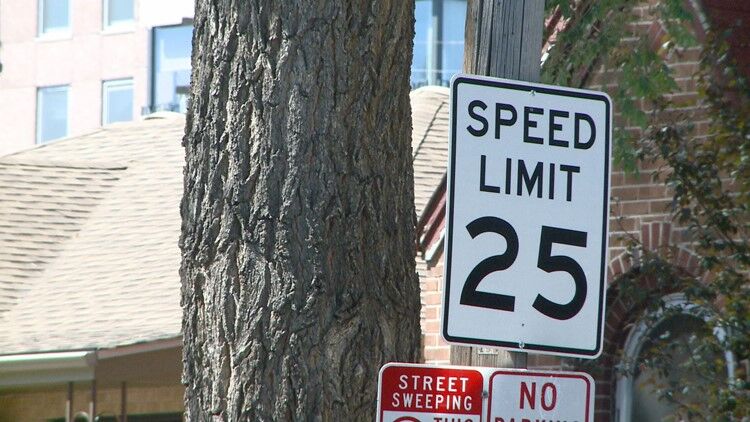
Speed limits on about 60% of Denver’s streets would drop under one city council member’s yet-to-be-introduced proposal.
The proposal will be introduced by Councilman Paul Kashmann on Dec. 1, and if passed, would decrease residential speeds from 25 to 20 mph in all the city’s residential areas.
“We’ve gotten a non-stop stream of complaints about people driving too fast on our neighborhood streets,” Kashmann said. “We need to pay at least as much attention to pedestrian safety as we do moving automobiles. The reality is we got all these vehicles and we need to do a heck of a lot better job.”
As of Friday, 68 people have died in traffic accidents across the city this year, which is three less than in 2019, but 20% higher than all of last year. An additional 310 people have been seriously injured in accidents, according to DOTI.
Since 2013, the majority of reported deaths and serious injuries involved people inside the vehicles, however, this year, 50% of the traffic deaths were pedestrians, bikers or people riding scooters, according to DOTI.
Kashmann’s proposal comes after the city conducted a $350,000 speed limit reduction feasibility study, which recommended reducing speed limits, created a speed limit reduction “toolkit,” and identified how this change could be implemented overtime.
The study is apart of the city’s Vision Zero initiative that aims to eliminate traffic fatalities by 2030.
Jill Locantore, the executive director of the Denver Streets Partnership, said reducing speed limits is a cheap, easy way to reduce the severity of injuries or even death in an accident.
“Once you hit 40 mph it’s pretty much a given that if a car strikes a pedestrian they’ll either be killed or suffer a life altering injury,” Locantore said. “Whereas at 20 mph there’s a very good chance the person will walk away unscathed.”
If Kashmann’s proposal passes, the city estimates between 2,700 and 3,500 signs would need to be replaced and could take three to five years to complete, said Nancy Kuhn, a spokeswoman for DOTI.
The department does not have an estimate on how much it will cost to replace the signs, Kuhn said.
Additionally, if the proposal is successful, it could begin a chain effect of other streets reducing their speeds or implementing other speed reducing methods to lower the number of traffic injuries and fatalities. These roads include high-traffic areas such as Colfax Avenue and Federal Boulevard, Kashmann said.
“We’re looking at appropriate speeds across the city,” he said. “Does that mean every street in the city is going to change? I don’t have any evidence that that’s the case, but I wouldn’t be surprised if other appropriate speed reductions take place.”
Although Kashmann’s proposal focuses solely on reducing the speed limit, the 258-page study identified other modes to reduce traffic fatalities and injuries through automatic enforcement and changes to street designs.
Locantore said for speed reductions to be successful the city will need to implement additional infrastructure changes through speed bumps, raised crosswalks, roundabouts and traffic diverters.
“Reducing the default speed limits helps justify those needed street design changes and those traffic engineers are essentially designing the street to match the posted speed limit,” Locantore said.
Historically, the department of transportation and infrastructure has avoided using speed bumps in Denver, but the department recently finalized its Complete Streets Design Guidelines, which introduces the use of speed humps, Kuhn said.
Similar to Locantore, Kashmann acknowledge that reducing speeds is only the first step in making the city’s roadways a safer place, but he said it’s a great place to start.
“Changing signage is not going to be a silver bullet to correct the habits of those who drive badly in our city, but it is part of the solution,” Kashmann said.
Kashmann said the proposal could be voted on as early as mid-December, but could roll into January. But he hopes the vote occurs sooner rather than later.
“Sixty-eight people have died on our roads this year already and that’s ridiculous,” Kashmann said. “Obviously we haven’t done the job we need to do.”