







Denver OKs emission reductions for large buildings, $26 million in solar energy projects
milehightraveler, iStock / Getty Images
The Denver City Council unanimously passed two bills Monday that will establish new emissions regulations for large buildings and greenlight a $26 million contract for solar energy projects throughout the city.
The first bill requires all large commercial and multifamily buildings in the city to reduce greenhouse gas emissions and improve energy performance over the coming years.
These changes come as Denver aims to cut building energy use 30% by 2030. Commercial and multifamily buildings produce 49% of the city’s greenhouse gas emissions, according to the Office of Climate Action. Councilman Jolon Clark called the bill “a big deal.”
“We are in the midst of a climate crisis and we can only solve it with bold policies like this one,” Clark said. “The time for action on climate change is now. We’re certainly not done yet but this is a huge step tonight.”
The bill requires buildings 25,000 square feet or larger to achieve 30% energy savings by 2030, with interim goals set in 2024 and 2027.
Buildings between 5,000 and 24,999 square feet will have to install all LED lights or use solar power to meet 20% of energy usage. Those deadlines range from December 2025 for larger buildings to December 2027 for smaller buildings.
Denver power plants 'textbook examples of environmental racism,' Sierra Club says
In addition, the bill gradually requires buildings to use electric heating systems when they replace existing gas systems.
In 2025, electric heat pumps will be required when easy to electrify systems need to be replaced (like furnaces, rooftop units and individual water heaters). In 2027, electric heat pumps will be required for harder to electrify systems as well (like PTACs, boilers and central hot water).
“This ordinance represents climate benefits that are huge and impressive,” said Christine Brinker with the Southwest Energy Efficiency Project during a committee meeting. “This really makes Denver a leader and is something we can truly be proud of.”
The changes are expected to reduce greenhouse gas emissions from Denver’s buildings by roughly 80% by 2040, according to the Southwest Energy Efficiency Project. The bill will not influence single-family homes.
The second bill approves a $26 million, 25-year contract with McKinstry Essention LLC to fund solar power generating facilities and electric vehicle charging stations throughout the city.
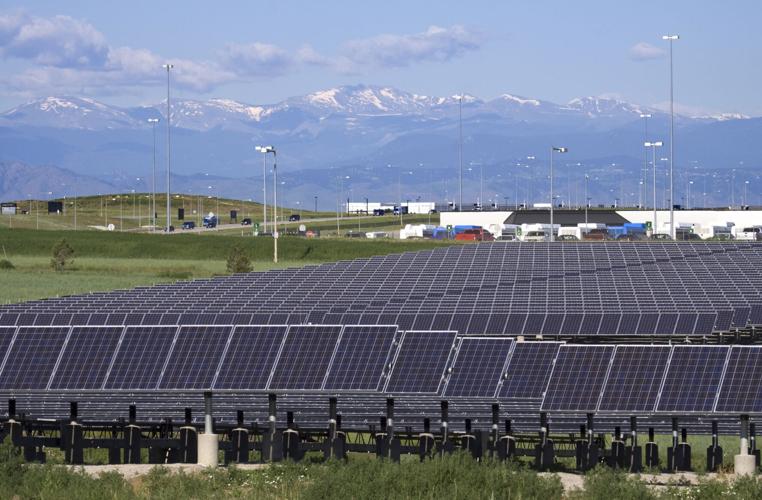
Currently, 10 solar panel arrays are planned for the proposed contract. The arrays are expected to generate over 144 million kilowatt-hours of renewable electricity, hosted across city-owned parking lots, rooftops and land parcels.
Janitors end Denver International Airport strike after reaching deal to improve wages
“This program is specifically designed to help us power our facilities and also provide that equity benefit to folks who might not qualify for privately-offered solar,” said Jonny Rogers, the city’s renewable energy specialist.
The electricity generated by the arrays will be used to power city facilities like recreation centers and Denver Public Schools buildings, Rogers said. In addition, 30% of the electricity will be allocated to low-income households.
Rogers said this will equate to providing power to about 150 low-income families throughout the city.
Construction on the 10 solar panel arrays is scheduled to begin in four phases throughout 2022. Four of the arrays will be located at the Denver International Airport and National Western Center Campus, as well as solar carports at recreation centers, schools and city offices in Districts 5, 6, 8, 9 and 11.
This contract is part of the Renewable Denver Community Solar initiative, aiming to build and operate up to 15 megawatts of city-owned community solar projects by 2025. The 10 planned arrays will add 4.6 megawatts.