







December comes with the blues as Colorado ski areas wait for snow
To Jeff Hanle, it didn’t feel like the first day of December.
“Sunny and warm,” reported the spokesman for Aspen Snowmass. “If it wasn’t ski season, I’d say it’s really nice out.”
It hasn’t felt like ski season.
The calendar turned to December, and Fred Klaas was just one ski area operator wondering when his lifts would turn.
On his way recently to Echo Mountain near Evergreen, “I drove by a golf course, and there’s guys out there literally in T-shirts and shorts,” Klaas said. “It’s December, and it’s like nobody’s thinking, ‘Let me go dig my stuff out of the garage and go skiing.'”
Passholders living along the Front Range have felt some of the warmest, driest days on record for this time of year. And they haven’t been able to find much relief in their usual winter escapes.
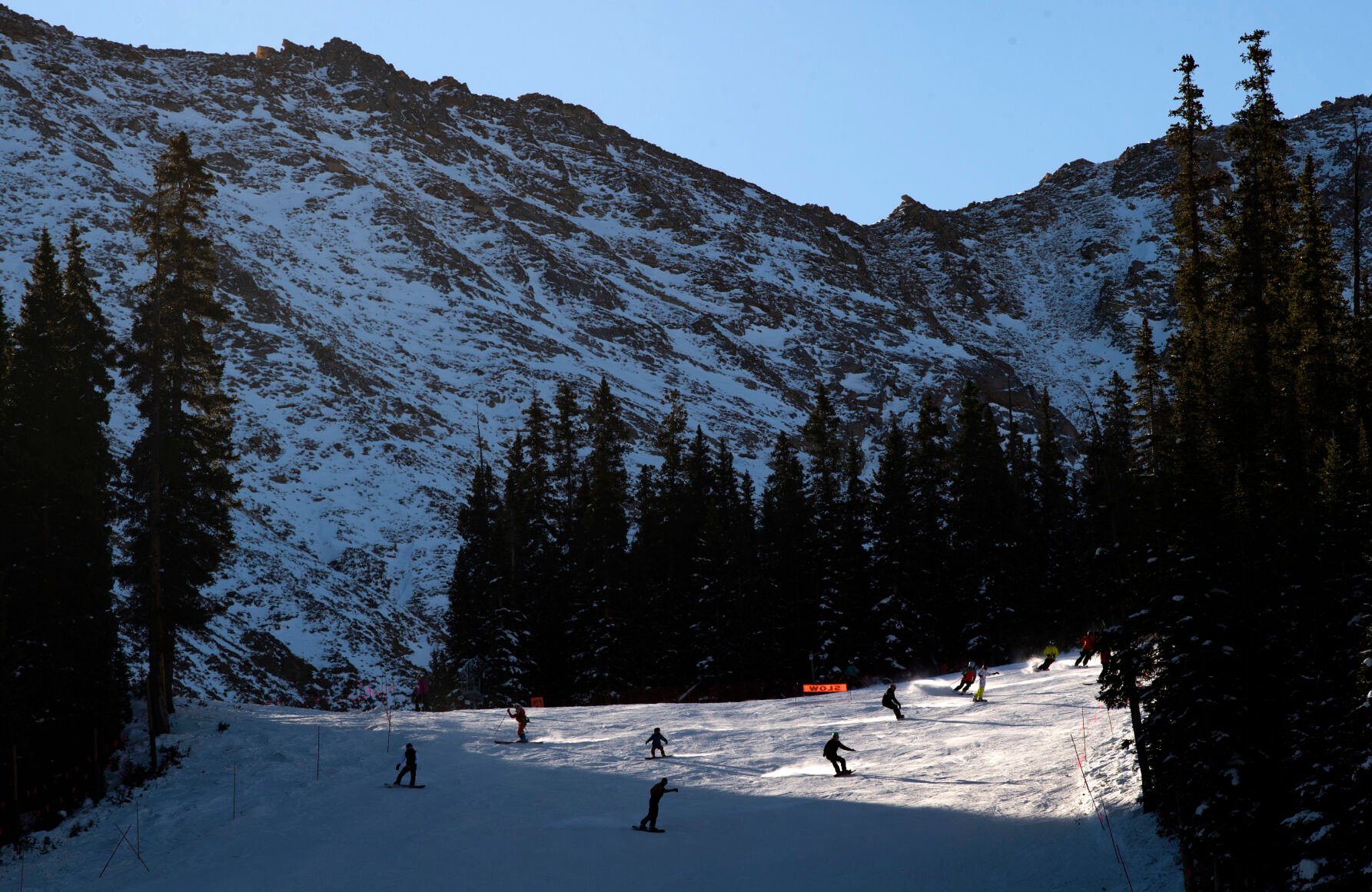
Of the 13 ski areas open heading into the weekend, a fraction of their collective terrain was available. That’s as the state’s snowpack sits well below average for the start of December, with the southwest most parched. The region’s snowpack has hovered around 30% of average, recent monitors have shown.
Near Pagosa Springs, Wolf Creek Ski Area has felt the pain. It’s not unusual for crews to ferry snow from the parking lot and pack it near the base of slopes, said Rosanne Haidorfer-Pitcher of Wolf Creek’s owning family. Nor is it unusual for the “barrel brigade” to be deployed — workers who roam to higher mountainsides to transport powder to pockets in need. But “usually it’s not as extensive as this year,” Haidorfer-Pitcher said.
She said Wolf Creek added three snowmaking guns to its humble fleet for this winter. “This season is definitely reminding us that we need to have a solid system in place,” she said.
No system is in place at Monarch Mountain. The southern Colorado ski area has a proud, all-natural motto. But Mother Nature didn’t come through for the traditional Thanksgiving opening. In 50 years, you could count on two hands the number of times that’s happened, spokesman Dan Bender said.
Two years ago, Aspen Mountain added snowguns to its upper reaches — a move likely never thought necessary when the technology expanded in the 1970s. But such decisions are necessary in the face of climate change, Hanle said.
Leading up to Aspen Mountain’s Thanksgiving opening with only 50 acres, temperatures hardly allowed for snowmaking, Hanle said. Steamboat Resort cited the same struggle in delaying its opening last month, joining three other Colorado ski areas to push back kickoff.
“When it’s not even cold enough to make snow, and you’re in a dry spell like this, it’s a really tough start to the year,” Hanle said. “And the way things are looking, we’re gonna see more and more of these.”
Indeed, the century has seen several ski season starts like this, said Joel Gratz, the meteorologist with forecasting hub OpenSnow. From his database, he found similarities in 2017, 2012 and 2007.
Along with global warming, climatologists have looked to a La Niña phase for the current dry spell. In La Niña winters, storms tend to linger in the Pacific Northwest before tracking south to Colorado and other western states, Gratz explained.
But La Niña doesn’t necessarily dictate the quality of a whole ski season, he said. And starts don’t always indicate the middles and ends of seasons, he said.
“The thing to keep in mind is that early season, at least from a skiing perspective, I always think of it as a pretty big bonus,” Gratz said. “Our snowpack is deepest on average in the middle of April and into early May.”
He offered more hope in his forecast for snow in the mountains next week.
The barrel brigade at Wolf Creek, for one, would be grateful.
“Any kind of snow we get at this point just makes it better,” Haidorfer-Pitcher said.
December comes with the blues as Colorado ski areas wait for snow
To Jeff Hanle, it didn’t feel like the first day of December.
“Sunny and warm,” reported the spokesman for Aspen Snowmass. “If it wasn’t ski season, I’d say it’s really nice out.”
It hasn’t felt like ski season.
The calendar turned to December, and Fred Klaas was just one ski area operator wondering when his lifts would turn.
On his way recently to Echo Mountain near Evergreen, “I drove by a golf course, and there’s guys out there literally in T-shirts and shorts,” Klaas said. “It’s December, and it’s like nobody’s thinking, ‘Let me go dig my stuff out of the garage and go skiing.'”
Passholders living along the Front Range have felt some of the warmest, driest days on record for this time of year. And they haven’t been able to find much relief in their usual winter escapes.
Of the 13 ski areas open heading into the weekend, a fraction of their collective terrain was available. That’s as the state’s snowpack sits well below average for the start of December, with the southwest most parched. The region’s snowpack has hovered around 30% of average, recent monitors have shown.
Near Pagosa Springs, Wolf Creek Ski Area has felt the pain. It’s not unusual for crews to ferry snow from the parking lot and pack it near the base of slopes, said Rosanne Haidorfer-Pitcher of Wolf Creek’s owning family. Nor is it unusual for the “barrel brigade” to be deployed — workers who roam to higher mountainsides to transport powder to pockets in need. But “usually it’s not as extensive as this year,” Haidorfer-Pitcher said.
She said Wolf Creek added three snowmaking guns to its humble fleet for this winter. “This season is definitely reminding us that we need to have a solid system in place,” she said.
No system is in place at Monarch Mountain. The southern Colorado ski area has a proud, all-natural motto. But Mother Nature didn’t come through for the traditional Thanksgiving opening. In 50 years, you could count on two hands the number of times that’s happened, spokesman Dan Bender said.
Two years ago, Aspen Mountain added snowguns to its upper reaches — a move likely never thought necessary when the technology expanded in the 1970s. But such decisions are necessary in the face of climate change, Hanle said.
Leading up to Aspen Mountain’s Thanksgiving opening with only 50 acres, temperatures hardly allowed for snowmaking, Hanle said. Steamboat Resort cited the same struggle in delaying its opening last month, joining three other Colorado ski areas to push back kickoff.
“When it’s not even cold enough to make snow, and you’re in a dry spell like this, it’s a really tough start to the year,” Hanle said. “And the way things are looking, we’re gonna see more and more of these.”
Indeed, the century has seen several ski season starts like this, said Joel Gratz, the meteorologist with forecasting hub OpenSnow. From his database, he found similarities in 2017, 2012 and 2007.
Along with global warming, climatologists have looked to a La Niña phase for the current dry spell. In La Niña winters, storms tend to linger in the Pacific Northwest before tracking south to Colorado and other western states, Gratz explained.
But La Niña doesn’t necessarily dictate the quality of a whole ski season, he said. And starts don’t always indicate the middles and ends of seasons, he said.
“The thing to keep in mind is that early season, at least from a skiing perspective, I always think of it as a pretty big bonus,” Gratz said. “Our snowpack is deepest on average in the middle of April and into early May.”
He offered more hope in his forecast for snow in the mountains next week.
The barrel brigade at Wolf Creek, for one, would be grateful.
“Any kind of snow we get at this point just makes it better,” Haidorfer-Pitcher said.