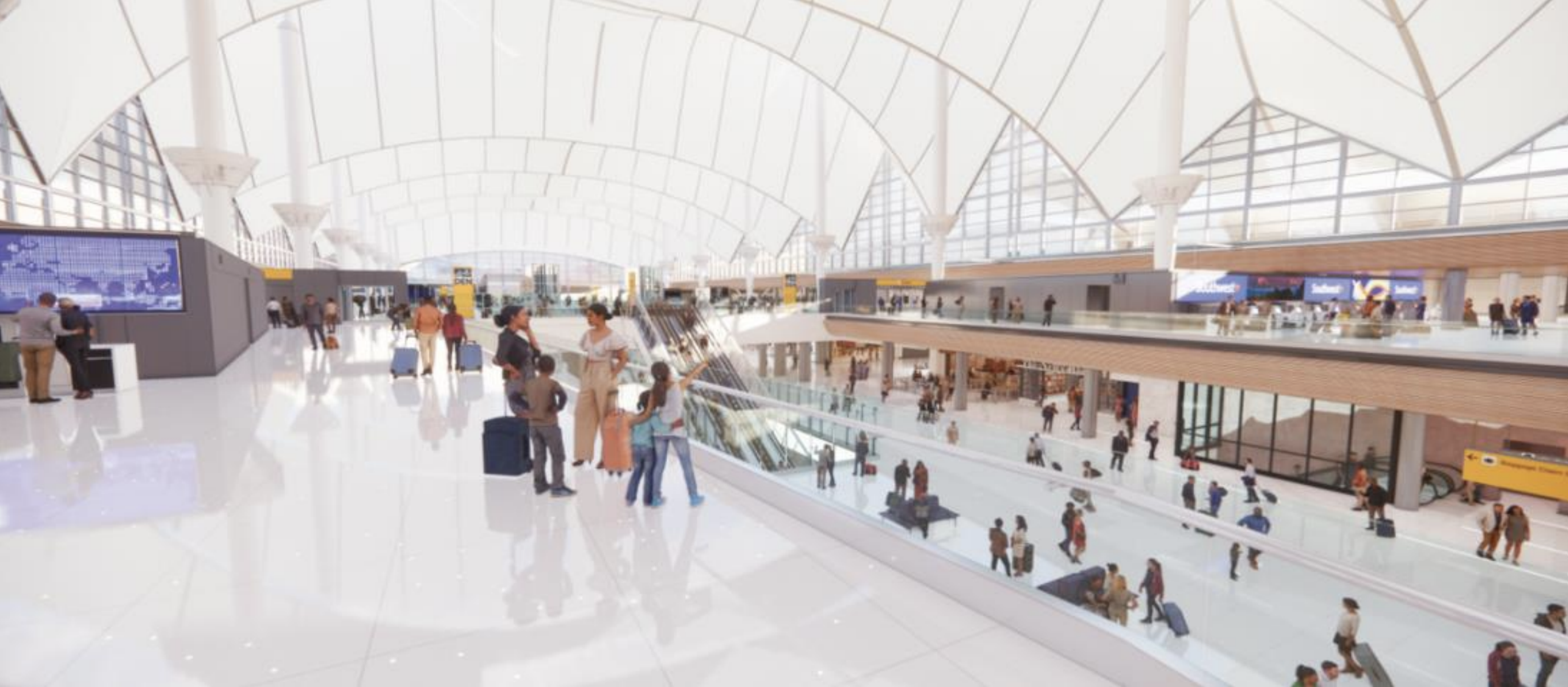
Denver committee advances $1.1B for DIA’s Great Hall Project
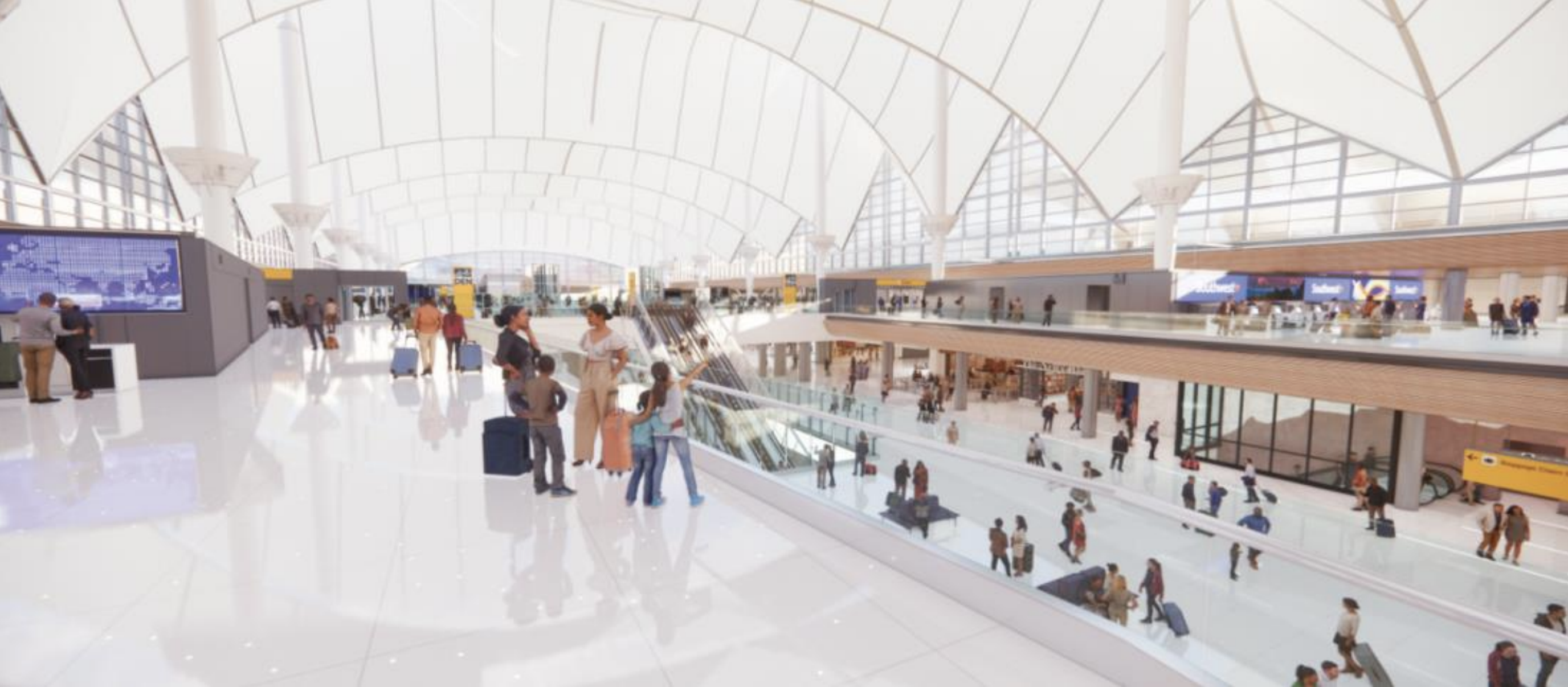
The whopping $1.1 billion price tag to complete the Great Hall Project at Denver International Airport passed a major hurdle Wednesday, receiving approval from the Denver City Council business committee.
The committee approved the four contract additions totaling $1.1 billion in a 6-1 vote after more than two hours of discussion. The proposals will now be sent to the full City Council for two final votes in the coming weeks.
Only Councilwoman Amanda Sawyer voted against the contract additions after her motion to delay the committee vote to Feb. 2 was shot down. Sawyer said the committee was given the contract drafts less than an hour before Wednesday’s meeting.
“I want to make sure that we make the responsible choice,” Sawyer said. “I don’t think that for $1.1 billion asking for six weeks … to look over the specifics is too much.”
If approved by the full council, the proposal would add $900 million to the airport’s contract with Hensel Phelps Construction Company, $100 million to the contract with Stantec Architecture Inc., $50 million to the contract with Jacobs Engineering Group Inc. and $50 million to the contract with LS Gallegos.
All of the additional dollars would be used to fund the third and final phase of the airport’s Great Hall Project — an effort to renovate the airport’s main Jeppesen Terminal that the airport has been working on since 2018.
Though the Great Hall Project was originally intended to be completed by November 2021, it was halted in 2019 when the contractor was fired with the project only 25% complete. After hiring a new contractor in 2020, the airport celebrated the completion of phase one of the project last month. The first two phases cost $770 million.
With phase two underway and expected to be completed in mid-2024, phase three of the project would round out years of construction at the airport.
“We feel very strongly about the completion of this project,” said airport CEO Phil Washington. “This airport is 26 years old. It is aging and it is showing its age in many respects. It’s crowded. … It’s the same airport but with more people.”
Phase one included adding more than 80 self-check-in stations on level six for Southwest, United Airlines and Frontier Airlines. Phase two will add a 17-lane security checkpoint in the northwest corner of the airport and a triple escalator that goes from level six to level four.
Phase three would construct another security checkpoint in the northeast corner of the airport, add self-check-in stations for all remaining airlines, add new flooring to the baggage claim and curbside areas, create a meeting area for arrivals on level five and construct Washington’s planned Center of Excellence and Equity in Aviation.
Washington said the total cost of phase three would be around $1.3 billion. The additional $200 million comes from direct costs such as quality insurance, inspection, permits, waste disposal and fees paid directly by the airport.
Airport officials defended the large costs Wednesday, saying the additions are necessary due to the popularity of the airport.
“This is all about building a terminal to accommodate 100 million annual passengers. That’s what we’re doing. Whether we do it or not, those passengers are coming,” said Michael Sheehan, senior vice president of special projects at the airport. “We’re proposing to finish what we started.”
Denver International Airport was built in 1995 to accommodate up to 50 million annual passengers, Washington said. In 2019, before pandemic-related travel decreases, the airport saw 69 million passengers. In 2022, the airport estimates it will see 72.8 million passengers.
The additional security checkpoint included in the plan for phase three would add another 10 screening lanes to the airport, increasing passenger throughput by 62%, or by 2,830 passengers per hour, according to airport estimates.
If approved, phase three would break ground near the end of 2022 and be completed between the spring of 2027 and the summer of 2028 — four years later than the most recent completion deadline of May 2024. Individual components would be opened as they are finished, Washington said.
“Nobody wanted to be sitting here talking about a failed contractor and a longer timeline and a bigger price tag,” said Councilman Jolon Clark. “With that being said … you’re putting forward a proposal that does get back to delivering everything that needs to be delivered. … We have to do it. This is critical.”
Several council members praised the plan to construct the Center of Excellence and Equity in Aviation in phase three. Washington said the center would train people for careers in aviation, targeting underrepresented communities like low-income and people of color, in addition to recruiting airport employees who work in other industries.
The $40 million center would be built out of level four in the airport’s Hotel and Transit Center. Other costs for major elements of phase three include $604 million for the self-check-in stations and $496 million for the security checkpoint.
The $1.1 billion that would be used for phase three would come from funds generated by the airport. Under federal regulations, these funds must be used for the airport and cannot be used for other city projects like public roads or parks.
“The difficult part for us is the price tag,” said Councilman Kevin Flynn. “You’ve given us everything we’ve asked for and a little more at a price that we didn’t expect. That’s something we’re going to have to consider.”
Completion of phase three would generate a projected 6,500 direct jobs, 500 indirect jobs and 1,300 induced jobs for the airport, in addition to 54,000 additional apprenticeship hours, according to airport estimates.
The City Council’s advancement of the $1.1 billion plan comes after the council approved $700 million in bonds for airport capital improvements last week. Airport officials said the $700 million would largely go toward funding the airport’s gate expansion and phases one and two of the Great Hall Project.
Sylvester Lavender, the airport’s chief financial officer, said it still has $948 million in its capital fund, partially from the Great Hall funding, but airport officials want to use the existing funding for future capital projects and use the interim funds to finish the Great Hall.