







Colorado law to require new license plates when vehicle is sold, transferred
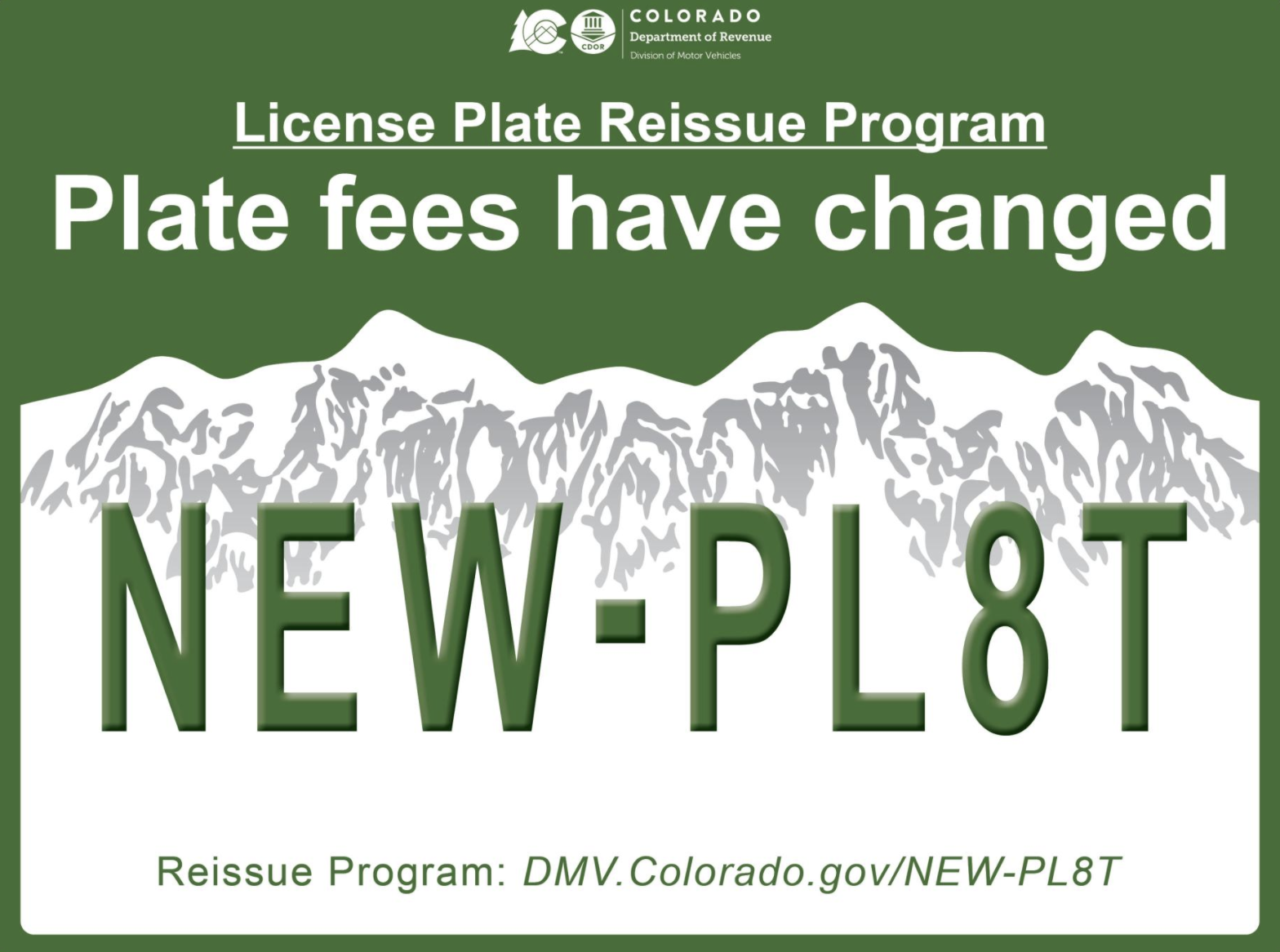
A new Colorado law will soon cause license plates to expire when a vehicle is sold or transferred, the Division of Motor Vehicles announced Friday.
This means vehicle owners will not be able to transfer their old license plates to their new vehicles. The License Plate Expiration on Change of Ownership Act goes into effect on Jan. 1, marking Colorado’s first license plate replacement program in over 20 years.
Officials called the new law a public safety policy, saying taking old license plates out of circulation will ensure vehicles have plates that are reflective and visible in low-light environments.
“All motorists will benefit from the program since license plates are often the only highly reflective element on vehicles, which is critically important for motorists to see a stalled vehicle on the roadside during low-light periods,” the Division of Motor Vehicles said in a statement.
Under the law, vehicle owners can still use the same combination of letters or numbers from their expired plates; however, to do so, they must apply for personalized plates and pay a one-time replacement fee ranging between $68.06 and $118.06.
For most, the standard replacement of the license plates without personalization will cost $4.73.
The new law will apply to license plates for Class C motor vehicles upon transfer of the owner’s title or interest in the vehicle. Class C motor vehicles include passenger vehicles, motorhomes and motorcycles.
Colorado law to require new license plates when vehicle is sold, transferred
A new Colorado law will soon cause license plates to expire when a vehicle is sold or transferred, the Division of Motor Vehicles announced Friday.
This means vehicle owners will not be able to transfer their old license plates to their new vehicles. The License Plate Expiration on Change of Ownership Act goes into effect on Jan. 1, marking Colorado’s first license plate replacement program in over 20 years.
Officials called the new law a public safety policy, saying taking old license plates out of circulation will ensure vehicles have plates that are reflective and visible in low-light environments.
“All motorists will benefit from the program since license plates are often the only highly reflective element on vehicles, which is critically important for motorists to see a stalled vehicle on the roadside during low-light periods,” the Division of Motor Vehicles said in a statement.
Under the law, vehicle owners can still use the same combination of letters or numbers from their expired plates; however, to do so, they must apply for personalized plates and pay a one-time replacement fee ranging between $68.06 and $118.06.
For most, the standard replacement of the license plates without personalization will cost $4.73.
The new law will apply to license plates for Class C motor vehicles upon transfer of the owner’s title or interest in the vehicle. Class C motor vehicles include passenger vehicles, motorhomes and motorcycles.