







EDITORIAL: Bluecifer, Freemasons and the curse of DIA
Coloradans are blessed and cursed by Denver International Airport. We have easy access to affordable, direct flights nationally and internationally. It is the third-busiest airport in the United States, the eighth busiest in the world, and airport officials anticipate substantial growth in traffic and capacity.
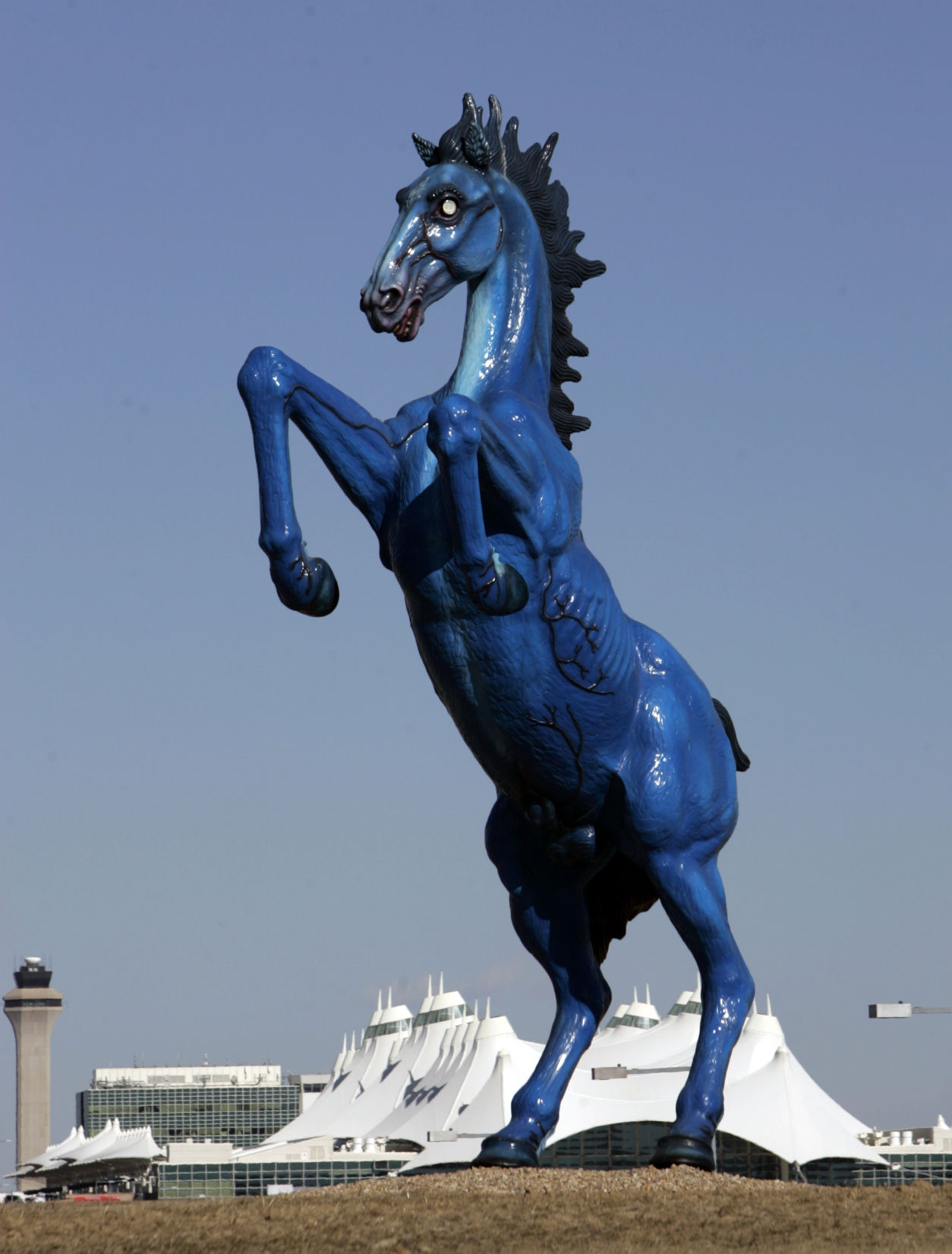
Then there’s the curse. It has nothing to do with the beautiful blue horse with creepy red eyes known fondly as and critically as “Bluecifer.” Sane people 100% dismiss the conspiracy theories about DIA’s secret underground railroad the Freemasons will use to transport enemies of “The New World Order” to concentration camps.
Such stories add to DIA’s panache, and the marketing department knows how to use them.
The real DIA curse involves a historical series of cost overruns and delays that have burdened Coloradans since the 1990s.
The airport opened in February 1995, 16 months behind schedule and $2 billion over budget. That’s equivalent to $3.7 billion today.
Longtime Coloradans should never forget the $600 million boondoggle known as the BAE baggage system, in which 22 miles of tracks and conveyors would revolutionize and lower the cost of baggage management.
Instead, BAE became fodder for late-night comedians as it crushed luggage and spit out strewn and mangled clothing. The system never worked, and DIA abandoned it.
Today, only 27 years past the delayed opening, Coloradans endure another boondoggle as Denver tries to renovate the main terminal.
Called “The Great Hall Project,” the renovations would upgrade ticketing stations, restrooms and create room for more restaurants, bars and stores. The sparkling new floors are extraordinary. More importantly, the work will adjust for new security procedures enacted by the Department of Homeland Security after the Sept. 11 hijackings. The Transportation Security Administration takes up much of the main terminal’s floor space, and The Great Hall Project should resolve that problem.
The construction began with an anticipated cost of $770 million and a finish date of 2021. As of last week, when the Denver City Council begrudgingly approved another $1.1 billion, the anticipated completion is seven years away with a price tag of $2.1 billion. That’s if all goes well.
Council members approved the additional funding because they cannot leave the airport’s terminal as a partially completed mess. Having committed the money, they must ensure oversight that prevents additional delays and overruns.
They should try to move this project forward more quickly and at a lower price. They must follow the money and tell the public exactly what’s going on. Coloradans and others who use the airport deserve accountability, as these costs will increase the price of flights in and out of Denver.
Public works fiascos of this magnitude are not normal in Colorado. Contractors recently completed the widening of I-25 between Monument and Castle Rock a year ahead of schedule and millions of dollars under budget.
The multibillion Southern Delivery System engineering feat — a pipeline that transports water uphill from Pueblo Reservoir to Colorado Springs — finished ahead of schedule and substantially under budget.
The Denver City Council, Mayor Michael Hancock and airport CEO Phil Washington should study those projects and learn how it’s done. The cost overruns are unacceptable, and seven more years is way too long. Find a way to underpromise and overdeliver as DIA improvements move forward.
The Gazette Editorial Board
EDITORIAL: Bluecifer, Freemasons and the curse of DIA
Coloradans are blessed and cursed by Denver International Airport. We have easy access to affordable, direct flights nationally and internationally. It is the third-busiest airport in the United States, the eighth busiest in the world, and airport officials anticipate substantial growth in traffic and capacity.
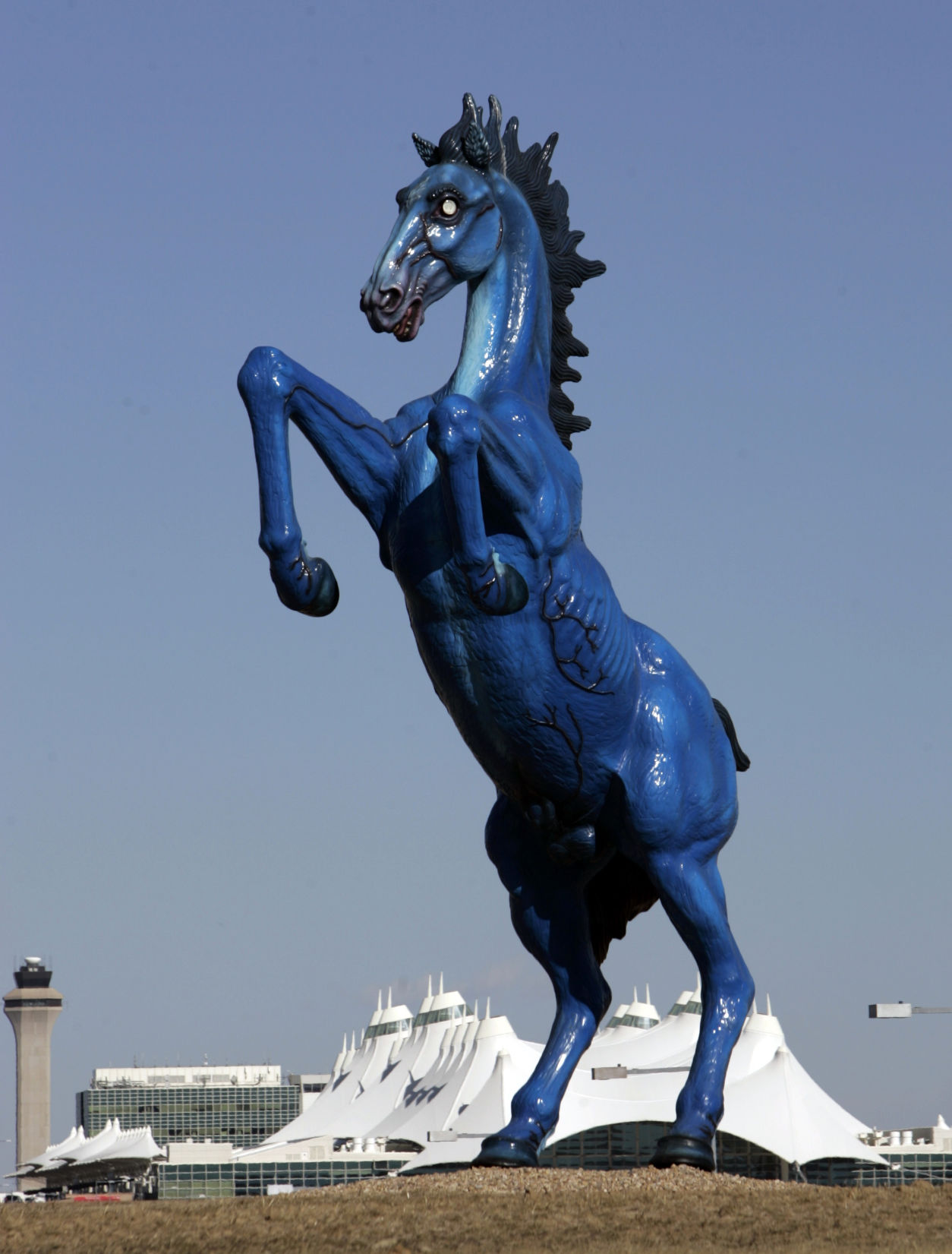
Then there’s the curse. It has nothing to do with the beautiful blue horse with creepy red eyes known fondly as and critically as “Bluecifer.” Sane people 100% dismiss the conspiracy theories about DIA’s secret underground railroad the Freemasons will use to transport enemies of “The New World Order” to concentration camps.
Such stories add to DIA’s panache, and the marketing department knows how to use them.
The real DIA curse involves a historical series of cost overruns and delays that have burdened Coloradans since the 1990s.
The airport opened in February 1995, 16 months behind schedule and $2 billion over budget. That’s equivalent to $3.7 billion today.
Longtime Coloradans should never forget the $600 million boondoggle known as the BAE baggage system, in which 22 miles of tracks and conveyors would revolutionize and lower the cost of baggage management.
Instead, BAE became fodder for late-night comedians as it crushed luggage and spit out strewn and mangled clothing. The system never worked, and DIA abandoned it.
Today, only 27 years past the delayed opening, Coloradans endure another boondoggle as Denver tries to renovate the main terminal.
Called “The Great Hall Project,” the renovations would upgrade ticketing stations, restrooms and create room for more restaurants, bars and stores. The sparkling new floors are extraordinary. More importantly, the work will adjust for new security procedures enacted by the Department of Homeland Security after the Sept. 11 hijackings. The Transportation Security Administration takes up much of the main terminal’s floor space, and The Great Hall Project should resolve that problem.
The construction began with an anticipated cost of $770 million and a finish date of 2021. As of last week, when the Denver City Council begrudgingly approved another $1.1 billion, the anticipated completion is seven years away with a price tag of $2.1 billion. That’s if all goes well.
Council members approved the additional funding because they cannot leave the airport’s terminal as a partially completed mess. Having committed the money, they must ensure oversight that prevents additional delays and overruns.
They should try to move this project forward more quickly and at a lower price. They must follow the money and tell the public exactly what’s going on. Coloradans and others who use the airport deserve accountability, as these costs will increase the price of flights in and out of Denver.
Public works fiascos of this magnitude are not normal in Colorado. Contractors recently completed the widening of I-25 between Monument and Castle Rock a year ahead of schedule and millions of dollars under budget.
The multibillion Southern Delivery System engineering feat — a pipeline that transports water uphill from Pueblo Reservoir to Colorado Springs — finished ahead of schedule and substantially under budget.
The Denver City Council, Mayor Michael Hancock and airport CEO Phil Washington should study those projects and learn how it’s done. The cost overruns are unacceptable, and seven more years is way too long. Find a way to underpromise and overdeliver as DIA improvements move forward.
The Gazette Editorial Board