




A beginner’s guide to cross-country skiing in Colorado
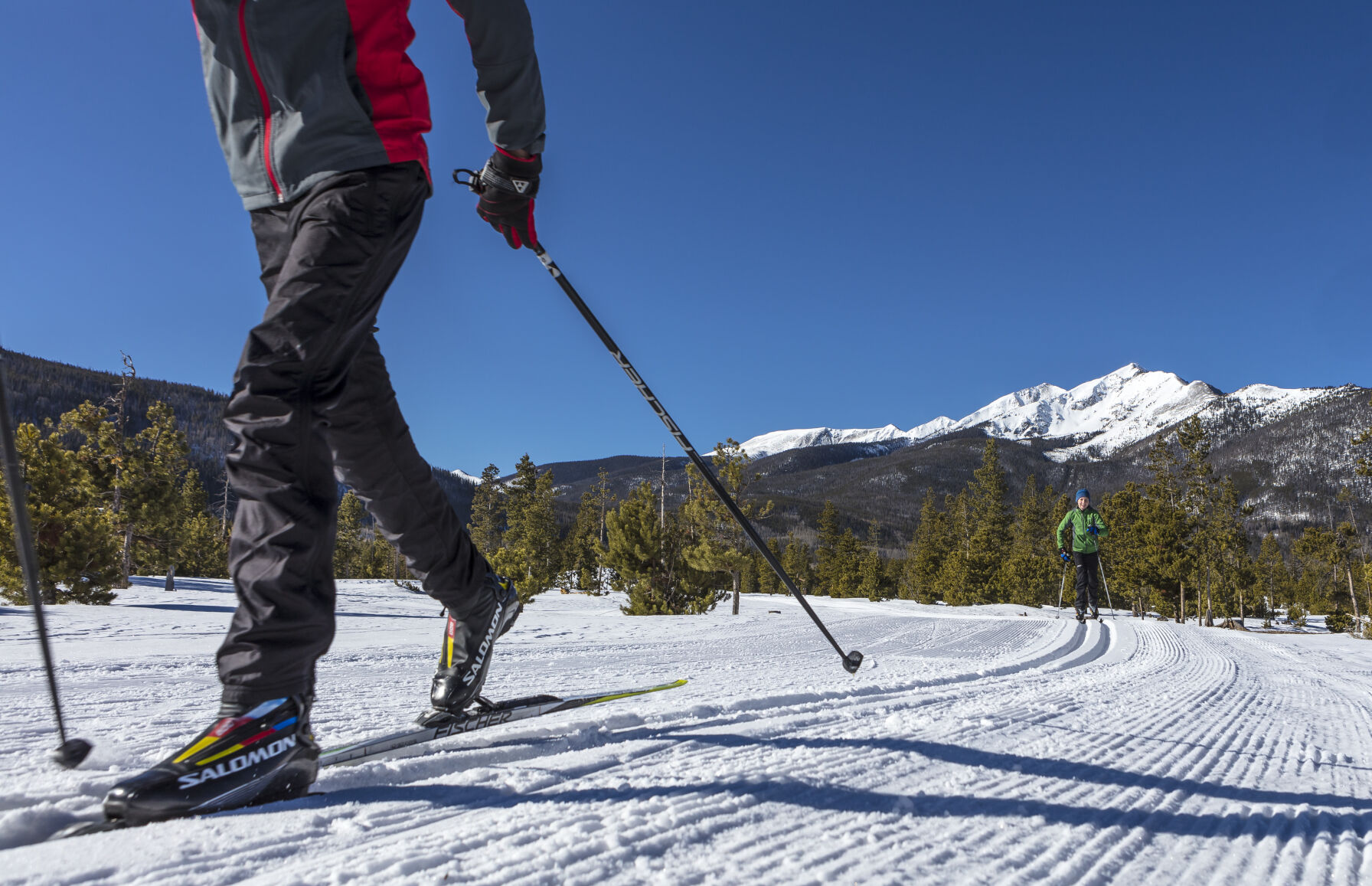
Starting in the early 1980s as a University of Denver student, Dan Timm lived in Colorado for almost a decade before he discovered another side of skiing.
“Alpine skiing, you ride the lift and fly downhill, and it’s still fun and exciting,” he says from his home in Vail. “But yeah, I started to enjoy the exercise part of it more.”
The part that afforded him a full-body workout: arms and legs, skis and poles, collaborating for heart-pumping, sun-soaked kilometers of gliding through powder-glistening glades and meadows. That’s cross-country skiing, or Nordic skiing.
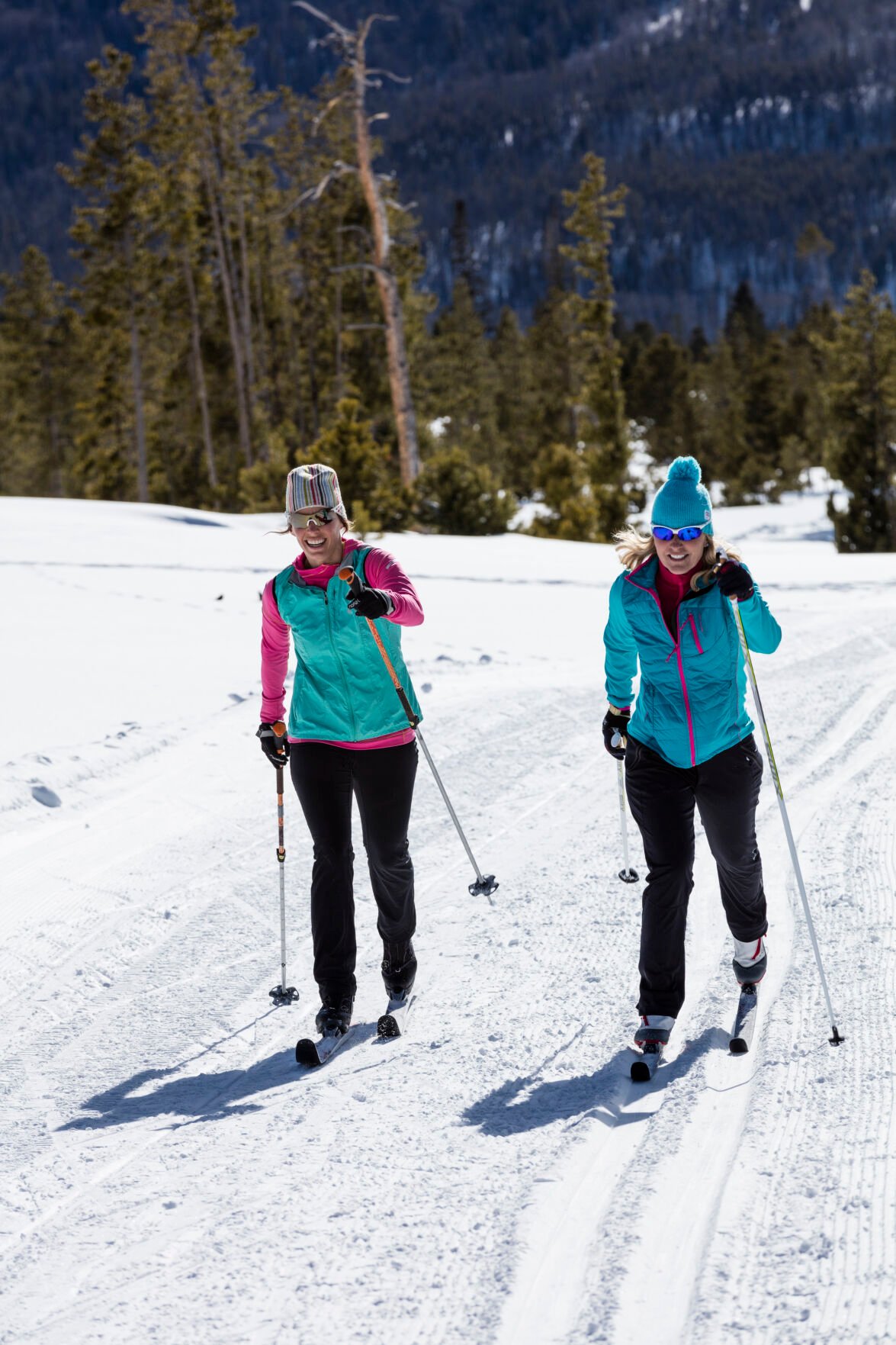
“Any time you move all four limbs, you’re burning more calories and creating more endorphins,” says Timm, now director of Vail Nordic Center. “I see that with customers. They’re getting that feeling of creating more endorphins, and they love it.”
They’ve expressed love for other reasons. For the serenity and fresh air. For skiing minus the lift lines and injury risks. For the price ($50 for day pass and rentals at Vail Nordic, compared with the ski resort’s alpine lift tickets with gear closer to $200/day).
For many in the COVID-19 era, it is a newfound love.
“Last year was really a boom,” says Laura Puckett Daniels, echoing counterparts at Nordic centers around the state.
At her Crested Butte base, she said 2020-’21 saw day pass sales up 80% season-to-season. Lessons were up 93%, and rentals 218% — more indicators of the sport indeed turning heads.
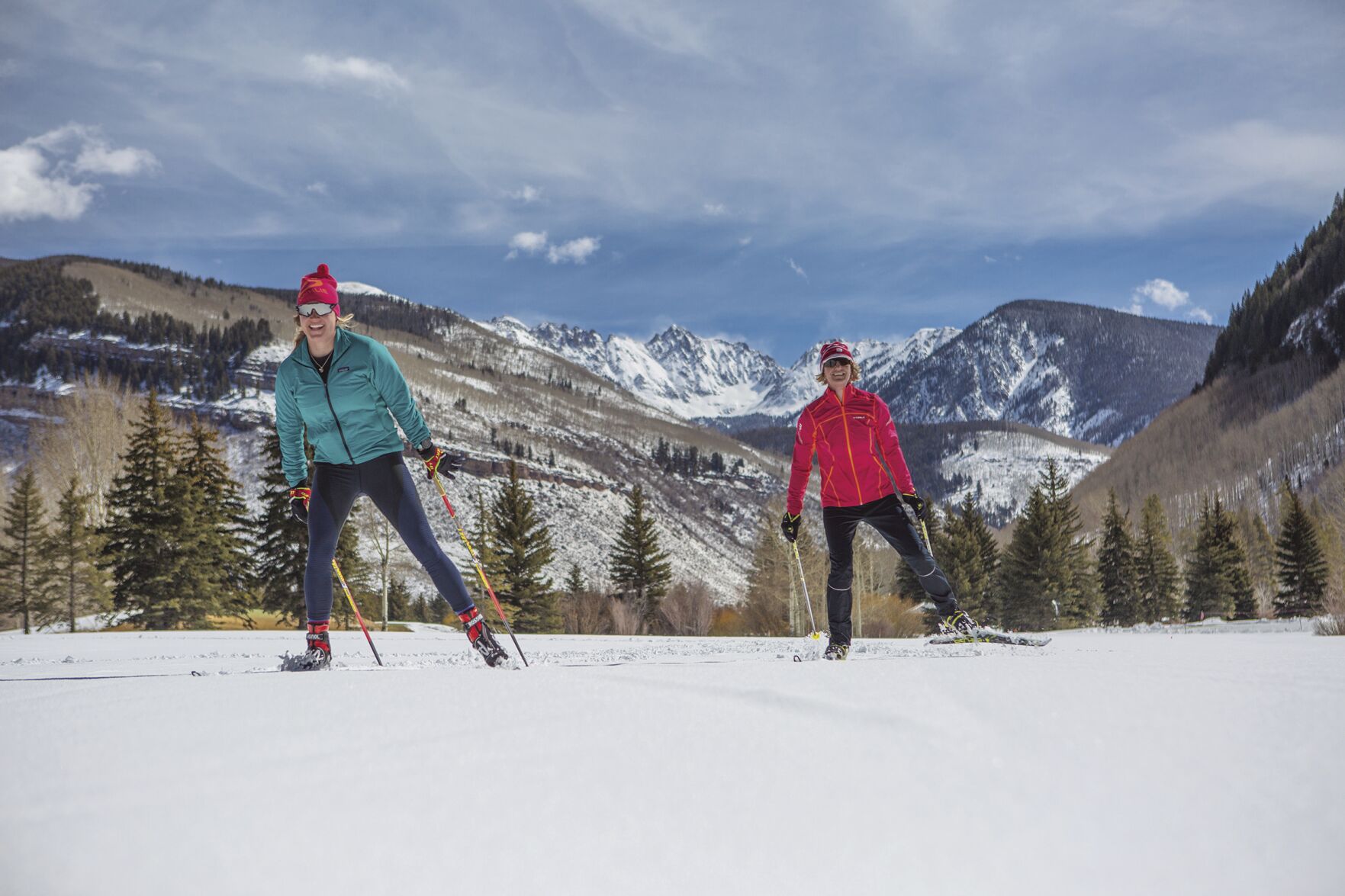
At Frisco Nordic Center, Pete Swenson says the demographics have ranged.
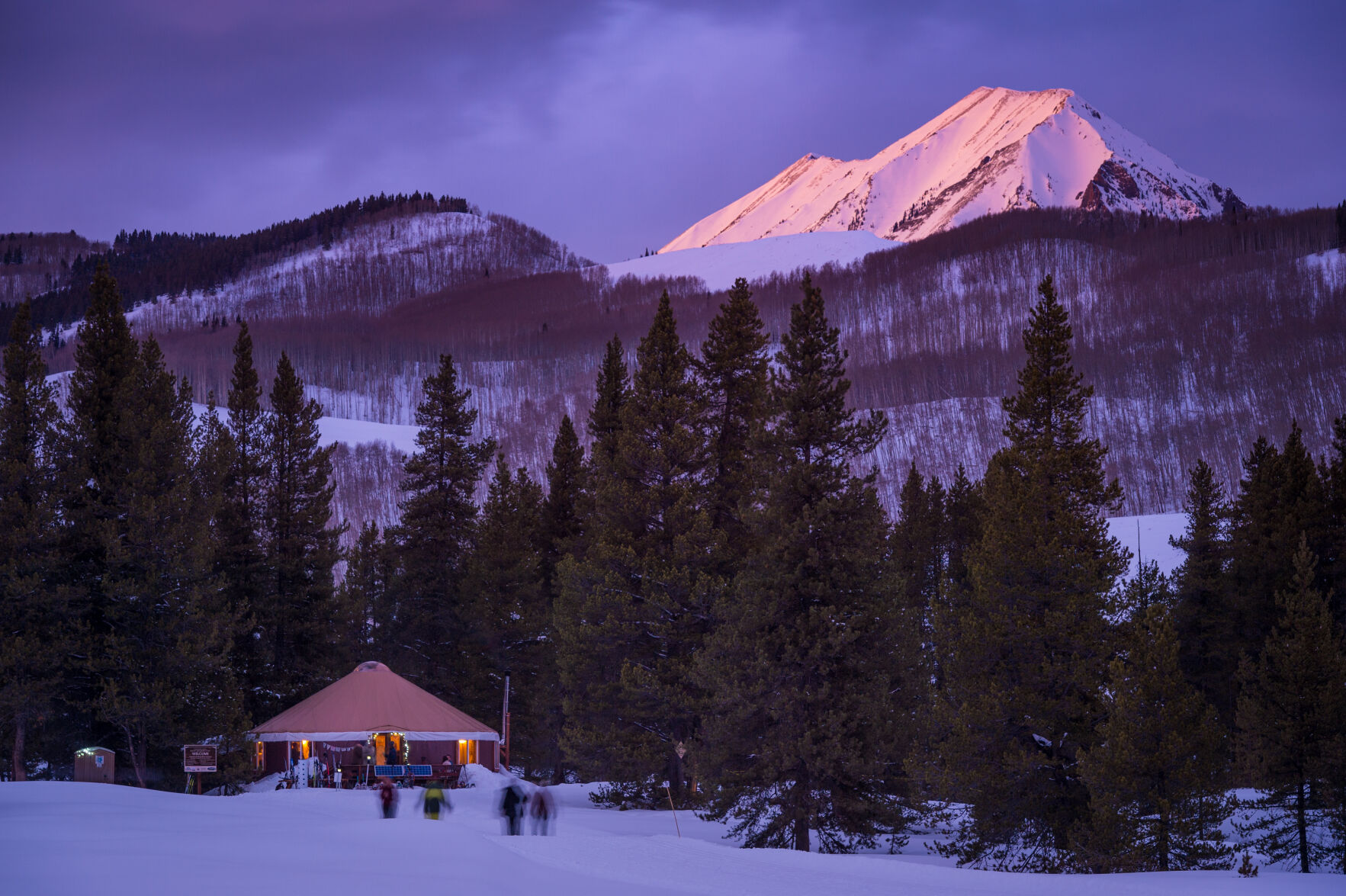
“We have a number of people who are big runners and cyclists,” he says.
Just as much, he says, parents with young children have found the activity on flatter, less crowded terrain to be physically and logistically easier to manage — the learning curve less steep, the parking hassles, shuttles and lines not applying. Meanwhile, Swenson says, skiers in old age have found a version of the sport that’s easier on their knees and joints and, at the same time, a better workout.
“The other thing I would attribute (growth) to is the improvement of equipment in the last five years or so,” says Josh Dayton, managing director at Breckenridge Nordic Center. “The equipment has gotten lighter, more stable and easier to use.”
If you’re joining the craze this winter, that gear is one thing to know. We asked for more tips and recommendations:
Gearing up
Between Nordic and downhill skis, the difference in binding is most obvious. In Nordic, the heels are free, mobile to navigate hills. Also, today’s Nordic skis are wider and shorter — “definitely easier to control,” Timm says.
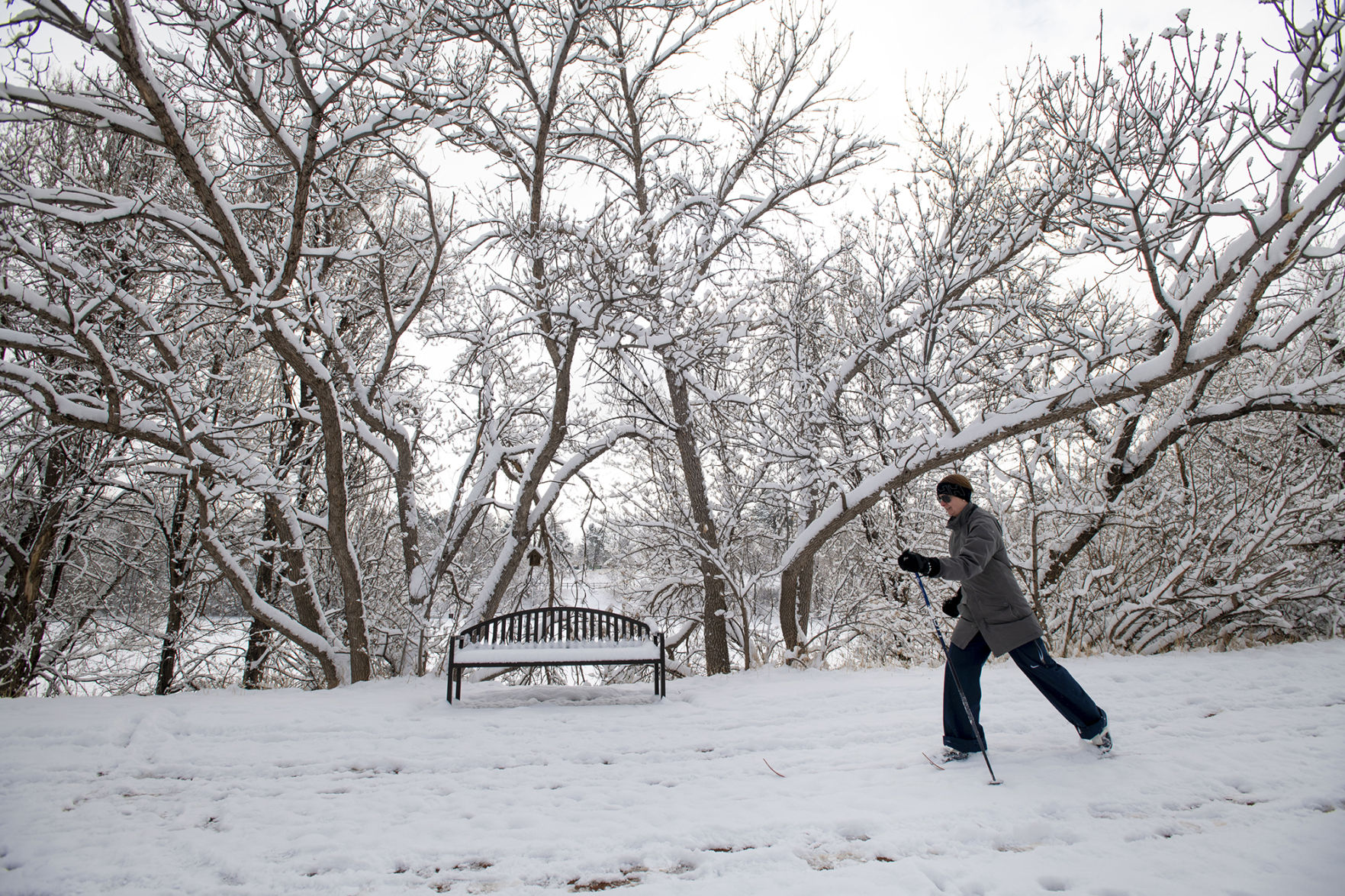
The difference in boots is most felt. Rather than the rigid, clunky downhill contraptions, Nordic boots “fit like a comfortable sneaker,” Puckett Daniels says.
At least, they should. For many dissuaded newbies, “it all comes down to having the wrong equipment,” Dayton says.
“In a lot of cases, people are getting out on old, borrowed equipment that’s notoriously unstable and difficult,” he says, adding: “If you have a boot too loose or of poor quality, it’s not gonna provide the stability you need and the control you need, and consequently, you’re not gonna have the fun you should be having.”
As for attire, “dress like you’re going for a run at that temperature,” Swenson says.
Be prepared to sweat and shed layers. Think windbreaker rather than heavy coat. Sweat-wicking, non-cotton midlayer, base layer, light-weight pants, hat and gloves.
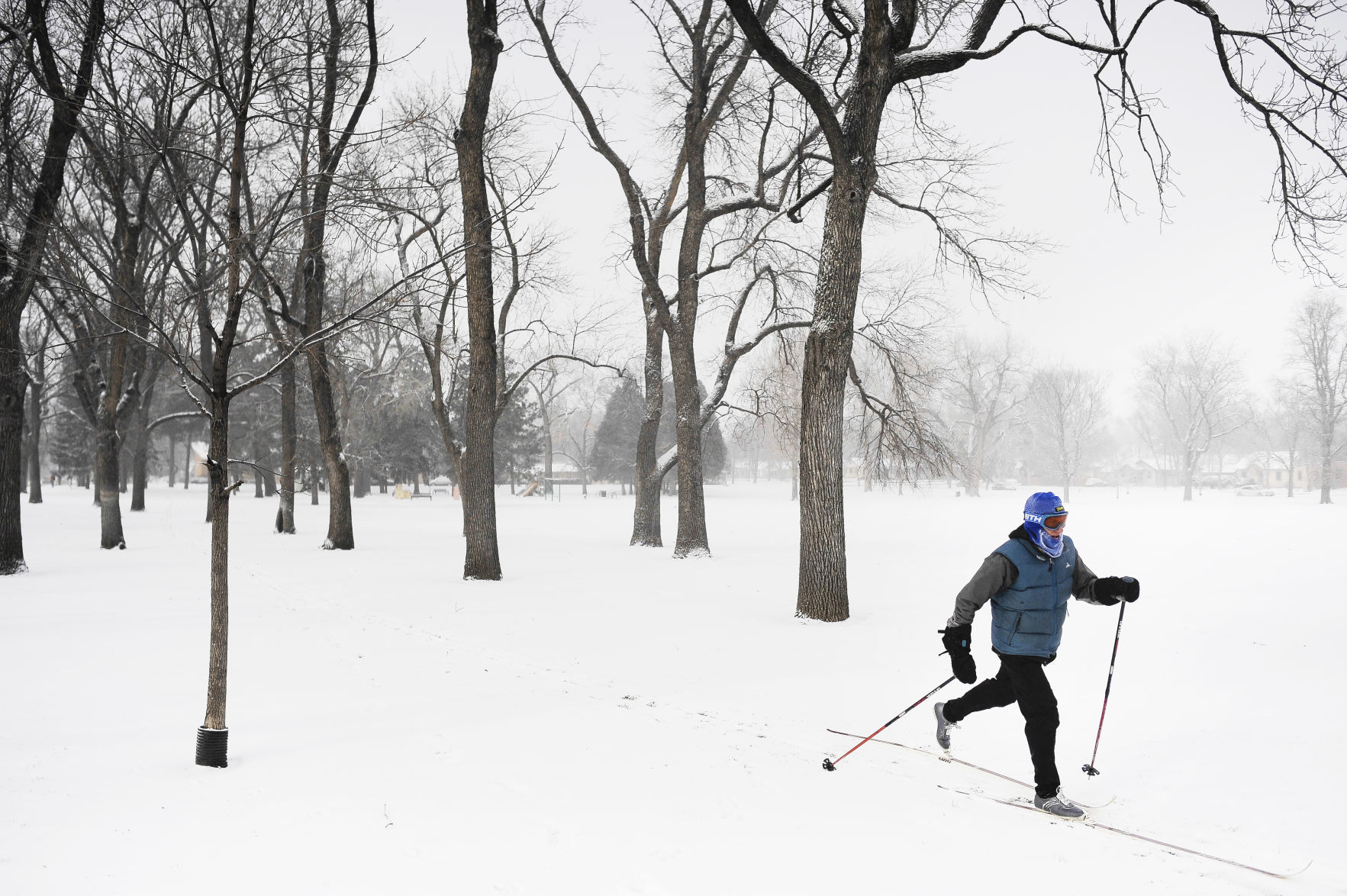
“Gloves are one of the more important things,” Timm says. “You don’t want big, fat gloves that you can’t get a good, comfortable feel of the poles in your hands.”
Where to go
Some local parks, open spaces and roads are suitable for starting out. Some trails on public lands are even groomed, packed down for skiing convenience. Think wide, flat, snow-covered paths out of avalanche zones and light on traffic.
“But a Nordic center is the most comfortable entry point to the sport,” Swenson says.
That’s for proper gear from the rental shop. And that’s for specifically designed trail networks: groomed and well-marked, so you know where you’re approaching flat greens, sloping blues and more technical blacks.
“Even if you’re an experienced downhill skier, start on the flats,” Puckett Daniels says. “I’ve been a downhill skier for 30 years, but the equipment is so different, and the skills you have from downhill skiing don’t immediately transfer.”
Consider a lesson
Most anyone can get to gliding on their own by starting on those flats, Swenson says. “What a lesson does is short-cut your time to proficiency,” he says — especially useful when it comes to learning the “herringbone,” a technique for ascending and descending hills.

A lesson teaches how to speed up and slow down, how to properly fall and get back up. And how to prevent bad habits.
“A lot of times people get out on the snow and their body tenses up,” Dayton says. “Focus on bending your ankles, keeping your hips forward, keeping your eyes up.”
Eyes up, so you don’t crash into someone else. Or something else. “If you see a moose, keep your distance,” Dayton says.
Pick your style
You’ve seen those racing, spandexed Olympians. Their side-to-side motion is similar among hard-charging hockey players. That’s skate skiing, practiced by skiers working up a sweat.
Classic skiing is advised for beginners: the straight forward movement where the skis stay parallel, rather than spread like a “V.”
“It’s harder to gear down in skate skiing,” Puckett Daniels says.
Certain types might crave speed. “If they come from a background of ice skating, or hockey skating or even rollerblading, that’s beneficial,” Timm says. “Typically though, I would tell people to start with classic skiing.”
Contact the writer: [email protected]
Get OutThere
Signup today for free and be the first to get notified on new updates.
PREV
PREVIOUS

Texas abortion law challenge sent to state Supreme Court
A panel of judges on the 5th U.S. Circuit Court of Appeals sent the legal fight over the Texas law that bans most abortions after about six weeks of pregnancy to the Texas Supreme Court. The 2-1 ruling Monday marks another setback for abortion providers who sued in federal court to stop the law that […]
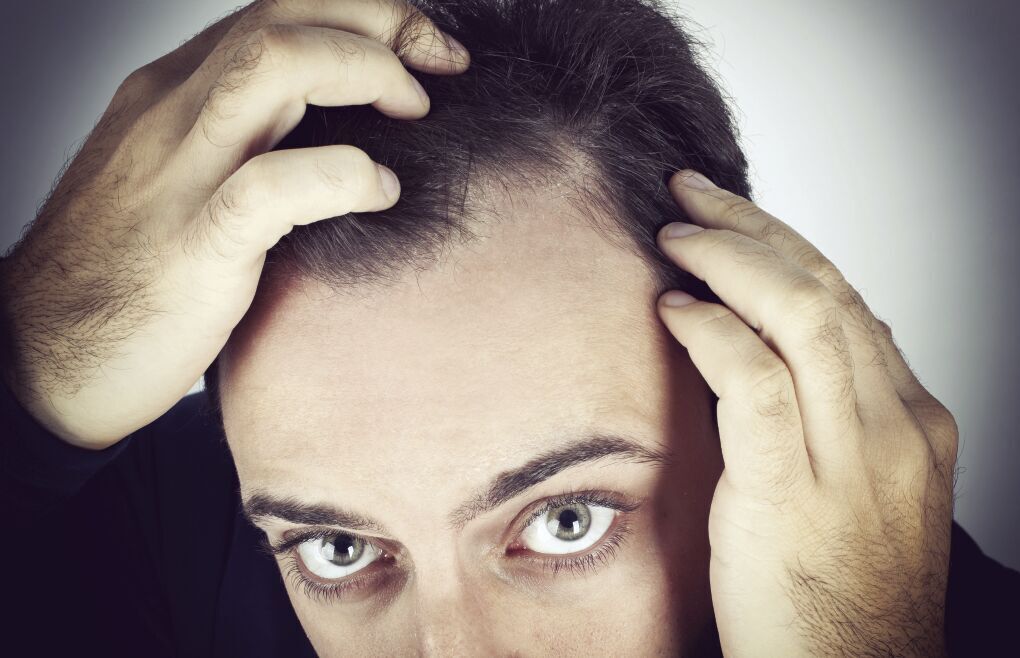
Live Well: Hair loss? You're not alone
Can you hear that? It’s the sound of our hair follicles closing up shop. The past almost two years haven’t been kind to our previously lustrous manes. Stress, whether from a global pandemic or significant life event, such as a divorce, job loss or illness, can wreak havoc on our noggins. Dr. Maria Sheron, a […]