







Prolific actor Harvy Blanks, who died Sunday at the age of 73, made history in Denver, on Broadway
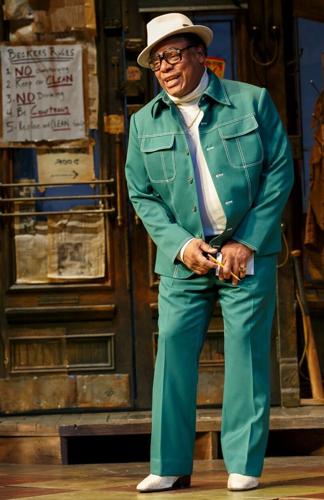
Harvy Blanks in August Wilson’s “Jitney” Broadway premiere
Courtesy photo
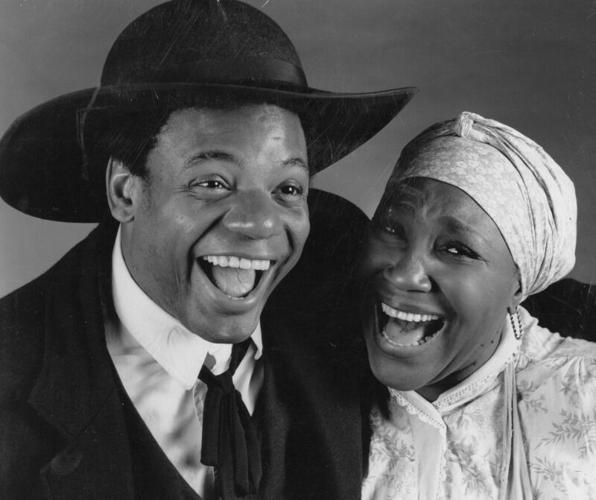


In 2009, actor Harvy Blanks helped make theater history in Denver. In 2017, he helped make theater history on Broadway.
Blanks, who appeared in 37 plays for the DCPA Theatre Company over 25 years, “was a crucial part of the maturation of the Denver Center Theater Company,” former Artistic Director Donovan Marley said of Blanks, who died Sunday at his home in Denver at age 73. “His legacy as an artist will live on as long as audiences gather at the Denver Center.”
In 2009, Blanks appeared in “Radio Golf,” which made the late Israel Hicks the first director in the world to have completed the entire August Wilson American Century Cycle for the same theater company. Blanks appeared here in eight of the 10 plays that chronicle the African American experience in Pittsburgh’s Hill District throughout each decade of the 20th century.
In 2017, Blanks not only finally made his Broadway debut, but he did so in “Jitney,” which became the 10th and final story in Wilson’s legendary series to be told on Broadway. It was a point of pride to Blanks that Denver beat Broadway to the Wilson finish line by seven years.
“The coupling of my doing any August Wilson play, and being on Broadway for the first time, is just too much,” Blanks said in 2017. “I sit backstage sometimes and I say to myself, ‘Man, I’m on Broadway. And I am rubbing elbows with some of the greatest actors in the world.’ ’’
Kim Staunton, who appeared alongside Blanks in six Wilson plays at the Denver Center, says Blanks was part of a tribe she calls “The Wilsonian Warriors.”
“Harvy is one of America’s theater treasures, and a kind, gentle, amazing man,” Staunton said in 2017. “That his debut is the last August Wilson play in the canon to be produced on Broadway could not be more perfect and wonderful.”
Many called Wilson “The Black Shakespeare,” but not Blanks — in part because he felt Wilson’s plays were for all audiences. “He wrote about the limitless possibilities of love and the abysmal hole that hate can take us into,” Blanks said. “Regardless of what we’ve gone through and the different experiences we have had, we are all Americans, and you cannot talk about the White experience in this country without talking about the Black experience in this country, and vice versa. We all share this common bond, and he did not write separately of that experience — he connected it.”
Blanks, born March 12, 1948, in what he described as a Chicago ghetto, stood up to racism from the football field to stages across America. “I didn’t consider myself an underprivileged person,” he said. “I had a mamma and a daddy, a lot of love and a big family. So the ghetto to me was not the ghetto — it was home.” He said one teacher changed his young life when she took a group of neighborhood kids to see their first opera in downtown Chicago. It was “Aida” starring Leontyne Price. It struck young Harvy then that not only did he deserve to be in the audience, but he could be on stage as well. “That did it,” he said.
Blanks attended the University of Washington and excelled on the football field as a 5-foot-8 wingback for the 1967 and ’68 seasons. But long-simmering racial tensions came to a head midway through the 1969 season when five Black players, including Blanks, were suspended for refusing to pledge personal loyalty to head coach Jim Owens.
Blanks, who was sitting out that season with a broken foot, was the only player never reinstated, which didn’t surprise him. “I basically called him a liar,” Blanks told the Seattle Times in 2003. “He was just a racist, and to me, that’s the tragedy of it.”
Blanks went on to earn a master’s degree from Cornell and became an actor, director and playwright. The four players, along with a White assistant coach who resigned in protest, were collectively inducted into the University of Washington’s sports hall of fame as “The Five Who Dared” in 2021.
Blanks’ first appearance at the Denver Center was in a 1985 staging of “Purlie,” a musical about a preacher who returns to his home in the South to open an abandoned church. Other roles in his remarkably varied Denver Center career included Lorraine Hansberry’s “A Raisin in the Sun,” August Strindberg’s “Miss Julie,” Shakespeare’s “The Winter’s Tale,” Tennessee Williams’ “A Streetcar Named Desire,” Joseph Kesselring’s “Arsenic and Old Lace” and nine seasonal productions of “A Christmas Carol.” His last Denver Center appearance was a seminal 2011 production of “Ruined,” a “Mother Courage”-like story set in a brothel in war-torn Africa.
He knew the Denver Center would be his artistic home when Marley first told him, “We don’t have ‘color’ around here,” Blanks said. “He told me, ‘You are going to be a full part of the company,” alongside legends like Jamie Horton and Kathy Brady. “Those people were so gifted. Just by sitting there and watching them work, I became far more disciplined as an actor than I was before I got there. So my time in Denver was huge to me.
“I miss it, man. That’s where I cut my teeth.”
Banks was known as a sweet, brave and collaborative actor. “Harvey was an all-encompassing guy — quite literally,” said fellow actor Michael Winters. “Whenever you met him, you had to be ready for a bone-crushing hug.” But he was also as tough as, well, a football player, having gamely endured several stage injuries. During the first preview performance of “Jitney” in 2002, Blanks took a stage punch from a fellow actor that accidentally landed. Blanks kept right on going, “despite leaking copious amounts of blood,” as journalist Dick Kreck reported it. Blanks was sent to the hospital after the show, where he required 10 stitches to the inside of his mouth.
Blanks earned a 2006 Denver Post Ovation Award for his performance in “Waitin’ 2 End Hell” for Denver’s late Shadow Theater Company. The next year, he appeared in “Ain’t Nothing But the Blues” for Theatre Aspen. In 2014, he performed alongside Staunton in Lake Dillon Theatre Company’s “The Mountaintop,” a play that imagines the night before Martin Luther King was assassinated. And in 2016, he appeared in the world premiere of the musical “Uncle Jed’s Barbershop” at the Cleo Parker Robinson Dance Theatre.
Nationally, Blanks was part of the ensemble that won the 2001 Drama Desk Award for the Off-Broadway hit “Tabletop.” And he completed his own personal Wilson cycle when he appeared in “Ma Rainey’s Black Bottom” at Maine’s Portland Stage in 2013.
But his stage spine was lined mostly with the bones of Wilson’s characters. Blanks considered his most meaningful role to be playing Herald Loomis, a former slave traveling the countryside looking for his wife in “Joe Turner’s Come and Gone.”
“To me, it was a microcosm for what slavery did to the black family because of the separation that took place,” he said. “They could split you up at any time. They could take your mother or father or your kids.”
Blanks modeled many of his characters after his own family members. He got sentimental playing the smooth numbers man Shealy in “Jitney” because his fashionable 1970s attire reminded him of his father. “I looked in the mirror in the dressing room and I just saw my dad in that suit, man,” he said. “You can’t know how meaningful that was to me. It took me right back to those days with my dad and my mom getting dressed to go out. August just knew my people, and turns of phrases that my dad used all the time are now pouring out of my mouth.”
Blanks adopted his grandfather’s southern accent for “Gem of the Ocean.” Before Blanks was born, that same grandfather put his 11 kids and some furniture on a flatbed truck and drove all the way across Alabama to get away from a sheriff who had threatened him. In “The Piano Lesson,” Blanks played Boy Willie, a character who wants to sell the family piano to buy a piece of land, despite its sentimental value to his sister. “Having some land became very important for my granddaddy,” Blanks said. “He became heavy into real estate in Chicago because he always wanted to have a place to come home to, and to raise his kids.”
In 2017, I asked Blanks if we were heading in the right direction as a country. He responded, “Honestly, I never thought we were heading in the right direction.” He knew that the election of Barack Obama was just a moment in time, not proof that America had forever changed for the better. “But I also believe that art is something that endures beyond our own ignorance. You can’t kill it,” he said. “You might think it’s not having an effect on you, but it is.”