







Witnessing war from orbit: a conversation with the CEO of Colorado-based Maxar Technologies
Westminster-based satellite imagery company Maxar Technologies has made national news lately as its images from Russia’s invasion of Ukraine show the conflict playing out up close and personal.
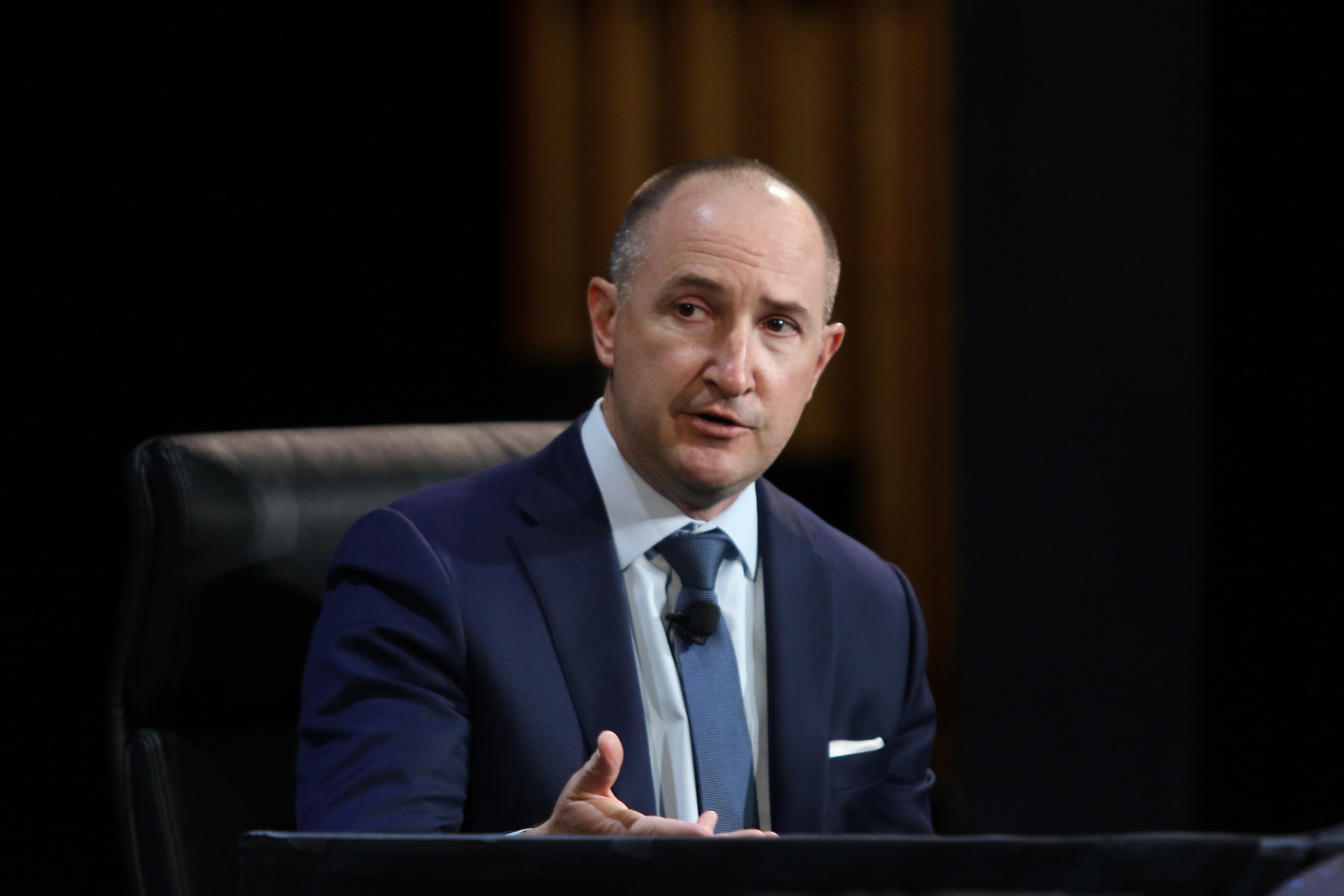
Maxar CEO Daniel Jablonsky fielded questions Thursday from Politico reporter Bryan Bender at the 37th Space Symposium in Colorado Springs.
“It’s a very diverse set of tragic situations that are happening right now,” Jablonsky said. “I wish we were able to tell a different story, in these times. But we’re telling the story that needs to be told.”
The company is continuing to do “what we’ve been doing 24/7, 365 days a year for the past 27 years,” but the conflict has put its space capabilities on center stage, he said.
“We’ve often done that for natural disasters, but I think this is probably the first time our imagery has been this prominent and relevant to a wartime situation,” Jablonsky said.
Asked if the technology is improving for sorting and analyzing the massive amounts of satellite images being produced, Jablonsky said artificial intelligence, cloud storage capabilities and algorithms are making analysis easier, faster and more accurate.
“The time element matters very much in a situation like this,” he said. “Looking at something two hours, two days or two weeks later is not the same as having it in hand, and only wait a minute or two, in time to make decisions about it.”
Maxar works with some 140 media outlets worldwide “on a real-time and daily basis to help provide our data so they can help tell the stories.”
Bender asked about information provided to human rights organization to track potential war crimes in Ukraine.
“Maxar has worked with these organizations across the world for many years,” he said. “We have an ongoing library. … We’ve been capturing that imagery on a daily basis and can go back through and create a document record of what’s been taking place.”
Bender also asked Jablonsky about what the company is doing to help with the “space trash” issue — thousands of satellites, many no longer in use or obsolete, crowding Earth’s low orbit.
“Governments and world bodies really do need to move more quickly here,” he said. “Space is a common environment for us, and just like any common environment if you don’t have rules and regulations, traffic management laws and laws about who should and shouldn’t do things — humans probably don’t do the best job of interacting on their own.”
Maxar’s satellite are maneuverable and encrypted so bad actors can’t take control. They’re also constructed “responsibly without extraneous parts or pieces or things that might go sort of whizzing around in space at 17,000 kilometers (10,563 miles) per hour,” he said.
“We safely de-orbit our assets when they’re done,” Jablonsky said. “But I’d say this is a real issue for all of us.”
Maxar Technologies (NYSE: MAXR) has more than 1,200 Colorado-based employees and more than 4,400 companywide.