








Colorado River water providers to ‘substantially expand’ conservation efforts
The largest water providers from the states of the Colorado River basin Wednesday announced a commitment to “substantially expand existing efforts to conserve water, reduce demands and expand reuse and recycling of water supplies.”
The providers from both the upper and lower basin states include Denver Water, Colorado’s largest water provider as well as the largest drinking water provider in the country, Metropolitan Water District of Southern California. Other Colorado providers include Colorado Springs, Aurora and the Southeastern Water Conservation District. The Southern Nevada Water Authority, which provides water for Clark County, which includes Las Vegas, is also in the group.
The water providers also invited other utilities in the basin to take part in the commitment to reduce water demand and indicated other utilities are awaiting final approval before joining in.
The commitment formed the basis for a memorandum of understanding, delivered to Bureau of Reclamation Commissioner Camille Touton Wednesday.
“We are developing prudent municipal water conservation actions that every community that relies on the Colorado River should be using,” the letter to Touton said. “While we have significantly reduced demands the onset of the drought, there is more we can and must accomplish. Achieving the protection storage volumes needed to preserve water and hydropower operations within the Colorado River basin cannot be met by a singular country, basin, state, or water use sector. While municipal water use represents only a small fraction of total Colorado River water use, progress begins with one and then many until we are all moving in the same direction.”
The agreement calls for:
- Developing programs to replace non-functional or passive cool weather turf grass (grass that serves primarily a decorative role and is otherwise unused) with drought- and climate-resistant landscaping, while maintaining vital urban landscapes and tree canopies where appropriate. Colorado’s legislature passed a bill this year to start up an incentive program; Aurora City Council is currently considering an ordinance that would ban future warm-weather turf in favor of cool-weather turf.
- Increasing water reuse and recycling programs where feasible.
- Expanding conservation and efficiency programs to accelerate water savings, including indoor fixtures and appliances; adopting conservation-oriented rate structures; and increased coordination between land use and water planning efforts.
The MOU states that the initial municipal providers in the agreement have cut annual water usage by 1.153 million acre-feet since 2000, while at the same time increasing populations by 3.7 million people.
The MOU, however, does not identify a targeted amount of water savings.
“The water supply challenges we are facing on the Colorado River are accelerating at an alarming pace. Everyone who relies on the Colorado River must take bold and immediate action to reduce their use on this vital water source,” said Adel Hagekhalil, general manager of the Metropolitan Water District of Southern California. Colorado River water supplies 25% of the water used by his district.
“With climate change and aridification affecting the entire Basin, improving the health of the Colorado River system requires a swift and collective effort of all water users – in all sectors – to reduce water use and implement actionable strategies, policies and programs to protect this vital resource and balance water supplies with demands,” said John Entsminger, Southern Nevada Water Authority general manager. Entsminger was among the most vocal critics last week when the seven states could not come up with a plan to reduce Colorado River water usage.
“…despite the obvious urgency the situation, the last sixty-two days produced exactly nothing in terms of meaningful action to help forestall the looming crisis,” he said in a letter to Touton and the Department of the Interior on August 15.
Jim Lochhead, CEO of Denver Water, added that “climate change and overuse of the Colorado River have put us squarely within the crisis we long saw coming. The bottom line now: We all need to work on solutions, no matter our individual impacts on river flows.”

Popular Lakewood park set for more than a decade of improvements
Sage Kelley
sage-kelley@denvergazette.com
Updated 1 hour ago
The second-largest park in Lakewood will remain in the forefront of the city’s renovation and conservation planning for the next decade — if not longer. The City of Lakewood scheduled an open house for Dec. 18 to hear residents’ input...

Sage Kelley
Reporter
Audit finds major gaps in Colorado’s oil and gas reporting, enforcement
Marissa Ventrelli
marissa-ventrelli@denvergazette.com
Updated 1 day ago
The agencies responsible for regulating Colorado’s oil and gas industry are underperforming when it comes to reporting and enforcement and they also failed to collect payments amounting to hundreds of thousands of dollars in lost revenue, according to a state...

Marissa Ventrelli
Reporter

Brick by brick: Denver museum exhibit features larger than life Lego sculptures
Tom Hellauer
tom.hellauer@denvergazette.com
Updated 5 hours ago
To see the Denver Museum of Nature & Science’s newest big animals on display, visitors don’t need to roam their expansive Wildlife Halls. Rather, artist Sean Kenney has dozens of animal sculptures up for viewing — all made entirely of...

Tom Hellauer
Reporter
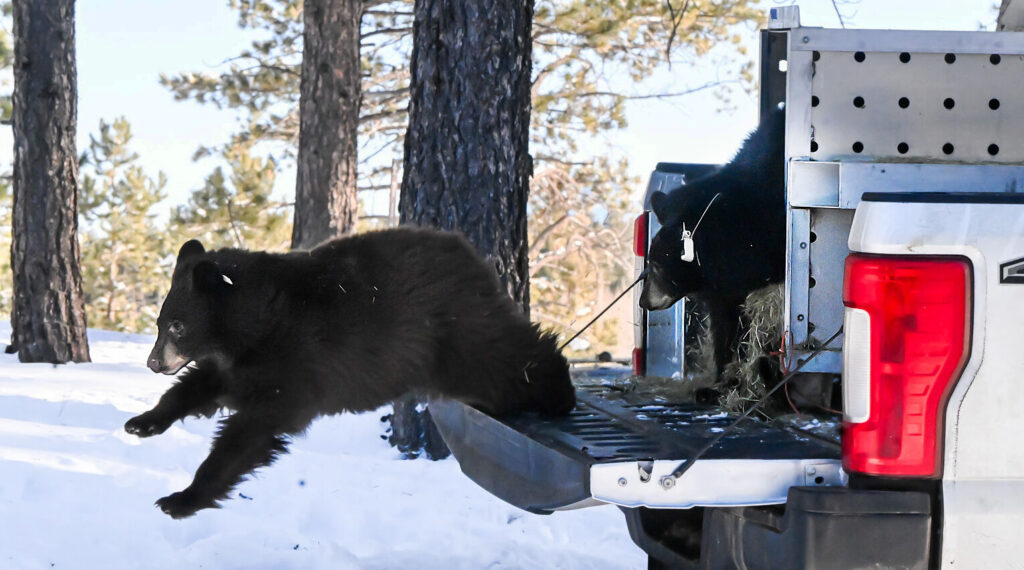
Colorado Parks and Wildlife release of orphaned bear cubs into the wild ‘a big win’
O'Dell Isaac
odell-isaac@denvergazette.com
Updated 2 days ago
During the summer months, five black bear cubs, likely born in January or February, were orphaned, their mothers euthanized after getting dangerously close to humans in the Pikes Peak region. On Thursday, after a period of rehabilitation, Colorado Parks and...

O'Dell Isaac
Reporter
Colorado Parks and Wildlife release of orphaned bear cubs into the wild ‘a big win’
O'Dell Isaac
odell-isaac@denvergazette.com
Updated 2 days ago
During the summer months, five black bear cubs, likely born in January or February, were orphaned, their mothers euthanized after getting dangerously close to humans in the Pikes Peak region. On Thursday, after a period of rehabilitation, Colorado Parks and...
O'Dell Isaac
Reporter
51 acres of private Colorado inholdings secured by land trust in two popular wildernesses
Jonathan Ingraham
jonathan.ingraham@denvergazette.com
Updated 4 days ago
Acquisitions will help to add onto public lands in pristine state ecosystems The Montana-based Wilderness Land Trust announced Wednesday it recently acquired two private inholdings within Colorado wildernesses, expanding 51 acres for future public use. The two properties are the...

Jonathan Ingraham
Reporter

After Colorado reintroduction, wild turkeys are a common urban encounter
Savannah Eller
savannah-eller@denvergazette.com
Updated 2 weeks ago
Since moving into her neighborhood in 2017, Fountain resident Nicole Henderson has sighted her feathered neighbors like clockwork. She’s taken videos of them scratching at front lawns and bobbing their heads as they make meandering road crossings. “They are out...

Savannah Eller
Reporter
Colorado regulators target oil and gas emissions anew
Scott Weiser
scott-weiser@denvergazette.com
Updated 1 week ago
A Colorado commission is mandating an additional 50% cuts in nitrogen-oxide emissions from oil and gas operations by 2030. The Denver basin has a serious problem with summer ozone, though more than half of that comes from wildfires, pine trees...

Scott Weiser
Reporter
Colowyo coal mine near Craig lays off 133 workers as mine closes
Scott Weiser
scott-weiser@denvergazette.com
Updated 5 hours ago
Neil McCandless sat in a Craig coffee shop, reminiscing on his 94 years in a town that has gone from sheep ranching to coal mining to power production but which is now moving toward an uncertain future. Coal mining is...
Scott Weiser
Reporter
EPA takes joint control of gasoline spill cleanup on Southern Ute land
Scott Weiser
scott-weiser@denvergazette.com
Updated 1 week ago
The U.S. Environmental Protection Agency has assumed joint oversight of the cleanup from a 97,000-gallon gasoline pipeline rupture on Southern Ute lands, the tribe announced on Friday. The move, nearly a year after the Dec. 5, 2024 leak, comes after...
Scott Weiser
Reporter
PREV
PREVIOUS

Colorado office mentions equity over 500 times in new study of vehicle electrification
Facebook Twitter WhatsApp SMS Email Print Copy article link Save The Colorado Energy Office called for equity in transportation electrification in a new report, insisting it must be a priority in eliminating gasoline and diesel cars and trucks from highways. Gov. Jared Polis has called for putting at least 940,000 electric vehicles on the highways […]
Sierra Club, environmental groups petition EPA to ban natural gas for home heating
Facebook Twitter WhatsApp SMS Email Print Copy article link Save More than two dozen environmental organizations petitioned the Environmental Protection Agency to ban the use of natural gas for home heating nationwide, arguing the federal agency must regulate “deadly pollution from heating appliances.” The petition, sponsored by the Sierra Club, claims fossil fuel-fired home furnaces, […]