







Controversy at Colorado State Fair after AI-generated artwork wins prize
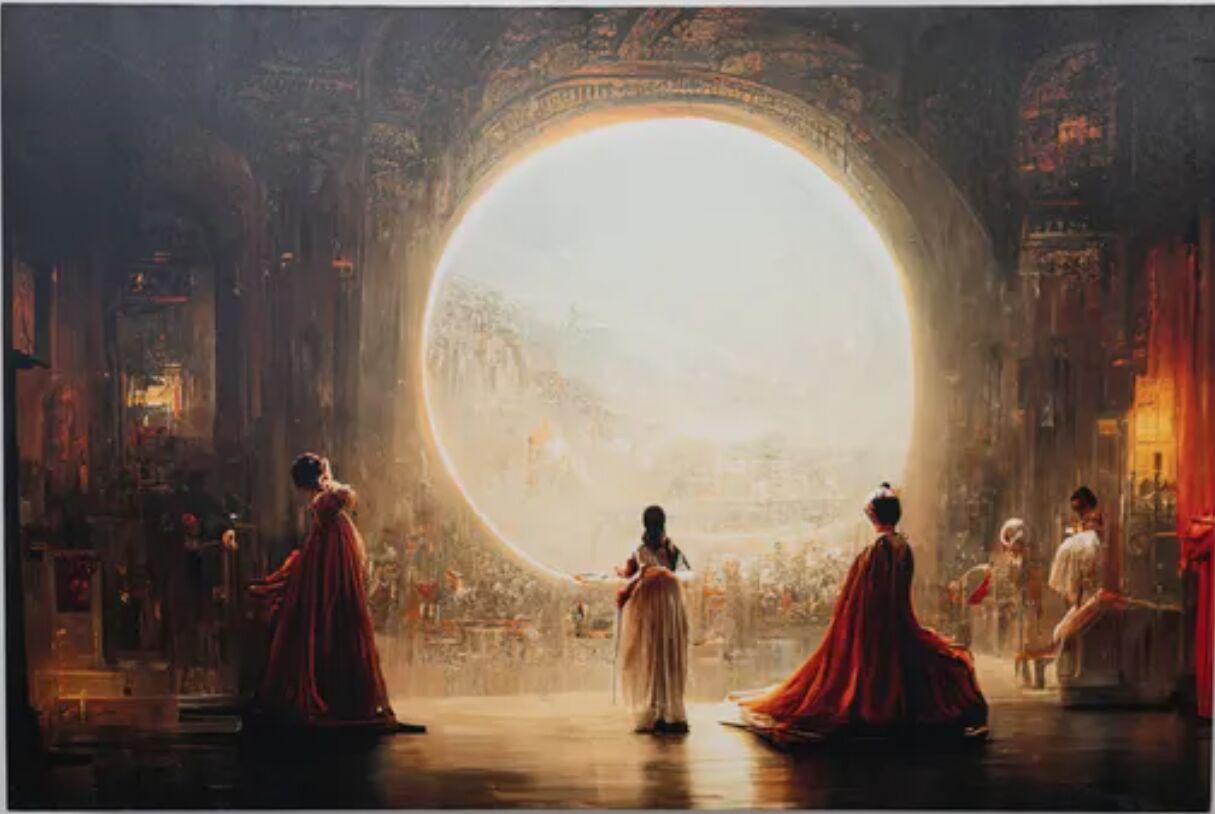
Courtesy of Jason Allen
A Pueblo artist’s winning entry in the Colorado State Fair’s fine arts competition has sparked responses of fervent support and vitriolic opposition from the art community and beyond.
Jason Allen’s submission, a piece of digital artwork titled “Theatre D’opera Spatial,” took first place in the digital arts category of the fair’s art contest. But unlike the other entries, Allen’s piece was created using artificial intelligence — with an online program called Midjourney.
Grammy Award-winning The Band Perry to perform at Colorado State Fair
From the moment Allen posted the news of his victory on social media, the online attention and commentary has spread like a brushfire. A single tweet about Allen’s contest win has generated more than 86,000 “likes” and upward of 3,200 comments.
“We’re watching the death of artistry right before our eyes,” tweeted a user with the handle @OmniMorpho.
“You’re just ripping the fun and life out of art,” tweeted @Nohshy_.
Other comments lauded Allen’s work as “imaginative,” “creative” and “praiseworthy.” People familiar with the use of AI in art pointed out that Allen’s final creation was the result of painstaking work on his part.
“This dude used a prompt he fine-tuned and did it hundreds of times to get the right random result, then had to go in and remove all the errors … the system put in,” wrote a user with the handle @DaddyWarpig.
“The responses have definitely spanned the gamut,” said Olga Robak, communication director for the Colorado Department of Agriculture. “Everyone seems to feel strongly about it, one way or the other.”
“There has been a lot of love — and a lot of hate,” Allen agreed.
Allen, a game designer by trade, was somewhat skeptical about the concept of AI as an artistic tool; at least, at first.
“But as more and more of it started crossing my path on social media, I started to take notice,” said Allen, the CEO of Incarnate Games, a company that produces tabletop games.
“I was really impressed with the quality and level of detail. I decided to give it a try.”
He began tinkering on free platforms, and gradually began to gain proficiency, he said. When he was granted access to Midjourney, an invite-only AI tool, he felt his imagination begin to explode.
“When I got onto Midjourney, I was just obsessed,” Allen said. “Being able to watch my imagination unfold on the screen before me is fascinating. It’s actually addictive.”
Pikes Peak Posse, Denver Rustlers score at Colorado State Fair livestock auction
Allen selected the piece he wanted to submit in the State Fair competition, and worked at it tirelessly, creating more than 900 iterations of the piece and selecting the three he liked best, he said.
“I thought it was something I could share with the world,” said Allen, 39.
Then Allen’s piece won first place, and his passion project went viral, receiving national media attention.
“I knew there would be some debate (about the piece),” he said. “I could not have predicted this.”
Robak said that no contest rules appear to have been broken, and no contestant has filed a grievance yet.
“We do have a formal grievance process, and anyone can submit a formal grievance if they believe one of the rules has been broken,” she said.
The deadline for filing a complaint is Sept. 5, the last day of the fair.
Jessica Hair, whose “Judge, Jury, Executioner” garnered third place in the digital arts category, said she personally would not have submitted an AI-created piece. But she doesn’t have a problem with Allen’s submission or the fact that he won.
“I’m not upset that I didn’t win first or second place because an AI beat me out,” Hair said. “But I do want future competitors to be aware that they have access to use AI, as well.”
Robak said the AI debate adds a “really interesting conversation point” to the debate over the nature of art.
“There is a new medium in art, and it opens up a door to talk about what art is and how we can properly judge it and categorize it in a way that is fair,” said Robak, who has an art degree. “This is a conversation that I can’t believe I’m having. But I love it!”
Allen said he believes many of the harsh responses are born of discomfort with something new and unfamiliar.
“This kind of thing happens every few years,” he said. “A long time ago, portrait artists thought they were going to be replaced by cameras. As time went on, people began to accept the technology, and eventually they realized there was room for both. Portrait artists haven’t been replaced. I think the same thing will happen with AI.”
Whether people like it or not, artificial intelligence as an artistic resource is likely here to stay, Allen said.
“We need to embrace AI technology and move forward, rather than deny that it’s happening.”
Allen’s prize-winning, controversy-generating project isn’t quite finished, he said. He plans to continue tinkering with it.
“Now that I know other people appreciate it the way that I do, I’m excited to complete the project in a much bigger way,” he said. “From there, I think I will continue exploring AI generators as a resource for my work in the future.”