Community meets Aurora police chief finalists

When Lea Steed thinks about what she wants in Aurora police officers, she envisions more training in how to carry out arrests, the skill to recognize a person in crisis, and accountability for officers accused of killing or harming someone. It’s important for her hometown, she said.
“There are a lot of issues in Aurora that we are battling,” she said at a meet-and-greet event Tuesday to learn more about the two finalists for Aurora’s next police chief.
She felt the last police chief’s firing was unfair.
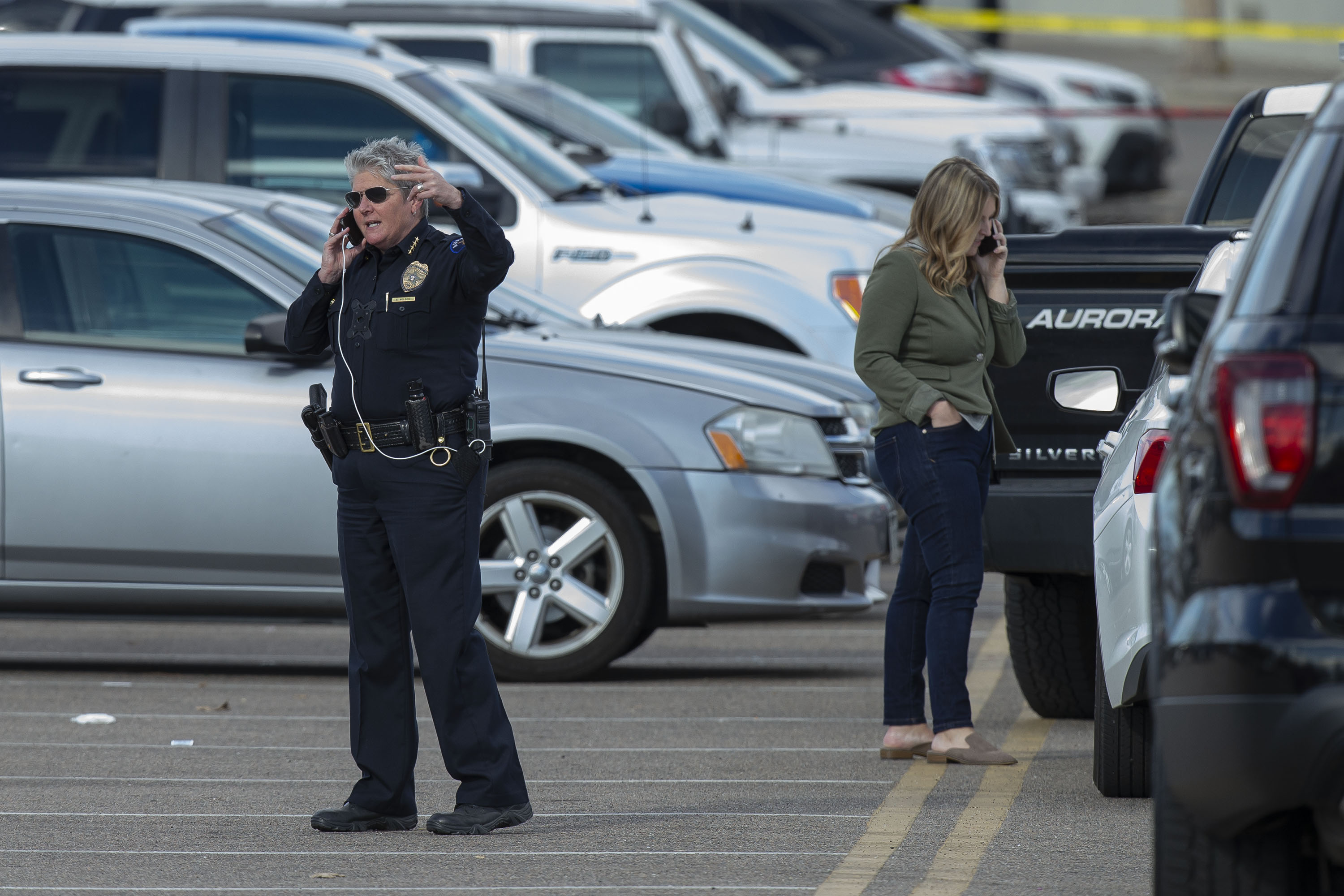
Aurora’s former police chief Vanessa Wilson was ousted in April after about two years on the job.
The violent arrest that killed Elijah McClain, which Steed called “a red mark” on the department’s reputation, was mishandled from beginning to end, she said.
She wants to know more about the recruiting process, and how the department can ensure the (racial) breakdown of its policing force resembles the breakdown of the city.
“There is nothing wrong with being a police officer,” she said, but when people in the profession have biases, they cause the community more harm.
So Steed joined dozens of community members who weighed in Tuesday.
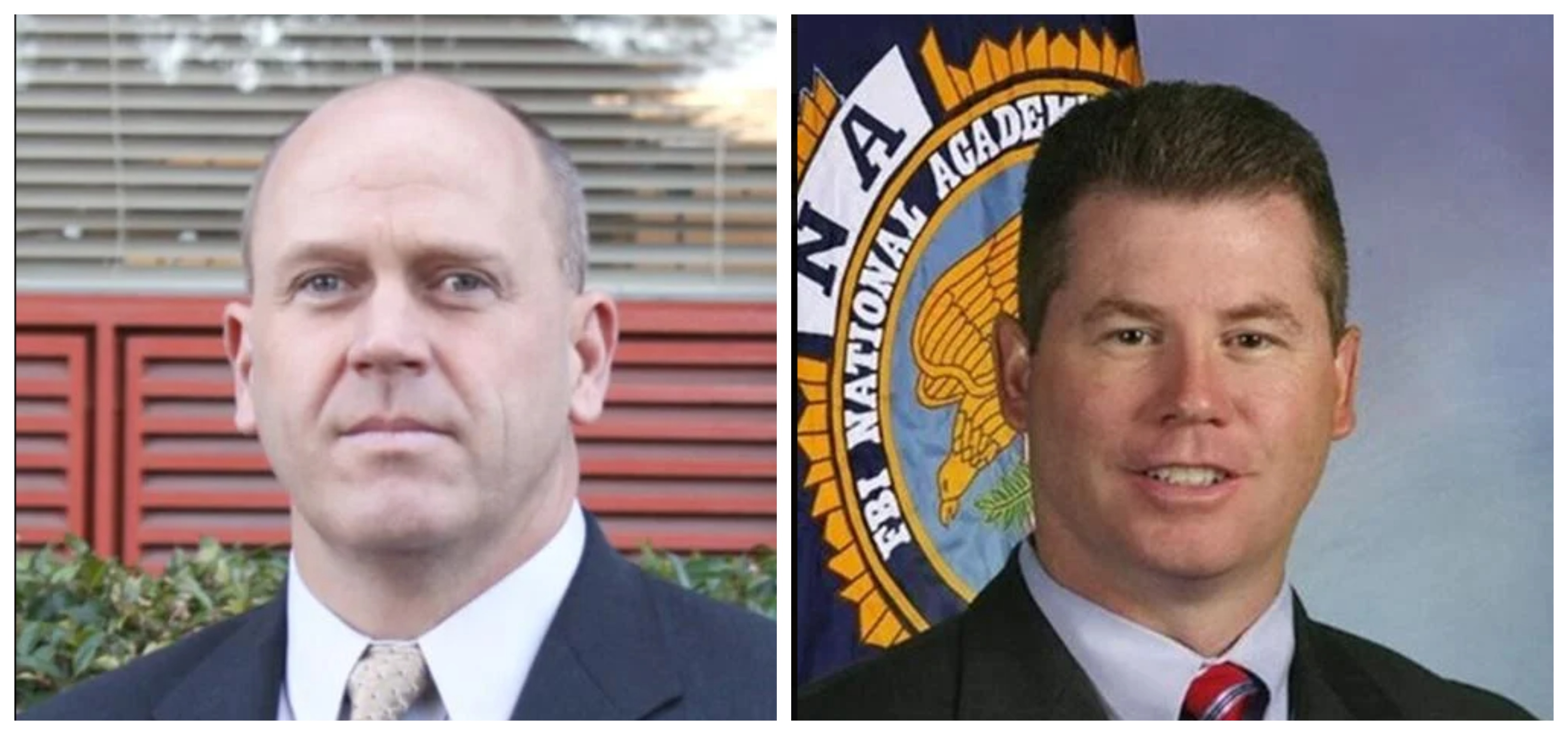
Finalist Scott Ebner is a retired lieutenant colonel and deputy superintendent of administration for the New Jersey State Police. David Franklin is the chief of staff for the Albuquerque Police Department in New Mexico. A third finalist, Scott Booth of Virginia, withdrew his application.
Amid struggles to recruit and retain officers — and a string of controversies in the past several years — the next chief also faces a department with a five-year consent decree requiring APD to address use of force, racially biased policing and documentation reforms.
Community members who turned out to the meeting had a bevy of questions for how each candidate would address the city’s most pressing issues and repair relationships with the public.
The city received applications from 21 people, according to demographics compiled by the search firm. Seven people were women or identified as a minority. One woman and one person of color advanced to the semi-finalist round but were not named finalists.
Alice Hayes and James Dixon wanted to know if either Franklin or Ebner asked the city about why the group of finalists lacked diversity. Both told her they did not know the answer, Hayes said, leaving her disappointed.
The men should have raised that question, and it’s their responsibility to introduce race relations into the conversation, Hayes and Dixon said. That’s particularly the case for someone applying to be police chief in a city as racially diverse as Aurora, they said.
“This is post-George Floyd. Hello. This is also post Elijah McClain,” Hayes said.
Racial profiling incidents and stereotyping minority communities have fostered distrust with the police department, local pastor Ashley Ransom said. He hopes the next chief can fix the “strain that the police department has had with the Black community.”
They can do that by interacting more with the community, diversifying the department, partnering with faith leaders and youth violence prevention programs, he said.
“It’s kind of like a shattered relationship, where credibility needs to be rebuilt,” he said.
During the event, the two finalists touted their previous experience working at other agencies under consent decrees and said it would bring invaluable insight to leading APD as it pursues reforms.
Earlier Tuesday, the city also published pre-recorded interviews where each finalist answered questions submitted by the community. They spoke to issues of diversity, use of force, mental health, recruitment and crime prevention. Here’s more from those conversations.
Candidate David Franklin
In his interview with the city, Franklin said a consent decree is a roadmap but that the cultural change it might spur is driven by the department’s leadership.
“One of the things that you’ve got to bring to this particular agency at this particular time is change,” he said.
The department in Albuquerque created community policing councils in each command area so that commanders and officers could hear directly from community voices, Franklin said, something he’d like to model in Aurora.
A police force should look like the community it serves and bring life experience to the job that community members might share, from a person’s race and religion to being a member of the LGBTQ+ community or a veteran, he said.
Franklin spent 17 years of his career focused on organized crime and criminal intelligence, he said. His approach involves finding the groups driving crime and pursuing “targeted, pinpoint, micro, hot-spotting against those groups.”
“I always say this, if we get the groups that are causing the problems, we don’t have to have the perception of over-policing, especially in certain high crime areas,” Franklin said.
Franklin vowed to provide what he described as “Constitutional policing” and “relational policing.” A motto he learned while working in Texas said that every police stop is an “opportunity to build or break a relationship.”
The police force needs to build relationship with the community, which will come with some difficult conversations, he said. He would turn to “constitutional policing” as the department works to address use of force. Officers should be following best practices established by national and international law enforcement associations, he said.
Franklin said in some instances of use of force, a police officer should be fired or jailed. The profession needs to move toward the mentality that “bad apples destroy the bunch.”
“If you are an ethical police officer you will understand, the only people that hate bad cops worse than the citizenry are good cops,” he said.
To address the consent decree’s requirements for addressing racially biased policing, Franklin said too many agencies undergo implicit bias training and stop there. Just as important is follow-up training, along with “coaching, counseling and mentoring, every single day.”
Preventing and reducing the fear of crime is a community effort, he said. The city could use environmental design as one crime prevention strategy, while also finding out who or what is driving crime.
Recruitment challenges are not unique to Aurora’s police department, he said, “but retention has to be your stopgap.”
“We’ve got to retain those officers that are good officers. We’ve got to let those officers that aren’t so good, that just want to leave because they don’t want to change, we’ve got to let them go. And we can’t worry about them. We’ve got to bring in the right people,” he said.
He called for compassionate officers and a representative force.
“If we have an all-white force, in a diversity that Aurora is known for, then how do we come across,” he said. “You know, we can be very professional but are we going to have that link.”
Across the nation, police response to mental health crises is “a huge problem,” Franklin said. He credited the City of Albuquerque for creating a new community safety department that is different from co-responder programs and largely staffed by social workers. Dispatch can divert behavioral health calls to clinicians at that department, he said.
Police should not be required to serve as social workers, he said. Changing how calls are dispatched can change how they are handled, he said.
“I think there’s a lot of work, but I think we can get it done.”
Candidate Scott Ebner
Throughout this career, Ebner said he has always put the public before himself. He’s been a uniformed police officer, detective and detective sergeant “in an agency that was going through some turmoil.”
As a detective sergeant for an agency under a consent decree, he was assigned to assist internal affairs and worked with monitors, tracking officer interactions with drivers, searches and seizures and use of force.
“Not many people have that experience” of seeing a department in the years before, during and after it operated under a consent decree, he said.
“It’s a cultural change in the beginning. Its not easy. It’s difficult,” he said.
While the nation sees an influx of police chiefs retiring, Ebner promised to stay with Aurora Police Department at least seven to 10 years to help it work through the consent decree.
Building community trust is one of the biggest challenges facing police chiefs right now, he said. To set that stage, he spoke about prioritizing officer wellness as they work in a traumatizing profession.
If an employee is struggling with mental and physical burnout, dependency issues, marital problems, or other symptoms of a demanding field, they won’t be their best when interacting with the public.
“You have to build trust and morale within to let your officers know that they matter,” he said.
Then officers can better build trust with the community, he said, stressing that effort needs to keep in mind the city’s 450 neighborhoods all have different priorities.
“The fear of crime has gone up throughout the country” he said, not just Aurora.
Violent crime and the level of auto thefts have all gone up. His approach to reducing crime is two-fold. First is recruiting more officers to address a staffing shortage.
“The most important part of police work is the prevention of crime,” he said.
Then, the community is a vital part of crime prevention, he said. They need to feel safe coming to police to report crime.
“Some communities don’t trust law enforcement because of what happened to them in their country, and when they emigrated here,” he said. “We have to break down those cultural barriers.”
Aurora will lose more officers than it will hire this year, he said. Recruitment is important but so is retaining quality officers. He believes in using professional development as one tool to keep people from leaving.
Ebner said the department needs to hire civilian staff as well, and people who represent the community, saying “the strongest part about police work is the diversity of the departments.” Every officer has a responsibility to help recruit, he said, but also the community.
“It’s easy for people to sit back and say, ‘You are not hiring diverse candidates.’ Well I would challenge them, ‘Have you recommended any diverse candidates to us, because I would be happy to hire them,’“ he said.
Ebner said he wants to work with the civil service commission to have more input in the officers hired in the city.
Racially biased policing, use of force and documentation were also in the consent decree he worked under previously, he said. If he gets the job, the department will rely on data about who officers are stopping and why, and how that compares to their peer officers. If an officer is stopping a certain demographic at a higher ratio, the department would look at video, stop data and arrests to investigate why.
Police could better triage mental health calls, Ebner said, adding he knows that sending police to mental health calls is not the best strategy. He spoke about co-responder programs where a clinician or behavioral health professional might respond alongside, or instead of, a police officer.
“Let’s be clear, mental illness is not a crime and it can’t be treated as one, just like addiction can’t be.”