Houston or San Antonio? Aurora officials explore two approaches to homelessness
As the number of homeless in Aurora climbs, city leaders look to Texas for a potential roadmap to solve the dilemma at home.
Members of the Aurora City Council recently returned from a trip to Houston, alongside other metro area leaders, and plan to head back to San Antonio as they explore two models for reducing homelessness.
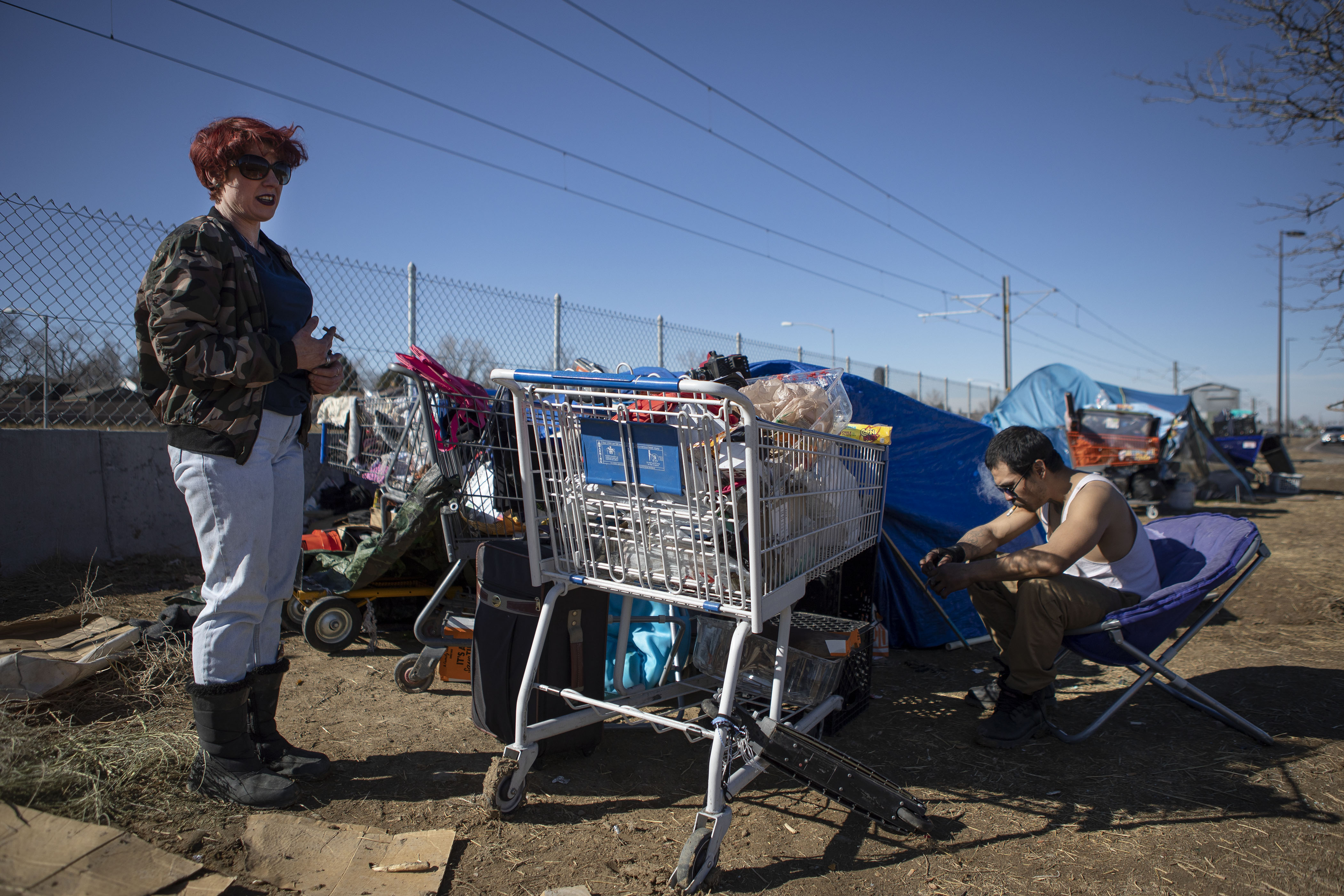
A 2022 Point-in-Time report showed a 43% jump in homeless people in Aurora between 2020 and 2022, surpassing 600 in total. Point-in-Time counts provide snapshots of the day they are conducted and significantly undercount the number of homeless people in a community.
Aurora’s experience is far from unique. Metro Denver is struggling to address homelessness, which jumped by 12.8% – from 6,104 to 6,888 – between January 2020 and January this year. State and local governments responded by pouring significant resources into homelessness in the last few years.
What is clear, Aurora’s elected officials told The Denver Gazette, is that the current system, fragmented and disjointed, is failing and that whatever future strategy is adopted in the Denver metro area will require a regional mindset and a united approach.
And Aurora officials wonder if Texas offers a way out.
“I think what was extraordinary about (Houston’s) program was their ability to bring people together and to find a common purpose,” Mayor Mike Coffman said in a debriefing about local leaders’ trip to Houston.
***Houston’s housing first***
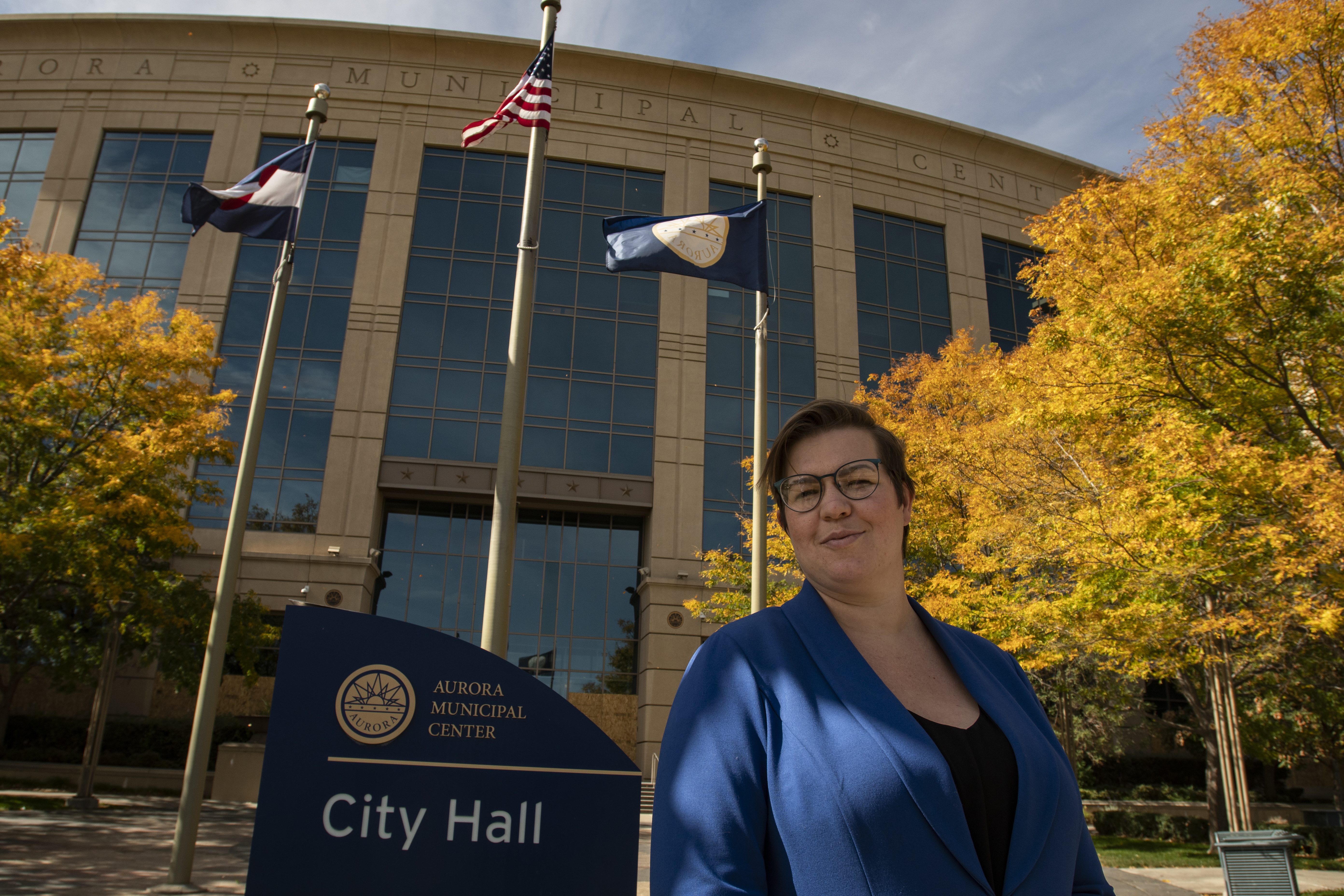
Mayor Coffman, Councilmember Juan Marcano and Councilmember Alison Coombs joined other Denver metro area leaders on the trip to Houston in mid-September to learn about the city’s strategies for reducing and preventing homelessness.
Houston’s significant gains in reducing homelessness during the past decade has generated buzz about the possibility that its approach should be adopted as a national model.
Houston has implemented its version of what’s referred to as “housing first,” in which the homeless are provided with permanent housing, while also receiving social services. That could look like providing someone a housing voucher paired with life skills training, as well as behavioral health and substance abuse treatment, amid other services.
Under this approach, the additional support services are tailored to an individual’s specific needs and monitored by case managers within Houston’s homelessness response system.
Pairing the two is important, “housing first” advocates said.
The idea of “permanent supportive housing” does not work without social services, and, conversely, social services won’t be effective if a client is not in a safe and stable environment, said Marc Eichenbaum, special assistant to Houston Mayor Sylvester Turner.
Eichenbaum said he wants to dispel some fallacies about Houston’s program and “housing first” systems, the first being “that we’re taking them right from the streets and plucking them into a housing unit without any supports.” That would be grossly negligent, he said.
Another is that Houston provides people free, unlimited housing. A majority of clients are on a short-term program, receiving between six and 24 months of housing services. Many of the people who do need longer-term support are individuals with disabilities and “chronically” homeless, he said.
“We are not investing in housing because it is out of some progressive playbook. We are investing in housing because the data shows it is by far the most effective, responsible solution to end homelessness,” Eichenbaum said.
A good reason exists why Eichenbaum seeks to dispel what he describes as fallacies. The clash of ideologies over the role of government in solving problems, of personal responsibility, and of America’s bifurcated tendencies – progressive, on the one hand, conservative, on the other – is most sharply illustrated, perhaps more than any other social woe, in homelessness.
Houston and San Antonio are but the latest of a string of social experiments aimed at curbing homelessness, which, amidst America’s wealth, serves as a stark reminder of how far individuals can fall off the social ladder.
The conservative tendency is to say homelessness is the result of abdication of personal responsibility, and the cure, therefore, is not absolution without atonement. The progressive tendency, on the other hand, is to argue that the individual’s fall is often the result of systemic inequities, and the government, with its vast resources, offers a corrective action. That debate often comes to a head in the idea of “housing first.”
Not all housing debates are wrapped up in such philosophical garb. Often, the discussions are pragmatic and the solutions sought grounded.
A decade ago, Houston had the sixth largest population of homeless in the nation. About 25% of those people were “chronically” homeless. Chronic homelessness refers to people who have a disability and have been continuously homeless for 12 months or more.
Under a federal mandate to address the crisis, Houston created a new system, dubbed the “The Way Home,” a one-stop-shop to serve the homeless. Local governments, public housing authorities, veteran services and various agencies rallied around the idea.
The program aims to prevent homelessness when possible and ensure it is a “rare, brief and one-time” when it occurs.
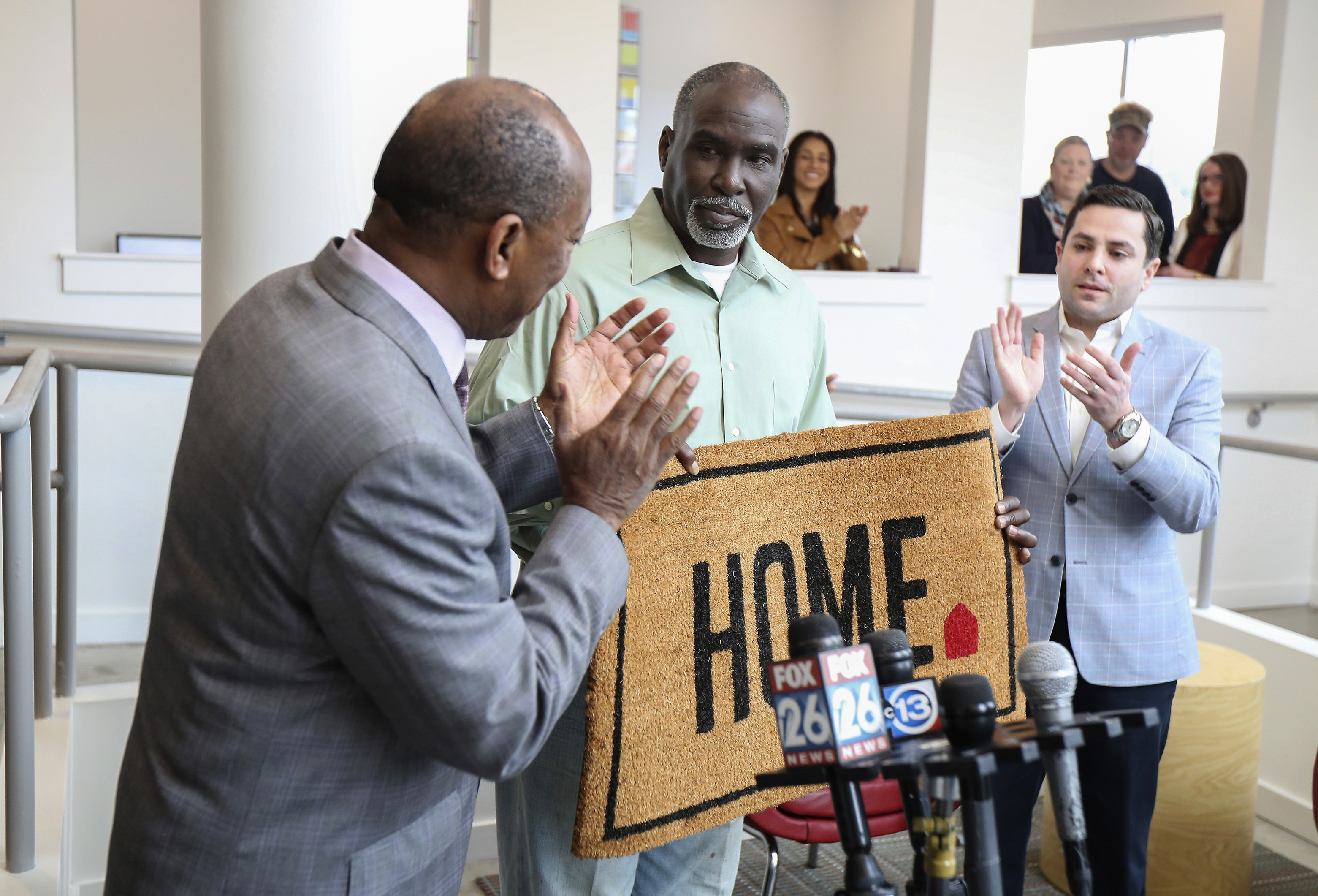
Between 2011 and this year, overall homelessness in Houston decreased by 63%, according to Point-in-Time Count data. Roughly 26,000 people have been placed in permanent housing since the program’s inception. About 90% of people are still housed two years after beginning services under “The Way Home.”
In the span of five years, the program saw 6,978 “chronically” homeless people move into permanent housing. Officials declared the program has effectively ended veteran homelessness in the city.
The program is not cheap.
Ana Rausch, the vice president of program operations for the Coalition for the Homeless in Houston, which is the lead agency for The Way Home program, said bulk of its funding comes directly from the U.S. Department of Housing and Urban Development. In 2012, The Way Home received $25 million through HUD’s annual funding competition, and that allotment has nearly doubled in the years since to $45 million last year, Rausch said.
Last fiscal year, The Way Home homeless response system received about $90.3 million in public funding and resources in total, including the $45 million from HUD.
“On top of that, we also work closely with the city and the county and the state for local funding that kind of pairs with that funding that comes directly from the federal government,” she said.
Houston keeps track of whether The Way Home’s clients remain housed for up to two years after they enter the system. The city stores data further out, but it does not analyze the information because HUD only requires 24 months of system performance measurements, Rausch said.
“We don’t have a huge number of returns to homelessness,” she said.
Without offering specific data, however, the claim cannot be independently verified.
Houston’s officials also didn’t provide other information.
While Coffman, Aurora’s mayor, praised Houston’s success at uniting partners, the mayor said he had sought more detail about how many people in the system participated in services, such as mental health or substance use treatment, or how many got job training. The information was not readily available when he asked, he said.
It’s like solving a math equation “without showing the work,” he said.
***Regionalism required***
Marcano, the councilmember representing Ward IV, is a vocal enthusiast of Houston’s approach and is pushing to adopt the model here. That, he said, will require a regional collaboration.
“I think it makes sense to start with Denver and Aurora, with the two biggest cities in the metro leading that charge,” he said, adding he hopes the suburban communities would follow suit if that happened.
Getting multiple jurisdictions to buy in to a new regional system will also require local leaders to “leave the politicking aside,” he said.
Houston now spends $17,000 a year to house a client, compared to spending $96,000 per person ”to just manage someone’s existences as an unhoused person” before The Way Home launched, Marcano said in a Sept. 19 study session.
He hopes the argument that “housing first” is fiscally conservative will appeal to leaders who are skeptical of Houston’s approach.
He said if metro Denver pursued the model, each local community’s funding mechanism would be determined by different circumstances, but he noted that all of the Denver metro area receives federal funding. Cannabis revenue is a unique funding source other places don’t have, he added.
“Several of our member jurisdictions still have ARPA funds available,” he said, and wondered if communities affected by wildfires might also have some disaster relief that could be applied to homelessness reduction programs.
Houston was smart to take advantage of whatever funding it received, he said. CARES dollars helped create a COVID community housing program in response to the pandemic.
ARPA funds, however, are not sustainable. They have a specific shelf-life – states and local governments must decide where to spend the money by Dec. 31, 2024 and spend it by Dec. 31, 2026.
Reliance on ARPA funding means Houston – or any other jurisdiction that uses the federal dollars on homelessness – must find new or a sustainable revenue source if they aim to spend the same levels in succeeding years.
Ongoing funding is central to a successful homelessness reduction program, Marcano said.
The councilmember argues that homelessness is not a finite problem – that when housing becomes unattainable, if addiction takes over people’s lives, or mental health services are out of reach, those obstacles can become some of the numerous reasons a person might fall into homelessness.
Marcano, who will join the delegation visiting San Antonio, is curious to see how that structure compares to Houston. He is sure there are numerous aspects Aurora can borrow from there too, he said.
“What they’ve done that’s different from Houston is they have a full campus,” he said.
***Treatment first***
Councilmember Dustin Zvonek is helping to organize the trip to San Antonio on Oct. 4, which Coffman urged more councilmembers to attend. Zvonek expected at least seven councilmembers to go. The idea is to get an up-close look at an alternative to “housing first,” he said.
San Antonio’s system “Haven for Hope” launched in 2010 after an increase in homelessness, Director of Communications Terri Behling said. A committee, including Haven’s founder, Bill Greehey, was tasked with finding a new approach. The panel visited more than 200 shelters, finding the sites with resources close by were the most successful.
A number of abandoned buildings and warehouse spaced across 22 acres near the downtown became what is today the Haven for Hope campus, which partners with more than 180 partner agencies.
Legal help, job skills training or assistance recovering an ID are a few of the services housed on campus. There is a hair salon and barbershop on site and chapel services.
Like the program in Houston, maintaining the campus is expensive. Its operating budget is between $25 million and $27 million a year, with roughly 60% private funding.
“It really is designed to be a mini community so our clients kind of get used to being in community again,” Behling said.
There are two main routes for people to access Haven for Hope services.
A facility called The Courtyard is a “low barrier” shelter providing a place to sleep, three meals a day and a shower. People staying there are not required to be enrolled in a housing or income plan, and they can come and go from campus, Behling said.
“If you have someone out on the streets and they have a substance use problem and they are not ready to address it for whatever reason, we don’t want them staying out on the streets,” she said.
The other option at Haven for Hope is a residential campus for families, women and men. That facility includes a floor for non-traditional couples and family units that most shelters might separate. That could be grandparents raising grandchildren or an unmarried couple.
“With the campus side, you have to be sober, and you have to be actively engaged in an income and a housing plan, meaning you are meeting regularly with your case manager, and you are working toward your end game, whatever that looks like,” she said.
Behling said Haven for Hope’s approach is to address root causes of homelessness.
“We are not opposed to housing first and we have people who receive housing through a housing first model, but that’s not going to be for everyone,” she said.
People who don’t stay sober are given a warning and asked to get sober before coming back to the residential campus. They might go back to The Courtyard or another resource in the meantime and can continue in treatment or programs through Haven for Hope.
“We’re going to work with them. It would take a lot for them to be exited from our program completely,” she said.
About 92% of people who graduate from Haven for Hope are still housed one year later. There’s also been a 77% reduction in Point-in-Time counts of the downtown area’s unsheltered population since the program opened in 2010.
Similarly to Houston, the city does not analyze data beyond a year, although it does have the information, Behling said.
Zvonek is eager to learn more about “treatment first” models and San Antonio’s requirements for sobriety.
“San Francisco is also housing first, and San Francisco is an abject failure,” he said. “There are more examples of housing first being a failure.”
The councilmember said there’s a metaphor frequently used for the housing first philosophy — that a drowning person can’t be saved unless they are first taught to swim. Zvonek has put a twist on that analogy. He sees treatment first approaches as asking a drowning person to let go of the anchor holding them down, he said.
There are other reasons he is skeptical of “housing first.” Proponents will often discuss the number of people who can’t be on their own because of significant mental illness, but Zvonek said he does not believe those individuals comprise as big a portion of the homeless population as it may seem.
“There are a lot of men who are homeless and who are people who probably never treated their mental health issues,” he said, adding an untreated condition might appear worse than it is. He also worries placing a person into housing without requiring they receive treatment for behavioral health conditions could drive them further into isolation.
Zvonek wants less government support going to homelessness reduction programs and a transition toward programs supported by philanthropy, he said.
***Political will***
While local leadership is interested in new homelessness reduction strategies, Marcano said the political will doesn’t exist yet to put together a model similar to Houston’s in the Denver metro area. With more than double the counties that make up the Houston region, numerous partners will need to come together here, he said.
“That ultimately is, I think, going to be up to the elected leadership to get the political will together in the region,” he said. “If we can’t do that, then it’s going to be up to our local electorates to get the political will basically built.”
Eichenbaum, the special assistant from the Houston mayor’s office, believes if people let the data guide them, it will show a “housing first” model with wraparound social services offers the best approach. If other successful ideas emerge, that’s great too, he said.
“What gives me hope right now is to have elected officials in various jurisdictions, aligned with various parties, contacting the City of Houston separately,” he said, “saying that they want to do something, and they are not going to accept the status quo.”
The Denver metro area is not yet like some cities on the West Coast or in the Northeast experiencing a homelessness crisis, he said, and Denver has a window of opportunity to act.
“But that window of opportunity is closing,” he said. The Houston motto is “action, action, action,” he said.
“We can build the ship as it’s sailing, but we can’t sit around debating and planning anymore.”
Zvonek expects councilmembers will find considerable overlap in the Houston and San Antonio systems. Both he and Marcano agree Aurora’s current system is not doing anything to solve homelessness, and is simply managing it, he said.
He wants councilmembers to return from the trips to Texas and “take a hard look at what we learned,” and then prepare a resolution establishing a direction toward a new homelessness system.
“I do believe that there is a desire on our council as far apart as we are on some things,” he said.
What’s clear to him, he said, is that giving money to nonprofits that provide emergency services but doing nothing to improve the human condition merely feeds the status quo.
“Aurora does not have a homeless strategy. We have a patchwork approach that is frankly failing our residents. And it costs too much,” Zvonek said.
Editor’s note: This story has been updated to reflect San Antonio’s unsheltered population has decreased by 77% in the downtown area.