







A Conversation with Robert Kenney, President of Xcel Energy Colorado
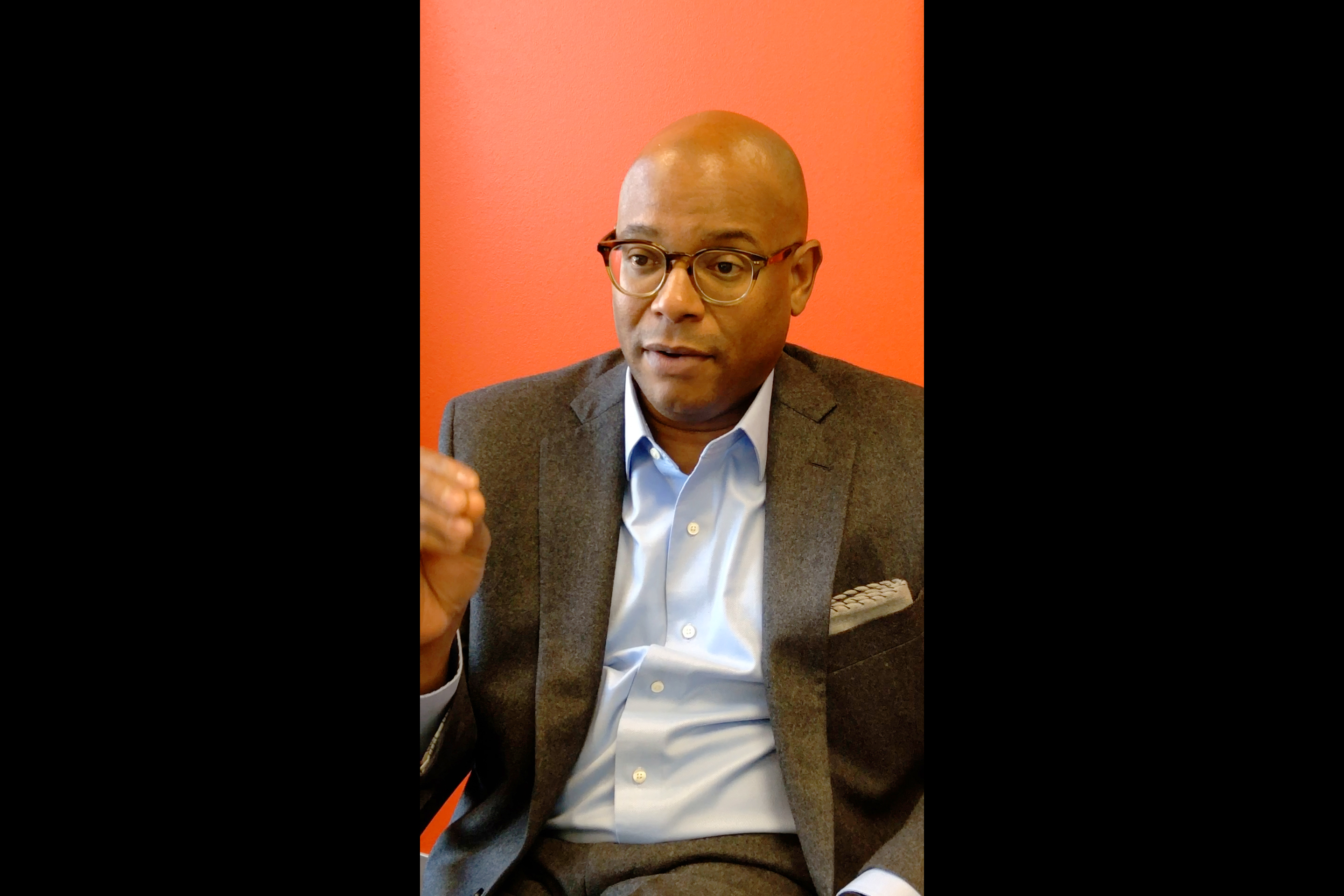
In a conversation this month, new Xcel Energy Colorado President Robert Kenney talked about Colorado’s transition to renewable energy, nuclear power and control over customers’ thermostats.
Kenney took over the reins on June 6 from Alice Jackson, who moved to a new position as senior vice president for system strategy and chief planning officer for Xcel Energy corporate.
Kenney hails from St. Louis, Missouri and worked as a private attorney, as well as taking a position with the Missouri Attorney General. He was later appointed to the Missouri Public Utilities Commission before taking a position at Pacific Gas & Electric Company in the San Francisco Bay area, finishing out as senior vice president of regulatory and external affairs before accepting the position of president of Xcel Energy Colorado.
The Denver Gazette: What are your aspirations for Xcel here in Colorado?
Robert Kenney: Well, I will say this, I want to make sure that we’re continuing the great work that we’re doing to lead the clean energy transition. That was one of the things that drew me here. And I would say I’ve had the good luck of working now for two utilities that are really at the forefront of driving the clean energy transition. And I would say Xcel Energy was one of the first utilities, if not the first, to … set really bold climate targets back in 2008.
I think another goal that I have is telling the story that is Xcel Energy. Not just leading the clean energy transition, but that this is a fantastic place to work and that you can come here and make a terrific living. We are contributing to the fabric of our community through the jobs that we provide, through the tax base that we pay on our assets, through our charitable contributions. One of the other priorities for me is really making sure that we’re crafting and telling that story broad and wide about how integral we are to the communities that we are privileged to serve.
The Denver Gazette: One of the problems that I get introduced to very often is consumers are very concerned about their rates – just keep going up. How do you answer those concerns?
Kenney: Well, the first answer is we’re very sensitive to the fact that for some of our customers, any rate increase is a hardship, and for certain of our customers, they struggle to pay their electric and gas bills. My first answer would be that we have the ability to place our customers on payment plans. If they’re struggling to pay their bills, they reach out to us. We can work with them to get them on a payment plan. We also have programs available to help our customers manage their energy usage in the first place, to decrease the amount of that bill. Through energy efficiency, through demand side management programs, we have the ability to refer them to other programs like LIHEAP and other community-based organizations that can help them pay their bills.
No. 2, I’d say it’s important that we keep our costs as low as possible and that we’re good stewards of the money that we’re entrusted with. And so, we work to make sure that we’re managing our finances well, that we are managing our investments well. The other thing I’ll say is to point to the gas side of our business. We are seeing increases in the commodity cost. Steps that we take to make sure that we’re doing our part to keep our gas bills low is investing in our hedging programs, making sure that we have adequate supply that we can inject into our storage facilities in advance of the winter heating season, to make sure that we can minimize to the greatest extent possible purchases on the spot market, and making sure that we’re entering into long term contracts, that we have adequate supply available as well.
The Denver Gazette: You weren’t here, so obviously you don’t have any responsibility for the way that the February 21 freeze was handled. But do you have an idea of hour you’re going to prevent that sort of massive cost for gas that occurred? Xcel Energy took a lot of heat for that $500 million ratepayers are going to have to pay. Do you have a plan to keep that from happening again?
Kenney: You’re referencing winter Storm Uri. We did go to the commission to seek cost recovery for those costs. And the commission allowed us to recover most of it, other than about an $8 million disallowance. One of the things that the commission pointed out was the need to more robustly and more rigorously communicate with our customers, particularly around demand side management and conservation. We listened to our customers, we listened to our regulators, and I think there’s always opportunities to improve, and continuous improvement is something we should all strive for. I think one of the main takeaways from that incident was the need to really step up our communications around demand side management and energy efficiency. That’s something we heard loud and clear from the commission and something that we’re working to implement in advance of the next winter season.
The Denver Gazette: Recently, during the hot weather, people’s internet-connected thermostats were locked down. What do you have to say about that?
Kenney: So, you’re referring to the AC Rewards program? There was about a four-hour period of time in August of this year where about 22,000 of our customers were unable to override the control of their thermostats. The first thing I would say about it is that it’s a voluntary program. Customers affirmatively volunteer to sign up to participate in that program. And what that program allows us to do is, in times of high demand and extreme heat, we are able to adjust thermostats to about 78 degrees for a period of time to decrease the stress on the system. So, if we set their thermostat at 78 degrees, they can typically override that. The feature that we deployed this time, which we had never deployed in the past, in the six years that the program existed, was that we prohibited that overriding.
The second thing I’ll say is that what we did and what we were able to do through the implementation of AC Rewards and some other conservation programs was avoid any massive or rolling blackouts. In that regard, it was a tool in our toolbox that allowed us to be able to manage high heat, high demand, and avoid any type of other catastrophic outcomes that could have resulted.
And then the last thing I would say is that, again, in the spirit of continuous improvement, we listened to our customers and we listened to many of the complaints that we heard. It was clear to us that we could do more in terms of communicating with our customers to remind them that this is a voluntary program that you’ve signed up for and here are the features of the program and making sure that our customers know and recall that there are features of this program that we will deploy at times of high heat and increased demand.
The Denver Gazette: How effective was that? And did you save a substantial amount of peak energy from 22,000 homes?
Kenney: I don’t know if we’ve quantified exactly how much we actually saved and how much we were able to shave the peak, but I will tell you, we avoided having any rolling blackouts. I don’t know if we’ve quantified the savings from it. I think we have, and maybe we can follow up and find out like exactly how much we were able to save as a result.
The Denver Gazette: That brings us to the problematic issues with PG&E and your time there.
Kenney: I don’t work there anymore.
The Denver Gazette: I understand that. But there were quite a few problems in California. The question is, are we going to be able to avoid that here with the rapid move away from firm base-load power—gas and coal, as we move more into renewables? Is there going to be sufficient capacity to avoid that kind of issue in Colorado?
Kenney: I will distinguish Colorado from California in a whole host of different ways. Different political environments, different physical environments. I try to avoid in my mind comparisons between Colorado, California. But here’s what I’ll say about Colorado, in particular. We run a natural gas system and we also have made very bold climate commitments. And we don’t believe that those are inconsistent. As we start to deploy more renewable resources, we do think that natural gas will have a role to play in helping to provide that 24/7 dispatchable energy during times of intermittency. One of the first things that I was privileged to do was represent the company in our rate case at the CPUC recently. We’re continuing to make investments in our gas system. We do believe that for home heating, for cooking, and for power generation, there will continue to be a role to play for natural gas. So, we’re very excited about the prospect of being able to bring more renewables on the system, particularly as we do retire our coal plants, but we also recognize that natural gas will continue to be a supplemental,24/7 base-load fuel that accompanies and compliments our renewables.
The Denver Gazette: Are the natural gas plants that you currently have in operation adequate to that task, or are you going to have to build new ones?
Kenney: We just got approval for our clean energy plan. We will be putting out an all-source RFP sometime in the fall, and we will be doing this all-source solicitation, and it’ll include wind, solar storage, like large scale solar storage, 24/7 dispatchable resources, some of which might be natural gas plants, and distributed generation, as well. I would expect that we would see some of that in response to our RFPs that we put out.
The Denver Gazette: What’s going to be the fate of those coal power plants? Are they going to be converted to something or are they going to be demolished? What going to happen to all that infrastructure?
Robert Kenney: One of our coal plants actually will be converted to natural gas. But Hayden and Comanche, those we are retiring. Particularly in Pueblo, we’re going to work with the communities, and we have a just transition plan to determine what will replace that plant. Our thought and our expectation are that it will be replaced with something – not coal, obviously – but it will be replaced with some other resource. We’ve made a commitment both at Hayden and at Comanche to work with our communities to help mitigate the lost jobs and the lost taxes. So, one way we might do that is through some other technology, some other resource that we would locate in that same location. But that work is still ongoing. We haven’t determined what that would be just yet.
The Denver Gazette: CEO director Will Toor, when I spoke with him a year ago, I asked him if they’d done any research on small modular reactors. And they said they had done nothing. They had no research; they weren’t even looking at it. When I asked him why, and he said none of the power companies have proposed nuclear, but we’d be happy to look at it if they were proposed something. So, what’s your view on the future of nuclear power in Colorado?
Kenney: I’ll give you my view on nuclear power generally before I talk about Colorado specifically. I come from a state that had a nuclear power plant, Missouri. California was originally scheduled to retire the Diablo Canyon but is now going to keep it going for a little bit of time. So having said that, it’s a technology that’s clean and zero emitting. I think it’s a technology that we, as a nation, have to look at. Small modular reactors have the benefit of being able to be constructed elsewhere, placed on a flatbed, and relocated someplace else. And so, the cost associated with small modular reactors as compared to a 1100-megawatt unit is significantly more cost effective. It’s a technology I think bears looking into. I would have to really understand how it fits in specifically into our resource mix here in Colorado, what the political climate is for it. And I would say that I would probably need to do more research before I would be able to definitively say where it fits in in Colorado.
The Denver Gazette: Let’s talk about windmills and solar panels. Will Toor has said that he thinks that Colorado can get to 80% renewables. How many windmills and acres and solar panels is going to be required to achieve that kind of goal in your system?
Kenney: What came out of the CEP, our Clean Energy Plan, will get us to 85% reduction in carbon emissions from 2005 levels and in excess of 80% renewable energy by 2030. The mix that we’re contemplating, and what our RFP will request, is 2,600 megawatts of wind, 1,400 megawatts of large scale solar, 400 megawatts of storage, 1,300 megawatts of 24/7 dispatchable resources – that was the natural gas that we talked about – and then 1,200 megawatts of distributed energy resources, distributed solar. So, the large scale solar, distributed solar and wind storage, that’s about 6,900 megawatts that I just described there. How many solar panels that is or how many wind turbines that exactly is, I don’t know that. I know the translation of that, but that 6,900 megawatts gets us to about 80% renewable.
The Denver Gazette: What’s the efficiency factor on the backup quick-dispatchable backup power source you’re talking about? Will Toor was talking about how he would be happy if they only ran 15% of the time. It doesn’t seem to be terribly economical to run a generating source like that at 15% efficiency. So, how do you justify spending all that money on something that’s hopefully not going to get used very much?
Kenney: Well, I think there’s value in having the resource available. So, having the capacity available has value in and of itself. Your argument, or I think your question, is that your spending money building a plant that’s only going to run for X percent of the time and is going to sit idle the remainder of the time. I would think of it as an insurance policy. I mean, you pay for automobile insurance that you hope that you’re never going to use, but you have it there for those one or two times when you might actually need it. Similarly, we’re going to pay for having that capacity available, and that is inherently valuable because we value reliability. That’s how I like to think about it. Yes, you’re not going to be running it very frequently and that’s the expectation, that your renewable resources are going to carry the load. But when those renewable resources aren’t working, then you’ll need that 24/7 dispatchable resource and having it there has value.
The Denver Gazette: What about the Clean Heat Program? What’s the future for natural gas heating in Colorado?
Kenney: We do think there’s a future. We do believe that natural gas will continue to have a role to play in the future. And it’s not inconsistent with the climate goals that we’ve met. So, our net zero natural gas vision really rests on kind of three legs of a three-legged stool. One is driving down the methane emissions from our own system through advanced leak detection technologies and making sure that we’re minimizing methane emissions. The second component is working with our upstream suppliers using our buying power to help them move to certified natural gas and reduce their methane emissions before they send it to us. And then the third component is working with customers to promote energy efficiency and demand side management to help them drag down their emissions as well. And so, the future of natural gas is that we continue to use it, but we use it in a much cleaner way.
The Denver Gazette: What about carbon capture and sequestration for natural gas? Is that technology on the edge of viability or is that down the road?
Robert Kenney: I don’t know the timing of the viability of carbon capture, and I think we’re referring to it as carbon capture utilization and sequestration. But it’s absolutely a technology that continues to advance and mature, and something that I think we’re keeping our eye on.
The Denver Gazette: Do you mind if I ask a little bit about your family?
Kenney: No, not at all. So, I’m married. I have two kids. My oldest is 18, is a freshman at American University. She graduated from high school in Oakland, California and was with us here for about three weeks before we took her to DC. And then I have a 14-year-old son, who graduated from eighth grade in Oakland and is now a freshman in high school here at Colorado Academy. So, that’s my family. We like to enjoy the outdoors. If somebody asked me what I like to do for fun, I said it’s whatever my kids like to do. Because I work a lot. And so, the free time that I have, I try to make my interests their interests. I play tennis with my son quite a bit. We ride our bikes and then we’re very avid readers and like to explore independent bookstores. And we’re avid movie goers, and we like to go to the movies.
The Denver Gazette: Do you ski?
Kenney: I don’t ski. And candidly I’m not going to ski cause I’m afraid of breaking something (laughs). So, my son might, but I will watch from the sidelines.
The Denver Gazette: The older you get, the less interested you get.
Kenney: Well, exactly. We were in northern California, where skiing in Lake Tahoe was quite the pastime. I declined then and I will decline now. But I’m looking forward to going up to the mountains and just seeing the beauty.