







No ‘red flag’ order sought despite earlier threats by man in murder-suicide outside Jehovah Witnesses worship hall
KYLA PEARCE/THE DENVER GAZETTE
The man who killed his wife and then himself on Christmas Day outside a Jehovah’s Witnesses worship hall, which he tried to blow up with pipe bombs, made shooting and bomb threats to family members and businesses more than a year earlier.
Enoch Apodaca, 46, possessed guns, had been investigated before for bomb making and had a protection order against him by the Northglenn Kingdom Hall because of threats he had made. He was also withdrawing from the family, according to notes from a call for service by his sister and other police records.
Notably, Apodaca’s sister reported to Westminster police her fear that “something that could be prevented” would happen, but the police department officials didn’t consider that threat specific enough to prompt criminal investigations or to seek a court order to remove his guns under Colorado’s red flag law.
“He said people were going to pay and there is going to be carnage,” according to a record of a call for service made by the sister on Sept. 13, 2021.
Family members contacted by the Denver Gazette could not be reached or declined to speak on the record.
“Normally, the family can deescalate him, but (he was) not communicating nothing but anger,” his sister told Westminster police.
Man suspected in Kingdom Hall murder-suicide made threats against wife, union rep
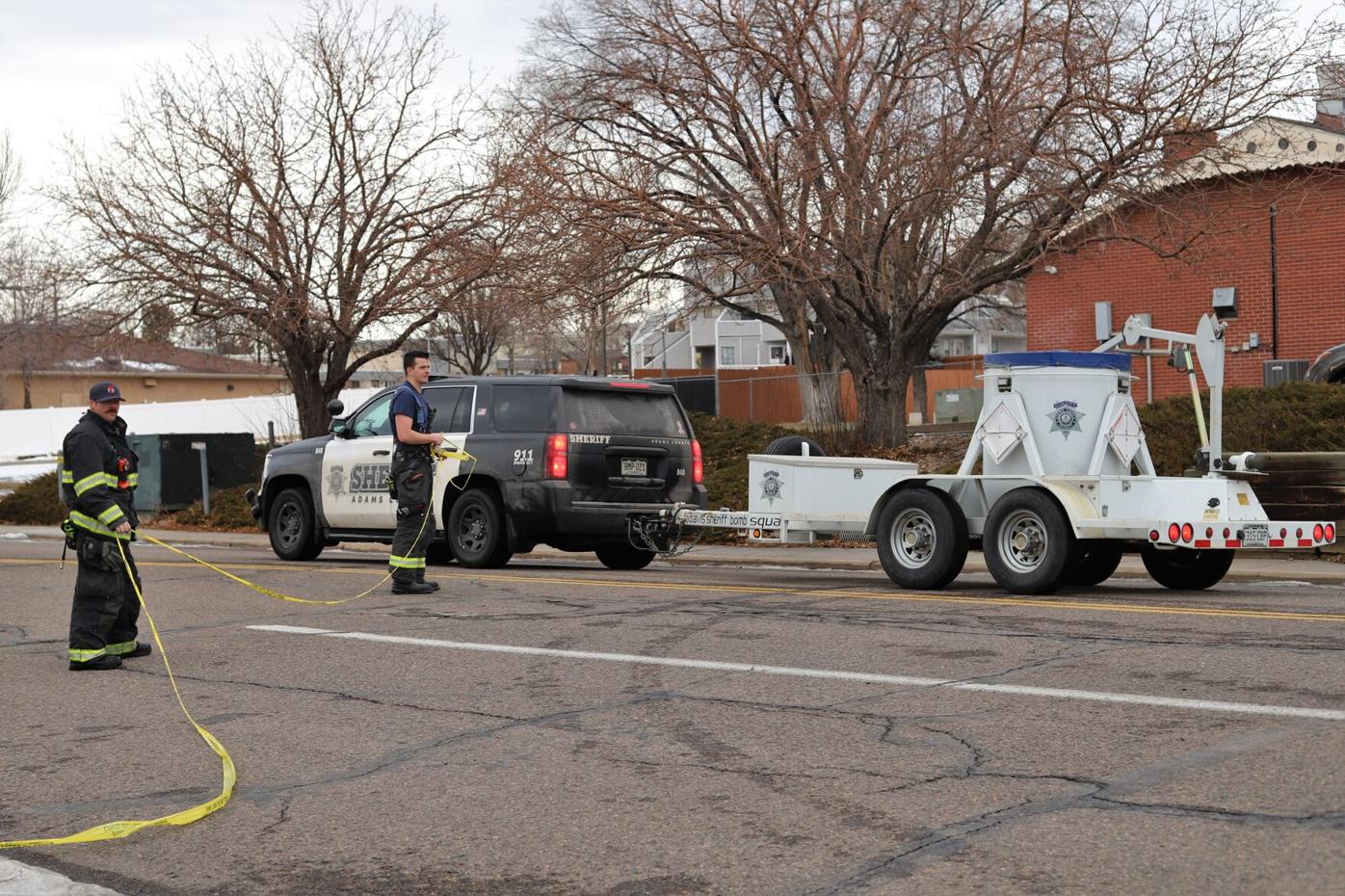
Apodaca, who worked for an electric company, threw three handmade explosives through the window of the Federal Heights Kingdom Hall on Milky Way Street shortly before 9 a.m. on Dec. 25 before he shot his wife, 44-year-old Melissa Martinez, and then himself.
Jehovah’s Witnesses do not celebrate Christmas, but at least two people were in the building preparing for meetings later that day. The man who called 911 reported seeing Apodaca shoot his wife in the back of the head and then a second time from the front. Apodaca approached the building before turning the shotgun on himself.
Three calls — including the ones to Westminster police in September and November 2021 — led to welfare checks on Apodaca and his wife. But teams of officers and behavioral health staffers, working as co-responders for the city, couldn’t make contact with Apodaca.
“When a threat is made, you have to have a victim,” said Sgt. Ray Esslinger, public information officer for the Westminster Police Department.
“Just making comments to somebody isn’t really a threat because there’s no victim. There’s nobody he actually made threats to that could actually lead to criminal activity. There was no criminal act.”
The case brings into sharp focus the debate over Colorado’s “red flag” law — whether it is truly effective, whether it is underutilized or whether it needs tweaking.
The law allows family members, household members or law enforcement officers to petition the court for a temporary Extreme Risk Protection Order against a person who poses an imminent threat to themselves or others “by having in his or her custody or control a firearm or by purchasing, possessing, or receiving a firearm.” If the order is granted, law enforcement is required to remove firearms and/or concealed-carry permits from the person and to hold the weapons for up to 14 days.
“This brings up an issue in a lot of states, which is a need for attention to how to implement these laws,” said Shannon Frattaroli, a professor at the Johns Hopkins Center for Gun Violence Solutions.
She said she believes resources for education about red flag laws should be concentrated toward law enforcement, because they come in contact with people in crisis regularly. Law enforcement can also share information about extreme risk protection orders with family members in the moment of crisis when it will be most useful, she said.
By contrast, she said, public education campaigns about red flag laws tend to be expensive and not necessarily have effectiveness that’s proportional to the resources spent.
“This represents a pretty big paradigm shift in terms of how law enforcement do business, because it’s not about responding to crime. It’s about getting ahead of crime.”
Lawmakers are expected to push for changes to the law, which passed in 2019 and took effect on Jan. 1, 2020, in the wake of the the Club Q shooting in November, which killed five people and injured 17 others. Some suggested expanding the pool of people who could seek it to include medical professionals, mental health workers and district attorneys.
Warning signs pile up
The same day Apodaca died, he bombed a building that housed the International Brotherhood of Electrical Workers Local #68 Union Hall on Logan Street, surveillance video shows. Minutes before going to the Kingdom Hall, Apodaca drove to building, got out of his car, grabbed what looked like a bucket from the back seat and presumably went inside.
A large explosion occurred shortly after Apodaca got back in his car. The Adams County Sheriff’s Office found natural gas turned on in the building and shotgun shells outside, according to a Thornton police report.
A year earlier, Apodaca threatened to shoot his wife and a local union representative, and in December 2021, he also said he would “come after” the people responsible for him losing his job at Sturgeon Electric Company, and that Martinez, his wife, would shoot up Sturgeon Electric’s building and he would kill himself, according to police reports.
But Magistrate Michael Garlan declined to issue a permanent protection order for Sturgeon because he did not find good cause, according to the Thornton police report, which also noted that Apodaca also worked as an electrician at Denver International Airport and his employment ended in June 2021.
The call by Apodaca’s sister came the day after Apodaca’s cousin requested a welfare check because he had received a text message from Apodaca saying he — meaning Apodaca — was dead. An officer spoke to Martinez at the couple’s home, who said Apodaca was fine and sleeping at the time.
Two months later, on Nov. 17, an employee of the Credit Union of Colorado reported Apodaca had filled out a customer survey saying “banks lie, cheat and don’t help people” and “he can’t kill enough of you or God would mistreat him.” Police again went to Apodaca’s home for a welfare check, and, for a third time, couldn’t make contact with him.
Apodaca was not a member of the congregation at Federal Heights Kingdom Hall but could come to meetings, according to the Thornton police report. Elders at the Kingdom Hall had asked Apodaca to stop coming because he wore dark sunglasses and a balaclava to cover his face, which made other members uncomfortable. Apodaca also would not shave his beard, which was another issue at the worship hall. Jehovah’s Witnesses believe men should be clean shaven, according to the police report.
Apodaca returned to the hall in August 2022, but left when elders confronted him, the report said. He reportedly called another member of the congregation the night before the shootings and asked to return.
The report by Thornton police and call for service by Apodaca’s sister in September 2021 also mentioned the Northglenn Kingdom Hall had a protection order against Apodaca. However, the Denver Gazette could not independently confirm details of the restraining order.
Officers who searched Apodaca’s home found bomb-making supplies, a book on building explosives, a suicide “guide” and ammunition. A table also had piles of Apodaca and Martinez’ belongings separated and labeled according to who they wanted the items to go to.
Some people who knew Martinez told police in interviews she seemed constantly sad and looked “on the verge of crying” in the months leading up to the shootings, according to Thornton’s report. One acquaintance said Martinez told her that her husband was getting “stranger and stranger” and her parents wanted her to move out of their home.
Thornton police learned Apodaca’s brother had gone to his home on Dec. 24 to pick some things up and he said Apodaca had threatened to shoot him. He reported his brother was shaking when he handed over the items. Apodaca’s brother said he “had pipe bombs and stuff” and warned police his house might be trapped with explosives. But he didn’t say how he knew Apodaca had the explosives, according to the Thornton police report.
No red flag order sought
Red flag laws are only as effective as the frequency with which they get used
Thornton’s Esslinger said the police department’s investigations commander steps in to help petition the court for a red flag petition if an officer determines someone poses a significant danger and has committed a crime.
In Apodaca’s case, incident reports weren’t created based on the attempted welfare checks because officers and co-responders were not able to make contact with him, he said.
“There was no information for them to provide. … They responded on the 17th and tried to provide Enoch resources, which, he declined to speak with them. So, there was nothing really to report,” Esslinger said.
Under Colorado’s law, the court holds an immediate hearing once an order is sought, and, if it finds substantial evidence the person poses a significant risk of causing injury or death to his or herself or to others by having a gun, an emergency order is granted for up to 14 days. A second hearing is held within that period to determine if the person is still a risk. At that point, if the court thinks the person poses a grave danger it can extend the order for as long as 364 days. Under both the temporary and extended orders, the person must surrender any firearms and their concealed carry permit. Once the protection order expires, all weapons must be returned within three days.
“The red flag law in Colorado and all the other states specifically do not require that a crime be committed in order to petition the court and have a reasonable expectation that the court would would review the case. These laws are specifically developed to interrupt that trajectory of violence,” Frattaroli said.
Application of the law has been uneven in Colorado.
In Denver, between Jan. 1, 2020 and June 30, 2022, there were 86 requests for an extreme risk protection order, according to the state’s judicial department annual reports. During that same time, El Paso County had 44, Jefferson County had 28, Douglas County had 23, Weld County had 12 and Arapahoe County had 11, the annual reports show.
Denver has had the highest rate of red flag petitions filed, and Arapahoe County has had the lowest, based on 2021 population data.
Data provided by State Sen. Tom Sullivan’s office shows three out of 380 petitions were filed in Adams County, which covers part of Westminster, since the law took effect in Jan. 1, 2020 and Dec. 31 last year. Of those, one was a temporary petition that was granted, another was a temporary petition denied, and a third was a permanent petition granted.
Judges granted about 46% of the red flag petitions statewide, though it’s not immediately clear from the data how many situations included requests for temporary orders and later permanent orders.
Sullivan’s son died in the Aurora movie theater massacre in 2012, and he was instrumental in passing Colorado’s red flag law after his election to the House of Representatives in 2018. He said he believes whether the statute’s definition of a “credible threat” is specific enough is a question for the courts and the Attorney General’s Office.
“I’m not a lawyer. All I am is a guy whose son was murdered, and has taken up activism to stop this from happening to others,” he said.
Sullivan added he believes there is more room to educate the public on how the red flag law works.
“I saw the story, and it’s just another one of the tragic stories that happen day after day,” he said.
Attorney General Phil Weiser declined to comment on whether Apodaca’s situation could have made a red flag petition appropriate.
“We tried to help this guy, and reach out and provide every resource that we could,” Esslinger said. “We can’t make people talk to us. We try, and be polite. A lot of times people just don’t want to talk to us.”
Denver Gazette reporter Jenny Deam contributed to this report.