New release day set for Cripple Creek’s famous donkeys: Update
Update: Cripple Creek’s donkeys will be released into town for the summer on Memorial Day Monday, May 29. All are invited to the annual, festive occasion. At noon, volunteers will gather at the intersection of C Street and Thurlow Avenue, near the southwest corner of town.
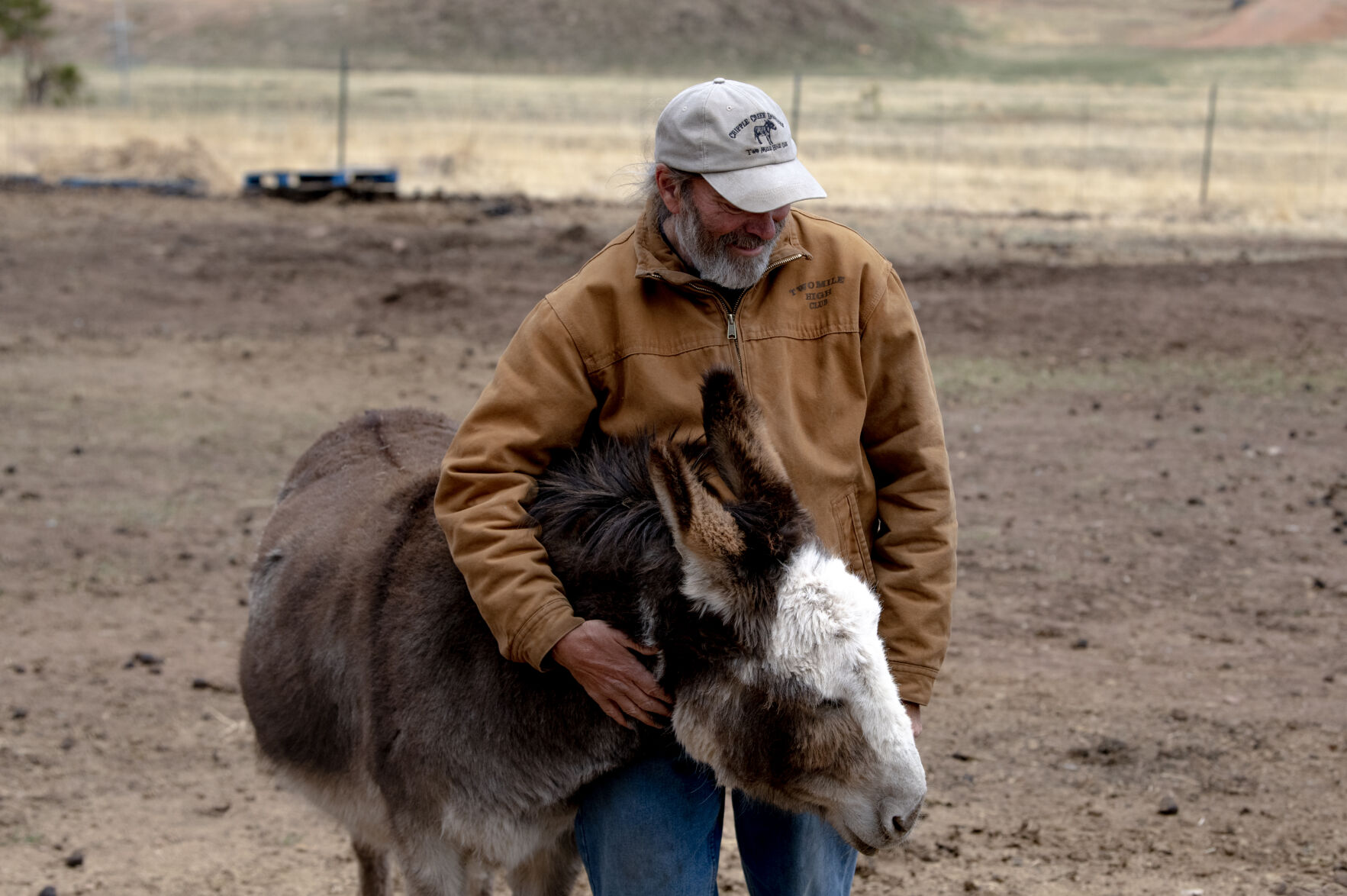
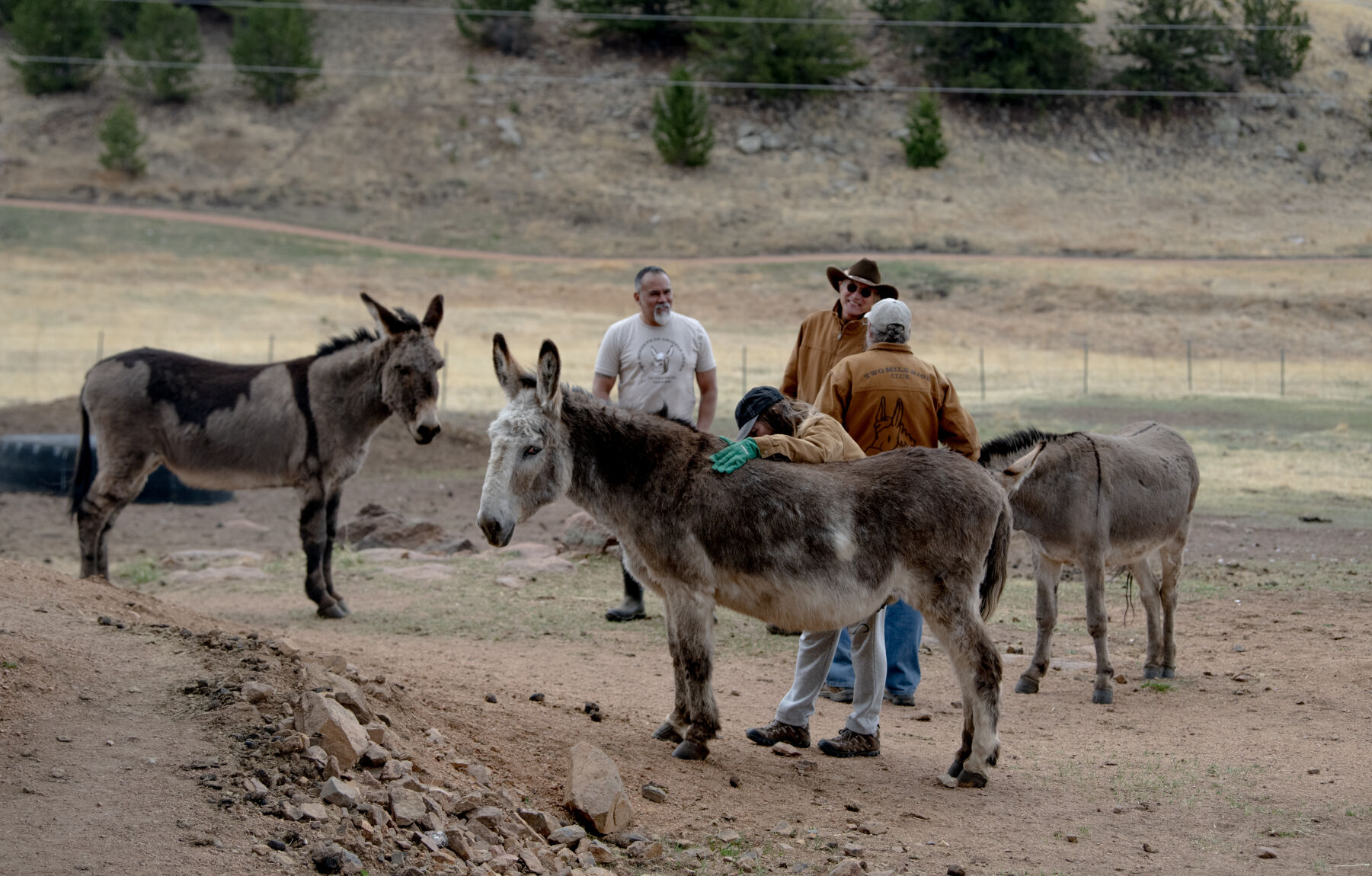
CRIPPLE CREEK • On a pasture at the edge of town, man and donkey say hello.
“Come here, baby,” Mark Green says to Salsa, who nuzzles up against the familiar, bearded caretaker. “You want a little lovin’?”
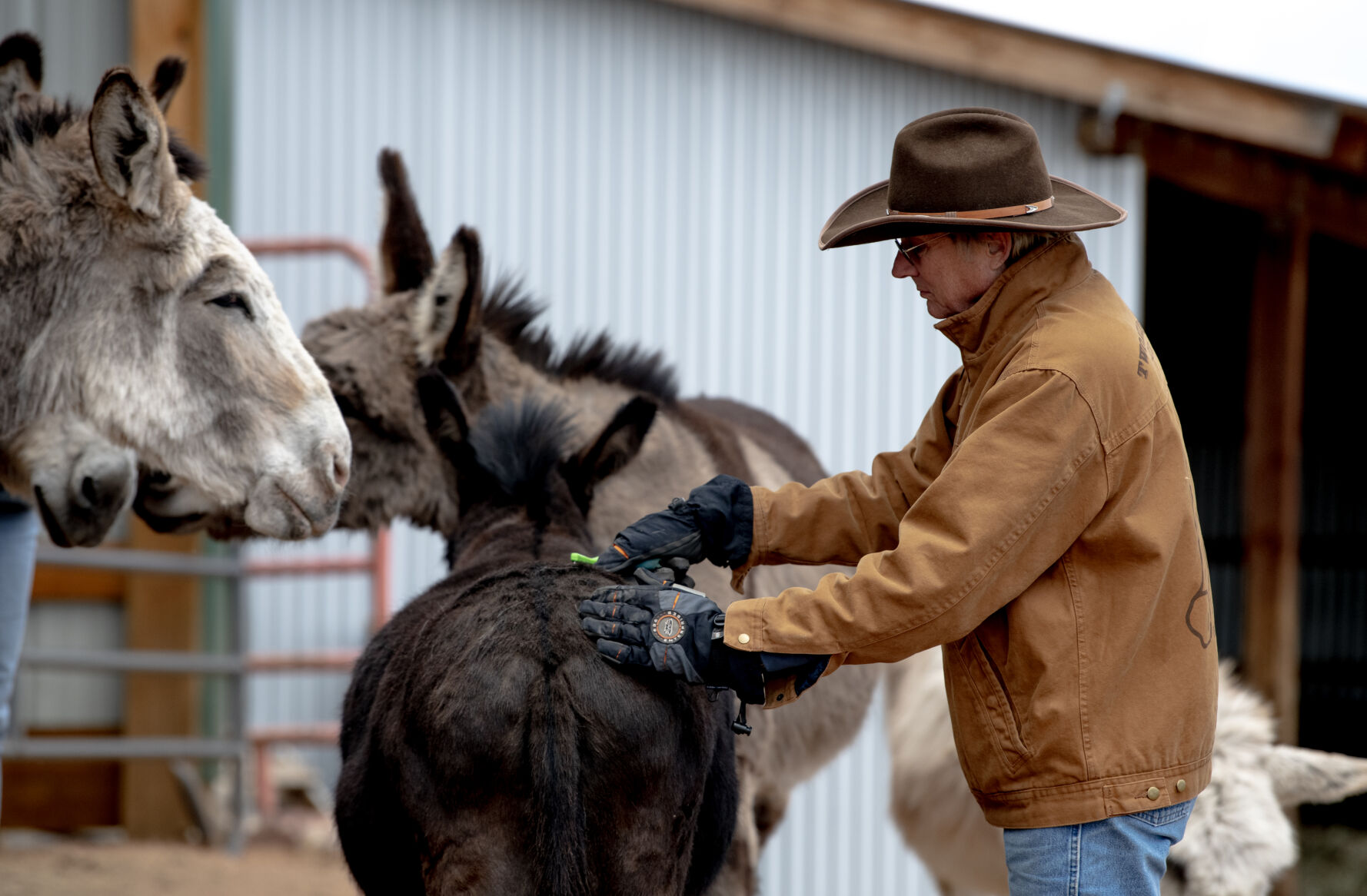
There is no shortage of lovin’ for Cripple Creek’s famous, historic herd. For Green and other people of the Two Mile High Club tending to the 15 donkeys, there is no shortage of love back.
“These guys are so calming,” says Wendy Wood, the club’s vice president. “They’re good for your soul.”
Good for the soul of this town, people around here say — charismatic ambassadors representing the old, mining way of life on this side of Pikes Peak.
Now people come for the casinos and the sights. And, of course, for the donkeys.
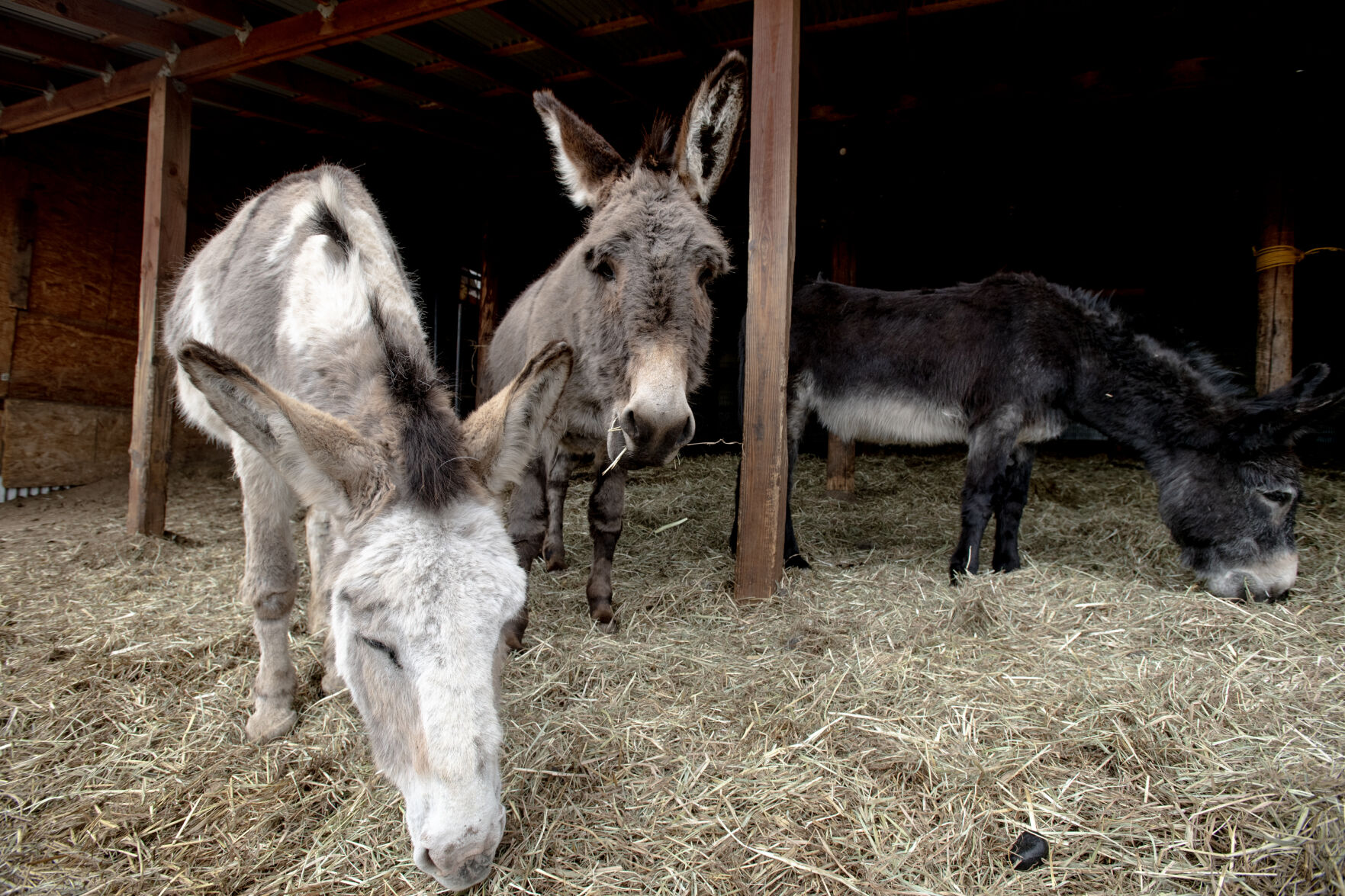
After a weather delay, an announcement is expected soon on the donkeys’ celebratory release date. The gates of the wintering pasture will be raised and the herd set free to roam the town for the summer.
It’s an annual tradition anticipated by tourists and locals alike, who long for the return of the snacking, far-from-shy residents and whatever shenanigans they bring to the busy streets.
“We let ‘em loose, and they just take off. They know it’s time,” says Curt Sorenson, active in the club for more than a decade.
The summer release is a tradition often accompanied by a few words from a man impersonating Theodore Roosevelt. “Teddy” is a central figure to the Two Mile High Club story.
“He saw the plight of the donkeys,” Green says, recounting the soon-to-be president’s visit to the gold camp in 1901.
Roosevelt saw how the sturdy, compact steeds worked in the underground tunnels, the story goes. They hauled ore and equipment before rail carts. Before the bustling scene of Colorado’s last, greatest gold rush here in Cripple Creek, donkeys were relied upon to carry loads up and down rugged terrain, becoming synonymous with this state’s heritage. (It’s no wonder the state’s official “heritage sport” is burro racing.)
In Cripple Creek, mining “was all underground,” Sorenson says. “These guys lived and died in the tunnels. They never saw the light of day. Many of them were blind. That’s what got Roosevelt. He thought that was terribly inhumane.”
He thought they should be outside. So they would be as mechanized developments replaced them in the tunnels. The donkeys were cut loose, left to roam the hills and town that would drastically change over the next few decades.
By 1920, the major railroad from Colorado Springs stopped running to Cripple Creek — a sure sign of economic despair. The Great Depression, World War II and the federal government’s halt on the gold standard officially turned the page from boom to bust.
All the while, the donkeys carried on, milling about. It appeared they multiplied even, the story goes.
“In 1931, a bunch of business owners got together and decided, ‘Hey, we got all these donkeys running around, somebody’s got to take care of them,’” Green says.
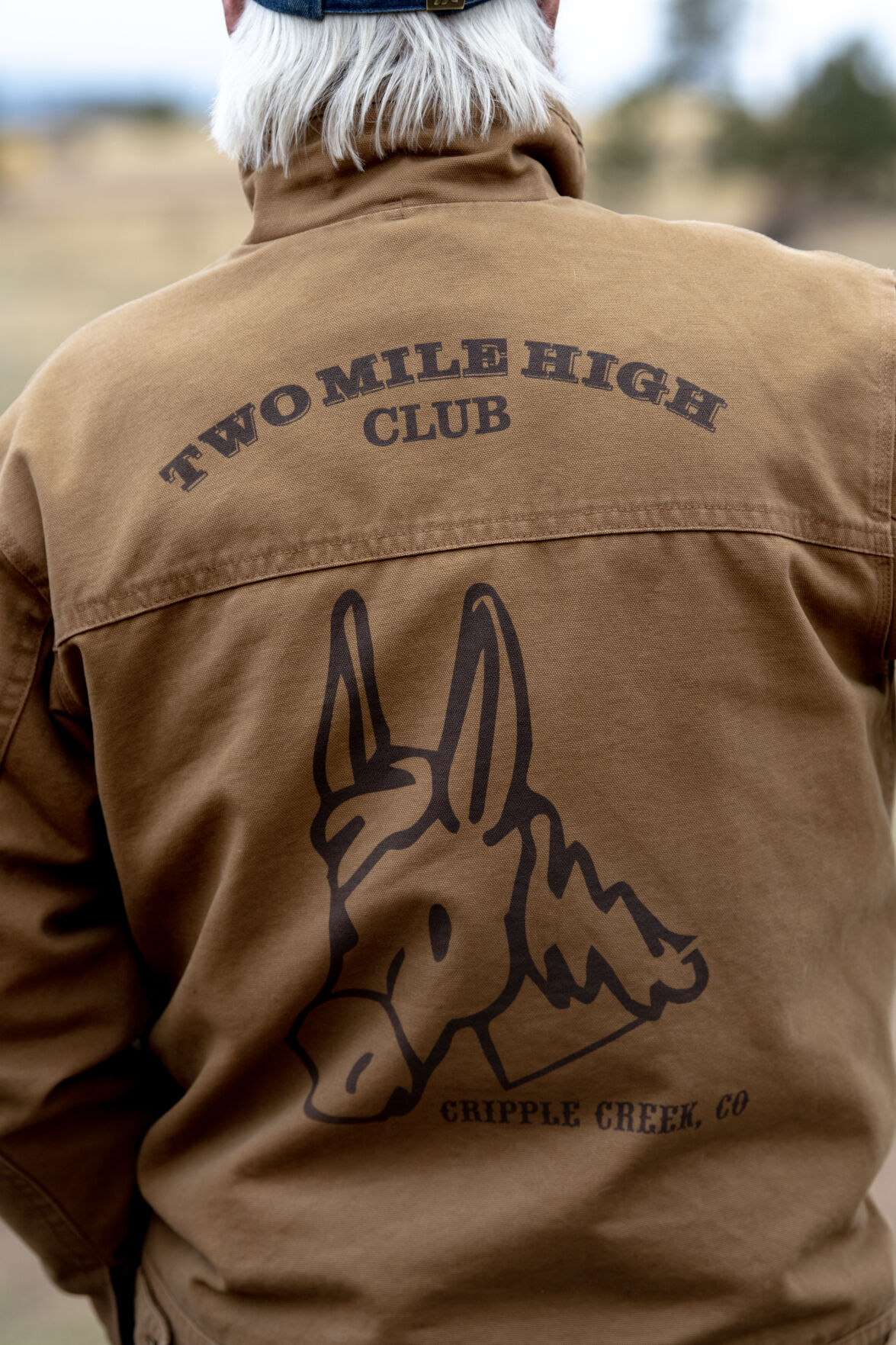
He says they initially called themselves the Mile High Club — a nod to Cripple Creek’s elevation, prior to the spread of commercial flying. “They changed it to Two Mile High Club when the age of aviation came around,” Green says with a wink.
As tourism became the prevailing idea for the future of the town’s economy, the club founders saw the donkeys as key attractions. The nonprofit was simultaneously formed with an annual event to be called Donkey Derby Days.
For 92 years, the race and festival weekend has continued as a vital fundraiser for the club to pay for feed, shelter and medical care. Money has otherwise come from donations and, more recently, membership drives and sponsorships. The club estimates each donkey each year requires at least $2,000 to cover needs — more than $30,000 collectively for the current herd.
Finances have been underscored in recent years in the wake of the COVID-19 pandemic. With revenues down, the local government’s support of Donkey Derby Days was put in doubt and with it the event altogether.
Along with money, volunteers were short, the club determined toward the end of last year.
“I remember they were almost in tears,” says Annie Valades.
Having worked in event planning, she offered her services. Thanks to her and “the generosity of sponsors and donors from all over the country,” read a recent announcement, Donkey Derby Days is slated for the weekend of Aug. 11.
The club considers it the latest example explaining 92 years of history. It’s simple, members say: People near and far have always stepped up for the donkeys.
The donkeys, Valades says, are “the heartbeat of the community.”
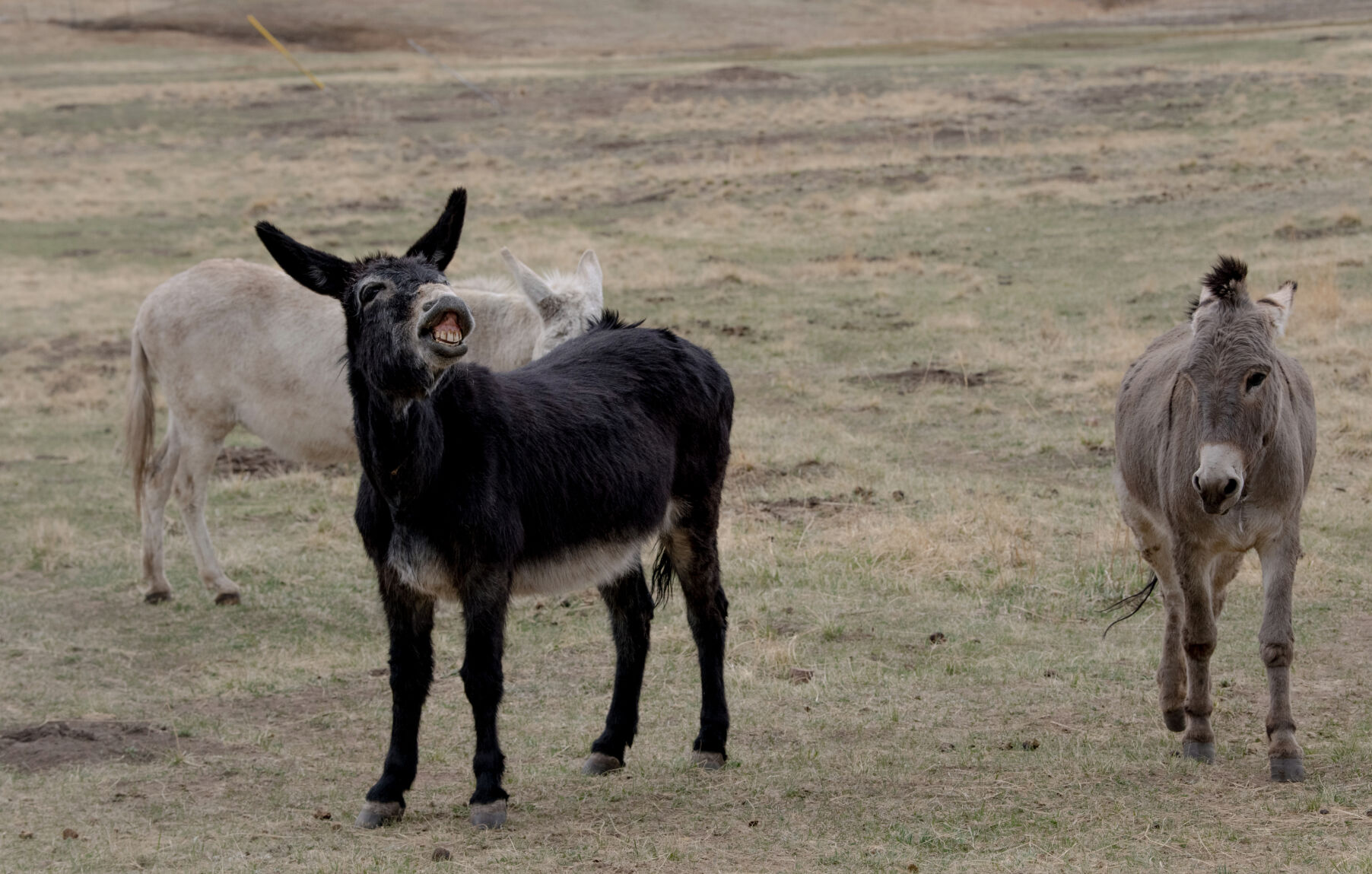
They’re the ones stopping traffic most every afternoon, causing families to rush out of their cars for photos. The herd’s alpha, Tarzan, has been known to stop traffic — “so the rest of ‘em can cross the street,” Green says.
Tarzan can be heard in the wee hours of day, hee-hawing the herd together. One or two are collared with trackers, in case anyone needs to go looking for them. “If we find one, we’re pretty much gonna find the others,” Green says.
By loyal nature, the donkeys stay together, and they don’t tend to stray far. They stick to the streets, where caretakers also patrol, handing out proper treats like oats and apples to tourists. The donkeys make rounds between houses, where they can count on more treats and water tubs kept full.
Locals try and often fail to protect their flowers and gardens. But there’s hardly a negative word about the four-legged neighbors.
“As far as everyone’s concerned, those are their donkeys,” Green says.
Everyone does their part to keep the animals alive and well. The club proudly reports most in the herd living close to 40, typically the oldest any donkey anywhere gets.
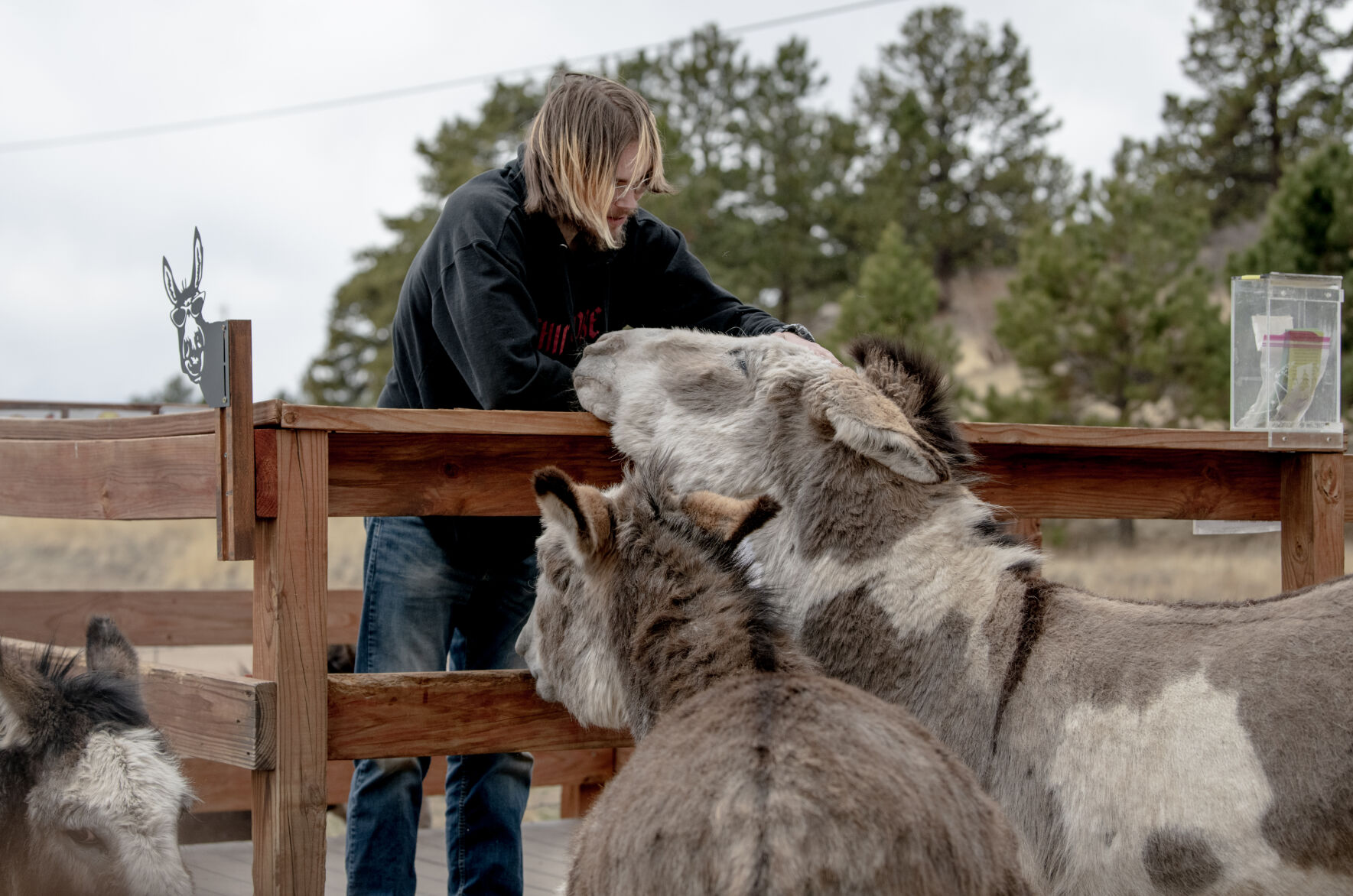
Time catches up to all. Due to age or medical reasons, a few of the current 15 will stay back in the pasture this summer. They can be visited from the feeding platform along the road.
It’s hard to let them go, like Jenny and Shamus not long ago.
“You get real attached,” Sorenson says.
It’s all too easy for Green, who can be seen out on the pasture in the harshest of elements. He recalls one particular winter day.
“There’s snow up to my damn butt,” Green says. “And all the sudden, this van pulls up to our feeding platform. There must’ve been 12 people come barreling out. Turns out they were from Belgium. They drove down here in the blizzard to come see the donkeys.”