Protecting history at Denver’s La Raza Park: ‘This story will continue to be told forever’
As the Denver city council voted unanimously to make La Raza Park the city’s third cultural historic district, emotion swept over Councilmember Amanda Sandoval.
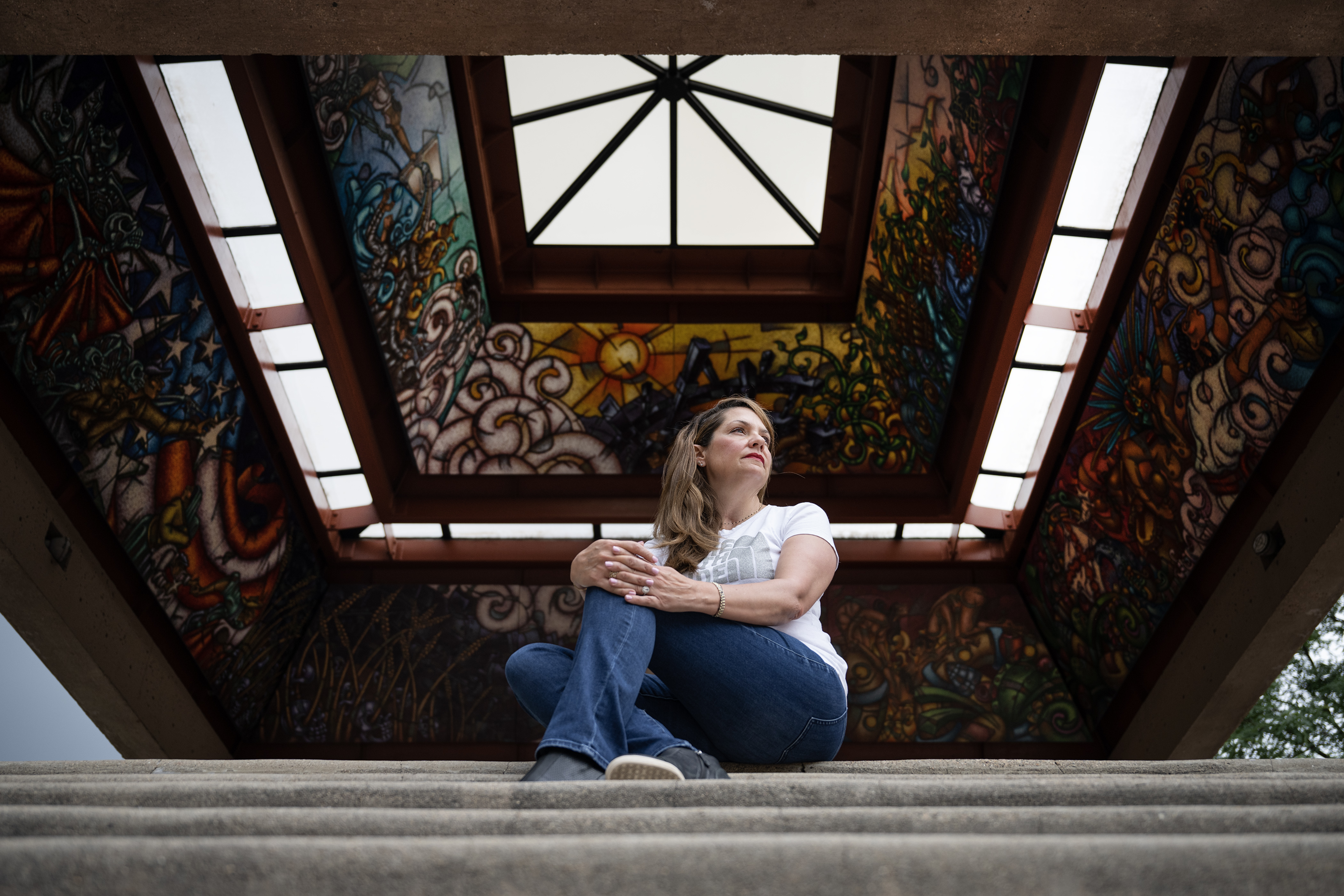
“I feel emotional now,” she said standing in the Sunnyside park several days after the vote, tears brimming her eyes.
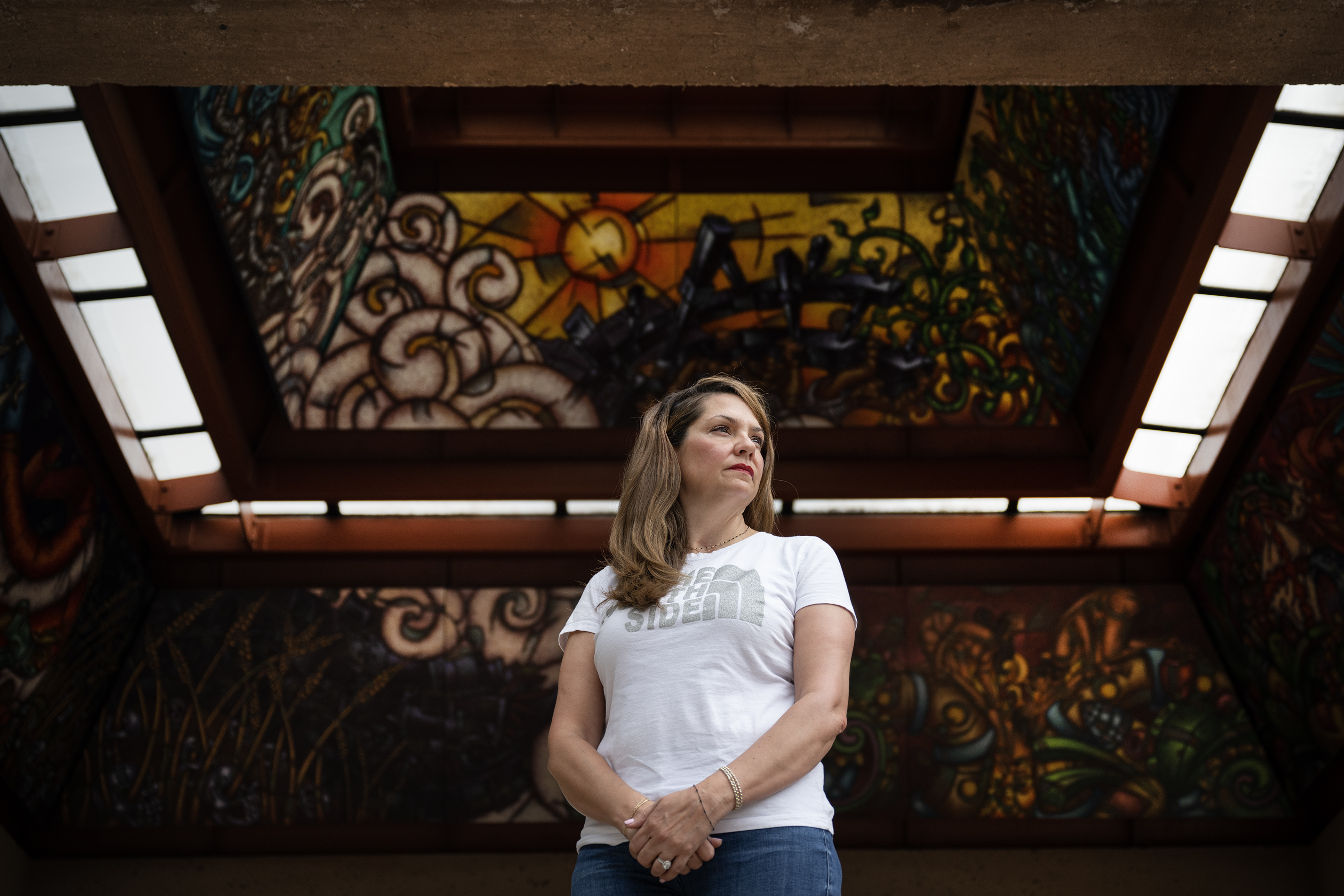
Towering behind her was the city’s only Kiosko, an iconic structure modeled after an Aztec pyramid, and one of the numerous aspects to La Raza that have made it a beloved gathering space for the Latino and Chicano community.
Sandoval was born and raised in the Northside. She grew up making tamales in her family’s restaurant, the daughter of a Latino father who taught her about his experiences being raised in east Denver, where he was forced to used “colored only” entrances and water fountains, told “to go to the back door” when selling newspapers, and shut out of Congress Park, which was a white-only pool at the time, Sandoval said.
“When I was growing up, I never thought I would be an elected official. I never thought I would be the one who was able to bring this forward for my community,” she said.
Sandoval also hadn’t predicted that as an elected official she would successfully lead a renaming effort of the park in 2020, stripping away the former title of “Columbus Park” that had held up a legacy of genocide and colonialism, and replacing it with “La Raza Park,” the name local community members had long known the park as informally.
The renaming was an important milestone in the park’s story but with the historic designation: La Raza’s history is not just being told, but being protected, Sandoval said. The decision will allow the city to use tax credits to repair and maintain its iconic fixtures and ensure they cannot be torn down, Sandoval said.
“For my community it means that this story will continue to be told forever. That no one is going to forget about it,” she said.
Before she took office, local residents had spent decades trying to convince Denver to rename the park. At the behest of Latino residents, Councilmember Debbie Ortega tried unsuccessfully to rename the site La Raza in 1988. The community waited another three decades — and more than five in total — to see the name changed through a proposal sponsored by Sandoval.
In roughly those same 50 years, Denver designated 360 individual landmarks and 58 historic districts. Among them, only 13% represented historically excluded communities.
“Our existing local landmarks tell a very narrow history of Denver, one which overrepresents upper-class white males,” city planner Becca Dierschow said in June while presenting to city councilmembers the application to make La Raza a cultural historic district.
One of the difficult aspects of compiling the history of La Raza came with finding past mainstream media coverage of the site, and how reports that did exist portrayed Latino community members in the 1950s and 1960s, Sandoval said.
“We were ‘agitators.’ We were ‘anarchists,’” Sandoval said, referencing how media described activists. What the Latino and Chicano community was actually doing was “fighting for our rights,” she said. At the heart of that movement was La Raza.
La Raza met the qualifications to become a cultural historic district on multiple fronts, Dierschow told councilmembers.
Spanning one block at the corner of Navajo Street and West 38th Avenue, the park is deeply tied to historic events and development in the city, Dierschow said — from its early days as a playground serving a thriving Italian community, to the crucial role it later played in the Chicano movement. La Raza remains an important site for contemporary celebrations and events as well.
The city acquired the land in 1906 and built a playground to serve what was then an Italian hub. The site was named Columbus Park in 1931 in honor of the Italian residents’ contributions to the community. A pool opened roughly a decade later.
Demographics shifted and the Latino community around La Raza grew between 1945 and 1990. La Raza served as “an incubator for Chicano and Latino culture,” the application said. The Chicano movement shaped the Northside significantly and encouraged the embracing of the Chicano identity amidst pressure to assimilate to “wider American culture,” according to the historic district application.
Members of the Chicano movement pushing for civil rights came to rely on the park as a gathering place. Marches and protests took place. Chicano youth staged “splash ins” at Denver pools, aiming to shine a light on disparities between facilities in white neighborhoods compared with those where people of color predominantly lived.
The Chicano community was able to persuade the city to turn over control of the La Raza pool to local residents in 1969 and 1970. The facility hired local community members to staff the pool, creating a “liberated” version of the park and a safe space for people of color.
But throughout the 1970s, “Denver police harassed Chicano youth and activists in La Raza, in the Northside, and throughout the city,” the application said.
In 1981, police violence marred a summer kickoff celebration at La Raza when officers unleashed tear gas and K-9 dogs on attendees, Dierschow said. Law enforcement claimed they were cracking down on an illegal gathering because organizers did not get a permit and alleged community members had thrown objects at them as they shut the celebration down. The city had never required a permit for the event before.
Within three years, the city would shutter and fill in the park’s pool.
The park’s evolution continued come 1990 with the dedication of the new Kiosko and plaza. Larger, more formal gatherings began to fill the park, including ceremonial danza, Dia de los Muertos memorials and a La Raza Park Day.
Long a home to murals by local Chicano artists, a new work in 2016 by muralist David Ocelotl Garcia filled the Kiosko’s ceiling.
In 2020 — amid nationwide reckonings following the murder of George Floyd at the hands of police, and local protests over the police killing of Elijah McClain in Aurora — Sandoval successfully led the renaming of La Raza, bringing to pass what Aztec dancers who came to the park annually in prayer had hoped for, she said.
In 2021 a rededication of the park included the installation of Emanuel Martinez’s sculpture, La Raza Unida, which honors people of diverse heritage, Sandoval said.
Speaking at the June city council meeting, resident Arturo Rodriguez wanted to thank the city council for helping him live out a lifelong dream, he said.
More than 50 years ago he helped organize Chicano youth and community members to advocate for their civil rights. He grew up half a block from La Raza, and seeing the cultural historic designation put in place was “a historical moment for me personally,” he said.
He also urged the city council to amend the historical account included within the application, saying it left out key moments in La Raza’s history.
That included the time period before 1931, when it was known as Navajo Park. The city acknowledged that Denver is on Indigenous land and should not omit that portion of La Raza’s history from the historic district materials, he said. He also asked for the historical account to correct its literal translation of “La Raza” to what the name stands for.
“La Raza means, ‘The People,’” he said.
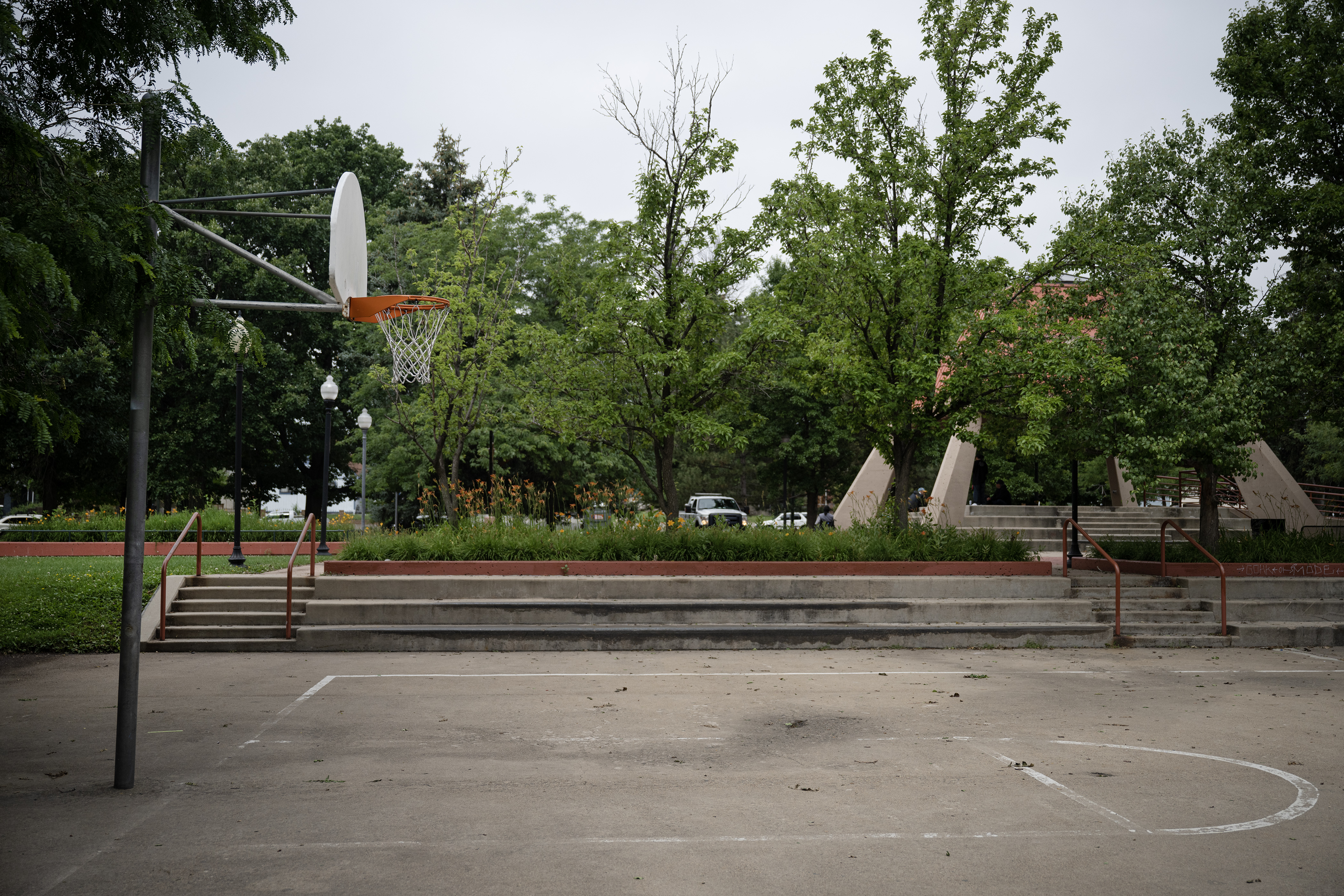
Coming up next, Sandoval will be helping oversee projects to replace and paint the park’s basketball courts. She also wants to find the funding to have Garcia cover the Kiosko’s pillars in artwork, so that the entire structure looks like a work of art.
Sandoval recalled a saying, “seven generations,” that she said inspires her public service. She is doing work on behalf of the seven generations that will come after her. The seven generations that came before her “opened the door to allow me to even be born and raised in my neighborhood” by enduring racial profiling, harassment and by praying for future generations, she said.
“I really feel that I am standing on the shoulders of the ancestors who have come before me and who have prayed for years,” she said.