







Arapahoe County expands housing opportunities, greenlighting ADUs

Photo courtesy of U.S. Modular Inc.
Arapahoe County is one of several counties in the metro area jumping on the latest trend and tool to increase housing availability.
On Wednesday, the county’s Board of Commissioners voted to approve accessory dwelling units (ADUs) in unincorporated areas of Arapahoe County. Commonly called “granny flats” or “mother-in-law apartments,” ADUs are smaller, independent living quarters either attached to a single-family home or located on the same lot as the main house.
According to the American Planning Association, the construction of ADUs and zoning reform, like the change approved in Arapahoe County, are a key “weapon” in increasing the affordability of residential neighborhoods in an effort to combat rising housing costs across the U.S.
“ADUs can help with affordability,” Arapahoe County Commissioner Jessica Campbell-Swanson said via press release. “We heard from residents across the county this is an option that residents have been waiting for.”
Responding to voiced concerns, Campbell-Swanson referred to a comparative analysis that showed ADUs do not reduce property values or overextend infrastructure capacity; based on the county’s requirements, these structures will maintain community characteristics.
Earlier this month in neighboring Denver, new rules also took effect regarding ADUs. After more than a year working with a community advisory committee, technical experts, neighborhood organizations, Denver City Council members, and the public worked to develop zoning code changes for accessory dwelling units (ADUs).
ADUs are currently allowed in portions of Denver (based on permitting and neighborhood zoning laws), Aurora, Bennett, Cherry Hills Village, Englewood, Littleton and Sheridan.
“These are going to be legitimate structures,” Campbell-Swanson added, citing the requirements the regulations have in place for design and size. “I don’t share the concern ADUs will stretch capacity or change the character of a neighborhood.”
Arapahoe County began exploring adding ADUs to the County Land Code in the fall of 2021 and has engaged residents throughout the regulatory process. Feedback from residents and stakeholders was presented to the County’s Planning Commission, who recommended ADUs be allowed only on lot sizes 19 acres and bigger.
Commissioners disagreed, citing an urgent need to allow the structures on smaller property sizes, down to 5,000 square feet. With the 19-acre recommendation, 977 lots within unincorporated Arapahoe County would have been eligible for an ADU compared to about 18,000 lots that meet the 5,000 feet requirement.
ADUs are often used as auxiliary housing for extended family members, or as rental units whether traditionally or on online platforms such as VRBO or AirBnb.
“We want all our neighbors to be comfortable,” Arapahoe County District 4 Commissioner Leslie Summey said. “It’s reassuring to know that the data on ADUs points to increased property values and positive outcomes for property owners and communities.”
The new ADU regulations encompass elements designed to ensure successful implementation:
- Arapahoe County will permit both attached and detached ADUs in all agricultural and most residential zoning districts on lots that are at least 5,000 square feet.
- In urban areas, on lots of less than 19 acres, ADUs can have up to two bedrooms. Detached ADUs are required to be situated in the rear or side yard, behind the principal dwelling.
- Square footage limitations will be based on lot size and/or the size of the principal dwelling.
- Minimum design requirements, off-street parking, and owner occupancy of either the principal dwelling or the ADU will also be mandatory.
- Exceptions to ADU location, square footage, and bedroom limitations will be granted for properties of 19 or more acres.
- Homeowner association-managed neighborhoods may prohibit ADUs through private covenants.
Arapahoe County’s new ADU regulations will go into effect on Sept. 12.


Denver area events for Feb. 11
Carlotta Olson
carlotta-olson@denvergazette.com
Updated 14 hours ago
If you have an event taking place in the Denver area, email information to carlotta.olson@gazette.com at least two weeks in advance. All events are listed in the calendar on space availability. Wednesday Downtown Denver Food Tour — 1-4 p.m., Denver, $63.60 and...

Carlotta Olson
Reporter

Briggeman | Air Force basketball overhauling its mindset, hoping the rest can follow
Brent Briggeman
brent-briggeman@denvergazette.com
Updated 5 hours ago
I’m not going to use this space to kick a program that’s down. No need to pile on. Scoreboards in Mountain West are telling that story with ample clarity. But it is important to zoom in for a look at...

Brent Briggeman
Reporter

Trump administration plans to hold back grant money from Colorado, 3 other states
Thelma Grimes
thelma.grimes@coloradopolitics.com
Updated 7 hours ago
The Trump’s administration is planning to withhold some public health and transportation money from a group of Democratic-led states, including Colorado. The other states are California, Illinois and Minnesota. Full details have not been released, including whether the states could...

Thelma Grimes
Reporter

Mark Kiszla: Free Bird! U.S. women flying high after 5-0 win over bitter hockey rival
Mark Kiszla mark.kiszla@denvergazette.com
mark.kiszla@denvergazette.com
Updated 7 hours ago
MILAN – Holy schnikes! Team USA knocked the ever-loving poutine out of Canada, eh? I went to the hockey version of a border war on Tuesday night, and a Lynyrd Skynyrd concert broke out. Free Bird! That’s the classic rock...

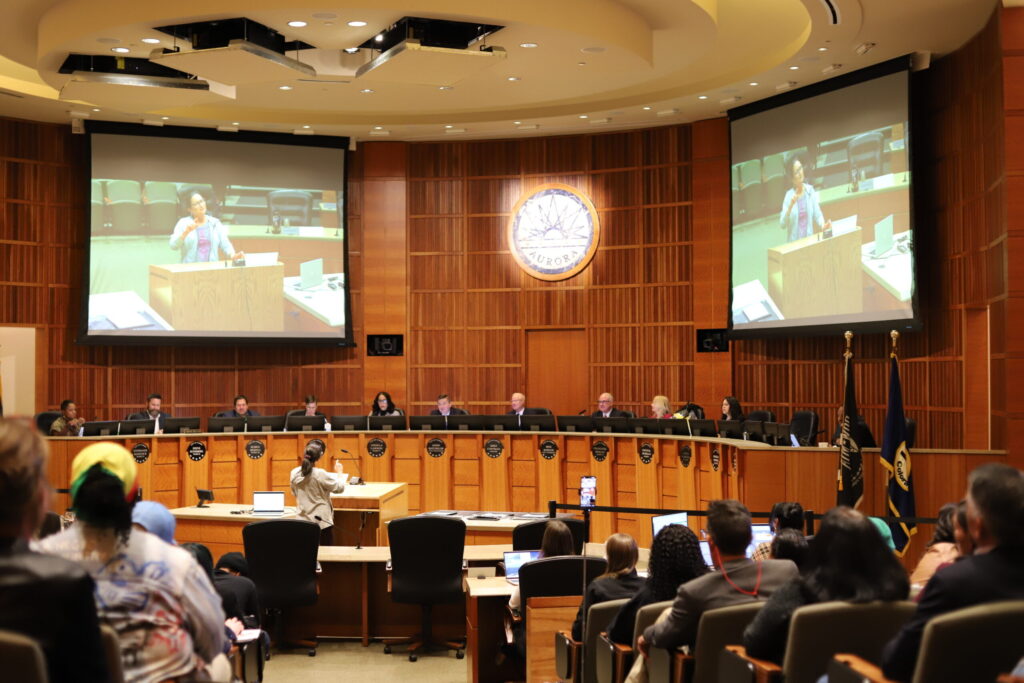
Aurora councilmembers discuss Regional Navigation Campus, ADA requirements
Kyla Pearce
kyla-pearce@denvergazette.com
Updated 9 hours ago
The Aurora City Council tackled several major city topics at a Saturday winter workshop, moving forward with ADA accessibility improvements for the council chambers, addressing concerns about the Regional Navigation Campus and debating a new impact fee for businesses. In...

Kyla Pearce
Reporter

Ranking the top 10 transfer portal additions for Deion Sanders, Colorado | Tyler’s take
Tyler King tyler.king@gazette.com
tyler.king@gazette.com
Updated 9 hours ago
The roster has been rebuilt. It’s a new-look group for Deion Sanders heading into his fourth season at Colorado, one filled with intrigue, especially as the Buffs look to get back to being a winning program following last season’s 3-9...

Tyler King tyler.king@gazette.com
Reporter

Christian Braun breaks down stop-and-start recovery from injury with Nuggets | NBA Insider
Vinny Benedetto
vinny-benedetto@denvergazette.com
Updated 10 hours ago
Denver Gazette beat writer Vinny Benedetto takes you around the NBA and inside the Nuggets locker room: NBA Insider Numbers never lie, but sometimes they mislead. Christian Braun in Monday’s loss to the Cavaliers scored more than 10 points for...

Vinny Benedetto
Reporter
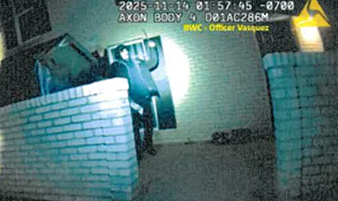
Denver police found justified in shooting of rod-wielding burglar
Michael Braithwaite
michael.braithwaite@gazette.com
Updated 11 hours ago
Two Denver police officers were found justified in the fatal November shooting of a burglar who approached them with a knife sharpening rod. Officers Michael Vasquez and Whaylen Phares were deemed to have acted in a proper manner in defending...

Michael Braithwaite
Reporter

Goldens take over Golden as annual tradition grows ever larger
Michael Braithwaite
michael.braithwaite@gazette.com
Updated 9 hours ago
It was a golden day for goldens to take to Golden’s streets in the golden foothills of the Front Range. Thousands of people, many leashed in tow behind their shaggy, yellow-haired and sociable retrievers, flooded the streets in the city’s...
Michael Braithwaite
Reporter

Colorado to Italy: Vail’s Elizabeth Lemley sits second after Olympic qualifying in moguls
Brent Briggeman
brent-briggeman@denvergazette.com
Updated 12 hours ago
Tracking Coloradans competing in the Olympic Winter Games Vail’s Elizabeth Lemley ranked second in qualifying in the women’s freestyle skiing moguls on Tuesday morning. The 20-year-old posted a qualification score of 80.95, behind only Austria’s Jakara Anthony (81.65). The second...
Brent Briggeman
Reporter