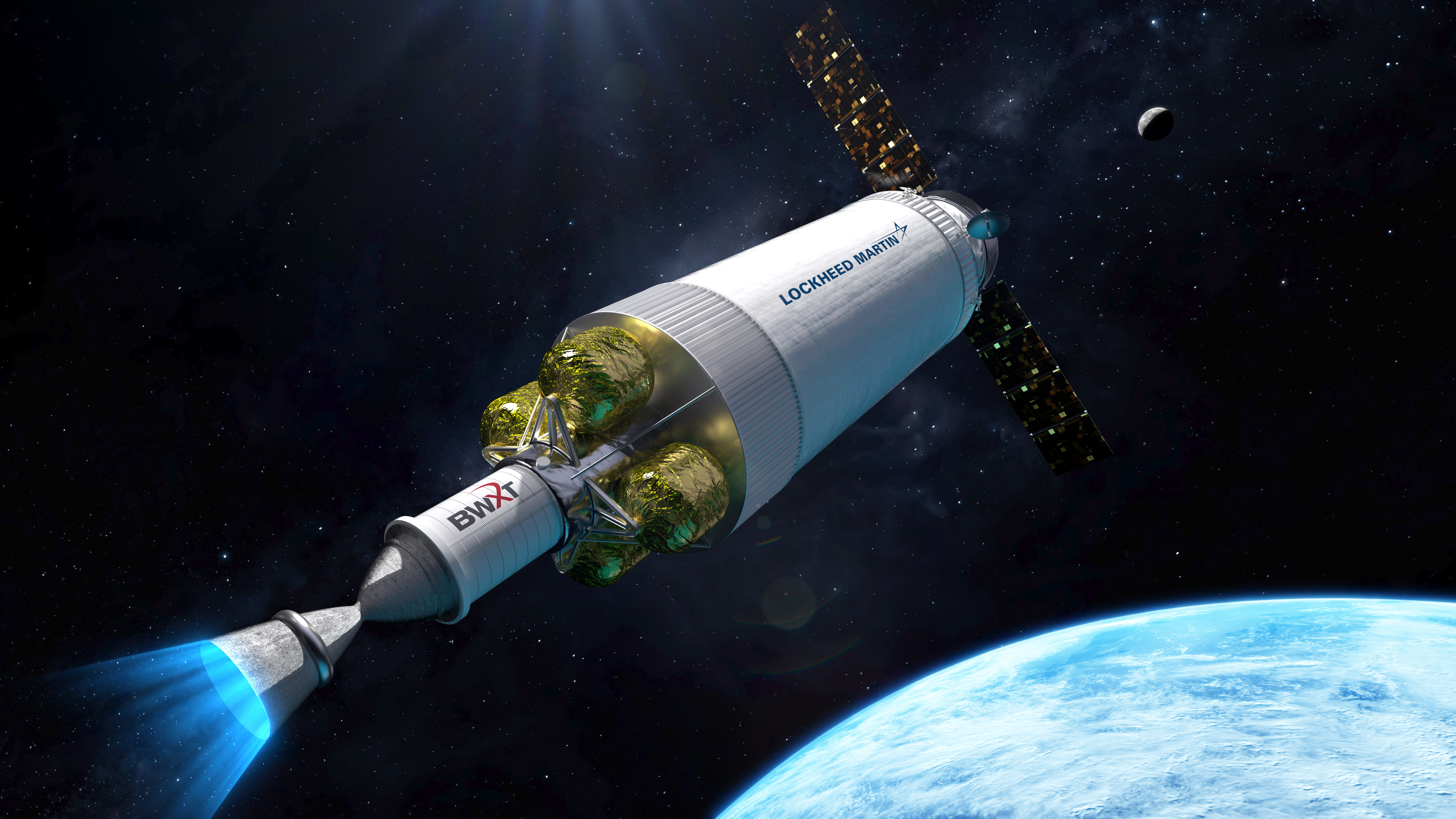
Denver’s Lockheed Martin to build nuclear reactor engine for spacecraft
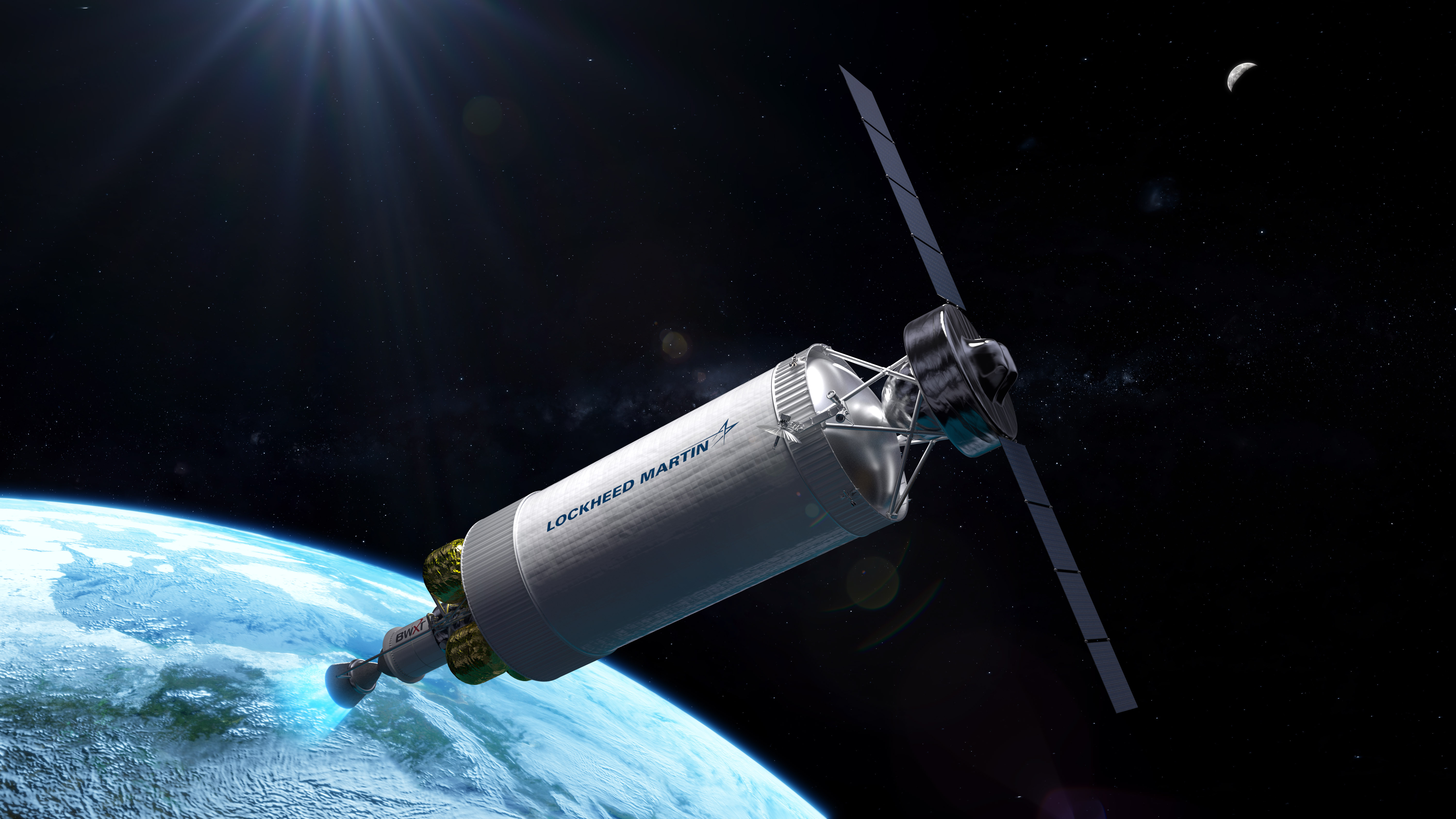
Denver’s Lockheed Martin Aerospace will be developing and building a fission-powered nuclear engine for spacecraft, according to the Defense Advanced Research Projects Agency.
The research agency recently announced the $499 million contract with the company to build the DRACO experimental nuclear thermal rocket (NTR) testbed.
The project’s goal is to design a space propulsion engine that ejects reaction mass, in this case pure hydrogen, out of the engine at tremendously high speed. The small reactor would heat hydrogen stored in a liquid state at minus 424 degrees Fahrenheit to more than 4,400 degrees in less than a second, producing a thrust equivalent to current chemical engines, while using much less of the limited fuel.
“The DRACO program aims to give the nation leap-ahead propulsion capability,” said Dr. Tabitha Dodson, program manager for the effort. “An NTR achieves high thrust similar to in-space chemical propulsion but is two-to-three-times more efficient. With a successful demonstration, we could significantly advance humanity’s means for going faster and farther in space and pave the way for the future deployment for all fission-based nuclear space technologies.”
The spacecraft development will happen at Lockheed Martin’s Waterton facility in Littleton. The nuclear reactor and fuel development will be done by BWX Technologies in Lynchburg, Virginia. The spacecraft and the reactor will be integrated at the Cape Canaveral in Florida just before launch from Florida.
“Nuclear thermal propulsion is an important technology if we’re talking space exploration,” said Dr. Jeffrey King, a professor of nuclear engineering at the Colorado School of Mines in an interview with The Denver Gazette. “If we’re going to get serious about doing anything other than puttering around in near earth orbit, we’ve got to have new propulsion technologies. Or if we’re talking a manned mission to Mars, nuclear propulsion technology is absolutely essential to getting there. And, so, to see us getting serious about it again for the first time in a while is really, really exciting.”
King said the reactor technology is very similar to the small modular reactors that have been used in naval vessels for nearly 70 years without a single nuclear accident.
“The United States is a dominant power in the world because of our nuclear technologies in aircraft and submarines,” King said. “And I think that’s some of what the vision is — some of what’s driving this push now to be the first and to get there. It saddens me a little that it has to be on the backs of war fighting. I wish we did it for purely exploration and reasons, but the reality is the exploration will benefit from it.”
Safety has been one of the major roadblocks to the use of nuclear power in space, having mostly to do with fears of a launch accident spreading toxic radiation far and wide.
Both King and Dodson agree that the risk to the public even in the case of a catastrophic launch failure are negligible.
“DRACO has already done all of our preliminary analyses across the entire spectrum of possibilities for accidents and found that we’re all the way down in the low probability and all the way down in the teeny tiny amount of (possible) release,” Dodson said in a press briefing Wednesday. “For instance, we are never turning on the reactor on the ground. Therefore, transportation and launch site operations are all greatly simplified because a reactor that has never been turned on is cold and benign. You can put your hand right inside the core and touch the fuel like you would any other heavy metal.”
The uranium fuel used in the DRACO reactor is ordinary uranium, which in its natural state contains only 0.3% U235, the fissile isotope of uranium. For this project, natural uranium is enriched to 20% U235, called “HALEU” or High Enriched Low Assay Uranium, which is used in both military vessel reactors and in some nuclear power plants.
But it’s still safe to handle so long as it hasn’t been turned on. It is the process of fission that knocks U235 atoms around and breaks them into different isotopes, some of which are extremely dangerous. At 20% enrichment, it is impossible for a nuclear explosion to occur. Nuclear weapons-grade materials must be 99% or better pure.
“The topic of radiation safety is both complicated and emotional,” King said. “Radiation is a part of our lives. We’re continuously exposed to radiation, particularly in Colorado. There’s cosmic rays, there’s radon from the radium and uranium in the ground. There’s natural sources of radiation. Plus, there are all the manmade beneficial uses. The one that I think most people are most familiar with is x-ray technology that is absolutely an essential technology for health and safety.”
By not turning on the reactor until it’s in an orbit somewhere between 436 and 1,243 miles (2,000 km) above the earth — far enough out that the orbital decay rate that might bring radioactive materials back to earth would be 300 to 30,000 years, Dodson said — the risk is “enormously tiny.” Further, the test is being designed to turn the reactor on to generate thrust for only about 800 seconds.
King also spoke about the local economic and educational benefits of the Lockheed Martin programs. The Colorado School of Mines is trying to put together a graduate certificate program in space nuclear technologies.
“We hope to be one of the first schools in the nation to do that,” King said. “We’ve gotten the go-ahead from some administration to do it. I am tentatively hoping that we will announce the initial graduate certificate program and maybe start taking applicants in January. We’re well poised to be a player in that. It’s an exciting technology. It’s something I’ve been involved with for a couple decades now actually. It’s what got me into nuclear energy.”
Denver has the largest aerospace presence of any city west of the Mississippi, he said.
“We also have one of the first space resources programs in the nation degree programs. So that positions us very well to play an educational part,” said King. “And a big piece of this is that if we really start getting serious about these technologies, we need a workforce. And there’s not a good pipeline right now for that workforce. And, so, that’s where Colorado School of Mines has the opportunity to play.”
Lockheed Martin has nearly 11,000 employees in the Denver area and some 9,500 employees in its Denver space division.