Colorado Crops: Worms pose bitter problems for Olathe sweet corn harvest
Sweet corn farms in Olathe are facing a slew of bitter problems as a rise in crop pests has drastically impacted this year’s harvest.
An infestation of helicoverpa zea — better known to the public as the corn earworm, has plagued this season’s sweet corn crop, causing a significant decrease in production.
Consuming a wide variety of crops across the county, the larvae are considered to be one of the costliest crop pests in North America.
Earworm moths typically migrate up from the south and lay the eggs on the silk of the corn, the larvae feeding off the tip of the corn ear and working their way down the vegetable once hatched.
Palisade peaches: Abundant harvest expected despite delayed start
The increase in worms and unseasonal weather seen through spring and early summer, coupled with the rising inflation and labor costs farmers, like John Harold with Tuxedo Corn Co., have been forced to confront what he calls an “imminent crisis.”
“It’s terrible,” Harold said, “The speed of which we can harvest along with the influx of moths have created huge problems in the field.”
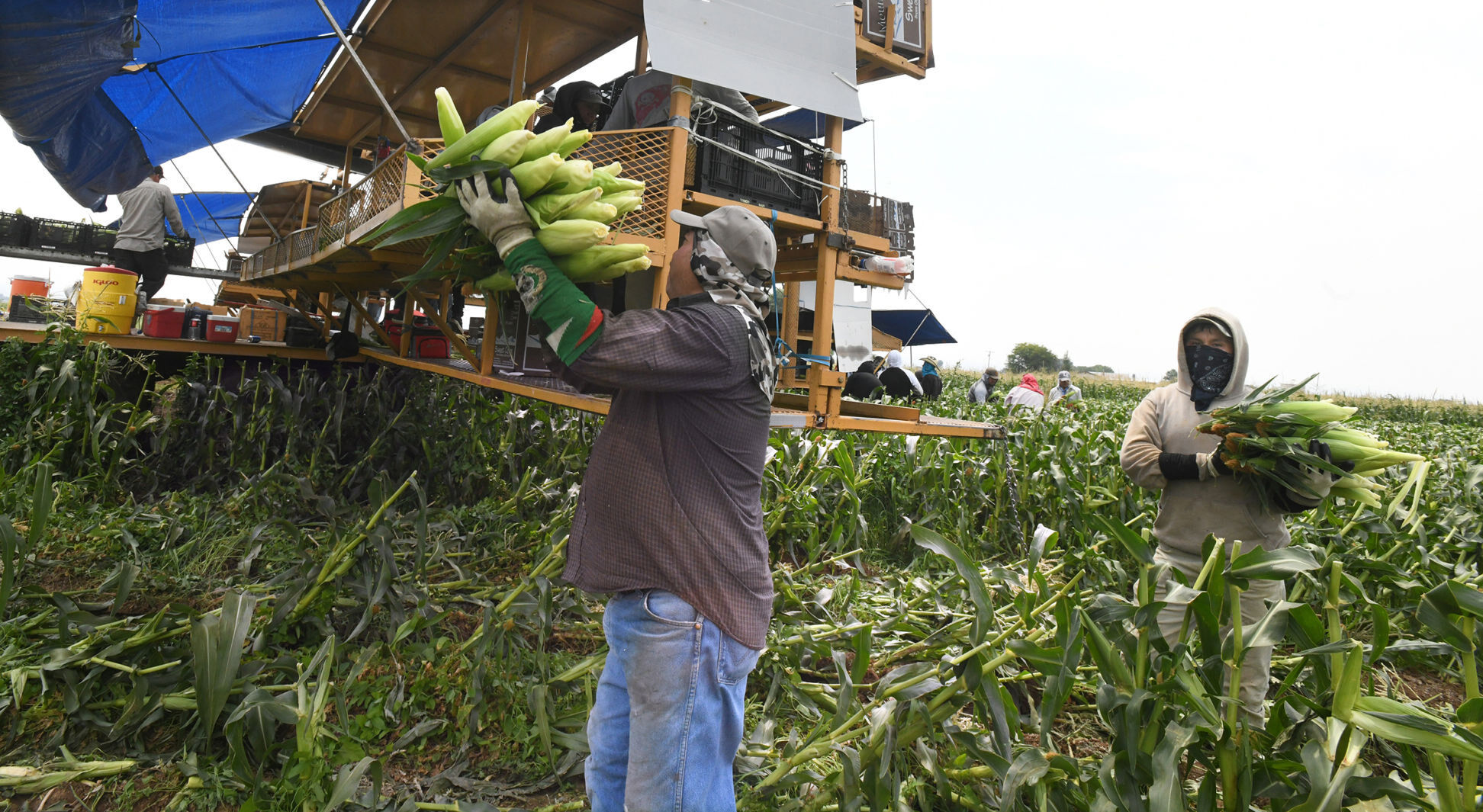
Citing at least a 30% decrease in harvest compared to years past, Harold said it’s not the quality of the corn holding back production, it’s the costs associated with an increase of labor required to harvest the affected field. Unlike most mass-produced crops in the state, Olathe sweet corn’s delicate nature requires the vegetable to be handpicked. The presence of the pests has just contributed to make the already taxing and laborious process even longer.
“We can sell everything we harvest,” Harold said, “Not every ear is affected, we have to pre-inspect the corn rather than harvest, then inspect it.”
“The difficulty becomes the cost increase associated with added labor. In the latter part of this week, we couldn’t harvest all the corn due to timeliness.”
Currently amid his 39th harvest season since starting the farm back in 1986, Harold claims to have “never seen anything like this” throughout the duration of his corn farming career, speculating this season’s influx of pests to be a product of a changing climate.
“From my perspective, I think it’s a direct result of climate change creating dramatically different temperatures throughout the season, making the bugs more active, tough, and procreating at higher numbers,” Harold said, and Colorado Department of Agriculture Commissioner Kate Greenberg agrees.
“Certainly, with climate change were anticipating that pest pressure will become more intensive and more frequent,” Greenberg said. “From what we’ve gathered, lots of precipitation and winds from the southwest blowing and spreading the eggs further have seemed to attribute to the increase in earworms.”
Additionally, Greenberg pointed to a lack in spring frost to have further contributed to the infestation.
“While earworms are a pest we’ve seen in the past, this year we’re facing an immense outbreak.”
The CDA, along with researchers with Colorado State University, say they are actively working on a plan of action to combat the pests in hopes of eradicating the outbreak next season, including looking at different chemical applications, and marketing strategies to assist in production, and establishing trust with buyers.
“We (the CDA) oversee the Pesticide Act, so if there’s a chemical application proven to be suitable in combating earworms, we can get that quickly approved,” Greenberg said.
In terms of marketing, Greenberg added that it’s about getting the message out about the earworms to promote an understanding of the situation between farmers and consumers; although the earworms alter the corn’s appearance, they do not impact the quality or taste.
“We don’t need all of our food to look perfect all of the time,” Greenberg said. “With some ears, you can see some damage, but it’s still the same beautiful, sweet and delicious Olathe sweet corn.”
Michael Munson, owner of Munson Farms in Boulder, said the colder start to the season has posed more problems for his corn crop than he’s seen with this year’s earworm infestation.
“Our June was 5 degrees cooler on average, so everything is a week to two weeks behind,” Munson said.
Colorado’s iconic foods, from slopper to harvest
According to Munson, his corn crop was only slightly affected by the high presence of earworms, thanks to a new pesticide he’s experimented with in this year’s crop.
“Because of the wet weather at the beginning of the season, some farmers weren’t able to spray for pesticide,” Munson said,
“We use an organic spray that’s about 85% effective, so we’ve lost around 15% of this year’s crop to the worms.”
Munson said that since his farm strictly sells locally, business hasn’t been as negatively impacted as farms who rely heavily on wholesale.
“With earworms, it’s usually just the first 2 inches of the corn ear that’s affected. It doesn’t look good, but it won’t taste any different,” Munson said, “With a bit of explanation, people tend to understand.”
“Big-box grocery stores like Whole Foods and Kroger want zero damage in their corn since it really upsets the customer,” Munson said. “From my understanding, stores will reject a full shipment if there’s one affected ear. This year, they might be a bit more tolerant.”
In looking ahead at this season, and next spring, as well, Munson, Greenberg, and Harold carry feelings of uncertainty toward the future of corn farming in Colorado.
“With as much money as I’m going to lose this year, I’m looking to solve the problem. And if we can’t, I don’t plan on going into it (the corn season) blindly,” Harold said, “I’m optimistic in a sense that we can fix it, but it’s serious — we’ve never seen anything like this before.”
Following this harvest season, Greenberg expects research from CSU to accelerate, with hopes of providing farmers with tools to assist in problems — like the earworms — to be faced in future corn seasons.
“We want the sweet corn to be produced in Olathe for as long as it possibly can,” Greenberg said, “Further research following this tougher season will help us learn what tools we can provide farmers with going forward.”