988 crisis line looks to empower others through awareness and care
A call taker walks through the day-to-day, future of 988

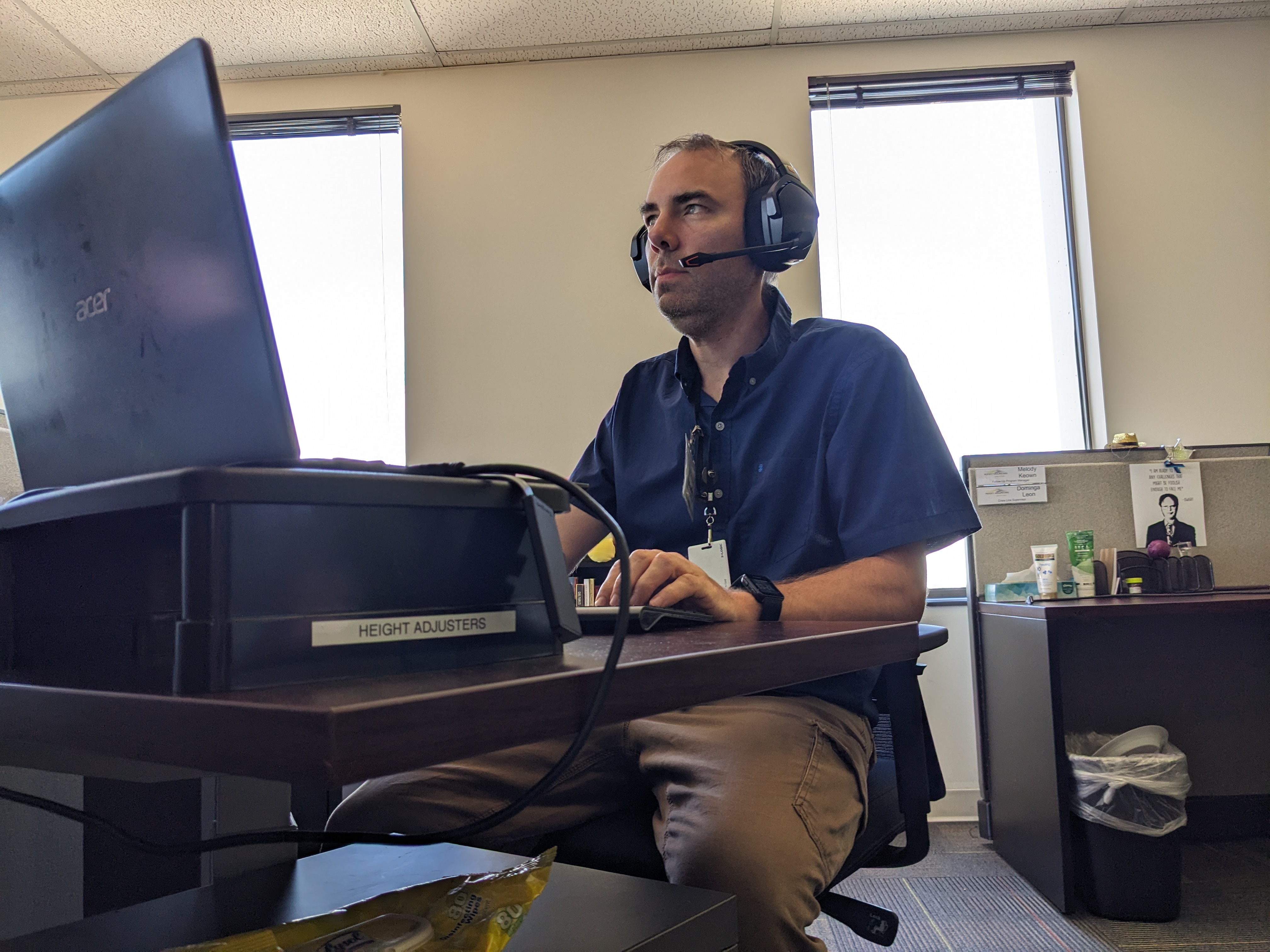
Crisis specialist Erik Jacobsen sits in a cool, dark office. Despite a list of incoming calls projected on the wall, the aura remains calm, ready to counteract the high stress ahead.
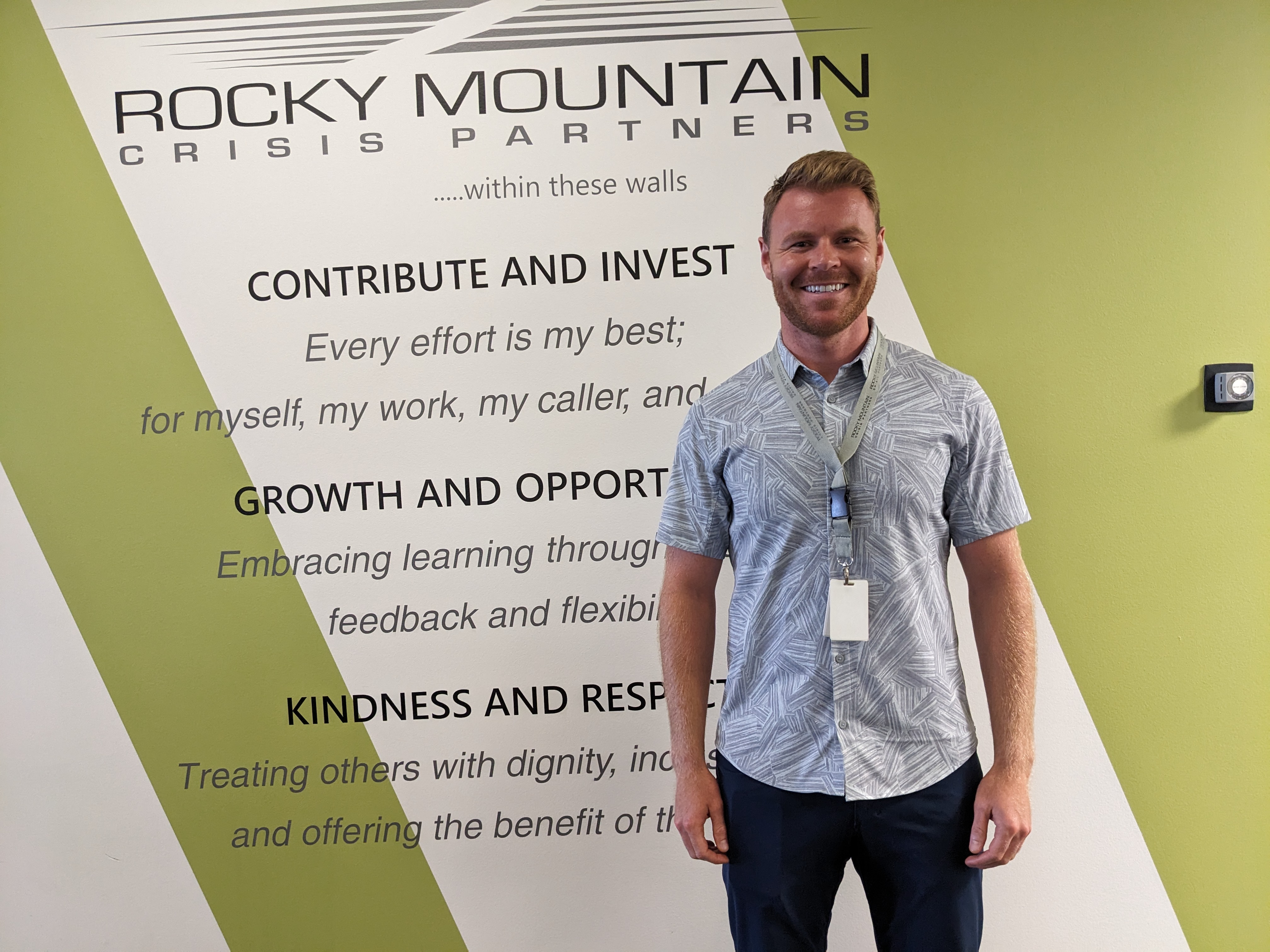
Jacobsen works for Rocky Mountain Crisis Partners, the call center appointed as Colorado’s 988 suicide and crisis hotline. He spends his time speaking to those going through mental health emergencies.
To Jacobsen, his work provides an opportunity to change the world. To change the trajectory of someone’s life.
“You hear about that hero who runs into a burning building to save someone. I want to be that person,” he said. “With the crisis hotline, you are given the opportunity to walk into someone else’s burning building.”
He is one of hundreds of 988 crisis specialists who deal with mental health and suicide calls, sharing an overall sentiment of helping others through tribulations — the ongoing mission of 988 in general. But if 988 is to help lower the alarming rate of mental health crises in the state, it will require both stellar specialists and community outreach.
The 988 lifeline went live in July of 2022, providing both phone and text support for individuals experiencing a mental health crisis. The 911-like system was federally mandated by the National Suicide Hotline Designation Act of 2020. Each state has a call center that puts callers in contact with live specialists, combining the National Suicide Prevention Hotline and Veterans Crisis Line under a 3-digit alias.
Through the first year of operation, 988 saw significant improvements in the operation of crisis lines. Nationally, the line received more than five million contacts, ranging from calls to texts and chats, over the first year. National answer rates saw a spike from 70% of calls answered in May 2022 to 93% in the same month the next year, according to the KFF health policy research group.
Mental health advocates say those improvements are needed.
A concerning trend
“As a nation, we are in a vast public health crisis when it comes to mental health,” Vincent Atchity, president and CEO of Mental Health Colorado, said in a 988 review by The Association of Health Care Journalists. “There’s a pediatric state of emergency when it comes to mental health.”
There were 49,449 suicide deaths in the United States in 2022, increasing 2.6% from the previous year, according to the U.S. Centers for Disease Control and Prevention.
Colorado came in as the sixth-highest suicide rate in the country in 2022, reaching 1,384 deaths — a trend that’s persisted for a decade. Since 2014, Colorado has been in the top 10 states for highest suicide rates every year except 2017.
Suicide rates amongst older teens did drop in 2022, according to an annual Kids Count in Colorado report. Fifty-six people between 15 and 19 died in 2022, a 32% drop from the 83 in 2020.
The rest of the rates were level. A bleak plateau.
Seventeen Colorado children between 10 and 14 committed suicide in 2022, according to the report. The same number as the year before.
Jacobsen recalls a conversation with a 7-year-old in his first crisis hotline role in Boston. The child had called with a bottle of pills in their hand, threatening to take their own life. A life yet lived.
“At 7, you don’t really have a developed brain. So, when things went bad, they went straight to this. I’m upset. I’m going to die.” Jacobsen said. He spoke with the child for around 30 minutes. Eventually, they were willing to put the pills down and walk away from the possibility.
The kid called back days later to thank Jacobsen for saving his life. Jacobsen didn’t know how to feel.
“If I were to die tomorrow, I made a difference in the world. I’m so proud of that,” Jacobsen said.
It’s the accessibility mission of the 988 hotline, along with the specialists that help it run, that may be able to cause a downturn in the concerning suicide statistics.
On the frontline
“I almost view this job as a professional athlete. A mental athlete,” Jacobsen said. “I have to show up ready.”
Seeing the rising numbers in mental health crises and the weight placed upon a single-center service like the 988 initiative can make a hard job even harder.
Jacobsen notes the job gets easier through practice, though. Rocky Mountain provides a four-week training program that includes two weeks of mock calls and two weeks of being shadowed by a supervisor.
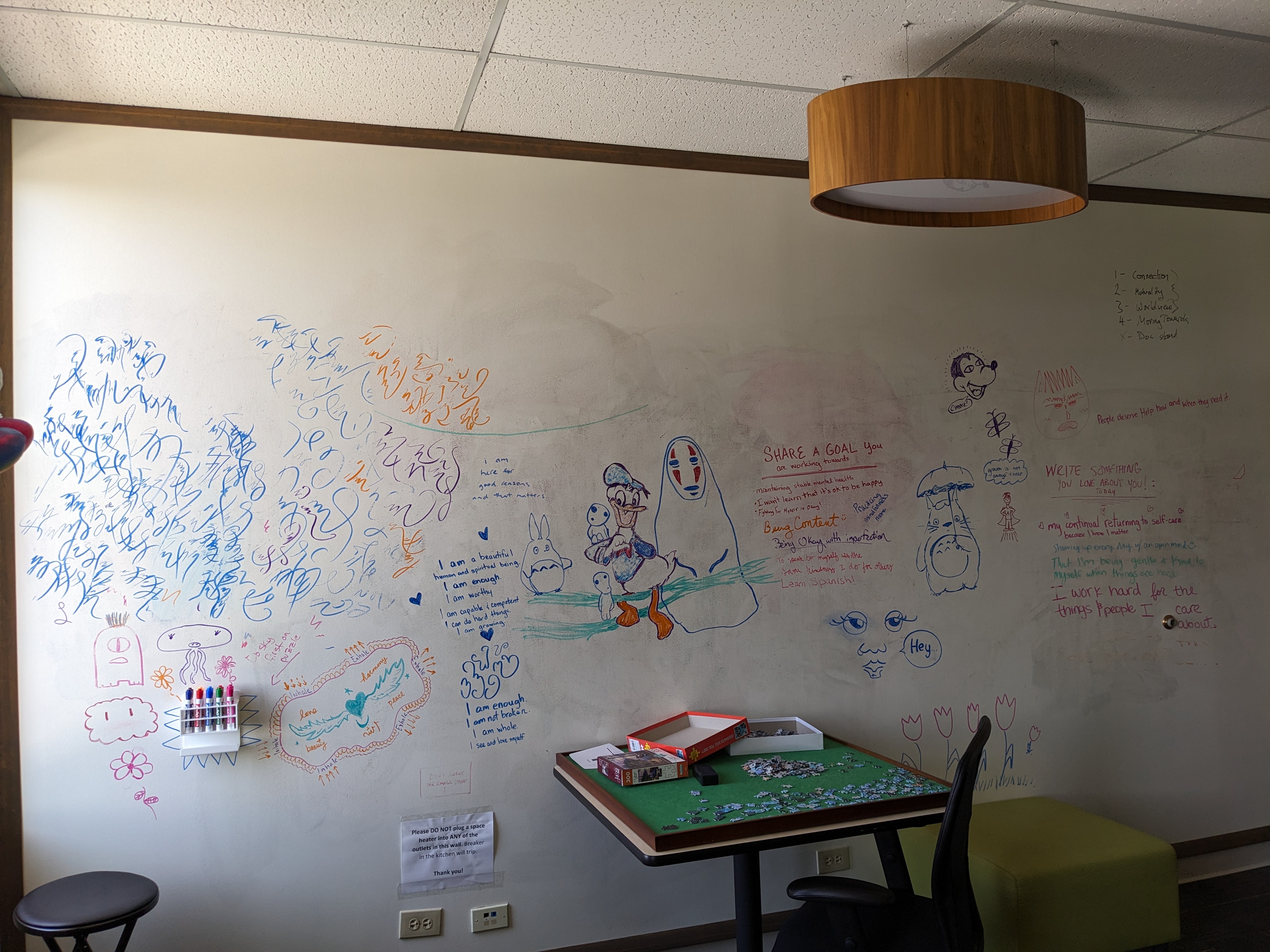
The job also includes heightened attention to employee mental health with bi-monthly supervisor check-ins, mental health days and constant communication.
While a rough outline is provided of how calls should be handled, it’s almost impossible to script. Jacobsen notes the main idea is to define the crisis and then provide the caller with the strength to get through it themselves. Suggestions and demands are never made.
“I am not here to tell you how to live your life. I’m not here to give you advice. I’m not here to problem solve,” Jacobsen said. “We try to support and empower the callers to solve their problems, so they are the agent of change.”
According to Jacobsen, this may be an act of listening, or pointing out little things that remind the caller of their connection to the world. He points to a story of an older person calling in, contemplating suicide. After the caller mentioned their plants, Jacobsen asked who would water the plants if the caller was gone.
That was enough to turn the tide.
“Sometimes it’s just a sliver, like a dog or plant,” Jacobsen said. “I’m going to try to find where the hope is in your life.”
But will the 988 hotline help?
The idea of 988 is to bring mental health issues to the forefront, with easy access to immediate and long-term care. Jacobsen and his coworkers are champions of that, providing open minds and eager ears to anyone who calls. But the impact of the accessible hotline on mental health crisis rates has yet to be seen.
Kelly Bowman, manager of 988 Enterprise at the Colorado Behavioral Health Administration, said the next hurdle is finding a way to get the community to know the service is available. The Substance Abuse and Mental Health Services Administration, the entity behind the national 988 hotline, said that awareness is the main initiative for their second year.
“Only around 13% of people know that 988 exists,” Heather Saunders, a postdoctoral fellow at KFF, said during the 988 review.
The next year is about telling people what’s going on at 988 and how it can help, Bowman added.
“We have to increase how we tell folks that this is not just a suicide prevention line,” Bowman said. “We want you to call. If it’s 2 a.m. and you’re on your hamster wheel of doom, we’ve all been there. You don’t have to do that alone.”
It’s not 911
Though a similar number, the objective of 988 is not the same as 911, a confusion that Jacobsen notes as common. 988 is there to help people through mental crises and provide resources, not dispatch police or ambulances.
If a caller is considered an immediate danger to themselves during a 988 call, they will be connected to a 911 dispatcher.
Bowman said that when a caller is considered an extreme danger, the call center must take matters to other professionals.
“Our skillset only goes so far in those moments,” Bowman said. “If it is a suicide in progress, we need to get someone immediately.”
She stresses that the stigma of purpose needs to be broken. Though 988 specialists, like Jacobsen, are there to talk with callers, not command outside emergency services. Even if they put a caller through to 911, they still have to alert the caller that it’s happening and ask them if they would be willing to provide information. 988 does not have caller information and location. They cannot give the police a caller’s personal info.
Bowman notes that 0.3% of the Colorado 988 contacts over the past year ended with a referral to 911.
Off the frontline
Jacobsen knows that it’s all a lot of pressure. He sees the suicide numbers rising.
He works hard not to take it all home. He notes that bringing your calls to your outside life can bring a mountain of stress.
He spends his off time recuperating his mind through outdoor activities like hiking and eating right.
“I feel fulfilled and like I’m making a difference, so outside of work, I feel good about myself… There’s no friction with my existence so I’m able to enjoy the things I do outside,” Jacobsen said.
He notes that the job isn’t for everyone. Some may not be able to separate the work from home life, getting into a downward spiral of negativity.
This mental separation doesn’t mean that Jacobsen or any other call specialists don’t care or take each call seriously. If someone is reaching out to a crisis line in the first place, at least a “part of their being wants help.”
It’s his job to help the caller realize that.
“It’s my process to show up and to do my best and to trust my judgment and my coworkers,” Jacobson said. “People are still going to die by suicide. I have to be okay with that. But, any person I interact with, I am going to give them 100% of my best to prevent that.”