People flock to remote village in the Philippines to be tattooed by world’s oldest tattoo artist

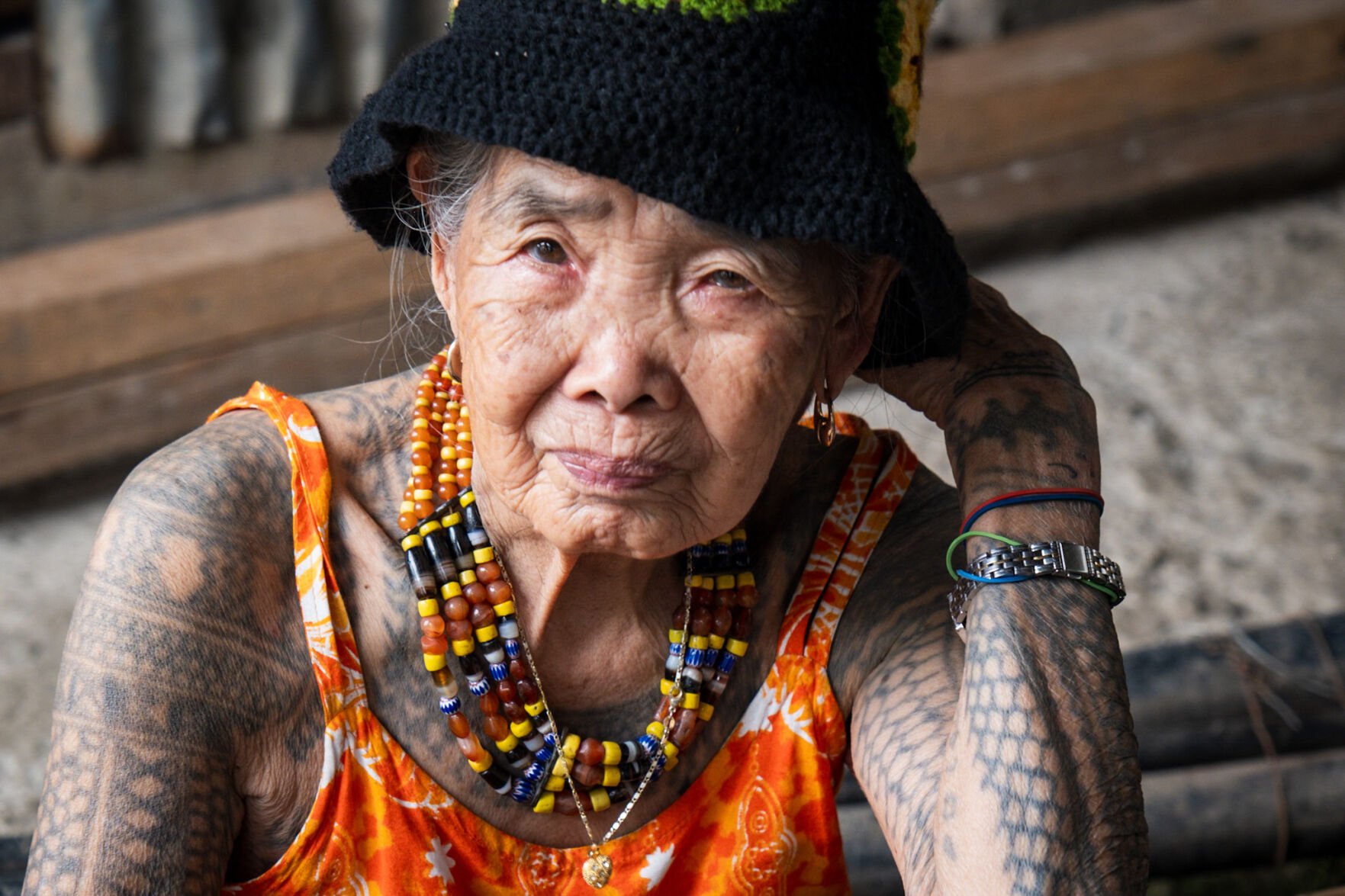
BUSCALAN, PHILIPPINES • Whang-Od, 107, has witnessed more than a century of change in her remote village in the Philippine northern hills. But the greatest changes have come because of her, the world’s oldest tattoo artist.
This tiny woman inked from neck to ankle in intricate traditional patterns has quietly worked to preserve and share her tribe’s culture through hand-tapped tattoos, bringing thousands of tattourists to the village each year.
Whang-Od is the Butbut tribe’s first female tattoo artist and for decades bore the weight of being the last, the sole steward of the tribe’s tradition of marking rites of passage or valor with centuries-old designs. But in the past 15 years, she has taught her grandnieces the sacred art. Together they inspired a new generation of mambabatok, or tattoo artists, mostly young women who are transforming the ritual that was once a male domain.
9 best tattoo shops in Colorado Springs
A 2007 documentary about Whang-Od brought the village global recognition, opportunities and sometimes controversy. People worldwide flocked to the village to be tattooed by the oldest practicing artist. For some, it is the ultimate souvenir of a journey; others are driven by a yearning to be linked by ink to something greater.
“I think people come because they are curious about this old lady who still gives tattoos,” Whang-Od laughed as her young relative translated. “They are curious about my age. They look at me and my body and say, ‘107? Really? She can’t be that old.’”
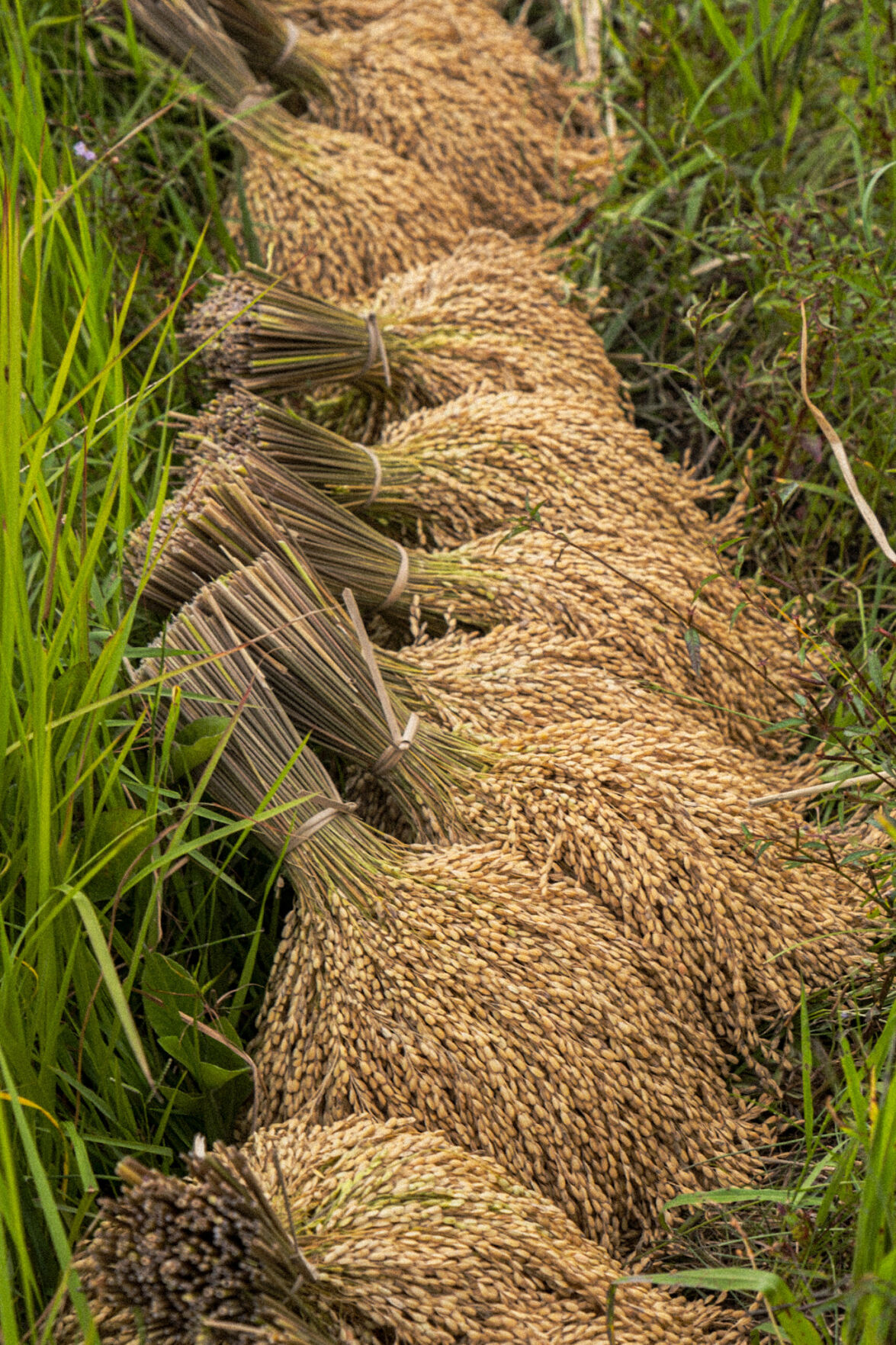
Her bright eyes and high cheekbones make her look decades younger, and she still treks across the ravine to neighboring villages and takes her turn working in the rice fields. It is not uncommon in Buscalan to live beyond 100. She’s not even the oldest person in the village. One woman is 110, and another is 104.
But it is more than curiosity that has drawn thousands of visitors to this remote mountain village.
“I think they find a connection here. They want to be part of this,” she said, pointing to the symbols of protection and beauty snaking down her arms. “They want to be part of a legacy.”
A July typhoon brought landslides that blocked the roads and knocked out electricity, plunging the village back to the time before its new prosperity brought satellite dishes, Wi-Fi and a few washing machines.
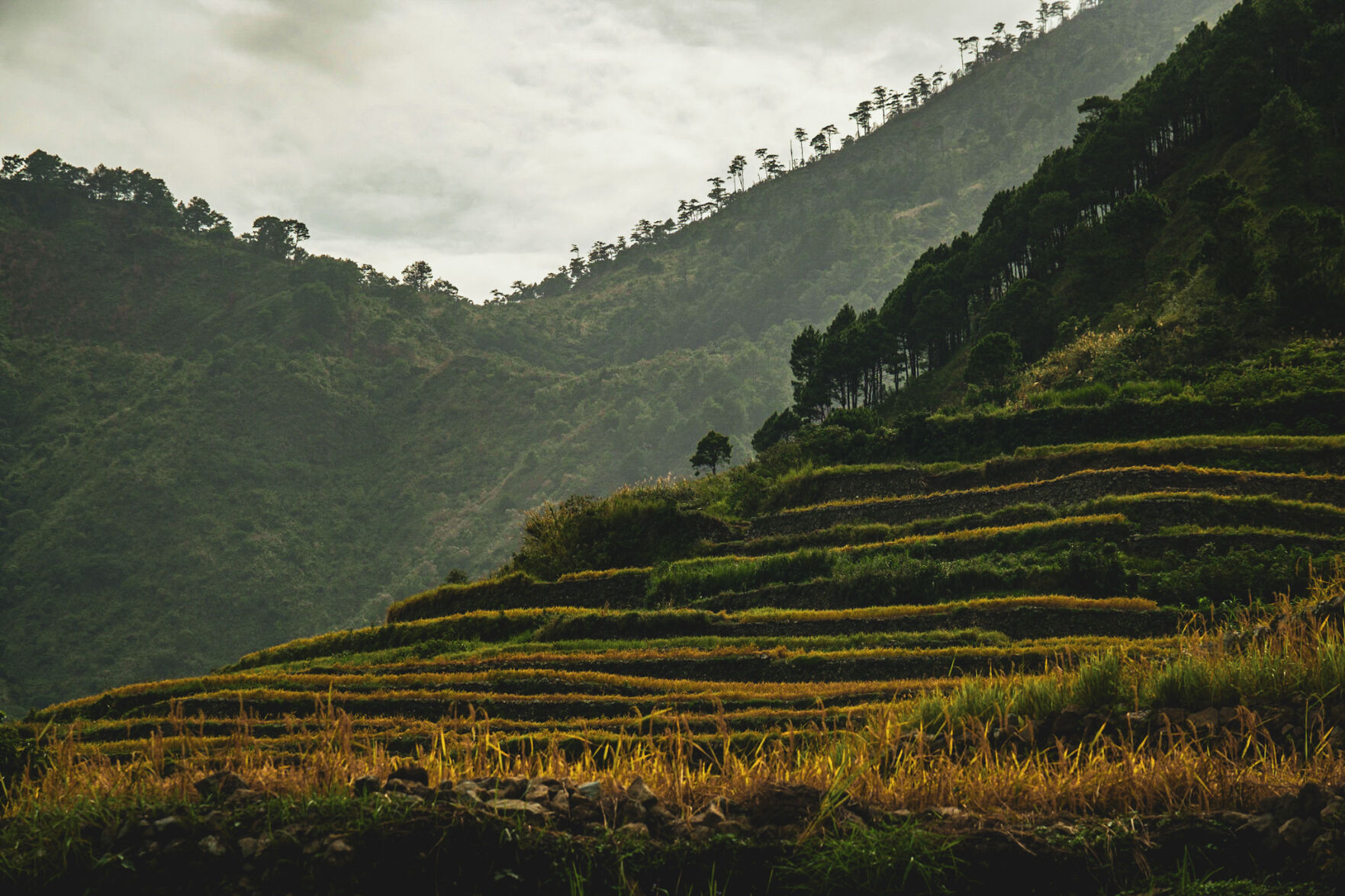
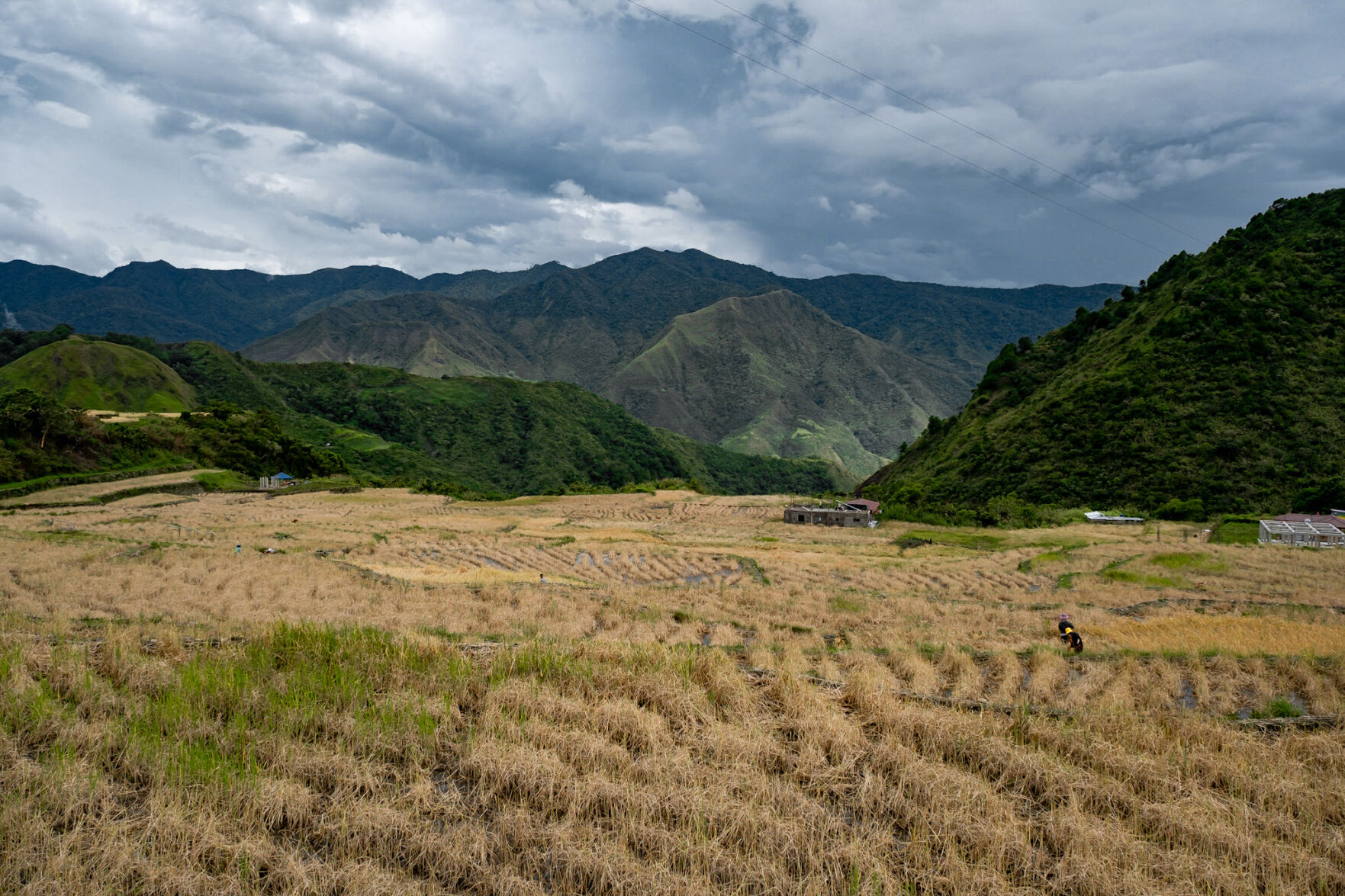
For Whang-Od, the bad weather brings a short respite from the throngs of visitors who make the pilgrimage from countries all around the world. Thousands each year endure long flights, a 12-hour bus ride, a van and motorcycle journey and, finally, a trek down and up a lush ravine to reach the village perched atop a hill scalloped with rice paddies.
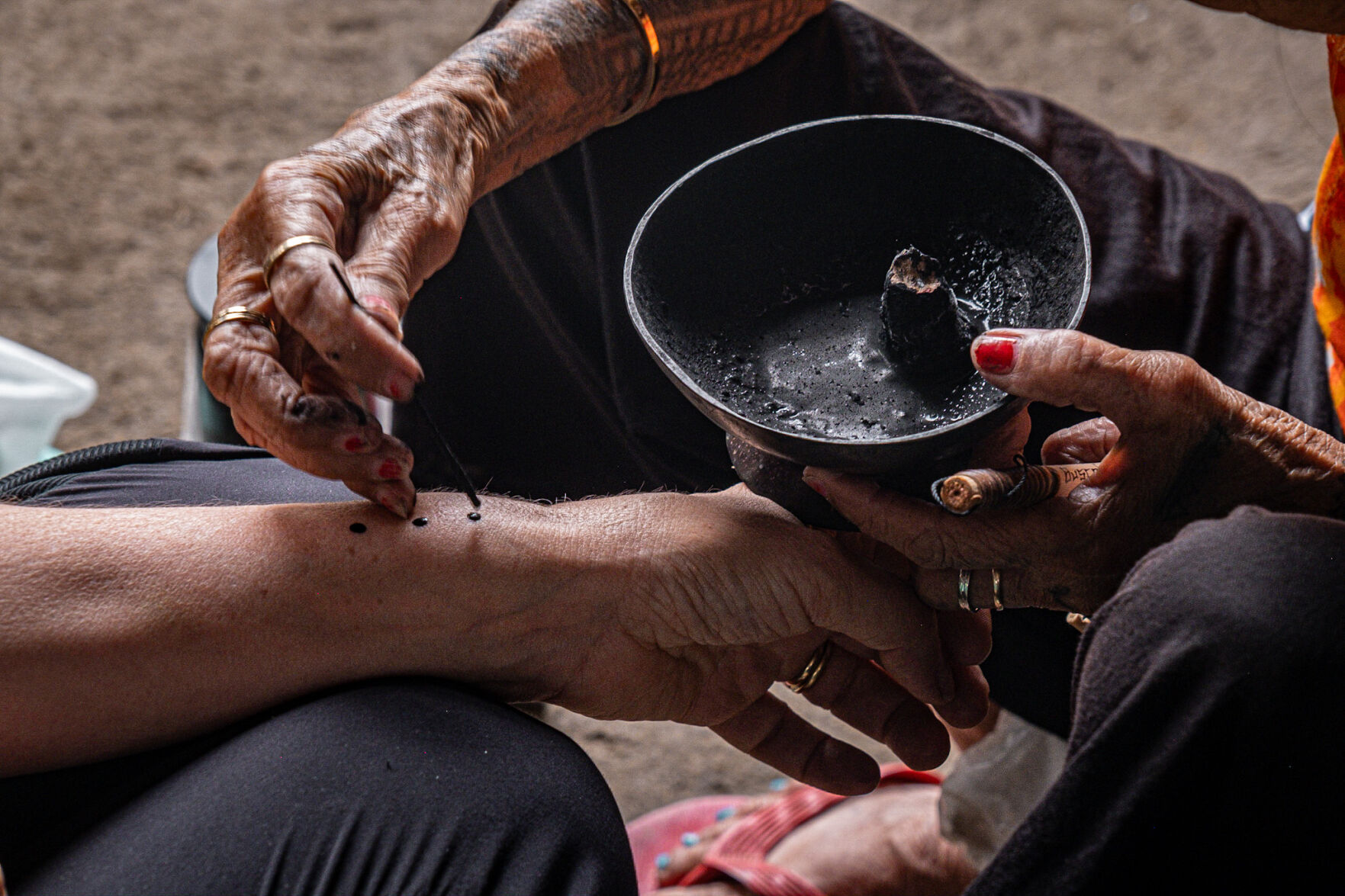
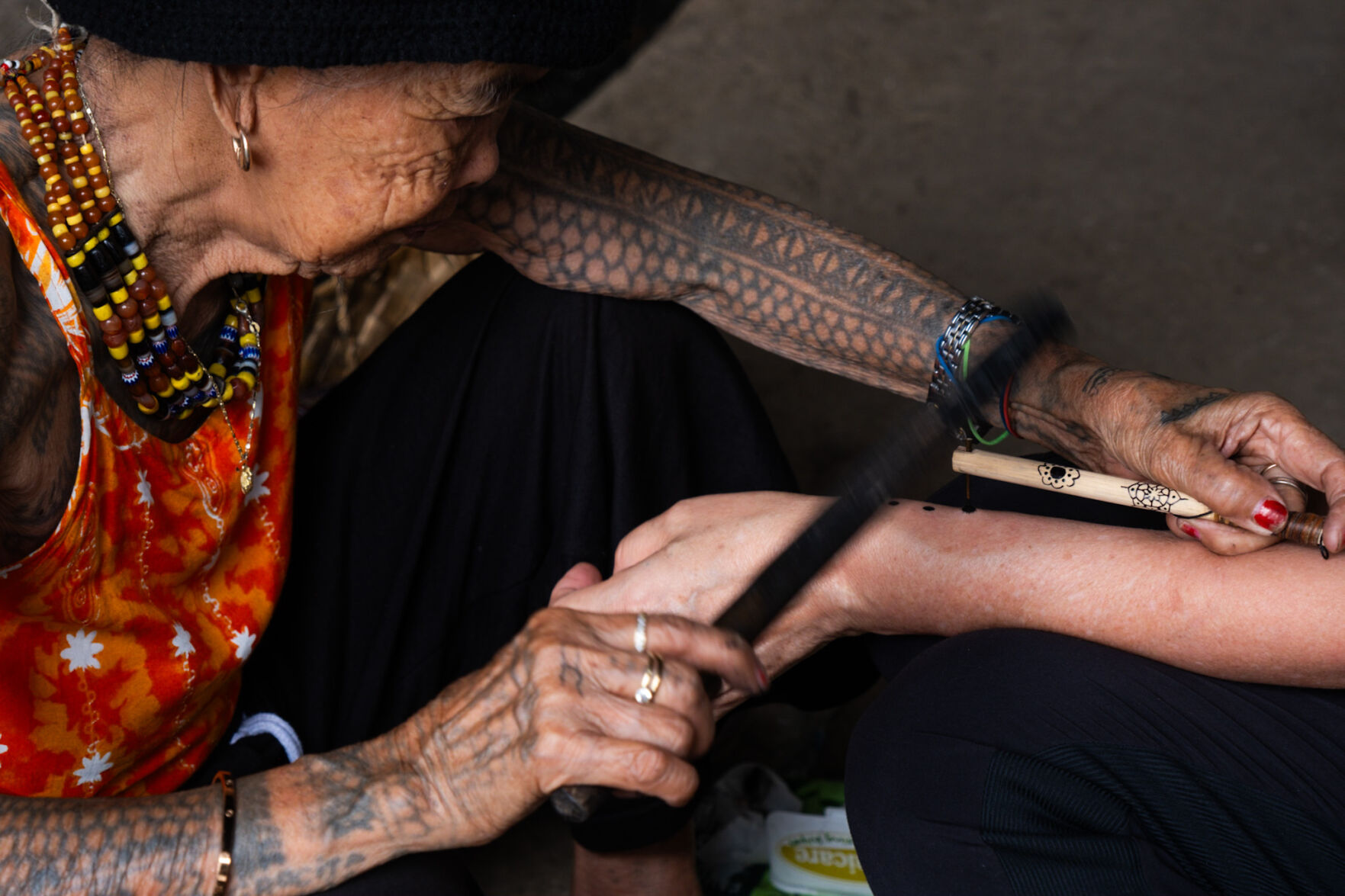
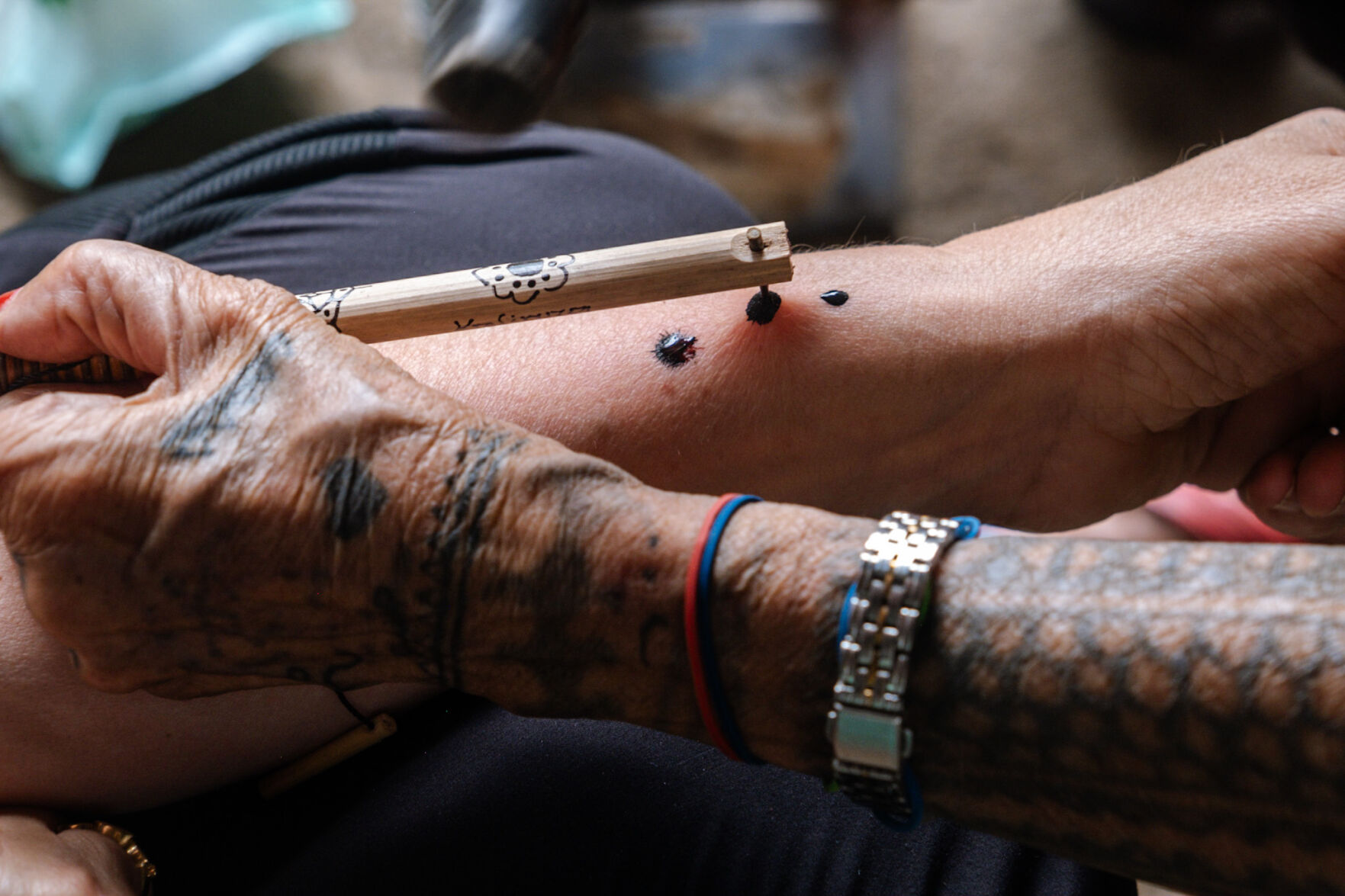
Usually, tattourists have to wait all day in line to get inked by the grand dame. Today, there are no tourists waiting, and she has time to talk. She recalls when at 16 her father passed her the tools of the trade — a bamboo stick that holds the thorn of a pomelo tree and a hammer stick made from coffee wood. The tattoos, known as batok, sound like their name when they are applied. She dips the thorn in ink made from charcoal, and with another stick, taps the ink into skin — batok, tok, tok — one dot at a time.
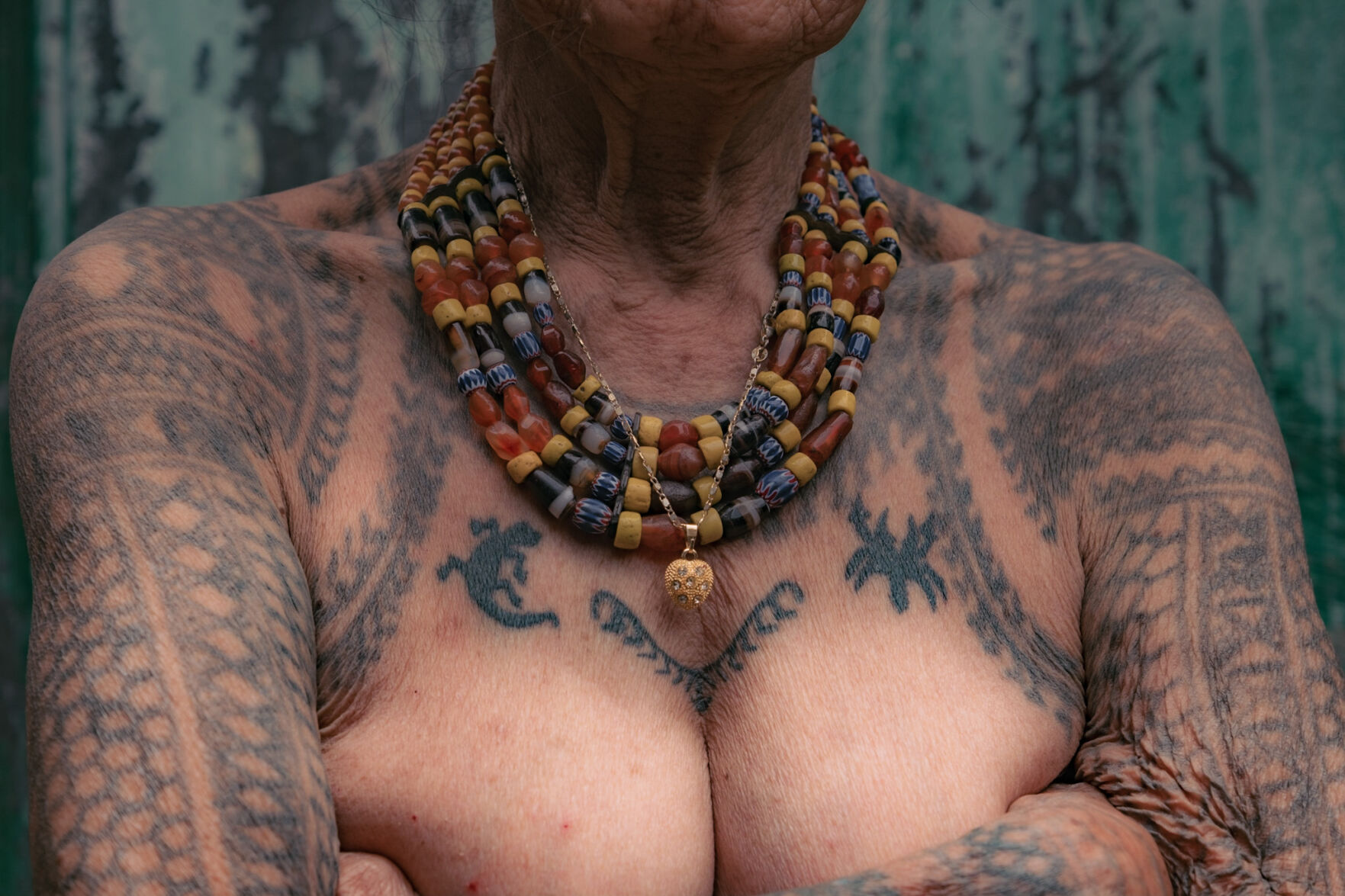
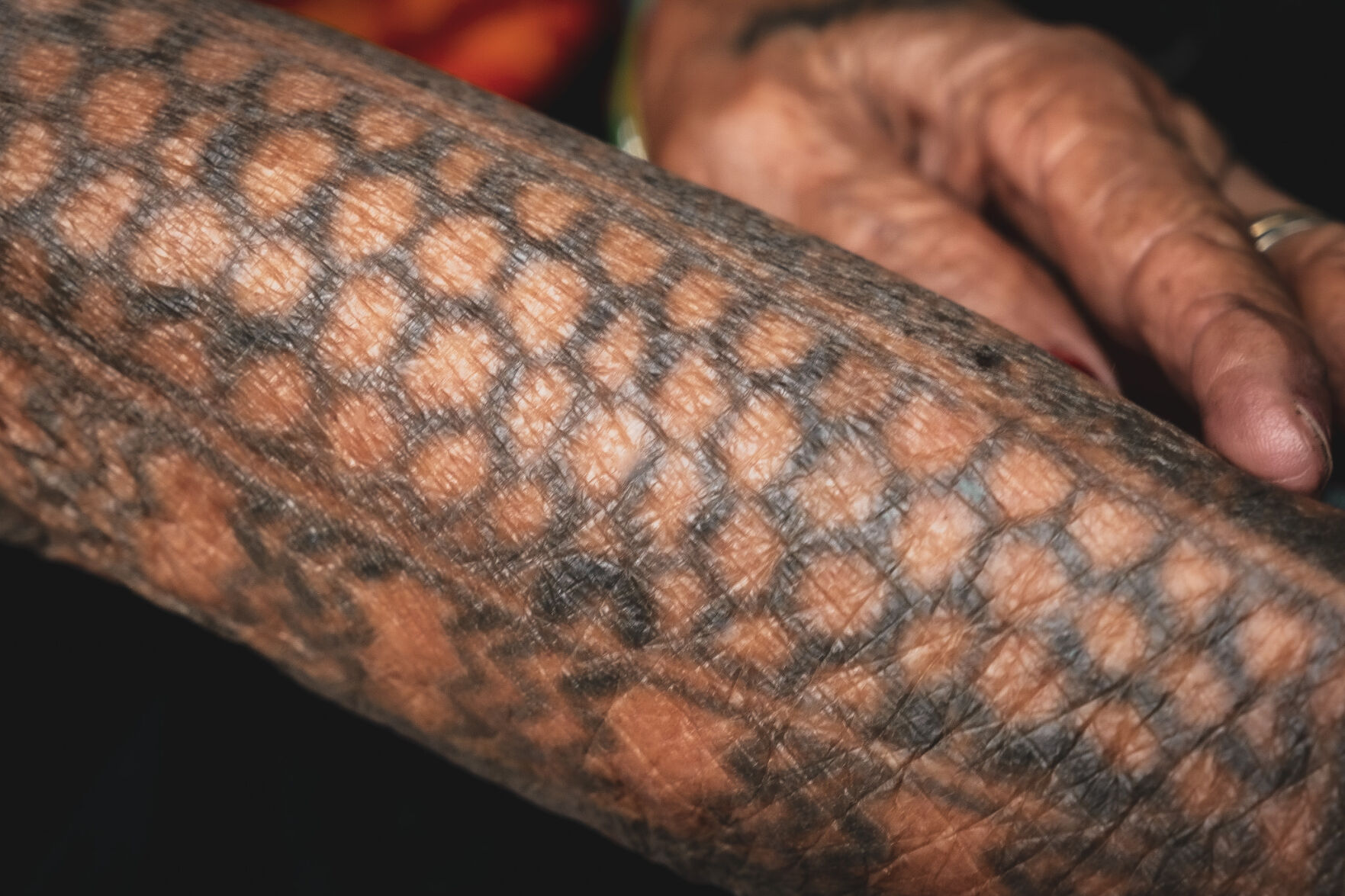
For years, she was the area’s only mambabatok and traveled to neighboring villages, tapping elaborate patterns that suggest snakeskin across the chests of head-hunting warriors and down their arms to commemorate bravery in fighting, a conquest or a death. She gave unmarried women tattoos that promised fertility and added to their allure.
“I would tell the girls to get a tattoo because it would be her legacy,” she said. “It can’t be removed from her body. Rings or necklaces can be taken off when she is put into the coffin. A tattoo is forever.”
A land of legends caught between past, present and future | Colorful Colorado
But Catholic missionaries tried to eradicate the practice in other villages, and outside Buscalan, the tattoos were regarded with scorn by townspeople and forbidden by the military. Slowly, the desire for the batok began to fade. It took appreciation by outsiders to revive the art.
In 2007, anthropologist Lars Krutak filmed Whang-Od for his Discovery Channel series “Tattoo Hunter.” In 2018, she won a prize from the National Commission for Culture and the Arts, and the Philippine Senate named her a National Living Treasure. With the rise of social media, travel bloggers have helped spread word beyond the Philippines, spawning Instagram accounts and two Facebook pages with around 60,000 members each called “Tattooed by Whang Od.” Members share photos of their designs, travel tips and tattoo aftercare.
The tourists started coming in force in 2016 and at the peak, Buscalan hosted 400 visitors a day in newly built guest houses and spare rooms. Whang-Od had taught her grandnieces, Grace Palicas, now 27, and Elyang Wigan, 23, the sacred art, and soon they were imprinting visitors as well.
During the COVID-19 pandemic, no visitors came. The young women of the village used the time to learn to tattoo, practicing on themselves and each other. By the time the tourists began to trickle back, more than 100 new mambabatok were ready to greet them, with a new appreciation of their own tattoos.
Grace, now 27, started learning batok from Whang-Od at 9, tapping ink into the outlines Whang-Od drew. Grace received a scholarship to college, but halfway through, decided that her calling was to propagate the Butbut cultural heritage and returned to Buscalan. She was one of the first young women of her generation to be adorned with the necklace and full arm designs that once were the hallmark of beauty in the tribe. “When I didn’t have a tattoo, I would never wear a tank top,” Grace said. “When I got my tattoos, I wanted to show them off. I feel more confident in my skin with a tattoo. I feel it is me.”
Finding a hint of their essence or an indelible imprint of their heritage is what brings many on the quest to Buscalan.
Prince Cunanan Saruhan, 34, was born in the Philippines but immigrated to Reno, Nev.,in 2002. He came back in 2013 seeking a connection with his Filipino roots, but found something more in Buscalan, a land that was never conquered by the Spanish or the Americans. He is here for the third time, chatting to distract himself from the intricate design Grace is pricking onto his shoulder to build on his previous snakeskin and centipede tattoos.
“Whang Od chose my first tattoo for me, the snakeskin like she has on her own arm,” he said.
Saruhan acknowledges he did not earn the motif like a Butbut warrior or even a member of the tribe and was surprised that Whang-Od offered him a tribal design. “I was so honored,” he said, as Grace wiped pinpricks of blood from his shoulder.
That tattoo was 10 years ago, a decade before today’s discussions that punctuate the Facebook groups about whether the tattoos should be considered cultural appropriation or appreciation and whether the commercialization of them helps or harms the village.
Grace said that they hold some designs in reserve just for Butbut members who have earned them, and that while some designs occupy the same areas that warriors’ chestplates do, the motifs are not the same as the tribal badge of honor. Several of the designs, like the sun and moon, are new generation insignias created just for visitors.
Just south of Colorado border, you can walk into a volcano crater
“There are good sides and bad sides,” says Grace of Buscalan’s transformation. “But I see mostly good. It has helped the village, and spread knowledge about our culture into the world.”
The money brought by the tattoo-seeking tourists allowed Buscalan to get electricity and the internet, and solid houses that withstand the heat and rain. Now there are motorized ziplines strung across the valley to bring construction items over the ravine. The tattoos’ dotted lines connect Buscalan to the outside world in multiple ways. They provide college tuitions and alternative livelihoods to farming: guide, homestay host, interpreter.
It is this that keeps Whang-Od working full time, she said, to ensure the benefits for Buscalan and to share them with neighboring villages. These days, the only tattoo she gives are her signature three dots, representing herself, Grace and Elyang — an ellipses signifying that there is more to come.
The tattoos are a symbol, just as she has become one: a defiant embodiment of living culture, of enduring beauty in a world that does not revere age, a unique feminine ideal in a society that is skewed toward Western standards of beauty. She insists that the tattoos and the symbolism they offer —protection, fertility, longevity — are for everyone.
“We are sharing our culture,” she says as the soot-stained thorn leaves its indelible imprint. as she taps. Batok, tok, tok . . . “They are not taking it away.”