







A young Jewish woman’s lament | Vince Bzdek
What is it like to be Jewish right now?
I’ve been teaching a class in political journalism at Colorado College, and we talk a lot about Israel and the division of views on campus. Though rallies at CC and elsewhere have voiced support for the Palestinian cause, there has also been a wave of support for Israel and concern about the impact of recent events on Jewish students.
One of my 19-year-old students sent me this essay on what it feels like to be Jewish right now.
It’s heartbreaking and powerful with a concerted effort to see both sides of the equation in Israel. It says more than I ever could about Israel. Her words, presented below, make me wonder if all my Jewish friends, my Jewish colleagues and even our Jewish governor aren’t going through the same waves of anguish right now. Again.
By Sofia Joucovsky
I feel like there is not much I can write that has not already been said by countless other Jews across the world. I feel lost, hopeless, depressed, and like my flight-fight-or-freeze response has been initiated. I want to reach those who feel the same, those who may not know a lot about how personal this war is, and those who even disagree with me on my thoughts regarding Israel and Palestine — not to change their minds, rather, simply because I want to try to write something meaningful.
My story does not start with me. It starts when my mom’s family arrived in the United States, initially fleeing pogroms from Russia, Austria and Poland in the 1900s. My great-grandmother and great-grandfather were part of that exodus from Poland. As Hitler began to take over, they joined the Nazi Resistance. My abuela (grandmother) was born in 1944 and spent two years hidden in a nunnery in southern France. My great-grandmother had 13 siblings and only two survived. In the late 1950s, my abuela’s family moved to Argentina.
Antisemitism existed in Argentina before the 1970s, but as the democratic government was overthrown by a military junta, anti-Jewish sentiments became encouraged. Jews were targets. My abuela’s siblings and mother (who had post-traumatic schizophrenia) fled to Israel, but abuela had two young kids and a husband that would never leave Argentina, so my father grew up in extreme poverty, hidden away from the eyes of La Junta.
The antisemitism my father faced growing up in Argentina horrifies me. Papa has not told me everything, and he probably never will, but there was a common saying I heard growing up from him and my mom: “The Holocaust happened once, it could happen again.” So, from a young age, I always was trying to prepare myself for the worst. Throughout all of this, I went to Sunday school, which had Israeli flags hanging everywhere, and our religious services had a deeply rooted “amor patriae” for the nation 8% the size of Colorado.
As I got older, I learned about anti-Israeli beliefs. I was confused. When I realized the concept of Israel was contentious, I immersed myself in researching. I learned about how Israel is slowly expanding into Palestinian territory, claiming it’s their God-given right. That, I think, made me question the Israeli state the most. The settlers in the West Bank, the ones creeping toward Gaza, know how much criticism Israel gets worldwide for that. I learned about Hamas, their control over the Gaza Strip, how they take money from humanitarian aid, and use it to build rockets.
During the past few days, I have heard people use Hamas’ cruelty to justify cruelty toward all Palestinians. Like we don’t care about the Palestinian children being killed, adults being beaten and abused. I felt heartless and numb when I stared at the Israeli flag that 9-year-old — me — had once hung up in my room with so much pride.
A week ago, many Israeli and Jewish people’s worst nightmares happened. Hamas attacked. I felt like I was floating in molasses, moving and processing everything so slowly. I am often one of the only Jews in class at college, one of the only people who have researched the crisis, and I felt frozen because I knew people would say antisemitic things. I knew people would validate what Hamas was doing, and I was scared and depressed.
I was scared for my family. I knew that if I were in Israel, I would have been killed, or raped, or kidnapped and traumatized forever. The Hamas militants don’t care that I am human. The scariest part about antisemitism is the people who killed and chased away Jews all over Eurasia — they don’t think I am a real person. Antisemitic propaganda claims we aren’t human, and we should be slaughtered to save everybody else from our evil.
Hamas (by saying Hamas, I mean their mission and what they have convinced people of) wouldn’t care that I’ve had nightmares about antisemitic attacks or being stuck in the Holocaust from the time I was 4 years old. They don’t care that I worked at a refugee resettlement agency or that I mourn the lives of Palestinians who have lost their lives. To them, I am Jewish. To them, and so, so, so many other people all over the world, I am Jewish, which makes me not human.
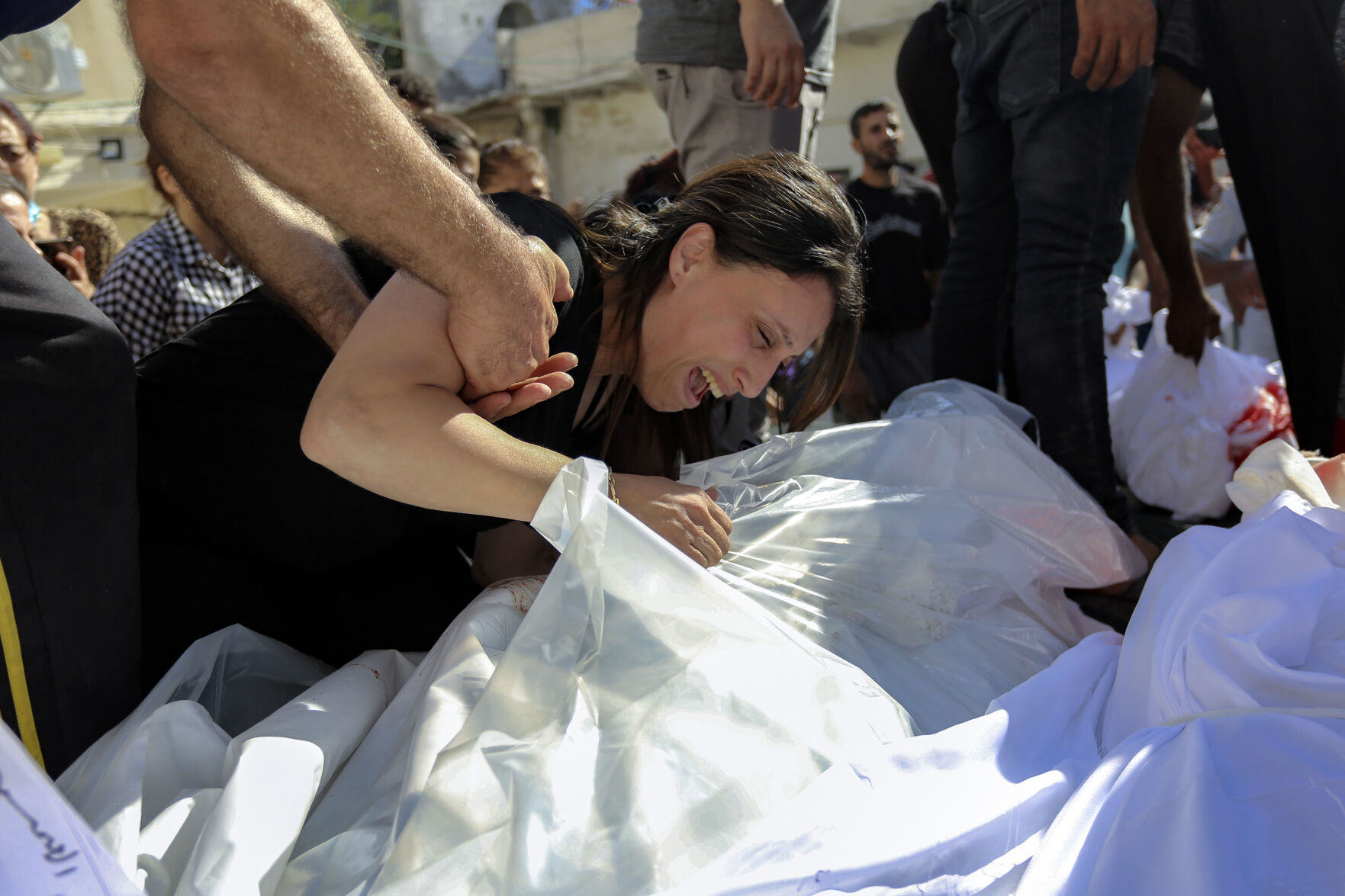
A few days ago, Israel began their retaliation. They cut off water, food, and energy to the people of Gaza. I went on SnapMaps, and I tapped on Gaza and numbly watched the rubble of buildings bombed, people holding dead bodies, understaffed hospitals, and people sheltering in schools. The weight of this conflict felt like it was on my shoulders, because I am watching all of this, and still trying to defend a country I have never been to. On top of that, I am still mourning the loss of the Jews who were slaughtered less than a week ago.
All Jews are on flight-fight-freeze, and if there is one thing Israel can do, it’s fight. They are choosing that path. I don’t think it’s because they need to eliminate Hamas; it’s because the identity, the value and the nationality of Israel is under attack. On both sides, people are terrified. They’re human. There are children who have lost parents, mothers and fathers who have lost their babies. Countries, languages, nationality, religion, all these things are social constructs. We have invented them to discriminate, to create identity, to feel belonging, and to feel power.
If we strip the idea of Israel, the identity of Palestine, (all we have left) are people who do not want to take the time to listen to each other. Jews have been fleeing and scared for thousands of years. Palestinians have been forced under regime after regime for thousands of years. Both groups want freedom and safety, and they hate and blame each other for limiting those opportunities.
We are human. Someone told me that in the same way White people in the U.S. need to hold themselves accountable for systematic racism, all Jews need to hold themselves accountable for discrimination against Palestinians. This non-Jewish person told me that the Israeli state itself is antisemitic. It took me a week and a half to process that statement, to process the deaths on both sides, and I started screaming and crying as I repeated it to my therapist. I sobbed as I realized I was holding the weight of this conflict on my shoulders — as I realized what people thought of me just because I am Jewish. Because I support a state of Israel.
Just because I said religion and nationality is a social construct does not mean that I, my family, my friends, my ancestors and my descendants are safe from antisemitism. We aren’t, and we might not ever be. The Jews who have survived, who are left in this world, have similar thoughts running through our heads — that we have to protect ourselves, because nobody else will.
Right now, nobody is protecting Palestinians. Hamas is weak. They were able to infiltrate the Israeli border, but they are a terrorist organization. The people of Gaza don’t deserve to live under that, and Hamas offers them no protection.
Everyday people are in pain right now. I am begging people to please stop arguing about whether Israel or Palestine should exist, because they both do, and nothing is going to change that. Instead, please take a moment and pray, wish, think, or process what is happening in that part of the world. Understand that on both sides, there is unimaginable suffering, and our job as humans is to fight for peace, to understand what has led to this, and to hope that everything will be OK: that Gaza will have a functioning government, good infrastructure, and a thriving economy; that the Jews, Arabs, and other groups in Israel can feel safe and celebrate peace; and that IDF, Hamas, Hezbollah and all other groups will stop terrorizing innocent people, so we all can just live.
Oseh shalom bimromav
Hu ya’aseh shalom aleinu
V’al kol Yisrael
V’imru: amen.
עוֹשֶׂה שָׁלוֹם בִּמְרוֹמָיו הוּא יַעֲשֶׂה שָׁלוֹם עָלֵינוּ
וְעַל כָּל יִשְׂרָאֵל
וְאִמְרוּ: אָמֵן.
(May the One who creates peace in the heavens bring peace to us and to all of Israel. And we say: Amen.)