







Denver councilmember resigns as homeless chair, citing distrust with mayor’s office
Announcement comes amid nearly $6 million in proposed contracts providing services for the three micro-communities under construction
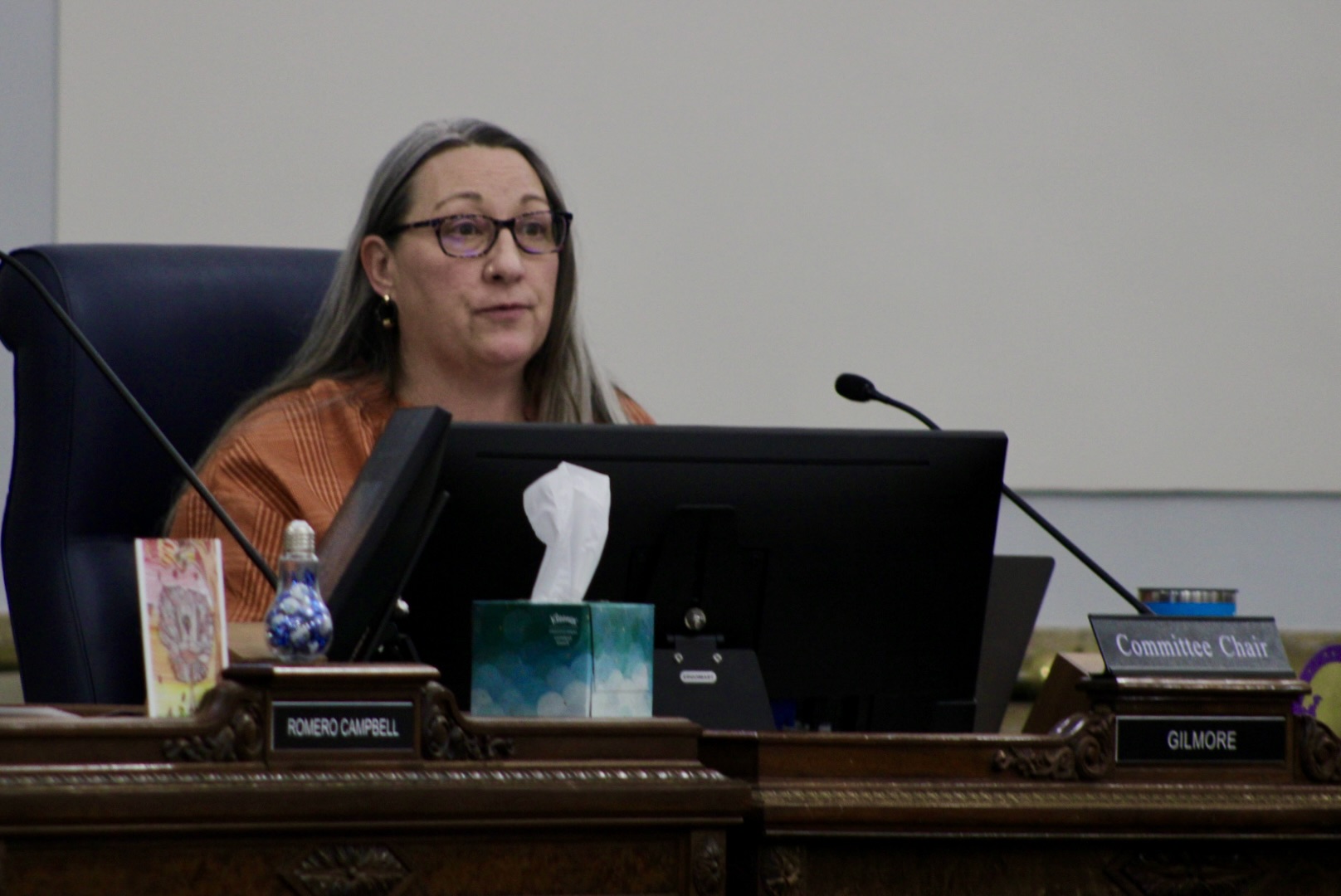
A Denver councilmember on Wednesday stepped down as chair of the City Council’s homeless committee, citing a “lack of transparency” and distrust between the council and Mayor Mike Johnston’s office on the latter’s efforts to curb the crisis.
Denver’s District 11 Councilmember Stacie Gilmore announced her resignation as chair of the seven-person Safety, Housing, Education and Homelessness committee after meeting with the mayor’s staff on Tuesday.
“I appreciate all of the collaboration with my colleagues,” Gilmore said after her last committee meeting as chair on Wednesday.
Gilmore was one of three councilmembers who voted “no” on Nov. 13 to extending Johnston’s homeless emergency extension. The extension, which the council approved, will last until Dec. 31.
She cited a lack of transparency on the millions of dollars being spent on the mayor’s homeless initiative, as well as distrust in the level of transparency the Johnston administration offers.
The Johnston administration has been building up housing units, from hotels to “micro-communities,” with the goal of housing 1,000 homeless people by year’s end. As envisioned, “tiny homes” — single units that provides temporary shelter — at “micro-communities,” where the city also plans to offer social services to homeless people.
Johnston’s emergency order, which started in his first full day of office in July, allows for extra city funds and resources from agencies to be deployed, officials said. As of Wednesday, the administration has move 292 people out the city’s streets, according to Denver’s homeless dashboard.
The dashboard shows 1,395 housing units are in the works, including 395 that have already been acquired.
“We are moving with the urgency this dire situation requires,” Johnston said on Wednesday. “We’ve been straightforward with councilmembers by providing them with information as soon as we have it.”
“These situations change quickly and we will continue to inform council as we work toward our joint effort to support those most in need,” Johnston said.
On Oct. 3, Gilmore asked Johnston’s senior homeless advisor, Cole Chandler, for a detailed breakdown of the millions the Johnston’s administration has spent so far.
On Nov. 18, Chandler said the city “wasn’t quite ready yet because of various contracts being applied.”
“We’ve been working very closely with the department of finance on getting something that we can bring forward,” he said.
Johnston’s administration is looking at hotel and land acquisitions for the “micro-community” sites, according to Chandler.
“I stand for transparency and accountability and you have thrown that aside to move forward so quickly in communities of color,” Gilmore said.
“We are actually looking at pieces of land all across the city,” Chandler said during the Nov. 13 meeting, “some of which we haven’t brought forward because we are not able to discuss those yet.”
Gilmore told Chandler he would’ve gotten her vote if the city had relayed to her the information she asked for in October.
At-large Councilmember Serena Gonzales-Gutierrez succeeded Gilmore as chair, while Councilmember Sarah Parady will serve as vice chair.
Gonzales-Gutierrez told The Denver Gazette she was not a part of that decision.
“(We’re) making sure that we’re meeting with the different departments and understanding that there are things coming from the administration,” Gonzales-Gutierrez said after Wednesday’s meeting.
“I think it has to do with just having open and often communication, making sure that councilmembers are, you know, properly briefed, and have the information they need to have their opportunity to ask questions,” she added.
On Wednesday, the homeless committee approved a proposal for nearly $6 million to be spent on “micro-community” services solely focused on the three sites currently being built at 2301 S. Santa Fe Dr., 1375 Elati St. and 12033 E. 38th Ave.
The committee also advanced two contracts for services at the micro-communities under construction.
One contract would authorize spending $4.25 million with Satellite Shelters to build 14 community centers for the three micro-communities.
The other contract would earmark $1,735,985 for The Salvation Army to provide three meals a day for each resident at the micro-communities.
Both contracts would expire at the end of 2024.
Denver’s Department of Housing Stability estimates spending $1.74 million for meals between Dec. 1 of this year and the end of 2024:
Breakfast at $4.17 per person for a total of $379,804
Lunch at $7.44 per person for a total of $677,635
Dinner at $7.45 per person for a total of $678,546
Meal costs will only apply to the three micro-community sites being built, according to Homelessness Resolution Programs Director Midori Higa.
The meal cost breakdown also indicates the city plans to feed around 230 people in micro-communities.
The City Council is likely to discuss these contracts during its next meeting on Monday.
Councilmembers reiterated the need to not spend more than needed for community centers and meals.
“I would hate for you ordering four of these and not needing them,” District 3 Councilwoman and Council President Jamie Torres told the mayor’s office on Wednesday.